Archive for the ‘Complete Albums’ Category

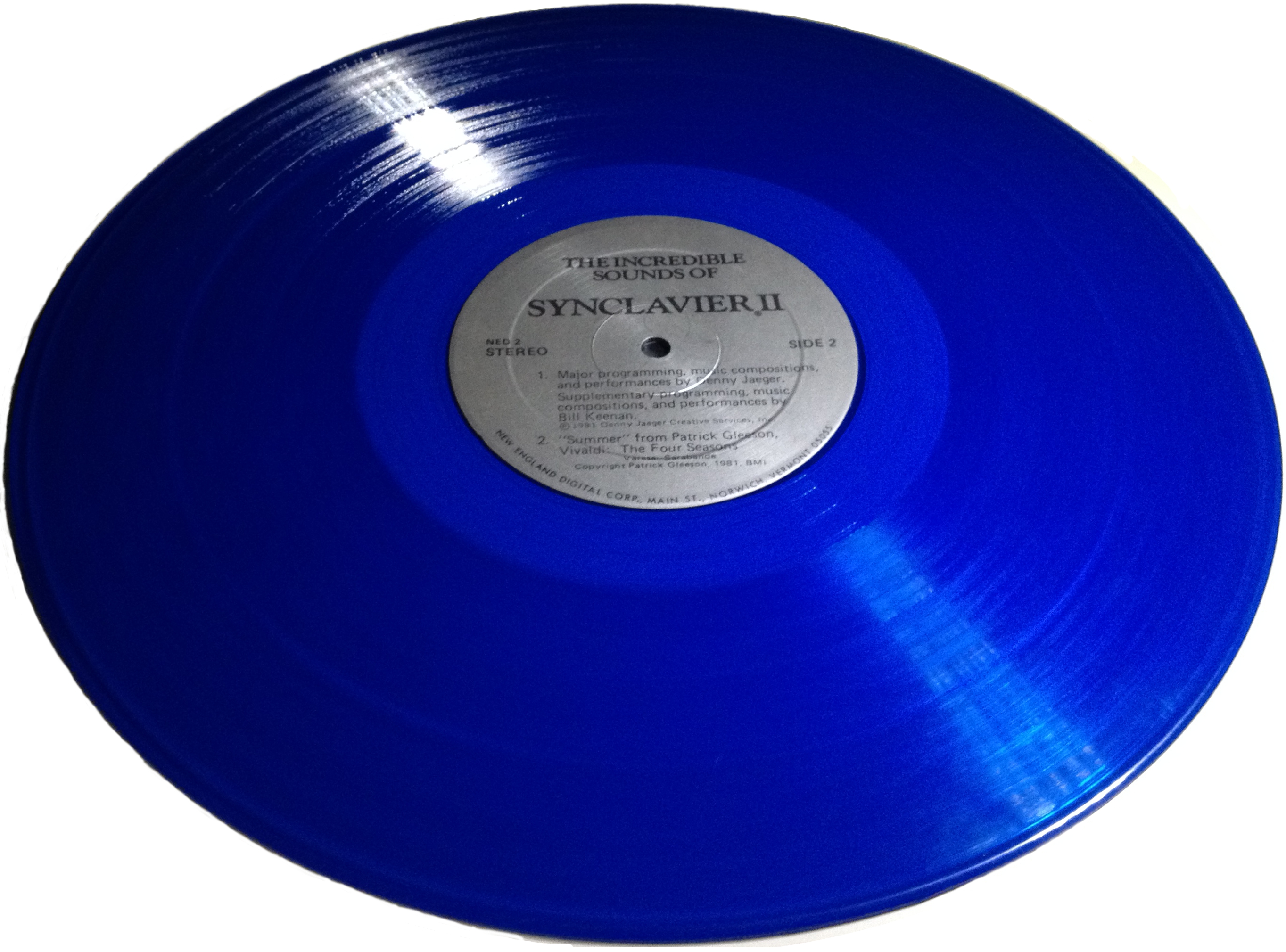
The Incredible Sounds Of Synclavier II Demo Record

Tuesday, July 24th, 2012

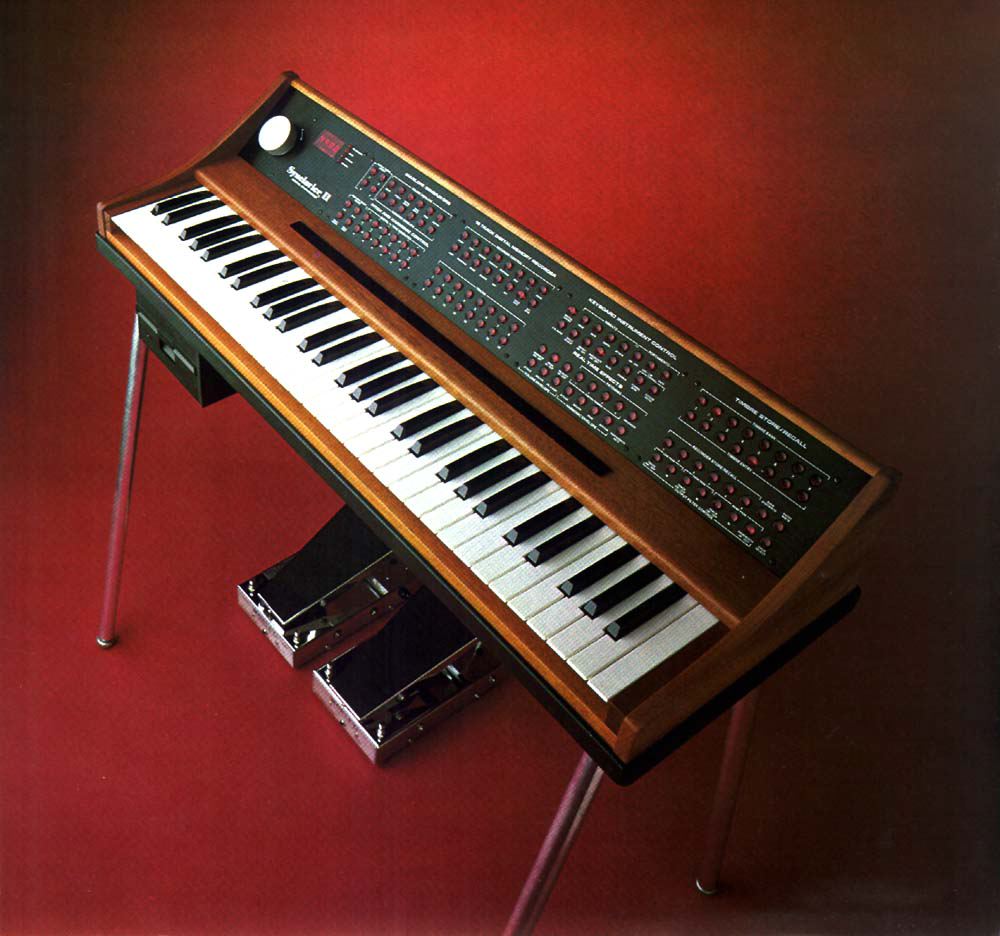
You see that? That’s the Synclavier II, one of the first digital synthesizers. Before synthesizers like that, most of them were analog.

What’s the difference?

Well, the sound in an analog synthesizer is created and modulated by the physical movement of its components, while a digital synthesizer creates sound using computer hardware. While some (including me) think that analog synths sound cooler and are more organic, they are a royal pain in the ass to work with. They’re very hard to maintain, and they go out of tune pretty easily. In fact, in some cases the heat that is generated by simply playing them over an extended period of time is enough make them go out of tune. Just imagine how much of a nightmare they must have been for touring musicians at the time. I don’t know how Tangerine Dream did it. Of course, I don’t know how Tangerine Dream does a lot of things.

That’s a hell of a barrier of entry for a lot of musicians. So in the late 70s, companies began to experiment with digital synthesizers and in 1979, the Fairlight DMI became the first digital synth to see widespread use within the recording community. One year later New England Digital’s Synclavier II followed suit.

While the Fairlight probably had a larger foothold in the popular music landscape thanks to its use by artists like Peter Gabriel, New Order, Devo and Herbie Hancock, the Synclavier also played a pretty big part in creating what would become the sound of the 80s. Frank Zappa’s 1986 album Jazz From Hell was composed almost entirely on a Synclavier, and artists as diverse as Paul Simon, Mr. Mister and Trevor Horn all made use of the Synclavier throughout the decade.

And I’m willing to bet that at least a few of those artists, and many others, listened to this record before doing so.

The Incredible Sounds of Synclavier II
Side 1

Side 2
Patrick Gleeson – Summer 

Released in 1981, this blue promotional record is basically one long demo reel that highlights the many strengths of the Synclavier. Throughout both sides of the record you’ll hear synthesized bells, gongs, pianos, drums, bass and various spacey synth sounds that would eventually make their way to countless albums over the next 10 years. It’s not really that musical, but for anyone interested in the behind-the-scenes aspects of the recording industry, digital equipment, or just goofy weird records, then this is probably worth a listen. At the end of the second side the full musical capabilities are showcased via Patrick Gleeson’s interpretation of Vivaldi’s “Summer,” which I’ve included as a separate track.

I know Michael Jackson and Quincy Jones probably listened to this record when it came out. Doubt me? Just listen to side one and skip ahead to about six minute and 44 seconds in. If you don’t want to, fine, you can just beat it.

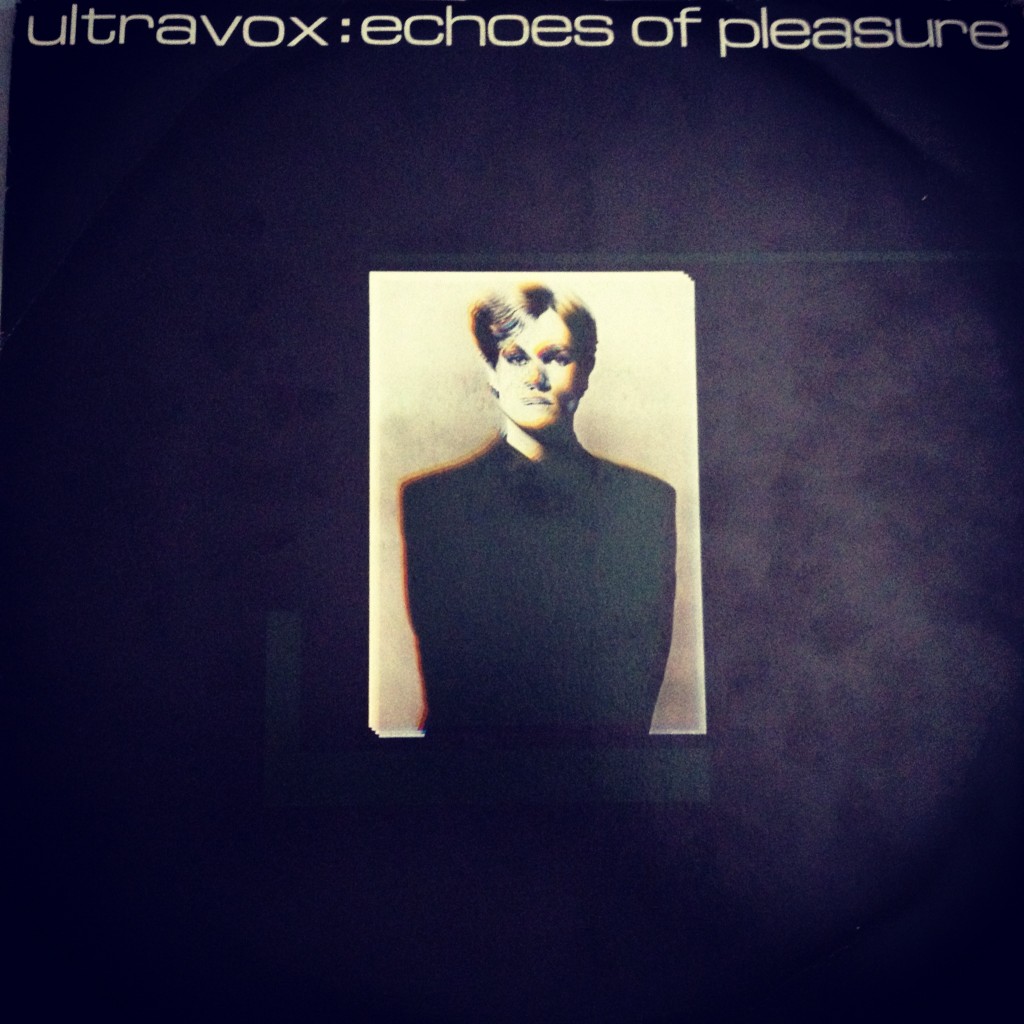
Echoes of Romance – An Ultravox(!) Bootleg

Monday, July 23rd, 2012

Echoes Of Romance
Part 1
Part 2
I’ve been accumulating quite a few bootlegs lately so I think I’m going to have to go bootleg crazy for the next few weeks to clear them out of my queue. Don’t worry, I’m sure most of you will like what I have to offer (even those of you who whine about “decent music).” So let’s just jump right in with one of my favorite recent bootleg finds, Echoes Of Romance by Ultravox.

This is an awesome album because it’s basically two great bootlegs in one, 30 songs pulled from two completely different shows. The first 15 tracks are taken from a December 26th, 1978 concert at the Marquee in England. This is the original(ish) line-up that includes Robin Simon on guitars and, more importantly, John Foxx on vocals. It’s classic early Ultravox, a bizarre combination of punk rock, synthpop and glam rock that still sounds unique and fresh some 32 years later. The quality is also excellent, with very clear vocals and almost no audience chatter. Classics like “Young Savage” and “Hiroshima Mon Amour” are performed, as well as awesome unheralded tunes like “Walk Away” and the supremely odd “Someone Else’s Clothes.” It’s a great show and worth a listen to even the most casual fans of the group’s early work.

The second half of this three-LP bootleg is comprised of songs from a December 13th, 1980 concert at the Odeon Hammersmith. This is of the “classic” line-up that features Midge Ure on vocals. The quality of this recording is a little more sketchy, with the vocals coming off a little more muddled at times and audience noises sometimes making their way into the mix. But even with its lesser fidelity it’s still well worth a listen for fans of the group as the band plays favorites like “New Europeans,” “All Stood Still,” and “Vienna.” Even Foxx-era tracks like “Hiroshima Mon Amour” and “Quiet Man” make an appearance. Great stuff all around.

I’m curious, which Ultravox do you all like the most? The punkier, harsher John Foxx stuff, or the classier, new romantic-influenced Midge Ure albums?

I love them both, although I still don’t have all of the Ure-era stuff. I think my favorite Ultravox song overall is the Ure-fronted “Hymm,” but I also have a soft spot for the crazier Foxx tracks like “Young Savage” and “Saturday Night In the City of the Dead.” Ask me which iteration of the band I prefer one day and you might get a different answer the next. I can’t decide.

Just don’t bring up the Billy Currie-led era. That never happened.

NEVER HAPPENED.

Genuine Latin Love Machine

Friday, June 29th, 2012

I haven’t posted an extremely stupid lounge/Moog album in a long time. Let’s fix that.

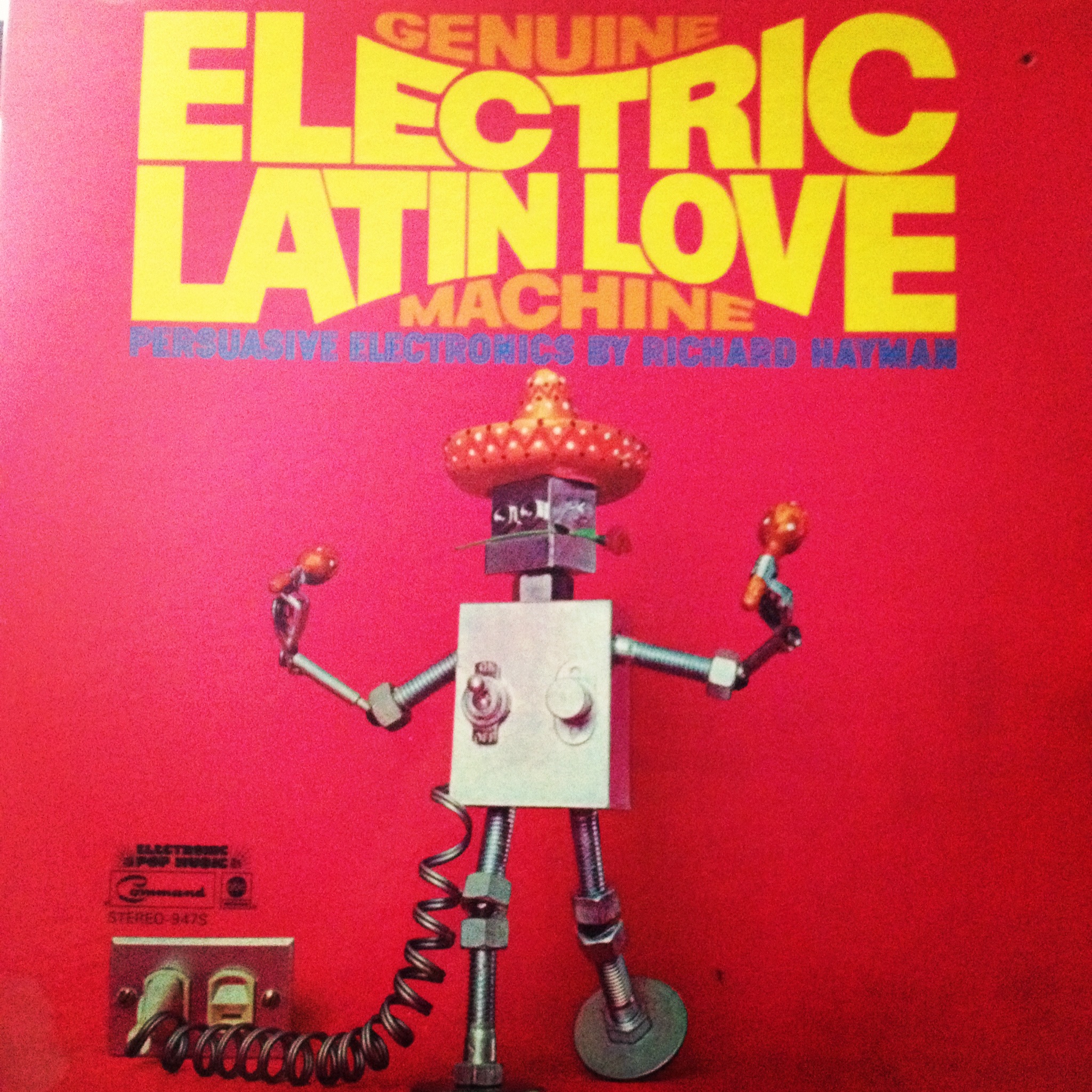
Richard Hayman – Genuine Electric Latin Love Machine
Richard Hayman is one of those people whose career is so long that it’s nearly impossible to summarize. As just about any page about him will tell you, he’s most known for being the arranger for the Boston Pop Orchestra, a position he held for over 30 years. According to his AllMusic bio, Hayman also served as a music director for a very eclectic assortment of celebrities, including Johnny Carson, Pat Boone and Olivia Newton-John. According to this photo of him, he enjoys large bowties.

He also apparently liked to make really silly early electronic music. In 1969 he released this goofy little record, no doubt an attempt to cash-in on the synthesizer craze that Wendy Carlos started with her legendary Switched-On Bach album a year earlier.

Did I mention this album is goofy and silly? Because holy shit it is.  As the title suggests, most of the songs are electronic re-imaginings of “Latin” songs like “The Peanut Vendor” and “La Comparsa.” But it also has a few mainstream pop songs thrown in for good measure, including “The Look Of Love?”  and “The Girl From Ipanema.” Don’t expect any covers of rock tunes though, I don’t think Hayman was hip to that sound.

It’s not as memorable as other early electronic albums, but its still worth a listen. And I think everyone in the world should take note of that amazing cover.

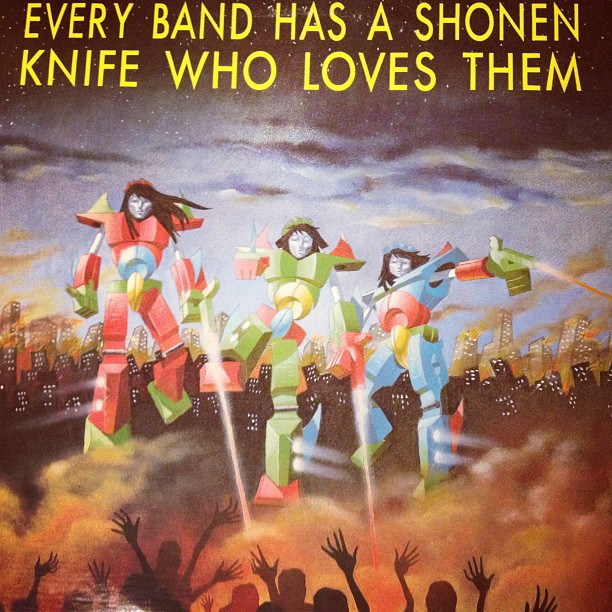
Every Band Has A Shonen Knife Who Loves Them

Thursday, June 14th, 2012

If you put a gun to my head and made me pick a favorite, all-female Japanese rock band, I’d probably have to choose Cibo Mato. Also, I’d probably tell you that you’re really violent about demanding declarative decisions in regards to my personal preferences of which international rock bands I enjoy the most.

That being said, I really like and respect Shonen Knife, even if I don’t know that much about the group. I recall them kind of being a minor thing in the states during the mid-90s. Kurt Cobain said he liked them, an endorsement of so much clout  for the time that pretty much guaranteed any act who got it  at least an early afternoon slot at Lollapalooza.

But Shonen Knife had developed a pretty rabid following in the states even before Kurt was talking about them in the press. By 1989 the group was popular enough for inide label Giant Records to compile Every Band Has A Shonen Knife Who Loves Them, a collection featuring American bands covering their favorite songs by the Japanese rockers.

Even as someone who doesn’t know a lot about Shonen Knife, I think this album pretty much kicks all kinds of ass. Just look at some of the acts who grace this record: Sonic Youth, Reverb Motherfuckers, The Mr. T Experience, Babes In Toyland, L7, Red Kross! It’s like a who’s-who of noise, indie and riot-grrl.

At times though the album is less of a “who’s who” and more of a “who’s that?” Sadly, many bands on this compilation went nowhere, some aren’t even credited on Discogs for any release aside from this record. And there are four bands on the album (Project Jenny & Teen Steem, Ella Ohne Die Schwarzen, Dem Choclodytes and The Maynards) whose only appearance on any release ever is on the 2LP edition of the album, their songs aren’t on the single LP version or even the CD edition of the record. How’s that for your obscure randomness?

Even more obscure than those songs though is the cover of “Cycling is Fun” by Pandoras. It’s on the tracklisting for the 2LP edition but it’s actually nowhere to be found on the record itself. It only exists as a concept! Now that’s some underground shit.

I’m only offering this is as a complete album download, because I really don’t want to set up 32 separate download links. Nor do I want to comment on each song/band individually, as I hardly know any of the bands on this record and I really don’t feel like researching 20+ bands. Sorry! If you have any interesting tidbits to share about some of the more obscure acts on this album, please feel free to share them in the comments though.

In case you’re wondering, here is the complete tracklisting:

Record One
1. Kappa Ex – Redd Kross
2. Summertime Boogie – The Freaks
3. Insect Collector – The Three O’Clock*
4. Public Baths – Frightwig
5. Dali’s Sunflower – Government Issue
6. Baggs – L7
7. Froot Loop Dreams – White Flag
8. Twist Barbie – The Pussywillows*
9. Making Plans For Bison – Big Dipper
10. Ice Cream City – Christmas
11. Lazy Bones – Pat Ruthensmear (AKA Pat Smear)
12. Elmer Elevator – Krave
13. Devil House – Chemical People
14. Burning Farm – Sonic Youth

Record Two
1. Antonio Baka Guy – Lunachicks
2. Flying Jelly Attack – The Mr. T Experience*
3. Miracle Woman – Project Jenny & Teen Steem*
4. Parrot Polynesia – Ultra Violet Eye*
5. Angel Has Come – Angels Of Epistemology*
6. Parallel Woman – Masters Of The Obvious*
7. Blue Oyster Cult – Ella Without The Blacks*
8. Tortise Brand Pot Scrubbing Cleaner’s Theme-Bye Bye – Disco Dave Landry
9. Elephant Pao Pao – Reverb Motherfuckers
10. Redd Kross – Death Of Samantha
11. Watching Girl – Babes In Toyland*
12. Riding On The Rocket – Das Damen
13. I Like Choco Bars – Dem Choclodytes*
14. Animal Song – The Maynards*
15. Ah Singapore – Wendy Horowitz
16. One Day At The Factory Preface – Phil Blumel
17. One Day At The Factory – Pippi Eats Cherries*
18. Cannibal Papaya – Smokin’ Gas Truck*

* 2LP Edition Exclusive Tracks

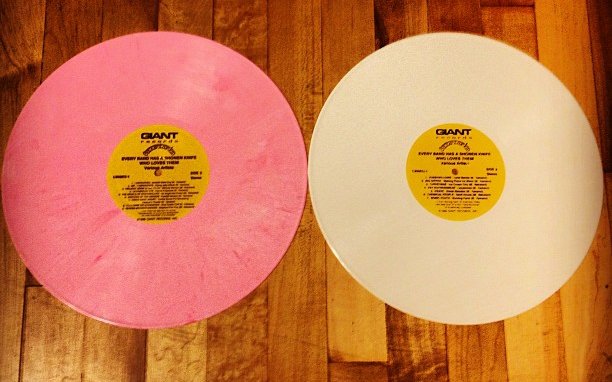
Oh, and the records are pink and white.


Have a good weekend, and if you live near Pittsburgh, don’t forget to check out Vinylpalooza! Click here for details.

Exotic Birds – Cleveland Synthpop (featuring some dude named Trent Reznor)

Wednesday, June 6th, 2012

Exotic Birds
Dancing On The Airwaves
Have You Heard The News
The Meaning Of Love
This Must Be Heaven
Nothing Lasts Forever
Fighting Fire With Fire 

So who the hell are the Exotic Birds and why the hell should you care about them?

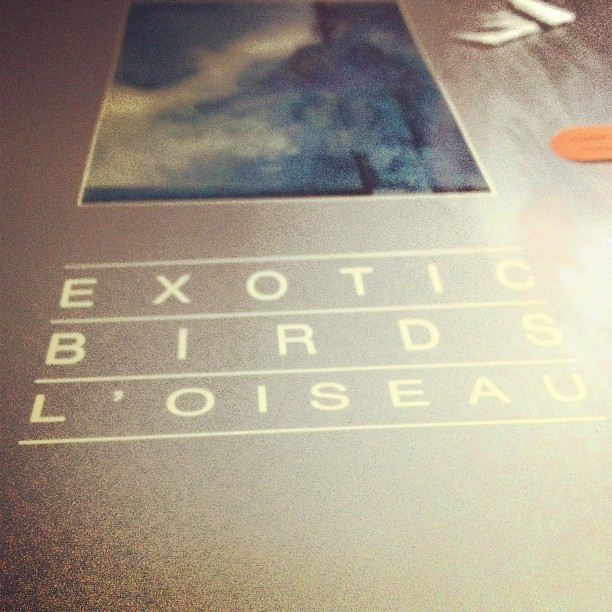
I’ll just cut to the chase, lest you skip this post completely from lack of interest. The Exotic Birds were one of the many bands that Trent Reznor was a member of before he decided to strike out on his own with Nine Inch Nails. And when you hear about the Exotic Birds today on blogs and on YouTube, it’s usually because of that fact. While that’s an interesting bit of trivia, I think that does a disservice to the rest of the band. Trent Reznor was barely in Exotic Birds after all, he only played keyboards on one EP (L’oiseau – the album I’m featuring tonight) and he wrote none of the songs.

The Exotic Birds was barely more than a for-hire gig for Reznor, the real man behind the group was Andy Kubiszewski. On L’oiseau he not only plays keyboards and sings, but he is credited as a guitarist, programmer, percussionist and even xylophone player in the linear notes. He’s the sole writer on four of the album’s tracks, with drummer Tom Freer getting a sole writing credit on one tune and a co-writing credit with Andrew on another. While the line-up to Exotic Birds changed a lot during its short time, Andrew remained in the group until he broke it up for good sometime in the early 90s.

But that was only the beginning of Andrew’s musical career. After he was done with the Exotic Birds he briefly joined The The as a drummer, before rejoining with Trent Reznor in 1994. This time he was the backing member in Reznor’s musical endeavor, playing drums with Nine Inch Nails on their album The Downward Spiral. Maybe working with Reznor’s industrial group gave Andy a taste for the harder-edged music, because just a couple years later he was with Stabbing Westward, the NIN-derivative act who gave us the uber-downer alt-rock hits “What Do I Have To Do” and “Shame” and “Save Yourself.” After Stabbing Westward decided to mope their separate ways in 2002, Andy went on to work with a few other bands before turning to production/songwriting work in 2005, oddly contributing music to t.A.T.u’s sophomore album Dangerous And Moving (which, by the way, isn’t that bad!) among other things. Today, Kubiszewski mostly does television work, composing music for Discovery shows like The Colony, Axmen and Monster Garage.

I said before that I’ve always thought that the lesser-known, more workmanlike musicians have more interesting careers and trajectories than the superstars and one-hit wonders, and I really think the Andrew Kubiszewski’s path of synthpop frontman to British alt-rock drummer to industrial drummer to eurodance songwriter to TV composer really proves that point.

All that and I never even really mentioned how the Exotic Birds sounded! Well, they weren’t bad. They definitely sound like a band that really doesn’t know what it’s doing, going after trends in music instead of trying to forge its own way. Some tracks are incredibly radio friendly pop numbers, while others have a slightly harder edge that might have played well on college radio at the time, kind of  Eurthymics meets The Cure meets InSoc (although not as good as any of those bands). It’s dated as hell, that’s for sure, but if I was Andy Kubiszewski I would be less embarrassed about “Nothing Last Forever” (which has a really great instrumental breakdown) than this.

Okay, that was kind of mean. Stabbing Westward had some good tunes too. “Shame” holds up alright, even if it takes miserablism and self-loathing to levels that NIN could only dream of. I mean, “I only see myself reflected in your eyes”? Pathetic perfection.

This is still not a blog post

Thursday, May 17th, 2012

Public Image Ltd. – Commercial Zone (complete album download)

In 1983, Keith Levene and Pete Jones left Public Image Ltd. Considering the events that followed, it can be assumed that the split was not a clean one.

When Keith left the band, he didn’t leave empty handed. He took with him the master tapes to their yet-unreleased follow-up to The Flowers of Romance. As if that act of sabotage wasn’t enough, he then mixed and mastered the recordings on his own and put the album out under the title Commercial Zone. He did this without permission from anyone in the band or their label.

Think about that for a second. Think about how crazy that is. Imagine if that happened today. Dinosaur Jr. are recording a new album at the moment. Imagine if, after the sessions were mostly done, Lou Barlow just said “fuck it, I’m sick of J and his bullshit (again)” and, without telling anyone, he stole the master tapes to the album and put them on the Internet. But not just as a “fuck you,” but as an illegal bootleg release that you would have to actually buy. It just wouldn’t happen! He’d be able to get five copies out the door before the label would bust in and shut his ass down.

But I guess things were different in 1984, because Levene was able to make two complete pressings of this album and even sell it in American record stores for over a year before the label was able to successfully shut him down. As such, fans were able to get two entirely different versions of the same album in 1983/84, the Levene-mixed Commercial Zone, as well as the final version, This Is What You Want…This Is What You Get. Listening to them both back-to-back is a lesson in album production, as most of the songs on Commercial Zone found their way onto This Is What You Want… albiet in radically re-worked forms.

I was originally going to do a track-by-track rundown of the differences between the Commercial Zone and This Is What You Want… versions of the songs, but that’s really pointless because all the tracks were changed in the exact same way. While the Commercial Zone versions of the songs are incredibly stark and minimal, with Lydon’s caustic vocals the center of attention, the This Is What You Want versions are polished with an 80s shine. Synthesizers are amplified. Drum beats are made danceable. Horn sections are brought in. And the abrasive nature of Lydon’s voice is died down ever so slightly so the countless reverb and echo effects added to it wouldn’t drive the listener mad.

So which version is better?

While most die-hard PiL fans enjoy Commercial Zone more, I actually find This Is What You Want… to be a better record. Fans would say that Commercial Zone is better because it retains the non-commercial sound and feeling of the group’s previous records, and that’s precisely why I don’t like it as much.

I think that after the band recorded something as brutally antipop as The Flowers of Romance, they had no need to continue in that direction. There was nowhere else to go. To me, Commercial Zone sounds the group is still trying to hang on to that caustic, abrasive sound while still attempting to record something that has some sort of commercial aspirations. This Is What You Want… on the other hand, makes no attempt to hide its pop sensibilities and is a more honest, more engaging record because of it.

Still, Commercial Zone isn’t a bad record. And if you’re at all interested in studying how songs can evolve and change during the recording process, both it and This Is What You Want… are essential listening. Like a lot of stuff I’ve been posting recently, I originally posted Commercial Zone back in 2006/2007 that sounded like dogshit. Here’s a new rip that sounds a hell of a lot better.

Bonus Songs!

Public Image Ltd.
This Is Not A Love Song (12″ Remix)
(This Is Not A) Love Song (The Best Of British £1 Notes Version)
Probably my third-favorite PiL track behind “Disappointed” and “Rise,” “This Is Not A Love Song” is a wonderfully angry bit of bile, no matter which version you find. The original Commercial Zone take is still the harshest and most in-your-face, but I feel the upbeat tempo and added horn sections on the This Is What You Want… version make that version much more catchy and interesting, even if the song’s spiteful message is somewhat lost in the sheen. As it is one of PiL’s biggest hits, it’s been repackaged and re-released several times over, sometimes in versions that differ from both the Commercial Zone and This Is What You Want… takes.

The 12″ remix, is really more of a dub version of the track, and removes almost all of Lydon’s vocals aside from the very opening. While this version is undoubtedly weaker as a result, the instrumental does a good job of standing on its own, and it also makes for a killer workout mix tune.

One of the most interesting versions of the song, however, is the version that’s on John Lydon’s greatest hits record, which features tracks all the way from The Sex Pistols to his late-90s solo work. This alternate version (which is not labeled as such) sounds like a mix of the song that was made in between the Commercial Zone and This Is What You Want… versions. It’s more polished and produced than the original version, but its still way rougher and abrasive than the final version that made the album. It’s actually probably my favorite take of the track, keeping most of the anger and spite of the original, while injecting a bit of the energy and excitement from the final version.

Listen to all three back-to-back-to-back and tell me which one you prefer. Just, go hug a kitten or something later, that’s a lot of Lydon angst to be carrying around with you.

And don’t forget that PiL has a new album coming out in a couple weeks! Get that too! It should be rad!


Godley & Creme – The History Mix Volume 1: So good it makes me want to…well, y’know

Sunday, May 6th, 2012

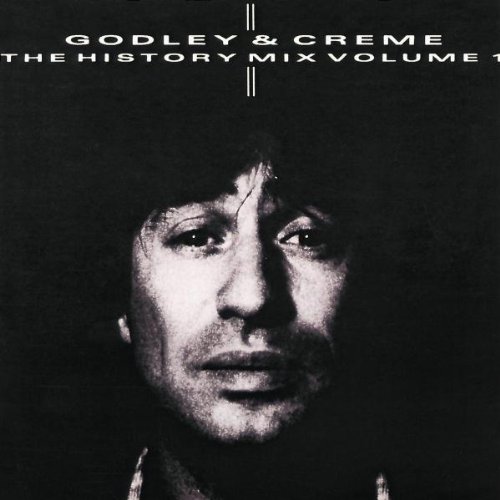
The History Mix Volume 1 has to be one of the weirdest albums of the 80s. There are multitudes to its weirdness that extend past the content of the record and into the nature of its release.

But first some background, The History Mix Volume 1 is an album by Godley & Creme, who were in the first incarnation of the 70s group 10cc. They left the band after their fourth album to continue as a duo. They never really achieved anything close to mainstream success in the 70s, and I really can’t tell you that much about them, because to be honest I don’t own anything by them other than this record (which I’ll get to). They did maintain some sort of cult status throughout the 70s and into the 80s however, and eventually found even more success behind-the-scenes, directing videos for Ultravox, Elton John, Frankie Goes To Hollywood, INXS, Sting and Yes.

If you’re a fan of 80s pop music (and you probably are if you’re here) then you probably notice a lot of Trevor Horn-related acts in that list. It’s pretty apparent that the pair became professional acquaintances with Horn during the early part of the decade, right when he was really starting to show his chops as a genre-hopping uber-producer and songwriter.

One of Horn’s more critically-acclaimed and groundbreaking projects of the early-80s was The Art of Noise, an avant-garde, experimental pop group that made heavy use of sound collage and the then new art of digital sampling. Godley & Creme were obviously fans of The Art of Noise (Creme even ended up in the group near the end of the 90s), because they recruited both Horne and J.J. Jeczalik to help work on The History Mix Volume 1, an album that exists in some sort of nebulous state between a record of entirely new material; a greatest hits compilation; and a remix record.

Most versions of the album primarily consist of two long-form tracks, “Wet Rubber Soup” and “Expanding the Business/The ‘Dare You’ Man/Hum Drum Boys In Paris/Mountain Tension.” Both tracks take elements from older Godley & Creme/10cc songs and sample them, restructuring the pop-rock tunes as uptempo dance tracks made for the club. From what I can tell, some samples are taken from the original songs, while others are samples of re-recorded versions. For instance “Wet Rubber Soup” uses some lyrics from 10cc’s “Rubber Bullets,” but they’re redone as a rap…which is odd.

What makes The History Mix Volume 1 even weirder is that when it first came out in 1985, two versions were released that were barely the same record. No matter which version you got, it included “Wet Rubber Soup,” which in itself contained a version of the hit single “Cry.” But some versions contained a second, single mix of “Cry” followed by the “Expanding The Business…” collage, while others instead featured four older songs by the duo: “Light Me Up,” “An Englishman In New York,” “Save A Mountain For Me” and “Golden Boy.”

Why? I have no idea. When the album was re-released on CD, most versions included all the tracks from both versions of the record. Today, all versions, CD, digital and vinyl, are out of print. Not only that, all of Godley & Creme’s previous records are all lost in the archives and only available as imports, if at all. The only song from the Godley & Creme discography that remains in print is “Cry” which was included on the 10cc greatest hits album.

So yeah, it’s a weird record with a weird history.

And one can only assume that Volume Two is TBA.

Godley & Creme – The History Mix Volume 1 (Both Versions)
Wet Rubber Soup
Expanding The Business/The ‘Dare You’ Man/Hum Drum Boys In Paris/Mountain Tension
Light Me Up
An Englishman In New York
Save A Mountain For Me
Golden Boy
Cry (Extended Version)
These are all the songs from both versions of the album, save for the single edit of “Cry” which you can get easily online. As a bonus, I’m also including the extended version of “Cry,” which is basically the same version that’s on the tail end of “Wet Rubber Soup,” but with its own intro. I freaking love that song. For a downer of a tune it sure pumps me up. Most of these tracks were taken from my US version of the album, while the “Expanding The Business…” collage was taken from the UK version, and the extended cut of “Cry” was taken from a 12″ single.

Tony Banks’ Soundtracks – Featuring Toyah Wilcox and that dude from Marillion

Monday, April 23rd, 2012

Tony Banks is the keyboardist for Genesis, and being a keyboardist in a rock band is usually a pretty thankless job. No matter how good their licks may be, most fans, members of the media, and groupies are more interested in the singer, guitarist, drummer and even the bass player than the keyboardist. That’s because, quite frankly, there’s no way anyone can make playing the keyboards look cool.

But back in the 70s and 80s Banks probably had it even rougher than most keyboardists when  it came to making a name for himself. First Peter Gabriel leaves the group to embark on a wildly successful solo career, and then Phil Collins starts his own solo career and proceeds to release some of biggest albums of the 80s. Even Mike Rutherford was able to get in on the action, finding inexplicable sucess with his side-project Mike + The Mechanics.

Tony Banks’ bids as a popular solo artists were less successful than his bandmates’. He released the concept album A Curious Feeling in 1979, and it quickly vanished from the charts without a trace. In 1983 he released two albums. One was The Fugitive, which he sang on. It didn’t sell. That same year he contributed to half of the soundtrack to The Wicked Lady, a swashbuckling adventure flick. Its never been released on CD, so I’m going to guess it didn’t set the world ablaze either.

But that wasn’t the last soundtrack that Banks’ would contribute to. In 1984 he composed the score for a low-budget sci-fi flick called Lorca And The Outlaws (it was released as Starship on VHS). In addition to the score, he also composed the original songs, “You Call This Victory” featuring vocalist Jim Diamond and “Lion of Symmetry” featuring vocals by the amazing Toyah Wilcox. Lorca And The Outlaws was not well-received commercially (it’s on a a few ‘worst movies of the 80s’ lists) and it never got an official soundtrack release.

In 1986 Banks would contribute the score to Quicksilver, a Kevin Bacon picture about a stock broker who is forced to leave the trading floor and become a bike messenger (sounds…exciting). But he wasn’t the sole contributor to that soundtrack. In addition to Banks’ work, the film also featured new songs by Giorgio Moroder (with Roger Daltrey), Peter Frampton and Ray Parker, Jr., to name a few. That soundtrack got a commercial release, but because of all the pop songs on it, Banks’ score was only included in a truncated form.

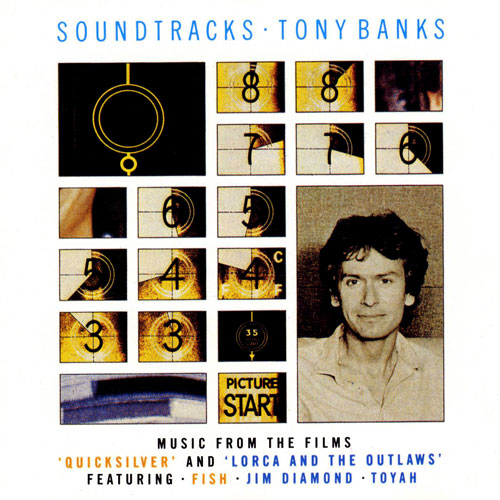
Well, it would appear that Banks found a way to solve both that problem and the lack of a release for his work on the Lorca And The Outlaws score with the release of Soundtracks, a single LP that features his music from Quicksilver on the first side, and his work from Lorca And The Outlaws on the second side.

How’s the music? Let’s start with the first side, the Quicksilver stuff.

Quicksilver
Shortcut To Somewhere (featuring Fish of Marillion)
Smilin’ Jack Casey
Quicksilver Suite: Rebirth
Quicksilver Suite: Gypsy
Quicksilver Suite: Final Charge
I’ve never seen Quicksilver (being neither a fan of Kevin Bacon nor bicycle messengers), so I can’t say how well this music fits into the film. I can image that that the fast-paced instrumental pieces probably worked well with montages of Kevin Bacon decked out in spandex, plowing through the streets of San Francisco like an asshole on a mission. And if you’re looking for a mix to fit your own cycling workout, they might be good for that as well. The slower instrumental pieces are little more uneven, and are certainly dated, but they have their own charm as well.

What does not have charm, however, is “Shorcut To Somewhere” the sole pop song that Banks’ contributed to the soundtrack. The vocals are by Marillion singer Fish, and while he does have one hell of a set of pipes, no singer, no matter how talented, could make the drivel he’s belting out sound interesting or catchy. The upbeat synths of the song really go for a “you can do it” feeling ala your favorite training montage from an 80s film, but they’re so oppressively upbeat that they’re just annoying. I imagine that this song may have been catchy and fun in 1986, but now it just sounds dated and boring. But like I said, the rest of the stuff is worth a listen if you enjoy instrumental synthesizer stuff.

Lorca and the Outlaws (also known as Starship)
You Call This Victory (featuring Jim Diamond)
Lion of Symmetry (featuring Toyah Wilcox)
Redwing Suite: Redwing
Redwing Suite: Lorca
Redwing Suite: Kid and Detective Droid
Redwing Suite: Lift Off
Redwing Suite: Death of Abby
As bad as “Shortcut To Somewhere” is, it’s actually not the worst track on Soundtracks. No, that dubious honor goes to “You Call This Victory,” an absolutely wretched number featuring the over-emotional whiny vocals of Jim Diamond. Musically, the song isn’t that bad, but Diamond’s vocals are just so god awful that they kill any charm or positive aspects the song may have had.

Thankfully, the rest of the Lorca and the Outlaws soundtrack fairs a bit better. The instrumental “Redwing Suite” actually holds up pretty well as a score, and is very reminiscent of the stuff that Tangerine Dream was doing at the time. It’s nothing great, but it’s certainly not bad. But what is great is the song “Lion of Symmetry,” which features this incomparable Toyah Wilcox. Toyah (who was featured in Urgh!) is one of my favorite signers of the new wave era, so to discover this track was a real treat. It’s seven minutes of pure Toyah weirdness, and is a must hear.

Hope & Anchor Front Row Festival

Tuesday, March 6th, 2012

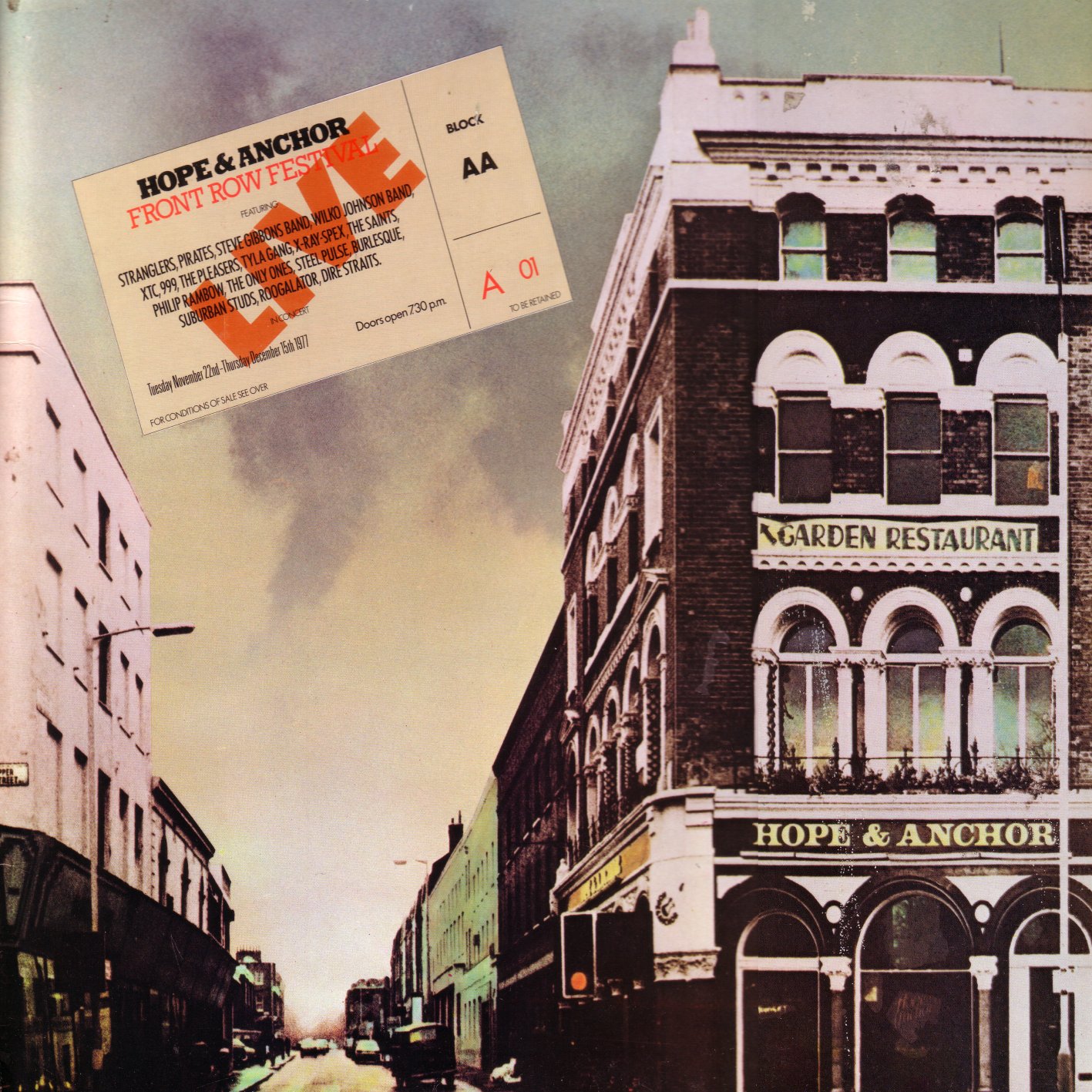
Hope & Anchor is a pub in the Islington borough of London. In 1977, they held a series of concerts dubbed The Front Row Festival. Performances from those concerts were then culled to create a 2LP concert album that was a record for the ages. It’s a crazy album with a wildly diverse set of artists, a line-up that shows a bygone era where an amazing assortment of diverse bands and genres co-existed in an open and free environment.

Not only are a wide arrange of punk and new wave artists featured on the album, but a good majority of the record is devoted to pub rock, an entire genre that most people today probably know next to nothing about.

Pub rock was a very short-lived genre that thrived in the London pub scene (duh) from about 1971 to 1975. It was basically roots rock music, stripped down old style rock and roll that had more in common with rockabilly and rhythm and blues than anything that was popular at the time. In fact, pub rock was a reactionary movement against popular music of the time, especially glam rock and prog rock. Pub rock acts were against bombast and overly complex songs. They wanted to take rock music back to its roots, so much so that many of them wouldn’t have been out of place in the 1950s opening for Bill Haley or Buddy Holly.

But it wouldn’t last long. While taking a nostalgia trip to a bygone era is fun for a while, the scene quickly moved on, appropriating the bare-bones and simplistic style of pub rock while forgoing it’s retro flavor, resulting in the birth of  punk.

However, for an all-too-brief moment, both scenes existed side-by-side, and we thankfully have this album to document the exciting and influential bands that were a part of it.

And Dire Straits.

Wilko Johnson Band
Dr. Feelgood
Twenty Yards Behind
Wilko Johnson has been in a few different bands. For most of the 70s he was in a pub rock act called Dr. Feelgood. Apparently when he left the group in the later half of the decade he took this cover of the 1960s blue song from which the band got their name with him.

The Wilko Johnson Band appears to have been a one-off, this is their only credited appearance from what I can tell. But everyone in the band (Norman Watt-Roy and Steve Monti, along with Johnson) were also in another band called Solid Senders, who released their sole album in in 1978. After that band ended, Johnson joined Ian Dury’s Blockheads.

Both “Dr. Feelgood” and “Twenty Yards Behind” are classic UK pub rock, no punk attitude to be found.  Still, you can hear how it probably served as an influence to the kids who would form punk bands, with its simple chord progressions and fast tempo, but you can also imagine that most probably hated it at the same time since it was pretty tame.

The Stranglers
Straighten Out
Hanging Around
I don’t think I need to say much about The Stranglers, they’re one of the biggest and best bands on this compilation. If you don’t own any Stranglers albums, then shame on you. Go buy some. I’ll wait here till you get back.

See? The Stranglers kick ass. Let’s move on.

Tyla Gang
Styrofoam
On The Street
The Tyla Gang were the brainchild of Sean Tyla, who was the guitarist for the awesomely named Ducks Deluxe, another popular British pub rock band of the mid-70s.  As The Tyla Gang, he seemed to continue the pub rock tradition of Ducks Deluxe, cranking out fast-paced, blues-influenced rock-n-roll. It’s not surprising that he went on to work with Joan Jett for a bit after the Tyla Gang called it quits.

These tracks a pretty solid, although the wannabe blues sound of “Styrofoam” is a bit corny.

The Pirates
Dont Munchen It
Gibson Martin Fender
The Pirates featured on this album are Mick Green, Johnny Spence and Frank Farley. They served as the backing band for the second incarnation of Johnny Kidd & The Pirates, who released their first single back in 1959. They were with Johnny Kidd until 1966, when he died in a car accident. This recording was apparently their “comeback” gig, and their first major appearance since Kidd’s death.

Strangely enough, The Pirates are one of the most “punk” sounding pub rock bands on this album, going for the raw style of R&B reminiscent of early Who and Sonics songs. “Gibson Martin Fender” has an oldies feel for sure, but all that separates “Don’t Munchen It” from a Sex Pistols track are competent musicianship of the band members and quality vocals.

Steve Gibbons Band
Speed Kills
Johnny Cool
Another 60s survivor, Steve Gibbons was a member of the horribly-named group The Uglys, and the even more horribly-named group Balls. His upbringing in the 1960s scene shows with these two songs, which are some of the most “roots rock” sounding cuts on the record.

The Pleasers
Billy
Rock & Roll Radio
These guys are interesting, at least from a musical standpoint, as they sound a bit like everything. They have the guitar solos and beats of 50/60s rock, the bluesy, garage rock feel of early-70s pub rock, and the non-stop energy and enthusiasm of punk/new wave music. I’m surprised they didn’t end up on Stiff Records. They ended up releasing quite a few 7″ singles, but they never put out a proper record. It’s too bad, this pair of songs sure sounds great.

XTC
I’m Bugged
Science Friction
I’m willing to bet that XTC were the only band on this line-up who would site Can and Neu! as inspirations. XTC are legends, I have nothing of value to add to any discussion about them. Both these songs are great, and if you haven’t already, listen to more XTC, they were incredible. Buy Oranges & Lemons, that album is a masterpiece.

Suburban Studs
I Hate School
Not all 1970s UK punk was political or topical, unless you consider the timeless subject of not wanting to go to school to be one of political importance. The Suburban Studs were one of the very first punk rock bands, with their first single coming out in 1977, but they fell through the cracks and have since been forgotten. That’s probably because they weren’t very good when compared to the Sex Pistols, The Clash and The Buzzcocks.

But hey, do you hate school? If so, then you can totally identify with this track.

Dire Straits
Eastbound Train
They may be the biggest band on this record (probably by about 100 million records or so), but when this performance was recorded in 1977, the band didn’t have an album to their name, let alone a single. Even though, this sounds like Dire Straits, laid-back and bluesy, with Knopfler’s trademark guitar and vocal styles noticeable from a mile away.

As far as I know, a studio recording of this song has never been released, and the only official releases of it have been on live albums. It’s a good track, but it still sticks out like a sore thumb compared to everything else here.

Burlesque
Bizz Fizz
Another pub rock group that died out with the birth of punk. I know very little about these guys. They released two albums (one studio and one live) but neither came out in the states and neither have been reprinted on CD. I can’t even find them on YouTube. Based on “Bizz Fizz” I can pick up a slight jazz edge to them, but they also have that punkish energy that so many great pub rock bands had. Anyone know if their albums are worth tracking down?

X-Ray-Spex
Let’s Submerge
I really need to get me some more X-Ray Spex. I think they the only first generation punk rock act to have a female lead singer (who had the fucking amazing stage name Poly Styrene), and I’m willing to bet they’re one of the only punk rock acts ever to rock a  sax player (for better or worse). This song kicks ass, although it’s no “Oh Bondage! Up Yours!”

999
Crazy
Quite Disappointing
999 songs can be broken up into two categories. The first is “Homicide” and the second is “everything that’s not Homicide.” That second category has some stand out tunes, like these two upbeat punk numbers, but nothing in it can compare to the singular song in the first category. Another great early UK punk group for those of you who may not know, their first three or four albums are well worth checking out.

The Saints
Demolition Girl
Aussie punk! I don’t know how these guys ended up in England to record a track for this album, but the record is sure better for it. This song kicks ass.

The Only Ones
Creatures of Doom
I’ll be honest, I knew nothing of The Only Ones before listening to this album, although when I started doing my research I found that I had heard their classic “Another Girl, Another Planet” before. They kind of remind me of the Buzzcocks, definite good company to have. They have a pretty big cult following, and after listening to more of the music, it’s easy to hear why.

Steel Pulse
Sound Check
Steel Pulse was a reggae band. They’re in Urgh! I still don’t like reggae, (sorry) so let’s move on.

Roogalator
Zero Hero
Roogalator was a funk band, at least according to their profile at Discogs, but “Zero Hero” is pretty damn punk. I love it. I also love saying “Roogalator” over and over again so much that my roommates must be wondering if I’m chanting to myself. 

Philip Rambow
Underground Romance
Philip Rambow is proof that life is weird.

In the early 70s he was in a band called The Winkies, who were pub rock in sound but glam in appearance. This appealed to Brian Eno, and he called on The Winkies to serve as his backing band for one of his tours. But Eno suffered a collapsed lung just a few shows in, and the entire tour had to be scraped.

But it wasn’t all bad news for the The Winkies. The bit of exposure did get them a major label deal, and in 1975 they put out their self-titled debut. However, the album was a bomb, so the group broke up. Rambow released a couple of solo LPs (one as The Phil Rambow Band and the other just as Philip Rambow), but they were bombs as well.

They got him noticed by someone though, because he got some songwriting work, most notably serving as a co-writer to Kristy MacColl’s classic “There’s a Guy Works Down the Chip Shop Swears he’s Elvis.” He also played guitar on Peter Murphy’s solo debut Should The World Fall Apart.

Pub rocker to glam rocker to pop songwriter to session guitarist for a goth icon. How’s that for a career trajectory?


Enjoy the record. If you want to learn more about pub rock, I recommended Jason Heller’s excellent piece at the A.V. Club. It covers the genres high (and low) points quite nicely.

 

Band’its At Ten O’Clock – Bands Featured At The 101 Club

Tuesday, January 31st, 2012


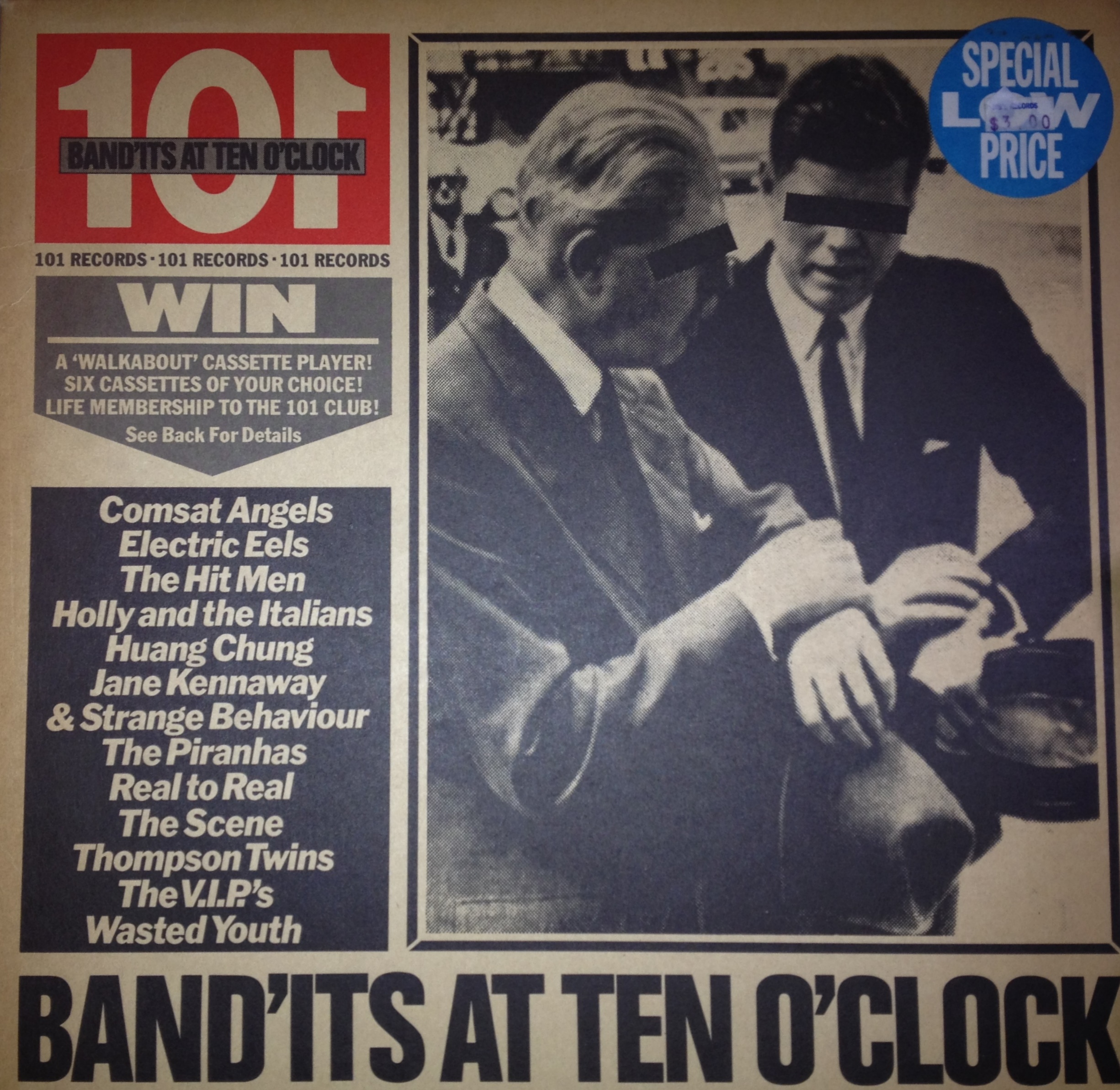
Band’its At Ten O’clock is another 101 release that came out the same year as Live Letters. Unlike that album, this record is a collection of studio cuts and not live records. But it’s equally, if not more so, impressive and well worth the listen today.

The Scene
All People Go Mad
You like mod music? These guys sure did. This album came out in 1980, but this song sounds like it was ripped straight out of the late-60s. Great stuff, very soulful and fun. I don’t know how these guys didn’t manage to get a deal with Stiff Records. As it was, they never put out a proper album, just a couple 7″ singles and one 12″ before vanishing forever. A shame.

The Hit Men
She’s All Mine
If  you told me that this was really an Elvis Costello b-side I would believe you. The singer even kind of sounds like him. Who were these guys? With a name as vague as “The Hit Men,” its kind of hard to track them down online.  From what I can tell they did seem to put out two albums. Anyone know if they’re any good? This song is great.

The V.I.P.’s
Causing Complications
This song is catchy as hell! Amazing harmonies and a great beat. Once again, I couldn’t find much about this group, but they did put out enough singles and have enough of a following to have gotten a compilation release in the late 90s. If their other songs were as great as this one then I’m definitely going to have to pick it up.

The Piranhas
Yap Yap Yap
First wave ska! I love early ska. It all should have stopped with Madness. Fucking Bosstones…anyways, these guys only put out one record, which has never seen the light of day on CD. Bummer too. This is another great track. Damn, can this album do any wrong?

Real To Real
White Man Reggae
Yes, yes it can. British white boys should not attempt reggae, even if one of them is Alan Wilder. That’s right, Alan Wilder from Depeche Mode was in a white reggae group.  I bet if you walked up to him with a Real To Real 7″ single (they released a few) he’d break it in two and offer you $20 never to tell anyone about it ever again. Yikes.

Holly And the Italians
Chapel Of Love
And we’re back on track with this number, a great cover of The Ronnettes classic. Holly And The Italians were an American group based in the UK (I’ll give you a second to wrap your head around that) and they released just one album, 1981’s The Right To Be Italian. It was re-released on CD and digitally in 2008, and judging by the cavalcade of positive reviews it has on Amazon, it apparently has a small but very devoted following.

Electric Eels
Thoroughly Modern
Slightly glam-influenced synthpop. I have no idea who these guys are. Anyone got an idea? They released a couple of 7″ singles before apparently selling their keyboards and vanishing into the night.

Jane Kennaway & Strange Behaviour
Catch Cool
Another unknown who released a few singles before vanishing. Catching a pattern here? Jane’s voice reminds me a little bit of Toyah Wilcox, but her sound is far more aggressive and downbeat.

Thompson Twins
Squares And Triangles
This sounds nothing like the Thompson Twins who brought us the 80s hits “Hold Me Now” and “Lies” and that’s probably because it literally is not that band. Because while most people know of the Thompson Twins as a trio featuring Tom Bailey, Alannah Currie and Joe Leeway, there were about a billion people in that group before it finally settled on that line-up. I have no idea which line-up is featured here, but I wish they would have recorded more music, I dig this stuff a hell of a lot more than their poppy stuff.

Wang Chung
Baby I’m Hu-Man
The Wang Chung tracks on Live Letters had one foot in New Wave, but they were also clearly embracing their pop tendanices as well. On “Baby I’m Hu-Man,” Wang Chung (still going by Huang Chung) are still way into a new wave sound reminscint of Joy Division and early Cure, at least until the sax solo kicks in at the end.

If these early Wang Chung recordings have taught me anything is that you can’t simultaneously be “edgy” and have a sax player in your band.

Comsat Angels
Independence Day
More sparse, minimal pop from the Joy Division school, and according to some they were even better. They have a surprisingly in-depth Wikipedia entry, and out-of-print CD re-issues of their albums go for a mint on Amazon. I’m going to try and track down some of their stuff on vinyl, because this song is great, probably my favorite track on this record.

Wasted Youth
Jealousy
No, not the LA hardcore punk rock band (that would be weird). This Wasted Youth was from east London and kind of sound like a mix between good Lou Reed and the Young Marble Giants. This is a sad song, but I’ll be damned it if doesn’t sound adorable as all get out. I want to hug it.