Archive for the ‘Complete Albums’ Category

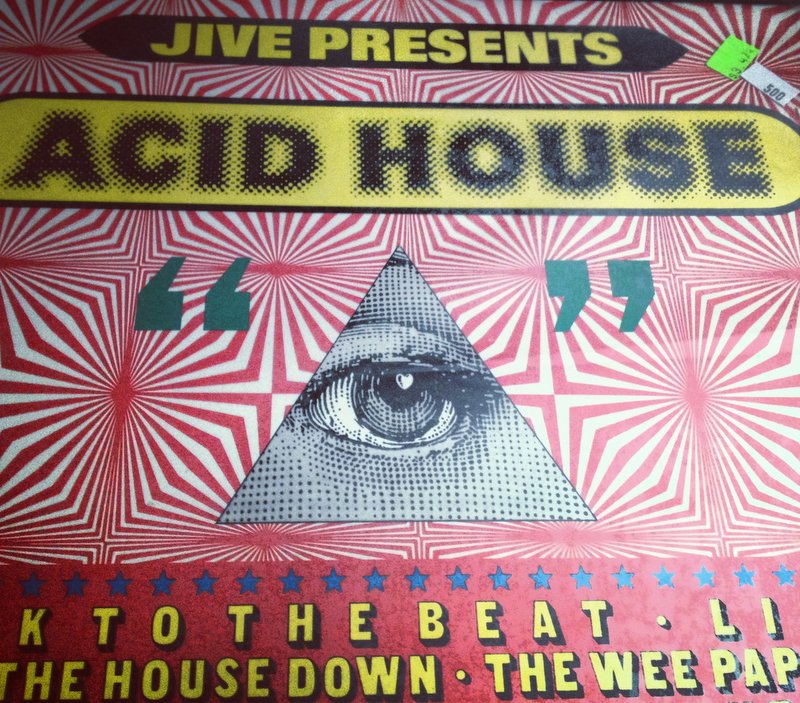
Jive Presents Acid House

Friday, August 3rd, 2012

Are you ready for some acid house?

Acid house, for you young kids out there who may not know, was one of the most influential and important dance sub-genres of the late-80/early-90s. It was an offshoot of Chicago house that employed the unique properties of the Roland TB-303 synthesizer-sequencer to create a sound that was more electronic, bizarre and trippy than anything that had been heard before. If you’re interested in reading more about the genre’s history and its sound, I suggest checking out the wiki, although it barely touches on the importance and lasting impact of the genre.

I think acid house has been kind of forgotten by the younger generation of electronic music fans, which is a shame as it was a key point in the history of electronic music. Before acid house, most dance music still had one foot in disco, relying way too much on four-on-the-floor beats and kick drums. By the time acid house made its way to England in the early 90s, it had stripped all of those aspects away, becoming one of the first purely electronic forms of dance music. Yes, I know other electronic dance music existed well before acid house, but it was one of the first to really catch on with the club crowd in a big way. Hell, as that wiki mentions it’s probably solely responsible for the birth of the UK rave scene (well, that and ecstasy).

That’s the scene that gave birth to Underworld, Fatboy Slim, The Chemical Brothers, The Orb, Prodigy and countless others acts that would go on to dominate electronic music (and to some extent pop music) in the later half of the 90s. Do you like electronic music? Then you should at least respect acid house, because without it your favorite electronic artists of today probably wouldn’t exist.

Which brings us to this album, one of the earliest compilations of the genre that I can think of. All the tracks on this record exemplify what made acid house acid house; simple beats, remixed and sampled vocals; and more 303 “squelch” sounds than you can shake an off-brand drum machine at. All awesome stuff, so let’s get into it.

Lisa M
Rock to The Beat (Short Circuit Mix)
A great seven and a half minute jam that combines the excellent acid sounds of the genre with some amazing vocals by Lisa M, whose full name is Lisa Moorish. She released one album, I’ve Gotta have It All, in 1996 on Go! Beat, but I think that was her only release as a solo artist. Since then the London-based singer has appeared as a backup singer on a few different releases, including singles for Ash, Oasis and Babyshambles. Didn’t see that one coming. This is one of the best songs on the album.

The Wee Papa Girls
Blow The House Down (Hard Core Mix)
The hideously-named Wee Papa Girls were a UK-based pair of rappers who released two albums on Jive in the late 80s and early 90s before calling it quits. I can’t find much in the way in activity for either of the girls after they split up. To be honest, their vocals are the least interesting thing on this excellent track, one again it’s the radical sequencer work that steals the show. Love this tune, it’s a sonic freakout.

Children Of The Night Featuring Rankin’ Roger
We Play Ska (Trojan Horse Mix)
While “We Play Ska” is a really odd name for an acid house tune, it’s a pretty accurate one. If there ever was a ska/house mash-up, it would be this track, thanks to is offbeat combination of 303 acid grooves with reggae vocals, trumpets and what sounds like a sample from a vintage ska track. We’ve been over how I feel about ska, but I do love anything with a hard 303 sequence, so I dig this track.

As for the people behind the music, Children Of the Night were Neil Rushton and Wayne Archbold, two DJ/producers who did more stuff behind the scenes as managers and producers than as artists themselves.  Rankin’ Roger is the MC on the track, and he released two CDs, one in 1988 and another in 2001. So I’m really looking forward to his 2014 release.

Mr. Lee and The Chi Town Posse
Pump It Up (Pump the Acid Remix)
Mr. Lee is a Chicago-born rapper who found some success in London in the early 90s thanks to his dance/rap hybrid style. Other dance hits by Mr. Lee include “Pump Up London,” “Pump Up Chicago” and “Pump That Body.” Apparently, the dude was pumped and wanted you to be as well. I’m not a huge fan of his rapping, but I love the sequencing on this tune.

And before you ask, I have no idea who The Chi Town Posse is.

Big Fun
Living For Your Love (Blow the Amp Mix)
Big Fun were a boy band, but apparently someone in their production group decided they should have an acid house remix. I’ve never heard the original version of this track, but I bet it’s pretty different than this remix, which is over seven minutes long and dissolves into nothing more than a sequencer melody and a drum beat near the end. Not a horrible track, but definitely the weakest song on this album.

Rhythm Is Rhythm
Beyond The Dance
Rhythm Is Rhythm is Derrick May.

Derrick May, in case you aren’t aware, was one of the originators of Detroit Techno. Meaning he’s one of the originators of techno as a genre of music. So yeah, he’s a big deal. Needless to say, this song is fucking fantastic and you should listen to it now.
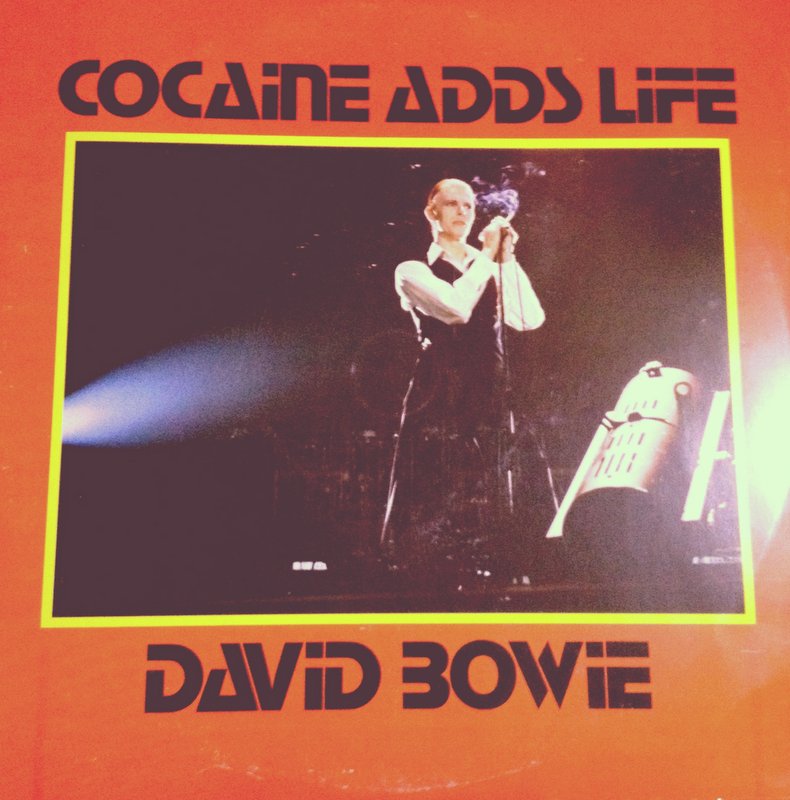
 

David Bowie’s Cocaine Adds Life (Cocaine Bear Approves)

Monday, July 30th, 2012

Another week, another amazing 2LP bootleg. This time it’s from David Bowie.

Cocaine Adds Life

The wonderfully titled Cocaine Adds Life mostly features tracks from mid-70s Thin White Duke Bowie (hence the title), but it also throws in some random 80s stuff on the last side. While Discogs sites the album as coming out in 2008, I think that’s a repressing, and that the version I have actually came out in 1984 (as this site claims). If the back cover of my version is to believed, the bootleg label responsible for this release only printed 200 of these bad boys (mine is number 66), making it a pretty rare find.

Regardless of where and when it came from, and how rare it is, it’s a great bootleg full of some pretty interesting stuff. The first three sides are a complete concert, recorded live at the Rotterdam Sports Palais Ahoy on May 13th, 1976. The recording is from a soundboard, so it’s crystal clear, if a little flat. Although Bowie complains on the recording that he’s suffering from a bit of bronchitis, he sounds great as the band plays through some of his best material of the time, including “Station to Station,” “TVC15” and “Diamond Dogs.”

The final side of the bootleg is a grab bag of bonus cuts culled from a variety of sources. First up is a recording of Bowie performing “Sweet Jane” with Lou Reed on July 8th, 1972 in London. It’s a real rarity, which makes up for the fact that the recording kind of sounds like garbage. After that there’s another super-rare one, Bowie doing a cover of The Beatles’ “This Boy,” performed on July 18th, 1972 in Aylesbury. It also sounds pretty bad though.

That’s followed by “Sister Midnight,” taken from a performance in Toronto on February 26th, 1976, and a version of “Sound and Vision,” that’s from a show in London on July 1st, 1978. These sound bad, but better than the previous tracks.

Finally there are a pair of tracks taken from two shows in Brussels on April 18th and 19th, 1983. The first is a rare live version of “Joe The Lion” and the second is a cover of The Who’s “I Can’t Explain.” These also sound okay, but not great.

Truth be told, the final side is pretty much a wash when it comes to sound quality, although those versions of “Sweet Jane” and “This Boy” should probably be of interest to Bowie completists out there. Like I said before, the real treat here is the complete concert from 1976. It sounds great and is well worth a listen. I hope you like it.

Complete Track Listing

Rotterdam Concert – 5/13/176

  1. Station to Station
  2. Suffragette City
  3. Fame
  4. Word On A Wing
  5. Stay
  6. Waiting For The Man
  7. Band Introduction
  8. Changes
  9. TVC15
  10. Diamond Dogs
  11. Rebel Rebel
  12. Jean Genie

Additional Tracks

  1.  Sweet Jane – 7/8/72
  2. This Boy –  7/18/72
  3. Sister Midnight – 2/26/76
  4. Sound And Vision – 7/1/78
  5. Joe The Lion – 5/18/83
  6. I Can’t Explain – 5/19/83

Crazy for Dance Craze

Friday, July 27th, 2012

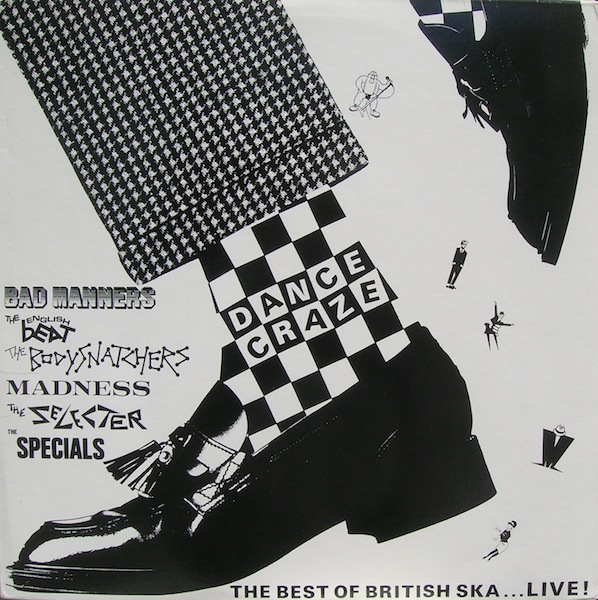
Dance Craze (Complete Album Download)

I love ska!

Okay, that was a lie. I just lied to you, and I apologize.

The truth is, I’ve never loved ska, no matter how much I try. I blame The Mighty Mighty Bosstones. Seriously, it’s all their fault.

Like most stupid Americans, I never heard of ska until the mid-90s, when barely-ska acts like the Bosstones, Reel Big Fish and No Doubt broke the sound through to the mainstream. And, let’s be honest, those bands and others like them were at their best slightly better than horrible. The Mighty Mighty Bosstones remain one of my most-hated bands of all time, right next to Creed and The Nixons (I have my reasons, okay?). I’ve done my best to forget about Reel Big Fish completely, and I only grew to tolerate No Doubt when the abandoned their ska roots for a more electronic sound.

So it’s all their fault, they’re why I hate ska. But I’ve been trying my best to educate myself, broaden my horizons. In doing so I’ve discovered that I actually like early ska! I know, I was shocked too, but the  2 tone (second wave ska) stuff out of England, I’m really beginning to dig that stuff. And this album is a big reason for that.

Dance Craze is like a Ska Urgh, a great compilation of early 80s tracks by artists both big (Bad Manners, The Beat, Madness) and small (The Bodysnatchers, The Selecter). It’s actually the soundtrack to a movie that came out in 1981, although it’s never been released on any format since, aside from VHS and that was only in England. (Although you can watch it on YouTube). The movie has 27 great performances, but the LP soundtrack cut that down to a slim 16 songs, which is a drag, especially considering amazing tracks like Madness’ “The Prince” and “Too Much Too Young” by The Specials were among those cut.

But that doesn’t mean the album was left with nothing but the dregs. The radical “Three Minute Hero” by The Selector is here, as well as an excellent version of The (English) Beat’s “Mirror In The Bathroom.” Thankfully we’re also gifted with a rocking jam of “One Step Beyond” by Madness AKA the greatest ska song of all time ever in the history of anything ever (don’t you dare try to correct me.)

Download and enjoy, and tell me about other 2-tone artists that you think I might dig.

Just don’t try to sell me on the Bosstones okay? Many have tried, and I have destroyed all of them.

And in case you’re wondering, here’s the complete tracklisting:

Side One

  1. “Concrete Jungle” – The Specials
  2. “Mirror In The Bathroom” – The Beat
  3. “Lip Up Fatty” – Bad Manners
  4. “Razor Blade Alley” – Madness
  5. “Three Minute Hero” – The Selecter
  6. “Easy Life” – The Bodysnatchers
  7. “Big Shot” – The Beat
  8. “One Step Beyond” – Madness

Side Two

  1. “Ranking Full Stop” – The Beat
  2. “Man At C&A” – The Specials
  3. “Missing Words” – The Selecter
  4. “Inner London Violence” – Bad Manners
  5. “Night Boat To Cairo” – Madness
  6. “Too Much Pressure” – The Selecter
  7. “Nite Klub” – The Specials

Also, a note to longtime readers of The Lost Turntable. I posted this soundtrack eons ago, but you should still download it again (if you like it). This rip is much better.

And one more thing. I was serious when I said I don’t care if you like the Mighty Mighty Bosstones, Reel Big Fish or any other of those shit bands. If you leave me a comment about how my taste sucks I’ll just delete it, so don’t bother.

The Incredible Sounds Of Synclavier II Demo Record

Tuesday, July 24th, 2012

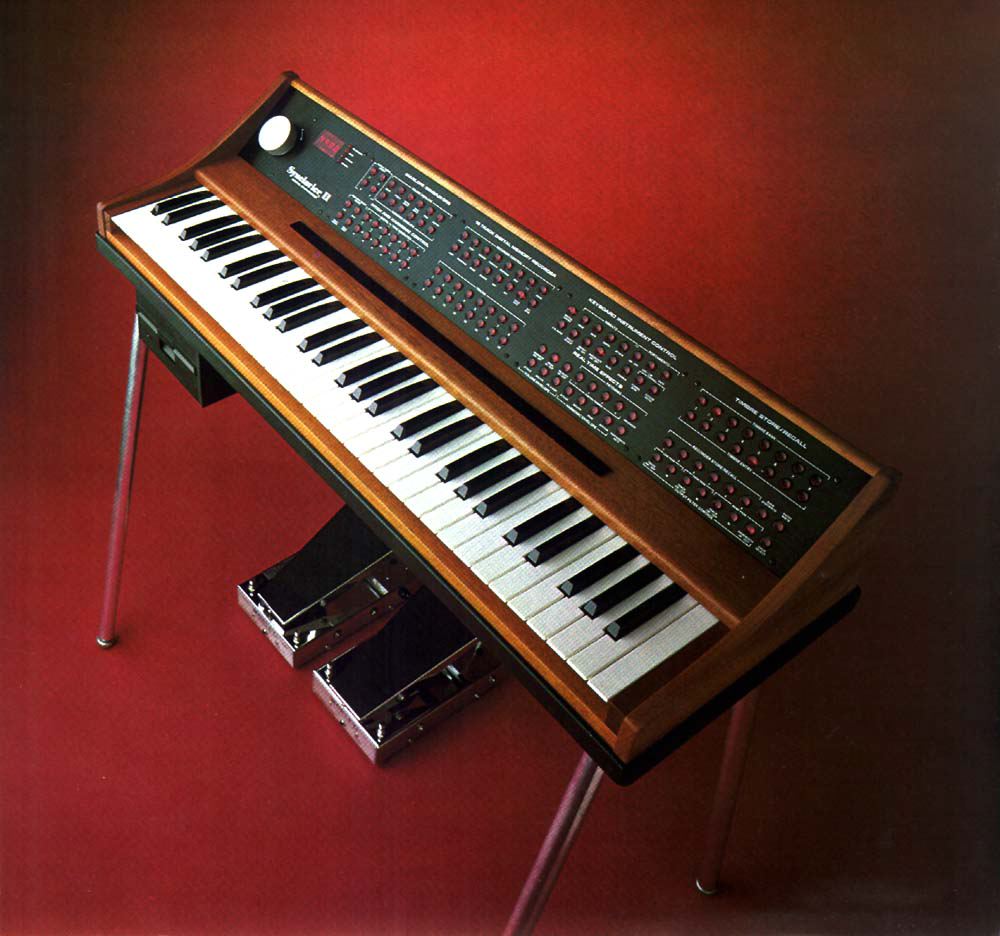
You see that? That’s the Synclavier II, one of the first digital synthesizers. Before synthesizers like that, most of them were analog.

What’s the difference?

Well, the sound in an analog synthesizer is created and modulated by the physical movement of its components, while a digital synthesizer creates sound using computer hardware. While some (including me) think that analog synths sound cooler and are more organic, they are a royal pain in the ass to work with. They’re very hard to maintain, and they go out of tune pretty easily. In fact, in some cases the heat that is generated by simply playing them over an extended period of time is enough make them go out of tune. Just imagine how much of a nightmare they must have been for touring musicians at the time. I don’t know how Tangerine Dream did it. Of course, I don’t know how Tangerine Dream does a lot of things.

That’s a hell of a barrier of entry for a lot of musicians. So in the late 70s, companies began to experiment with digital synthesizers and in 1979, the Fairlight DMI became the first digital synth to see widespread use within the recording community. One year later New England Digital’s Synclavier II followed suit.

While the Fairlight probably had a larger foothold in the popular music landscape thanks to its use by artists like Peter Gabriel, New Order, Devo and Herbie Hancock, the Synclavier also played a pretty big part in creating what would become the sound of the 80s. Frank Zappa’s 1986 album Jazz From Hell was composed almost entirely on a Synclavier, and artists as diverse as Paul Simon, Mr. Mister and Trevor Horn all made use of the Synclavier throughout the decade.

And I’m willing to bet that at least a few of those artists, and many others, listened to this record before doing so.

The Incredible Sounds of Synclavier II
Side 1

Side 2
Patrick Gleeson – Summer 

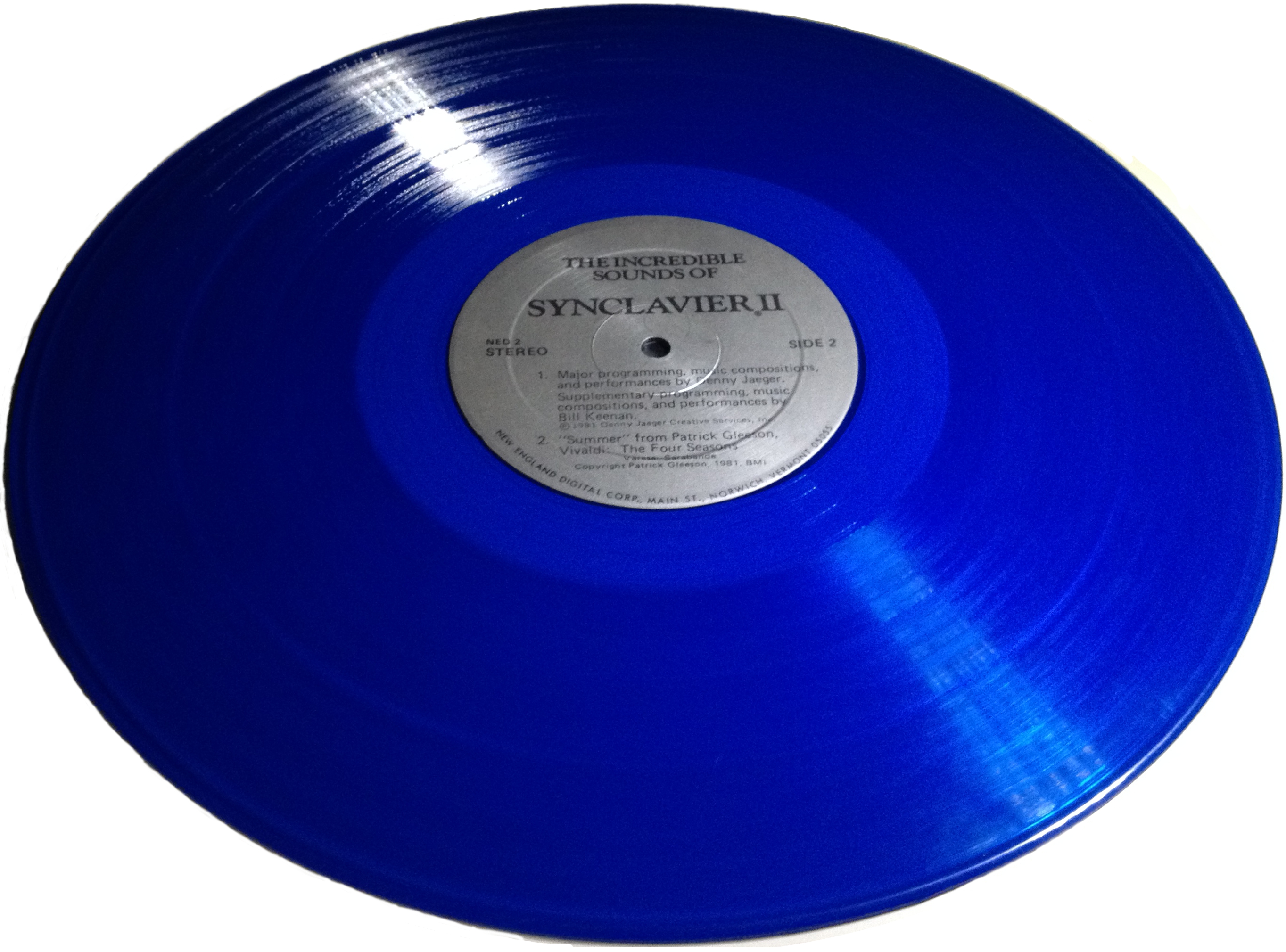
Released in 1981, this blue promotional record is basically one long demo reel that highlights the many strengths of the Synclavier. Throughout both sides of the record you’ll hear synthesized bells, gongs, pianos, drums, bass and various spacey synth sounds that would eventually make their way to countless albums over the next 10 years. It’s not really that musical, but for anyone interested in the behind-the-scenes aspects of the recording industry, digital equipment, or just goofy weird records, then this is probably worth a listen. At the end of the second side the full musical capabilities are showcased via Patrick Gleeson’s interpretation of Vivaldi’s “Summer,” which I’ve included as a separate track.

I know Michael Jackson and Quincy Jones probably listened to this record when it came out. Doubt me? Just listen to side one and skip ahead to about six minute and 44 seconds in. If you don’t want to, fine, you can just beat it.

Echoes of Romance – An Ultravox(!) Bootleg

Monday, July 23rd, 2012

Echoes Of Romance
Part 1
Part 2
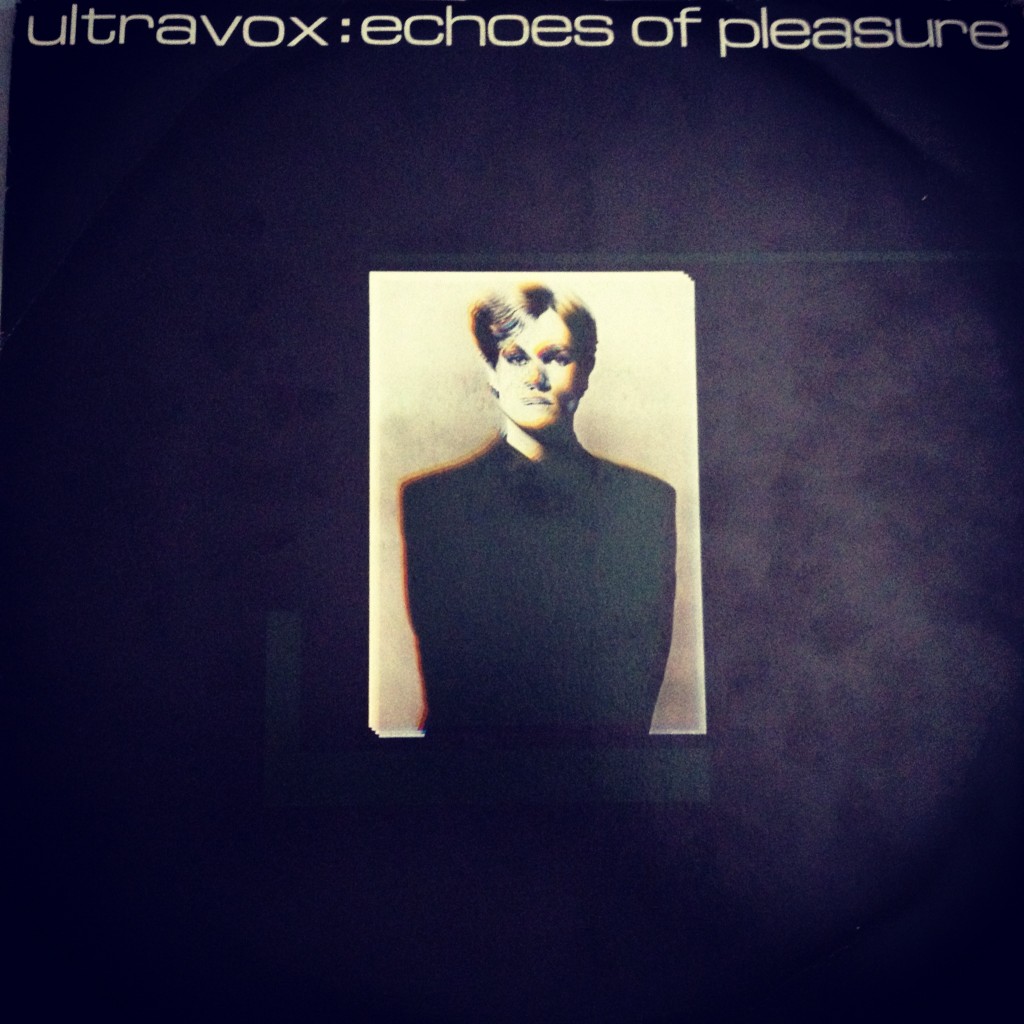
I’ve been accumulating quite a few bootlegs lately so I think I’m going to have to go bootleg crazy for the next few weeks to clear them out of my queue. Don’t worry, I’m sure most of you will like what I have to offer (even those of you who whine about “decent music).” So let’s just jump right in with one of my favorite recent bootleg finds, Echoes Of Romance by Ultravox.

This is an awesome album because it’s basically two great bootlegs in one, 30 songs pulled from two completely different shows. The first 15 tracks are taken from a December 26th, 1978 concert at the Marquee in England. This is the original(ish) line-up that includes Robin Simon on guitars and, more importantly, John Foxx on vocals. It’s classic early Ultravox, a bizarre combination of punk rock, synthpop and glam rock that still sounds unique and fresh some 32 years later. The quality is also excellent, with very clear vocals and almost no audience chatter. Classics like “Young Savage” and “Hiroshima Mon Amour” are performed, as well as awesome unheralded tunes like “Walk Away” and the supremely odd “Someone Else’s Clothes.” It’s a great show and worth a listen to even the most casual fans of the group’s early work.

The second half of this three-LP bootleg is comprised of songs from a December 13th, 1980 concert at the Odeon Hammersmith. This is of the “classic” line-up that features Midge Ure on vocals. The quality of this recording is a little more sketchy, with the vocals coming off a little more muddled at times and audience noises sometimes making their way into the mix. But even with its lesser fidelity it’s still well worth a listen for fans of the group as the band plays favorites like “New Europeans,” “All Stood Still,” and “Vienna.” Even Foxx-era tracks like “Hiroshima Mon Amour” and “Quiet Man” make an appearance. Great stuff all around.

I’m curious, which Ultravox do you all like the most? The punkier, harsher John Foxx stuff, or the classier, new romantic-influenced Midge Ure albums?

I love them both, although I still don’t have all of the Ure-era stuff. I think my favorite Ultravox song overall is the Ure-fronted “Hymm,” but I also have a soft spot for the crazier Foxx tracks like “Young Savage” and “Saturday Night In the City of the Dead.” Ask me which iteration of the band I prefer one day and you might get a different answer the next. I can’t decide.

Just don’t bring up the Billy Currie-led era. That never happened.

NEVER HAPPENED.

Genuine Latin Love Machine

Friday, June 29th, 2012

I haven’t posted an extremely stupid lounge/Moog album in a long time. Let’s fix that.

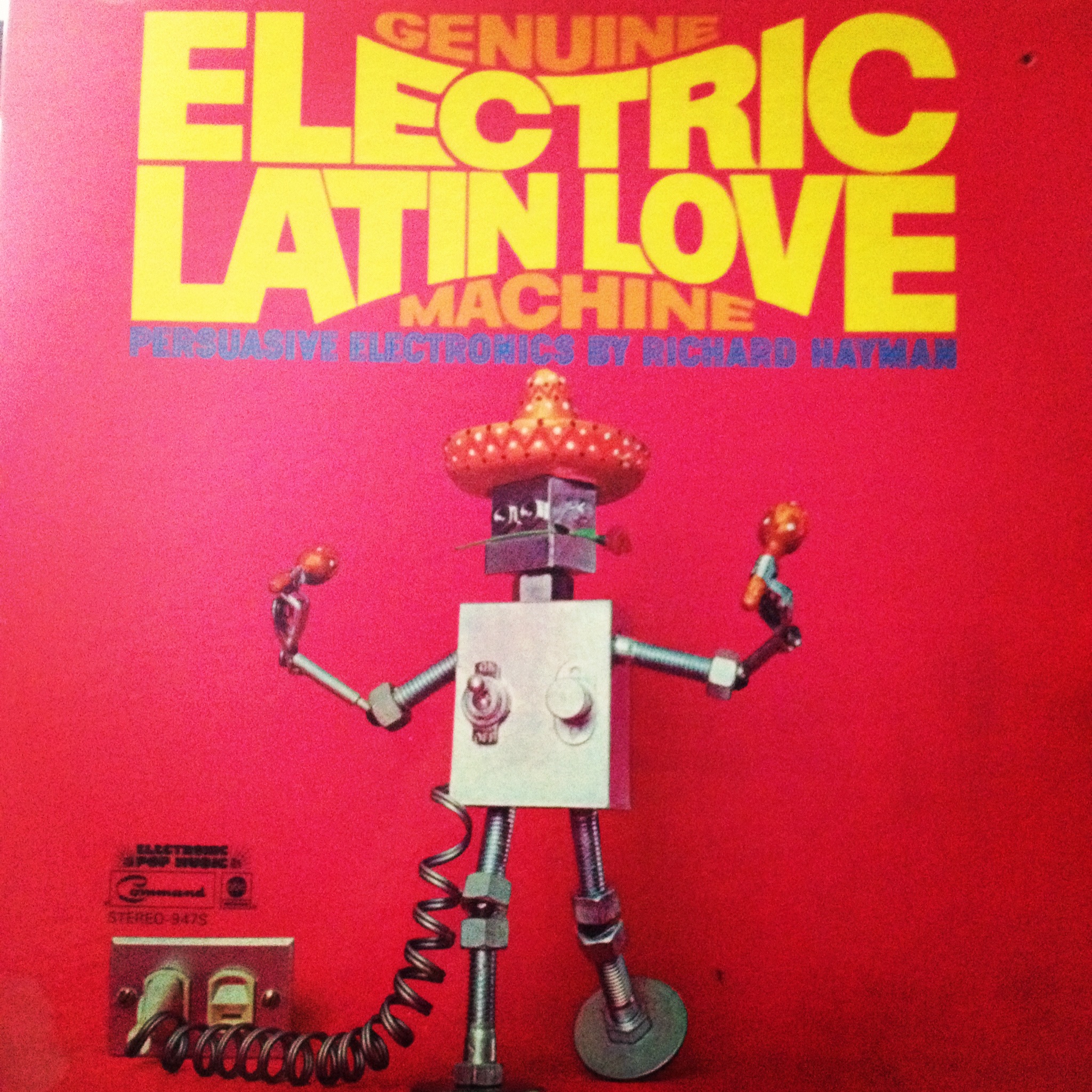
Richard Hayman – Genuine Electric Latin Love Machine
Richard Hayman is one of those people whose career is so long that it’s nearly impossible to summarize. As just about any page about him will tell you, he’s most known for being the arranger for the Boston Pop Orchestra, a position he held for over 30 years. According to his AllMusic bio, Hayman also served as a music director for a very eclectic assortment of celebrities, including Johnny Carson, Pat Boone and Olivia Newton-John. According to this photo of him, he enjoys large bowties.

He also apparently liked to make really silly early electronic music. In 1969 he released this goofy little record, no doubt an attempt to cash-in on the synthesizer craze that Wendy Carlos started with her legendary Switched-On Bach album a year earlier.

Did I mention this album is goofy and silly? Because holy shit it is.  As the title suggests, most of the songs are electronic re-imaginings of “Latin” songs like “The Peanut Vendor” and “La Comparsa.” But it also has a few mainstream pop songs thrown in for good measure, including “The Look Of Love?”  and “The Girl From Ipanema.” Don’t expect any covers of rock tunes though, I don’t think Hayman was hip to that sound.

It’s not as memorable as other early electronic albums, but its still worth a listen. And I think everyone in the world should take note of that amazing cover.

Every Band Has A Shonen Knife Who Loves Them

Thursday, June 14th, 2012

If you put a gun to my head and made me pick a favorite, all-female Japanese rock band, I’d probably have to choose Cibo Mato. Also, I’d probably tell you that you’re really violent about demanding declarative decisions in regards to my personal preferences of which international rock bands I enjoy the most.

That being said, I really like and respect Shonen Knife, even if I don’t know that much about the group. I recall them kind of being a minor thing in the states during the mid-90s. Kurt Cobain said he liked them, an endorsement of so much clout  for the time that pretty much guaranteed any act who got it  at least an early afternoon slot at Lollapalooza.

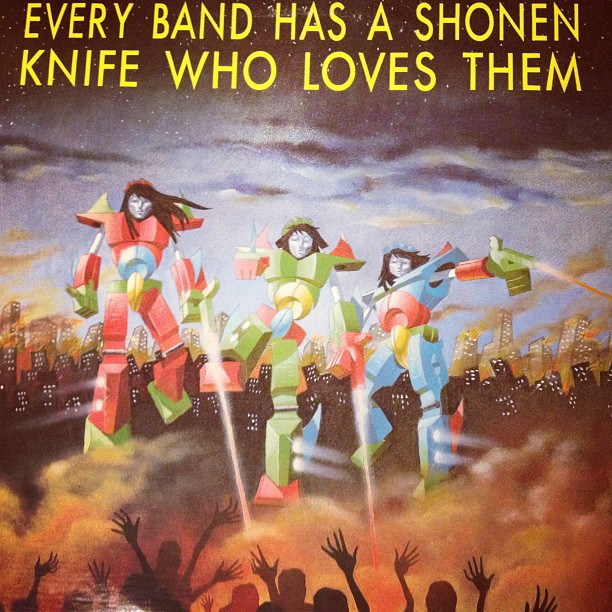
But Shonen Knife had developed a pretty rabid following in the states even before Kurt was talking about them in the press. By 1989 the group was popular enough for inide label Giant Records to compile Every Band Has A Shonen Knife Who Loves Them, a collection featuring American bands covering their favorite songs by the Japanese rockers.

Even as someone who doesn’t know a lot about Shonen Knife, I think this album pretty much kicks all kinds of ass. Just look at some of the acts who grace this record: Sonic Youth, Reverb Motherfuckers, The Mr. T Experience, Babes In Toyland, L7, Red Kross! It’s like a who’s-who of noise, indie and riot-grrl.

At times though the album is less of a “who’s who” and more of a “who’s that?” Sadly, many bands on this compilation went nowhere, some aren’t even credited on Discogs for any release aside from this record. And there are four bands on the album (Project Jenny & Teen Steem, Ella Ohne Die Schwarzen, Dem Choclodytes and The Maynards) whose only appearance on any release ever is on the 2LP edition of the album, their songs aren’t on the single LP version or even the CD edition of the record. How’s that for your obscure randomness?

Even more obscure than those songs though is the cover of “Cycling is Fun” by Pandoras. It’s on the tracklisting for the 2LP edition but it’s actually nowhere to be found on the record itself. It only exists as a concept! Now that’s some underground shit.

I’m only offering this is as a complete album download, because I really don’t want to set up 32 separate download links. Nor do I want to comment on each song/band individually, as I hardly know any of the bands on this record and I really don’t feel like researching 20+ bands. Sorry! If you have any interesting tidbits to share about some of the more obscure acts on this album, please feel free to share them in the comments though.

In case you’re wondering, here is the complete tracklisting:

Record One
1. Kappa Ex – Redd Kross
2. Summertime Boogie – The Freaks
3. Insect Collector – The Three O’Clock*
4. Public Baths – Frightwig
5. Dali’s Sunflower – Government Issue
6. Baggs – L7
7. Froot Loop Dreams – White Flag
8. Twist Barbie – The Pussywillows*
9. Making Plans For Bison – Big Dipper
10. Ice Cream City – Christmas
11. Lazy Bones – Pat Ruthensmear (AKA Pat Smear)
12. Elmer Elevator – Krave
13. Devil House – Chemical People
14. Burning Farm – Sonic Youth

Record Two
1. Antonio Baka Guy – Lunachicks
2. Flying Jelly Attack – The Mr. T Experience*
3. Miracle Woman – Project Jenny & Teen Steem*
4. Parrot Polynesia – Ultra Violet Eye*
5. Angel Has Come – Angels Of Epistemology*
6. Parallel Woman – Masters Of The Obvious*
7. Blue Oyster Cult – Ella Without The Blacks*
8. Tortise Brand Pot Scrubbing Cleaner’s Theme-Bye Bye – Disco Dave Landry
9. Elephant Pao Pao – Reverb Motherfuckers
10. Redd Kross – Death Of Samantha
11. Watching Girl – Babes In Toyland*
12. Riding On The Rocket – Das Damen
13. I Like Choco Bars – Dem Choclodytes*
14. Animal Song – The Maynards*
15. Ah Singapore – Wendy Horowitz
16. One Day At The Factory Preface – Phil Blumel
17. One Day At The Factory – Pippi Eats Cherries*
18. Cannibal Papaya – Smokin’ Gas Truck*

* 2LP Edition Exclusive Tracks

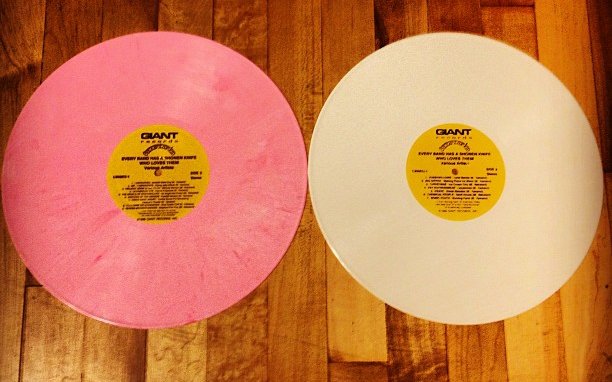
Oh, and the records are pink and white.


Have a good weekend, and if you live near Pittsburgh, don’t forget to check out Vinylpalooza! Click here for details.

Exotic Birds – Cleveland Synthpop (featuring some dude named Trent Reznor)

Wednesday, June 6th, 2012

Exotic Birds
Dancing On The Airwaves
Have You Heard The News
The Meaning Of Love
This Must Be Heaven
Nothing Lasts Forever
Fighting Fire With Fire 

So who the hell are the Exotic Birds and why the hell should you care about them?

I’ll just cut to the chase, lest you skip this post completely from lack of interest. The Exotic Birds were one of the many bands that Trent Reznor was a member of before he decided to strike out on his own with Nine Inch Nails. And when you hear about the Exotic Birds today on blogs and on YouTube, it’s usually because of that fact. While that’s an interesting bit of trivia, I think that does a disservice to the rest of the band. Trent Reznor was barely in Exotic Birds after all, he only played keyboards on one EP (L’oiseau – the album I’m featuring tonight) and he wrote none of the songs.

The Exotic Birds was barely more than a for-hire gig for Reznor, the real man behind the group was Andy Kubiszewski. On L’oiseau he not only plays keyboards and sings, but he is credited as a guitarist, programmer, percussionist and even xylophone player in the linear notes. He’s the sole writer on four of the album’s tracks, with drummer Tom Freer getting a sole writing credit on one tune and a co-writing credit with Andrew on another. While the line-up to Exotic Birds changed a lot during its short time, Andrew remained in the group until he broke it up for good sometime in the early 90s.

But that was only the beginning of Andrew’s musical career. After he was done with the Exotic Birds he briefly joined The The as a drummer, before rejoining with Trent Reznor in 1994. This time he was the backing member in Reznor’s musical endeavor, playing drums with Nine Inch Nails on their album The Downward Spiral. Maybe working with Reznor’s industrial group gave Andy a taste for the harder-edged music, because just a couple years later he was with Stabbing Westward, the NIN-derivative act who gave us the uber-downer alt-rock hits “What Do I Have To Do” and “Shame” and “Save Yourself.” After Stabbing Westward decided to mope their separate ways in 2002, Andy went on to work with a few other bands before turning to production/songwriting work in 2005, oddly contributing music to t.A.T.u’s sophomore album Dangerous And Moving (which, by the way, isn’t that bad!) among other things. Today, Kubiszewski mostly does television work, composing music for Discovery shows like The Colony, Axmen and Monster Garage.

I said before that I’ve always thought that the lesser-known, more workmanlike musicians have more interesting careers and trajectories than the superstars and one-hit wonders, and I really think the Andrew Kubiszewski’s path of synthpop frontman to British alt-rock drummer to industrial drummer to eurodance songwriter to TV composer really proves that point.

All that and I never even really mentioned how the Exotic Birds sounded! Well, they weren’t bad. They definitely sound like a band that really doesn’t know what it’s doing, going after trends in music instead of trying to forge its own way. Some tracks are incredibly radio friendly pop numbers, while others have a slightly harder edge that might have played well on college radio at the time, kind of  Eurthymics meets The Cure meets InSoc (although not as good as any of those bands). It’s dated as hell, that’s for sure, but if I was Andy Kubiszewski I would be less embarrassed about “Nothing Last Forever” (which has a really great instrumental breakdown) than this.

Okay, that was kind of mean. Stabbing Westward had some good tunes too. “Shame” holds up alright, even if it takes miserablism and self-loathing to levels that NIN could only dream of. I mean, “I only see myself reflected in your eyes”? Pathetic perfection.

This is still not a blog post

Thursday, May 17th, 2012

Public Image Ltd. – Commercial Zone (complete album download)

In 1983, Keith Levene and Pete Jones left Public Image Ltd. Considering the events that followed, it can be assumed that the split was not a clean one.

When Keith left the band, he didn’t leave empty handed. He took with him the master tapes to their yet-unreleased follow-up to The Flowers of Romance. As if that act of sabotage wasn’t enough, he then mixed and mastered the recordings on his own and put the album out under the title Commercial Zone. He did this without permission from anyone in the band or their label.

Think about that for a second. Think about how crazy that is. Imagine if that happened today. Dinosaur Jr. are recording a new album at the moment. Imagine if, after the sessions were mostly done, Lou Barlow just said “fuck it, I’m sick of J and his bullshit (again)” and, without telling anyone, he stole the master tapes to the album and put them on the Internet. But not just as a “fuck you,” but as an illegal bootleg release that you would have to actually buy. It just wouldn’t happen! He’d be able to get five copies out the door before the label would bust in and shut his ass down.

But I guess things were different in 1984, because Levene was able to make two complete pressings of this album and even sell it in American record stores for over a year before the label was able to successfully shut him down. As such, fans were able to get two entirely different versions of the same album in 1983/84, the Levene-mixed Commercial Zone, as well as the final version, This Is What You Want…This Is What You Get. Listening to them both back-to-back is a lesson in album production, as most of the songs on Commercial Zone found their way onto This Is What You Want… albiet in radically re-worked forms.

I was originally going to do a track-by-track rundown of the differences between the Commercial Zone and This Is What You Want… versions of the songs, but that’s really pointless because all the tracks were changed in the exact same way. While the Commercial Zone versions of the songs are incredibly stark and minimal, with Lydon’s caustic vocals the center of attention, the This Is What You Want versions are polished with an 80s shine. Synthesizers are amplified. Drum beats are made danceable. Horn sections are brought in. And the abrasive nature of Lydon’s voice is died down ever so slightly so the countless reverb and echo effects added to it wouldn’t drive the listener mad.

So which version is better?

While most die-hard PiL fans enjoy Commercial Zone more, I actually find This Is What You Want… to be a better record. Fans would say that Commercial Zone is better because it retains the non-commercial sound and feeling of the group’s previous records, and that’s precisely why I don’t like it as much.

I think that after the band recorded something as brutally antipop as The Flowers of Romance, they had no need to continue in that direction. There was nowhere else to go. To me, Commercial Zone sounds the group is still trying to hang on to that caustic, abrasive sound while still attempting to record something that has some sort of commercial aspirations. This Is What You Want… on the other hand, makes no attempt to hide its pop sensibilities and is a more honest, more engaging record because of it.

Still, Commercial Zone isn’t a bad record. And if you’re at all interested in studying how songs can evolve and change during the recording process, both it and This Is What You Want… are essential listening. Like a lot of stuff I’ve been posting recently, I originally posted Commercial Zone back in 2006/2007 that sounded like dogshit. Here’s a new rip that sounds a hell of a lot better.

Bonus Songs!

Public Image Ltd.
This Is Not A Love Song (12″ Remix)
(This Is Not A) Love Song (The Best Of British £1 Notes Version)
Probably my third-favorite PiL track behind “Disappointed” and “Rise,” “This Is Not A Love Song” is a wonderfully angry bit of bile, no matter which version you find. The original Commercial Zone take is still the harshest and most in-your-face, but I feel the upbeat tempo and added horn sections on the This Is What You Want… version make that version much more catchy and interesting, even if the song’s spiteful message is somewhat lost in the sheen. As it is one of PiL’s biggest hits, it’s been repackaged and re-released several times over, sometimes in versions that differ from both the Commercial Zone and This Is What You Want… takes.

The 12″ remix, is really more of a dub version of the track, and removes almost all of Lydon’s vocals aside from the very opening. While this version is undoubtedly weaker as a result, the instrumental does a good job of standing on its own, and it also makes for a killer workout mix tune.

One of the most interesting versions of the song, however, is the version that’s on John Lydon’s greatest hits record, which features tracks all the way from The Sex Pistols to his late-90s solo work. This alternate version (which is not labeled as such) sounds like a mix of the song that was made in between the Commercial Zone and This Is What You Want… versions. It’s more polished and produced than the original version, but its still way rougher and abrasive than the final version that made the album. It’s actually probably my favorite take of the track, keeping most of the anger and spite of the original, while injecting a bit of the energy and excitement from the final version.

Listen to all three back-to-back-to-back and tell me which one you prefer. Just, go hug a kitten or something later, that’s a lot of Lydon angst to be carrying around with you.

And don’t forget that PiL has a new album coming out in a couple weeks! Get that too! It should be rad!


Godley & Creme – The History Mix Volume 1: So good it makes me want to…well, y’know

Sunday, May 6th, 2012

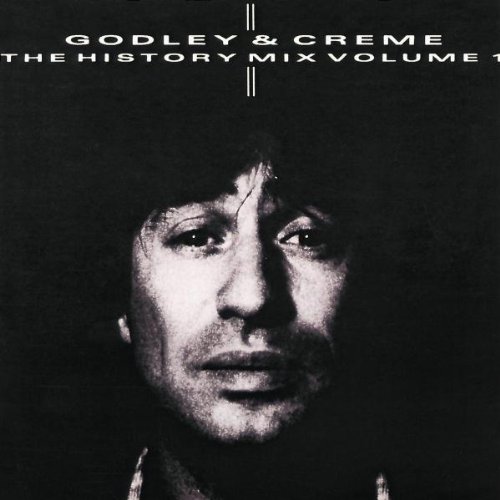
The History Mix Volume 1 has to be one of the weirdest albums of the 80s. There are multitudes to its weirdness that extend past the content of the record and into the nature of its release.

But first some background, The History Mix Volume 1 is an album by Godley & Creme, who were in the first incarnation of the 70s group 10cc. They left the band after their fourth album to continue as a duo. They never really achieved anything close to mainstream success in the 70s, and I really can’t tell you that much about them, because to be honest I don’t own anything by them other than this record (which I’ll get to). They did maintain some sort of cult status throughout the 70s and into the 80s however, and eventually found even more success behind-the-scenes, directing videos for Ultravox, Elton John, Frankie Goes To Hollywood, INXS, Sting and Yes.

If you’re a fan of 80s pop music (and you probably are if you’re here) then you probably notice a lot of Trevor Horn-related acts in that list. It’s pretty apparent that the pair became professional acquaintances with Horn during the early part of the decade, right when he was really starting to show his chops as a genre-hopping uber-producer and songwriter.

One of Horn’s more critically-acclaimed and groundbreaking projects of the early-80s was The Art of Noise, an avant-garde, experimental pop group that made heavy use of sound collage and the then new art of digital sampling. Godley & Creme were obviously fans of The Art of Noise (Creme even ended up in the group near the end of the 90s), because they recruited both Horne and J.J. Jeczalik to help work on The History Mix Volume 1, an album that exists in some sort of nebulous state between a record of entirely new material; a greatest hits compilation; and a remix record.

Most versions of the album primarily consist of two long-form tracks, “Wet Rubber Soup” and “Expanding the Business/The ‘Dare You’ Man/Hum Drum Boys In Paris/Mountain Tension.” Both tracks take elements from older Godley & Creme/10cc songs and sample them, restructuring the pop-rock tunes as uptempo dance tracks made for the club. From what I can tell, some samples are taken from the original songs, while others are samples of re-recorded versions. For instance “Wet Rubber Soup” uses some lyrics from 10cc’s “Rubber Bullets,” but they’re redone as a rap…which is odd.

What makes The History Mix Volume 1 even weirder is that when it first came out in 1985, two versions were released that were barely the same record. No matter which version you got, it included “Wet Rubber Soup,” which in itself contained a version of the hit single “Cry.” But some versions contained a second, single mix of “Cry” followed by the “Expanding The Business…” collage, while others instead featured four older songs by the duo: “Light Me Up,” “An Englishman In New York,” “Save A Mountain For Me” and “Golden Boy.”

Why? I have no idea. When the album was re-released on CD, most versions included all the tracks from both versions of the record. Today, all versions, CD, digital and vinyl, are out of print. Not only that, all of Godley & Creme’s previous records are all lost in the archives and only available as imports, if at all. The only song from the Godley & Creme discography that remains in print is “Cry” which was included on the 10cc greatest hits album.

So yeah, it’s a weird record with a weird history.

And one can only assume that Volume Two is TBA.

Godley & Creme – The History Mix Volume 1 (Both Versions)
Wet Rubber Soup
Expanding The Business/The ‘Dare You’ Man/Hum Drum Boys In Paris/Mountain Tension
Light Me Up
An Englishman In New York
Save A Mountain For Me
Golden Boy
Cry (Extended Version)
These are all the songs from both versions of the album, save for the single edit of “Cry” which you can get easily online. As a bonus, I’m also including the extended version of “Cry,” which is basically the same version that’s on the tail end of “Wet Rubber Soup,” but with its own intro. I freaking love that song. For a downer of a tune it sure pumps me up. Most of these tracks were taken from my US version of the album, while the “Expanding The Business…” collage was taken from the UK version, and the extended cut of “Cry” was taken from a 12″ single.