Archive for the ‘Complete Albums’ Category

Angelus: Great Game Music From A Game You Never Played

Wednesday, October 2nd, 2013

In case you missed it, and I don’t know how that could happen since I’ve been talking about it all damn week, I was recently a guest on Retronauts, the best damn retro gaming podcast on Earth. Now, I don’t want to make it like they called me out to be a co-host because of my awesome knowledge on video games, truth be told, I got to co-host because I donated a lot of money to their Kickstarter. However, I think I held my own pretty well on the podcast, and most comments I’ve read about the episode seem to be of the “that guy was surprisingly decent” variety (and one asshole talking smack about my speech problem. Fuck that dude). So check out the episode if you haven’t already, and leave a nice comment if you feel so inclined!

And once you do that, check out this sick video game music!

Angelus – Original Soundtrack Album (Complete Album Download)
photo

When I went to Japan earlier this year, I was on a quest to pick up as many video game soundtracks as possible, preferably on vinyl. However, that task proved harder than I thought it would be.

Turns out that game music on vinyl is pretty damn rare, even in Japan. I went to countless game, music and other collectible stores throughout Tokyo and came up nearly empty-handed in every single one. While I was able to pick up some soundtracks on CD in stores like Disk Union and Tower Records, no one seemed to have any game music releases on vinyl. It was only near the tail end of my trip that I was able to find two game soundtracks on LP, and this was one of them.

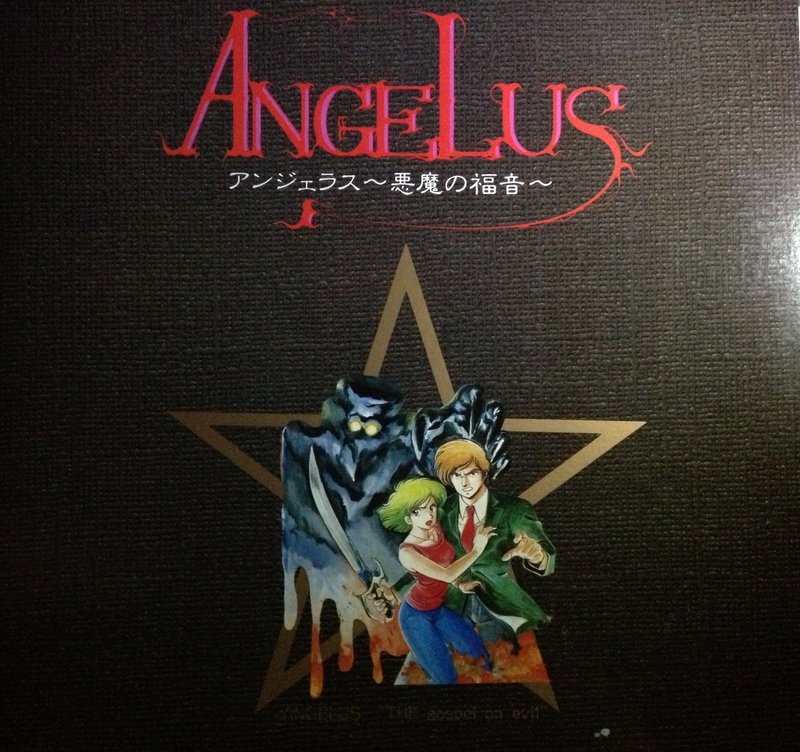
Angelus was a game released by Square Enix in 1988, but don’t feel bad if you’ve never heard of it; the game was only released in Japan, and only for systems that never came out in the states, such as the PC88 and the MSX2. And unless you can read Japanese, don’t bother tracking down an emulated version, as it’s a text-heavy adventure game/visual novel. I know very little about it. In fact, when I bought it, I didn’t even think it was a game soundtrack. I thought the clerk had misheard what I asked for and that he was actually giving me an anime soundtrack, but it was so cheap (and weird looking) that I bought it anyway.

And it was a good thing I did! Because it’s a pretty great soundtrack. In fact, the music is by Koichi Sugiyama, the critically-acclaimed composer who also did the music for the Dragon’s Quest series. From what I’ve read about the game (mostly from this site), it’s about some occult conspiracy/devil worship that causes random people to become hideously deformed, and that dark subject matter really shows in the soundtrack. It has a real menacing vibe to it, like an 8-bit Omen soundtrack. It terms of game music, it’s nothing revolutionary or a lost classic, but it’s certainly worth a listen and pretty unique. It’s also probably one of the few times that a PC88 game’s soundtrack has been made available, making it a rare chance to listen to what that system’s sound chip was capable of.

In addition to the original game audio, the Angelus soundtrack also features an arranged version made using the Fairlight synthesizer.  In case you aren’t aware, the Fairlight was the go to synthesizer in the 1980s, and was so ingrained with pop music in the decade that it actually changed the way music sounded for a good number of years. That awesome synth-riff in a-ha’s “Take On Me?” That’s the Fairlight. Same with awesome end noise in the “Miami Vice Theme.” Duran Duran, the Pet Shop Boys, Prince, The Cars and countless other acts from the decade also used the synthesizer on some of their biggest hits.  Seriously, it helped to define the decade. Well, that and hairspray.

While I do enjoy the Fairlight version, I actually prefer the original game audio. While the two versions sound very similar, I think Sugiyama was trying too much to add “depth” or layers to the Fairlight version. It has a lot of echo, and a few tracks even have some tacked on beats. The original version, on the other hand, is very sparse and minimal, which I think adds to its creepiness. Also, since the sound of the Fairlight is so ingrained with the 1980s, whenever I hear instrumental music composed entirely on it, I picture bad late-night cable movies. But that’s my own baggage.

I hope you all enjoy it, and to all my new readers, I hope you stick around. I post a lot of random stuff here, so if you ever see one post and just hate everything about it, just wait a week, I’ll have something entirely different.

Except for my next post, that’ll probably be more Sugiyama. Although I don’t think most people will complain when they see what I’ll be posting.

A quick technical note about this recording: This is a vinyl rip, which I did using the best equipment I had at the time. However, it is a very quiet record, so you may hear some hiss/surface noise. It’s not that bad, but I found it to be worth pointing out.


Echo And The Bootleg

Wednesday, August 21st, 2013

When this goes up, I’ll be in (not so) lovely NYC. Remember all the smack I was talking about Toronto and Canada? That was mostly facetious. Toronto is actually a pretty alright town. It might not be for me, but I can see why so many people dig it. And it has some pretty great record stores.

But New York City? Man, fuck that place. An overcrowded, overrated, overpriced and oversantized nightmare amalgamation of everything horrible that America has to offer. Sure, it’s the “city that never sleeps” and you can always find an amazing restaurant, bar or whatever, but damn, between the racist cops, smelly subways, mean people, crowded streets and every other disgusting and evil thing the city has to offer, why the hell would you want to leave your home in the first place?

If the above rant offended anyone who lives in the greater New York City area, I’m sorry…that you’re stuck in New York City.

Echo And The Bunnymen
New Horizon – Live in Tokyo January 1984
Two of my favorite things, Tokyo and post-punk/new wave music from Liverpool!

This is a bootleg. As the title suggests, it was recorded in Tokyo, sometime in January of 1984. I really don’t know much about it aside from that. There are no linear notes on the release, just a poorly made photocoppied piece of paper taped to the front cover. Judging from the setlists at this Echo And The Bunnymen fansite, however, it would appear that this an abridged recording of their January 17th show at the Nakano Sun Plaza Hall, with the encore of “All My Colours (Zimbo)” and “Do It Clean” absent.

I’ve posted bootlegs here before, and unfortunately most have sounded like hot garbage. Not the case with this one! Judging from the snippet of Japanese audio that plays at the beginning of the first track, I suspect this is a rip taken from a Japanese radio broadcast. While that means its definitely a cut above your typical audience recording, it still does have its fair share of flaws. The stereo cuts out from time to time on the first track, and the overall fidelity of the recording (and the vinyl I ripped it from) are less than perfect. That being said, it’s completely listenable, with clear vocals and instruments on all the tracks.

It’s also a pretty great performance from the band during their peak. Ian’s voice is incredible throughout the performance, and the band as a whole sounds damn near perfect. A must-listen for Echo fans who want a glance of the band during their prime, no doubt.

Click on the link above for a complete zip of the concert. But if you’re curious, here’s the entire tracklist:

  • Over The Wall
  • Stars are Stars
  • The Killing Moon
  • The Cutter
  • All That Jazz
  • Never Stop
  • Thorn of Crowns
  • Crocodiles

Mo’ Sakamoto

Monday, July 22nd, 2013

I reviewed the 12″ single to “Get Lucky.” Because if I don’t who will?

Another post dedicated entirely to Ryuichi Sakamoto. I should just turn this site into a Yellow Magic Orchestra fanpage.

Ryuichi Sakamoto
Forbidden Colours
The Last Emperor
Little Buddha
Wuthering Heights
Replica
El Mar Mediterrani
All of these tracks are live, taken from the album Cinemage.

The first four are excepts from musical scores and soundtracks that Sakamoto worked on. “Forbidden Colours” being the theme to Merry Christmas Mr. Lawrence, while the others are all self-titled from the films they appeared in. This version of “Forbidden Colours” does feature Sylvian’s vocals, but I suspect they were dubbed in later and not performed live with the rest of the music.

“Replica” is the only track on the album that is not taken from some sort of project, it is lifted from the Japanese version of Sakamoto’s solo album Illustrated Musical Encyclopedia. Next to “Forbidden Colours,” it’s probably my favorite track on Cinemage, thanks to its regimented, minimalist feel that echos Phillip Glass.

Finally, there’s “El Mar Mediterrani,” which was composed for the 1992 summer Olympic games. It’s 17 minutes long and crazy. That Olympic theme that John Williams did doesn’t have shit on this.

Bonus Sakamoto!
Jungle LIVE Mix Of Untitled 01 – 2nd Movement – Anger
I put up a ton of remixes from Sakamoto’s album Dischord a few weeks ago and since then a reader sent me along this mix, which he snagged off a promo CD. I love it, it’s just barely removed from pure noise at parts. As a narcoleptic who has built up a near-immunity to caffeine, I really find that comes in handy at times.

Switched-On Gershwin

Wednesday, July 17th, 2013

Quick reminders/shameless plugs/pleas for cash!

I wrote this review of the Maniac vinyl by Death Waltz over at my other website! It’s really good! (The record, I mean…although yeah, my website is pretty rad too.)

I wrote this little piece about audio warnings you’d find on old CD-ROM games at my other website too! It’s really dumb (The article I mean…although, y’know.)

I’m selling a bunch of stuff on eBay, if you like Criterion discs and really really low price (and I mean LOW) check them out!

Finally, I’m still trying a sell a TON of records, while I’ve been adding a few to eBay every now and then, I’d still prefer to sell them direct via my website. So if you’re interested, head on over to this post to find out more about that.

Now for Moog covers of Gershwin songs.

2552597774_f3e1e4865c_o

Gershon Kinglsey – Switched-On Gershwin
Rhapsody In Blue
I Got Rhythm
Porgy and Bess Introduction And Opening Scene I
Summertime
My Man’s Gone Now
It Ain’t Necessarily So
Clara, Clara
Crown’s Killing
In America, three people are widely credited with bringing early electronic music into the pop realm; Wendy Carlos, Dick Hyman (hehe) and Gershon Kingsley.

Wendy Carlos took electronic music and made it mainstream with Switched-On Bach, creating the first best-selling and Grammy award-winning electronic album, while Dick Hyman, who was already an accomplish jazz musician, took electronic music and made it respectable with his all-Moog albums full of original material.

However, sometimes I think that Kingsley gets lost in the shuffle, as he (along with with collaborator Jean-Jacques Perrey) were experimenting with the Moog and creating electronic pop music years before either Hyman or Carlos.

Carlos’ Switched-On Bach came out in 1968. Hyman’s first all-Moog album debuted in 1969. Perrey And Kinglsey’s debut album, The In Sound From Way Out, came out in 1966. The same year that The Beatles released Revolver, the same year that Tom Jones won the Best New Artist Grammy (really), these two crazy bastards were experimenting with previously unheard of electronic instruments, literally creating a sound that no one had ever heard before.

And they were doing it with mostly original tunes, not covers or interpretations of classical material. They were breaking ground in every way imaginable. It’s really amazing when you think about it. Of course, the true innovators never get the credit they deserve, and it was Wendy Carlos who broke electronic music through to the mainstream with Switched-On Bach. It makes sense though, better to expose modern audiences to electronic music via a sound they know than one they don’t. And Switched-On Bach is an amazing record, one that still sounds awesome and futuristic to this day.

It also inspired a legion of rip-off “Switched-On” albums. For some reason, in the coming years the term “Switched-On” came to mean “electronic music” and artists were releasing “Switched-On” country music, Beatles covers, showtunes, you name it, it got a “Switched-On” treatment.

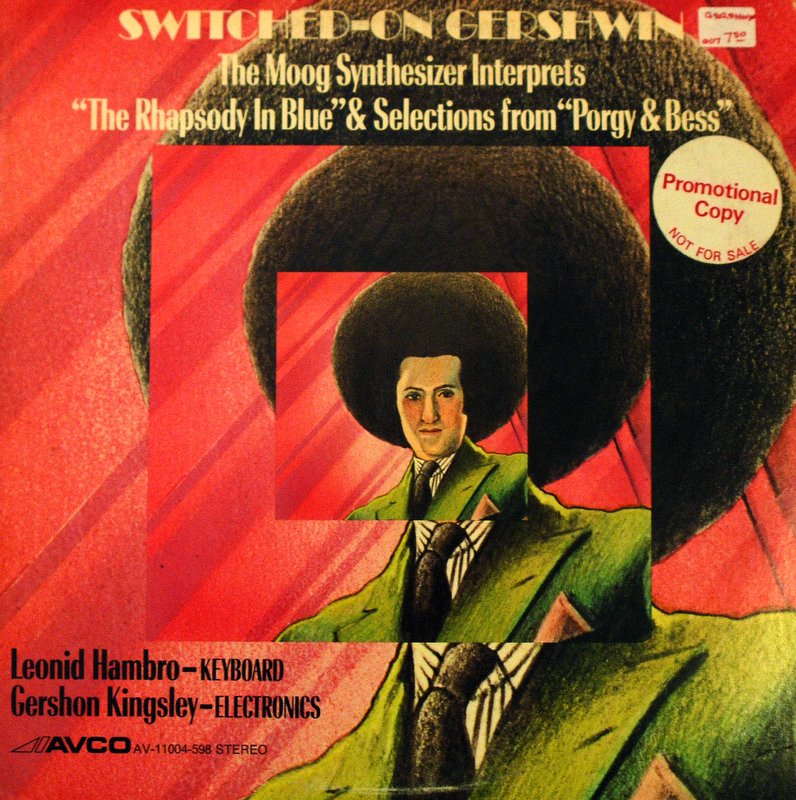
It was such a popular trend that even innovators like Kingsley cashed in on it with Switched-On Gershwin, which as you can probably guess from the title, offers a selection of George Gershwin pieces redone as Moog tracks.

However, this “Switched On” albums differs from many imitators in a few ways.

Firstly, it wasn’t always a “Switched On” release. The record was first released in 1970 under the name Gershwin: Alive & Well & Underground, and may have come out so close to the original release of Switched-On Bach that it’s probably not fair to call the album a cash-in on that other record’s success. Kingsley’s decision to cover Gerswhin tunes was most likely independent of the success of Carlos’ LP.

Secondly, it’s not an entirely all-Moog album. The showcase track of the record, the 14-minute take on Gershwin’s classic “Rhapsody In Blue,” employs ample piano performed by Leonid Hambro. It may seem like a minor thing to mention, but the track’s constant interplay between the traditional piano and the more experimental, modern Moog effects really makes it stand out in a way that other Moog albums can’t lay a claim to. It also wonderfully showcases the playful and upbeat feeling of the original piece.

Finally, and most importantly, while most “Switched-On” records were bland and unoriginal albums created by people without a creative bone in their body, Switched-On Gershwin is fucking amazing.

Kingsley may be performing someone else’s music here, but he interjects as much originality and creativity within the confines of those songs as humanely possible. These tracks are layered with all kinds of sound effects and really showcase the power of the Moog far more than Carlos’ album did. It’s obvious listening to this record that Kingsley probably knew more about the Moog and what it was capable of than nearly anyone else who was using it at the time, radically altering these tracks and making them his own. Listen to his version of “I Got Rhythm” or “Porgy And Bess Introduction And Opening Scene I” and tell me they’re mere covers. You can’t. He transforms them into something entirely unique and beautiful. It’s really incredible.

And that cover is fucking DOPE.

Pet Shop Boys – Relentless

Sunday, July 14th, 2013

Pet Shop Boys
My Head Is Spinning
Forever In Love
Kdx 125
We Came From Outer Space
The Man Who Has Everything
One Thing Leads To Another
In 1993, the Pet Shop Boys released Very, an amazing album that contained some of their greatest singles, including “Go West,” “I Wouldn’t Normally Do This Kind Of Thing,” and “Can You Forgive Her?”.

Very is one of the band’s most well-known and best-selling albums, and has never gone out of print since its original release. It was put on iTunes at the same time as the rest of their catalog, and was even remastered and re-released in 2001 with an added disc of bonus cuts and B-sides.

However, when the album was first released it was made available in two different versions; the standard single disc edition that most people know, and a limited edition two-disc set that featured a bonus disc called Relentless; this version is often just called Very Relentless.

As far as I can tell, this version, the most complete and comprehensive version of the album, was only released once, right when the album first came out. In the 20 years since, none of the songs on it have ever been remastered or re-released at all. Not on a greatest hits, not on a rarities or b-sides compilation, and not as a standalone release. You cannot get the songs on iTunes, you cannot get the songs on Amazon, you simply cannot get the songs.

If there was ever an example of a record label/artist forcing you to steal their music, this would be one.

I feel like it happens a lot though, whenever an album is released in multiple versions with different tracks, the most basic, cheapest one is the one that becomes part of their official discography. The versions with more tracks, with added video content, or extra-cool packaging, they’re the ones that vanish into the bargain bins of time.

It makes no sense, like the record labels are actively telling you that they don’t want your money, but whatever, makes it easier for me to pick tracks to share here.

Relentless is a great collection of tunes that would work fine as a standalone Pet Shop Boys release. It’s just six tracks long, but with an average track length of around six minutes, the album still fills out to a hefty 37 minute running time.

Musically, the album is a bit different than Very. Both are dance albums for sure, but while Very is a pop record you can dance to, Relentless is a dance record through and through, one that I suspect was influenced heavily on the growing dance scene that was spreading across the UK at the time of its release

Like I said before, the songs on Relentless are long, and they don’t conform to the typical pop structure that Pet Shop Boys usually operate in. Don’t expect at lot of Neil Tennant’s trademark vocals here. Sure, he pops up from time to time, but this is largely an instrumental affair, focused instead on hard-driving, pulse-pounding beats made to make people get up and dance.

I don’t know how different Relentless is when compared to the entirety of the Pet Shop Boys discography (I collect their singles more than their albums) but as someone who has always liked their remixes and dance versions more than their short single edits, I love this record.

Additionally, it is the ultimate synthpop workout record.

Ryuichi Sakamoto – Discord Gütninja Remixes

Monday, June 10th, 2013

Been neglecting Lost Turntable in favor of Mostly-Retro for the past week or so. Sorry about that, getting a blog up and running is hard work, especially when you’re trying to balance it with work that actually pays. In case you’re interested, some stuff I’ve put up there recently includes this review of the latest by Queens Of The Stone Age, and a rather obscene take on Microsoft’s rather obscene used games policy they seem to be adopting with the Xbox One. If you miss my foul-mouthed rants of old then you should probably read that post. I suspect you’ll like it.

Now music.

Ryuichi Sakamoto
Discord - Gütninja Remixes (complete album download)
I bought this in Tokyo, and recorded it last month. About the only thing that has stopped me from sharing it here is trying to figure out how to write about it, as well as the realization that only about five other people in the world will care about it. But hey, I’m sure those five people will be stoked.  For the rest of you, I’ll try to talk you into downloading this and giving it a chance.

I’ve written about Sakamoto on this site before, but in case you missed those posts, here’s a quick refresher. Ryuichi Sakamoto was part of the super-influential/amazing/incredible Japanese electronic pop group Yellow Magic Orchestra; a group who helped to lay the groundwork for synth-pop, electronic dance and even chip-tune. After they disbanded in the mid-80s, Sakamoto embarked on his wildly diverse and successful solo career, which includes mainstream rock music, ambient electronica, and orchestral compositions. He even won an Oscar in 1987 for his work with David Byrne and Cong Su on The Last Emperor.

In 1997, Sakamoto released Discord, his first classical work that was not for the screen (although many of his previous works had some classical elements). Primarily orchestral with a touch of piano, the album also featured some guitar and even some turntablism from DJ Spooky, so even if classical isn’t your thing, I think you should give it a chance. It’s really different.

Two years later, Sakamoto (or someone on Sakamoto’s label) handed Discord off to various DJs, producers and other electronic musicians for remixing, and the result is this album. It’s something special and unique, thanks largely to the remixers chosen for the project, who include Amon Tobin, Coldcut, Andrea Parker and Tavin Singh (a lot of Ninja Tune is on this record). They really work to transform the classical compositions into entirely new tracks, sometimes removing and reworking so much of the original pieces that they’re nearly unrecognizable. That’s not a bad thing in this case, however, all these tracks are great, even when they have little to nothing in common with the source material.

In case you can’t tell, I really dig this record. It’s pretty much everything I love all rolled into one big ball of awesome; Sakamoto, Ninja Tune, crazy remixes, and awesome weird Japanese shit. I really hope I’ve convinced you to check it out too.

Shonen Knife’s Super Mix of Superness

Wednesday, March 13th, 2013

001

When I went to Japan to buy all the records, I wasn’t just buying for myself, I do have friends after all. One of  said friends is a pretty big Shonen Knife fan, so I made it a goal to pick up an LP or two by the group while I was there.

Turns out that Shonen Knife vinyl is pretty damned hard to find in Japan. They’re not the most popular group in the country by any means, but their records are kind of like David Bowie or Pink Floyd albums are here; the people who buy them don’t sell them back.

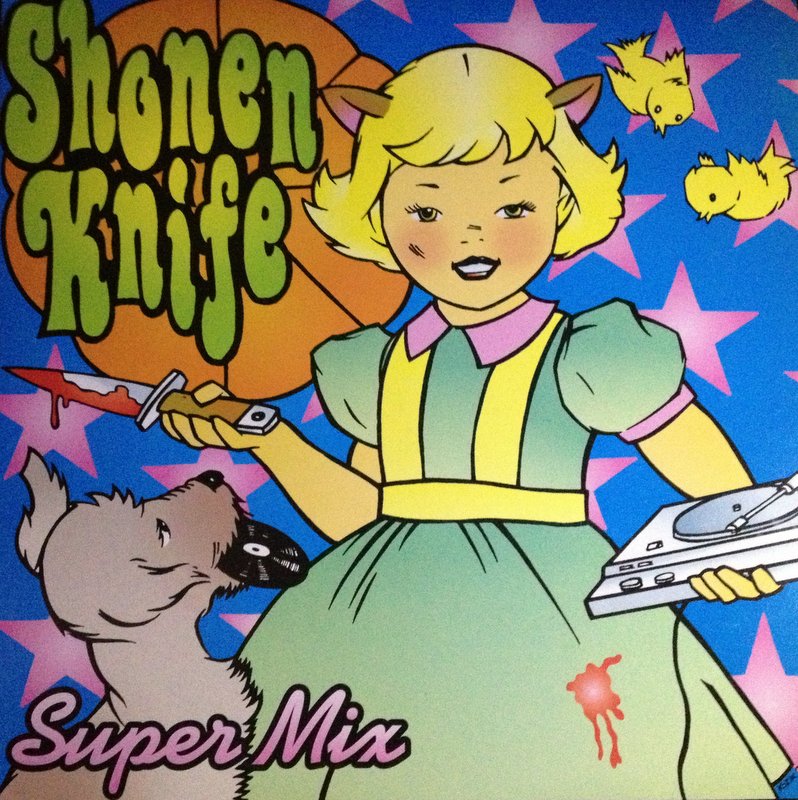
In all my shopping across the great city of Tokyo, in all the dozens of stores I explored and all the hundreds of crates I dug through, I was only able to find one Shonen Knife LP, Super Mix. By the time I found it I was nearing the end of my trip, so I pretty much just bought it without paying attention to what it really was. I was just happy to finally find a record by them.

Turns out it’s a remix LP. That’s fine for me (I don’t know if ya’ll noticed, but I like remixes), but my friend is decidedly not an electronic dance music fan. She’s a rawker. So while I think she appreciates the sentiment, this one is more of a cool little souvenir for her than an album she’s going to spin again anytime soon. Thankfully I also found some weird Pearl Jam bootlegs when I was in Japan as well (at a Tower Records no less!) so at least she got something rad to listen to.

As for the Shonen Knife album, I hope you all enjoy it more than she does.

Much like the Lupin albums I posted earlier this month, I’m going to list this one track by track, with some information on the remixers (when available).

Shonen Knife (Remix by Keigo Oyamada)
Oyamada is better known as Cornelius, a very influential electronic musician whose career has spanned nearly 20 years now. He wrote music for the soundtrack to Scott Pilgrim vs. The World and he done remixes for artists such as Yellow Magic Orchestra and Yoko Ono.

He also named himself after a character from Planet Of The Apes and did the same to his son, Milo. So I think it’s safe to say that he is…moderately weird. Also, if this remix is any indication, he’s also pretty great.

Parrot Polynesia (Remix by Keiichi Sokabe)
While not as crazy prolific as Cornelius, Sokabe is a dude who also gets around it would seem. He was in an influential 90s Japanese rock group called Sunny Day Service, and since then he’s released a few solo records, collaborated with other musicians and even started his own record label. You can find out more about him here. This is his only credited remix on Discogs, which is a shame. This is a great re-working of a great track, he transforms it entirely into a pretty hectic and frantic drum and bass track to surprising effect. Love this.

Cannibal Papaya (Remix by Thurston Moore)
Fucking Thurston Moore…

Okay, look, I really like Thurston Moore. How couldn’t I? Sonic Youth? Awesome. Daydream Nation? Top five album of the 80s.

All that being said, Moore is a pioneering musician in the genre of noise, experimental and no wave rock music, three genres that don’t exactly leap to my mind when I think “remix.”

Now, to his credit, I haven’t heard many remixes by Moore, the only that come to mind are this one and a remix of Blur’s “Essex Dogs” that appeared on their 2CD set Bustin’ + Dronin.’ Maybe he knows he’s a dogshit remixer and tries not to take that much remix work. Or maybe everyone else realized he was a dogshit remixer and they stopped giving him remix work. Regardless, he’s a dogshit remixer.

No doubt he was given the chance to do this mix simply because he was always a vocal proponent of Shonen Knife, and was in no small part responsible for them getting a record deal in the states. That’s awesome of him. And I’m glad he did it. But him doing this remix as a sign of respect for the group would be like you showing this blog to your friends and me thanking you by breaking your legs. Urgh.

Dog. Shit.

Tortoise Brand (Remix by Shonen Knife)
If you don’t know who Shonen Knife is then I don’t know how you got this far into this blog post. This is a cute mix.

Elephant Pao Pao (Remix by Takkyu Ishino)
Takkyu Ishino is the lead singer of Denki Groove, an incredibly prolific Japanese dance/pop group who sound like the lovechild of YMO, Kraftwerk, and half the music that came out in the 1980s. I found out about them through this remix and now I really want to hear more of their music. Everything I’ve checked out on YouTube has been great. This is also a great remix, very glitch and trippy.

Insect Collector (Remix by Ryuichi Sakamoto)
If you read this blog on a semi-regular basis then you should know who Ryuichi Sakamoto is. I’ve talked about him before (several times over in fact). Not surprisingly, this is the best remix on the album. It’s very reminiscent of YMO’s more recent stuff, minimal with a hint of dance flavor behind it.

Burning Farm/Banana Leaf (Remix by Moichi Kuwahara)
I couldn’t find much on this person. Apparently he/she is in Snakeman Show, the comedy group who appear on a few YMO releases. In addition to that, Kuwahara is also credited on Discogs as a producer of a few YMO cover records, and as a remixer on a YMO remix album. After that I got nothing. Anyone who knows anything else, please fill me in.

Cool remix though, very ambient.

Twist Barbie (Remix by Roger Manning)
Roger Manning’s full name is Roger Jospeh Manning Jr., I know this because I actually own some of this dude’s music. First and foremost, he was in Jellyfish, a power-pop band from the 90s that has a crazy cult following. From there, he formed The Moog Cookbook, a covers act who played pop songs on the Moog. I have one of their records (it’s alright). Then in 2000 he teamed up with film composer Brian Reitzell to create a soundtrack to an imaginary sequel to Logan’s Run called Logan’s Sanctuary. I have that record (it’s quite weird).

Since then he’s put out three solo albums, the latest coming in 2009. Since power pop is bigger in Japan than it is in the states, I’m going to assume that his work in Jellyfish got him this remix. It’s a good mix, although he really doesn’t do much to it aside from adding some various vocal and sound effects.  If it ain’t broke don’t fix it I guess.

Punch The Monkey! Lupin The 3rd Remixes, Part 2!

Thursday, February 28th, 2013

More Lupin remixes! I hope someone likes these. I feel like I’m going super specific here.

These are all taken from Punch That Monkey 2! The second of a three-part series that came out in 1999 to celebrate the 30th anniversary of Lupin The 3rd, the popular anime/manga series. I wrote about the series already, so I’m just going to cut to the chase this time.

And in case anyone was wondering, the albums are called Punch The Monkey because the creator of Lupin goes by the pen name of Monkey Punch.

I have no idea why.

Yuji Ohno
Lupin The 3rd ’78 (Afro Rock Theme~Douchatta No Lupin Mix)
Yuji Ohno was the composer for the second Lupin series, which first aired on Japanese television in 1977. He also did the music for the Miyazaki-directed Lupin film The Castle of Cagliostro, an excellent animated flick if there ever was one. This remix is by Yoshihiro Sawasaki, who has been releasing music in Japan since 1994, either under his own name or under various others, my favorite being Doctor YS & The Cosmic Drunkards. His music seems to run the gamut from acid breaks to minimal to straight-up dance, and everything I’ve heard I’ve dug. I really have to start getting into more Japanese electronic music…

Kazuya Senka/Yuji Ohno
Theme From Lupin The 3rd~Theme From Lupin “E” (Vocal Version)
A full vocal mix of the original theme music, with some light jazzy instrumental instrumentation thrown in for good measure. Nearly all the guitars are removed, and replaced with some incredibly laid-back keyboard work. I have no idea who Kazuya Senka is, so if anyone wants to fill me in, please do.

This remix is by ECD, a hip-hop act who I believe is Yoshinori Ishida, or Ishida with another person. Judging from the quantity of stuff he has on YouTube, it would appear he’s still going strong, and has quite the following. also Japanese hip-hop is crazy.

Tokyo Ska Paradise Orchestra
Lupin The 3rd ’78
Great name for a band, and very accurate, as they are massive ska group with over 10 members. These guys have been around for over 20 years now, and continue to release new music. If their Wikipedia is any indication, they also tend to go through members like Def Leppard and Lynyrd skynyrd combined, unfortunately.

Takeo Yamashita
Theme From Lupin The 3rd II (Readymade All That Jazz Mix)
Theme From Lupin The 3rd 3
Theme From Lupin The 3rd (Akakage’s Happy Set)
Takeo Yamashita was a composer of various live-action and anime shows throughout the 1960s and 1970s. He composed the original Lupin The 3rd theme song for the original series, and he also wrote the music for Giant Robo, the live-action version of the series that Americans know as Gigangtor. (He didn’t, however, write the awesome Gigantor song.)

All three of these remixes are by different people. The first is by Yasuharu Konishi of Pizzacato Five fame (he contributed a mix to the other Lupin compilation I put up). It’s crazy, and I love every minute of it, even if it barely resembles the original song.

The second track has no remix name, but it is indeed a remix, and was done by someone from the Japanese group Polysics. They’ve been described by others a Japanese Devo, and that’s pretty accurate. So, imagine the Lupin theme remixed by Devo, that’s what this sounds like. In other words, it sounds pretty rad. It actually sounds strikingly similar to Devo’s cover of “Working In A Coal Mine” in some parts, I don’t know if that was intentional or not. I hope it was.

The last mix is by an act called Akakage. According to Discogs, it used to be a duo, but most of their later stuff was credited only to a single person; Yoichiro Ito. From what I’ve heard of him, he really really likes Fatboy Slim. But hey, I really really like Fatboy Slim, so I’m not going to knock him for it.

Yoshihiko Katori Jazz Orchestra
Lupin The 3rd ’78 Theme (Melting Version)
I have no idea who these people are. Sorry.

Kanaho Maki/Yuji Ohno
Love Squall (Pansasa Love Anthem Mix)
Love Squall -M&M Bossa Bass Space
I know nothing about Kanaho Maki, tried my best, couldn’t find anything. Ditto for Pandart Sasanooha,  who is credited  for the “Pansasa Love Anthem Mix.”

The second mix is by Monday Michiru, an artist I had actually heard of before buying this compilation. Her music goes all over the place, from jazz and electronic to R&B and pop. Apparently she’s a big deal in Japan. As you might have been able to guess from the remix title, this mix has a strong bassa nova vibe to it.

The Ventures
Lupin The 3rd ’78
Yes, The Ventures. Yes, the Rock and Roll Hall of Fame inductees, best-selling instrumental rock group of all time Ventures. How did this happen?

Well, apparently The Ventures are HUGE in Japan. Seriously, at their peak popularity in Japan they allegedly outsold The Beatles. I honestly think the phrase “big in Japan” was created in part because of their massive success there. Shit, they should totally cover that Alphaville song. This is a straight-up cover of the original theme, no remixing, no electronic add-ons, and no vocals (it is The Ventures after all). It’s really, really good. They should have totally rocked this at the Rock And Roll Hallf Of Fame induction concert and blown everyone’s mind.


Punch The Monkey! Lupin The 3rd Remixes, Part 1

Thursday, February 14th, 2013

Now for some real Japanese stuff.

022

It seems to me that most anime/manga is fleeting. Many shows and books have intentionally short runs and are more like mini-series than full-fledged shows. But when a show or book takes off in Japan, it really takes off. Titles like Gundam, Macross, Dragonball, those aren’t just TV shows or comic books in Japan, they’re freaking institutions, multi-generational cultural milestones that seem to go on forever and ever.

While I find the enduring popularity of those series to be utterly fascinating, I can never seem to get into them myself.  Gundam and Macross are too complicated and self-serious for me to enjoy, while series like Naruto, Dragonball and One-Piece are about as aesthetically and thematically pleasing to me as an 18th century Russian novel or an British soap opera. There’s nothing wrong with them, they’re just not my thing.

The only long-running Japanese series that I have ever been able to get into at all is Lupin The 3rd, which started as a comic in 1967 before branching out into a TV series in 1971 and even a film series starting in 1978. That’s a lot of Lupin, and while my overall exposure to the the various forms of Lupin-related media have been relatively slim in comparison, I’ve loved just about everything I’ve been able to get my hands on.

I think the main reason that I like Lupin more than those other series is that it’s relatively self-contained. You can pop in any Lupin movie or TV series and figure out the basic gist within minutes, and as a whole it’s pretty light entertainment. While I’m sure Lupin has had his serious moments of the years, most of what I’ve seen has been incredibly easy-going and wacky, just the kind of thing I want to watch when I feel the need to escape for a bit. I also love the style of the series, and how its managed to maintain its 1960s aesthetic in one way or another to this day. (Of course, given my limited exposure to Lupin as a whole, I could just be talking out of my ass, but this is what I’ve noticed from the stuff I’ve seen.)

And it’s music is really dope. In the pantheon of anime soundtracks, the Lupin The 3rd main theme takes my second place spot as greatest of all time, right behind the jazzy perfection of Cowboy Bebop. Just like the series itself, I love its retro style, and how it’s managed to evolve over time to incorporate more modern musical movements. It’s a blast to listen to, and apparently I’m not the only person who thinks so, because holy shit there are a ton of remix compilations of the Lupin The 3rd theme music in Japan. I bought a couple of them (as well as some other Lupin-related vinyl) and I’ll be sharing them over the course of the next few days.

Up tonight are the tracks from the 1998 2LP set Punch The Monkey! Lupin The 3rd; The 30th Anniversary Remixes. I was going to do an artist by artist breakdown of the compilation, but I can hardly find anything about any of the people who worked on this record. When I do, it’s typically in Japanese, so that’s not much of a help. The record does have one name I recognize though, and that’s Yasuharu Konishi; the founder of Readymade Records and original member of Pizzicato Five, one of the only Japanese acts ever to make any kind of headway in the American music scene. His remix is pretty great, but then again, nearly all of these remixes are great. But if I had to pick a favorite, I would probably choose Escalator Team’s “Club Escape Mix” of the ’78 Theme, if for only its completely random sample from Mortal Kombat. How the hell did that happen?

Toshio Matsuura
Lupin The 3rd ’78 Theme From Lupin III (Walther P99 Mix)

Masanori Ikeda
Lupin The 3rd ’80 Theme From Lupin III (Latin Calcutta Mix)

Comoesta Yaegashi
Afro Rock Theme (Afro Rock Mix)

Escalator Team
Lupin The 3rd ’78 Theme From Lupin III (Club Escape Mix)

Fuzita Blender
Funny Walk In Old Fashion (Mori No Blend Mix)

Fantastic Plastic Machine
Theme From Lupin The 3rd (F.P.M.’s Reconstruction Mix)

Yasuharu Konishi
Theme From Lupin The 3rd 3 (The Readymade Yangu Oh! Oh! Mix)

Fantastic Explosion
Toward The Patrol Line (You & Fantastic Explosion Mix)

Sunaga T Experience
Lupin The 3rd ’80 (Sunaga T Experience 9849 Mix)

Jun Sasaki
Love Squall (Fujiko’s Love Mix)

Izuru Utsumi
Theme From Lupin The 3rd II (Bossa ’98 Mix)


Vib-Ribbon! Make me happy and tendentious!!!!!!!!

Monday, January 28th, 2013

Scan

I wanted to stock up on game music when I went to Japan, but little did I know that the greatest game music I would find while there wouldn’t be on a soundtrack, but on the actual game itself. Thank you PS1 games with Redbook audio!

Laugh And Peace – Music From Vib Ribbon
Polaroid
Sunny Day
Laugh And Beats
Universal Dance
Overflowing Emotions
Roll Along
Vib Ribbon Blues
When it came to shopping in Japan, I was definitely focused on music more than anything else. However, I’d be remiss if I didn’t spend at least a little bit of time in Tokyo going after some vintage Japanese games and systems. The classic games that I was after ended up costing way more than the albums I wanted though, so my gaming purchases were rather limited. I did, however, pick up a few nice items, among them being an original Famicon Twin system, the Japanese version of Contra, and a game for the PS1 by the name of Vib Ribbon.

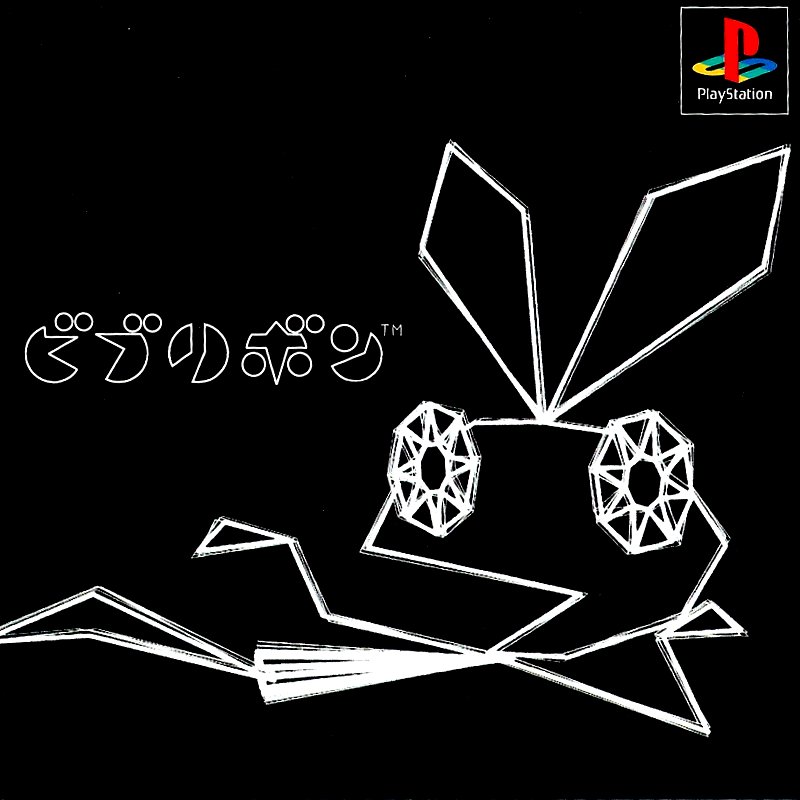
Vib Ribbon is an early rhythm game that was originally released in Japan in 1999. It was released in PAL territories the following year, but it never made its way to the states for some reason. I have no idea why, because it’s the dopest shit ever.

In Vib Ribbon you’re tasked with guiding a rabbit by the name of Vibri across a simple one-dimensional plane (or ribbon) that is filled with obstacles that are roughly based on the rhythm of the game’s music. Each obstacle can only be cleared by pressing the correct button (or button combination) at the exact right time. It starts out easy, but it gets crazy hard as you progress.

One of the most noteworthy things about the game is that you can remove the game disc and put any audio CD in the Playstation and play each song on the CD as its own “stage,” basically giving you as many stages as you have CDs. It’s a cute idea, and while I’ve done plenty of that in my time with the game, I’ve actually spent more time sticking to the game’s built-in soundtrack, because it’s incredible.

I had decided about twenty seconds into the first time I heard the adorable “Polaroid” that it was my new favorite song of all time of the month, only to have it immediately usurped by the even more adorable, beautiful and lovely “Sunny Day,” a song as bright and uplifting as its title. It’s so good. So good! I had to walk away from my computer before writing this post. It’s so good, I had to calm down, or tonight’s post would have been just something like “OMG YOU GUYS! THIS MUSIC! IT’S SO….AAAAAAAGRHGHRRDHRATERHEHEHGERHAE THERE’S NO TIME HURRY UP EVERYTHING’S SO FANTASTIC!”

And that’s just unprofessional.

But yes, you need to listen to this music especially the first three tracks, they are perfection, so happy it hurts.

As far as I know, all of these songs are by a Japanese group called Laugh And Peace. They are best known for…this. They released one album in 2006, but it was never released in the states (of course). You can stream it on their MySpace page though. I have no idea what the members are up to now, so if anyone does please let me know!

Listen. Be happy. (That’s an important part). And I’ll see you all later in the week with more awesome music, although to be honest I doubt it will be as awesome as this. It’s awesome.

Awesome.