Archive for the ‘Complete Albums’ Category

Yutaka Mogi’s Digital Mystery Tour

Friday, July 28th, 2017

I’m fairly certain I’ve stated this before, but I’m really happy when I say “boy I wish I could find a copy of [insanely obscure record]” and then immediately find said record, randomly, in a record shop for a steal of a price. I feel as if that happens far more often than it should, statistically speaking. Maybe I should start saying that for other things. Let’s give it a try.

Boy, I wish I could find a formula that makes affordable cold fusion possible! And maybe that Trump pee tape too! That would be great.

Okay everyone, expect the energy crisis, and the American political nightmare, to be solved with a few weeks. You’re welcome. In the meantime, here’s a fucking amazing synthesizer covers album you need to download right this second.
Yutaka MogiDigital Mystery Tour
I mean, I literally found this album less than two weeks after publicly proclaiming my desire to buy it. Fucking rad.

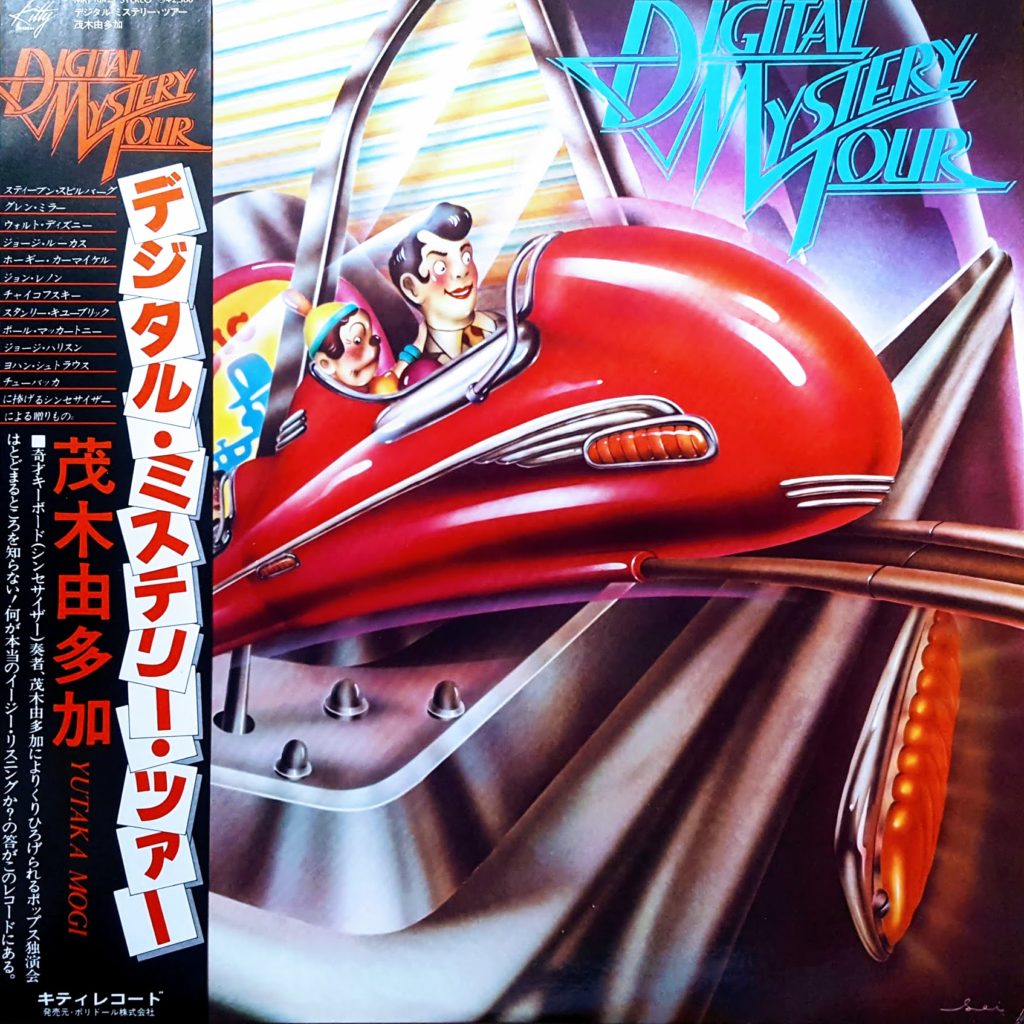
This is Digital Mystery Tour by Yutaka Mogi, like its title suggests, a large portion of it is dedicated to reworking Magical Mystery Tour with digital instruments. As such, that means we get all-synth takes on the Beatles classics “Magical Mystery Tour,” “Flying,” “Your Mother Should Know,” “Blue Jay Way,” and “Fool On The Hill.”

All of the Beatles covers are utterly brilliant, and are absolutely not afraid to radically tear apart the originals if needed. “Your Mother Should Know” is transformed into some wacked out funk track, and “Blue Jay Way” is re-assembled to be almost a new age number (and stretched out to be nearly twice as long as the Beatles original). Mogi also goes the quiet route with “Fool On The Hill,” with ethereal faux-strings and a quiet piano giving the song a strange, almost choral quality. The opening “Magical Mystery Tour” is a relatively straightforward cover, but Mogi’s insistence of using heavily modulated and just downright bizarre synthesizer settings will work to give it an otherworldly feeling.

For whatever reason, only half of the album is dedicated to The Beatles. Side two is dedicated to re-imaginings of much older numbers and features “When You Wish Upon A Star,” “The Skaters Waltzes – The Blue Danube,” “Tea For Two,” “Star Dust – Moonlight Serenade” and “Dances Of The Swans.” The rather pedestrian selection might make you think that the second half is filler, but Mogi really tears through these numbers as well. Just like The Beatles’ tracks, Mogi does what he can to give these songs new life. And the arrangements are just so lush. Early synthesizer covers records were sparse and simple because they had to be, due to the limitations of the hardware. This album came out in 1978. By then, synthesizers had become largely polyphonic, and a hell of a lot easier to manipulate and use. Mogi takes advantage of this, pumping as much life into these numbers as possible via a seemingly unending array of audio trickery and bombastic sound effects.
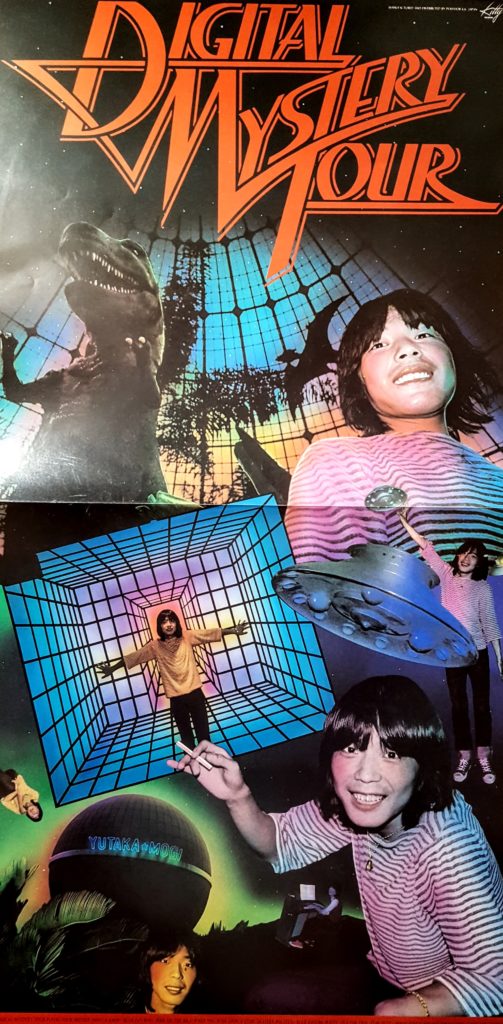
I need to start cataloging and ranking the myriad of moog/synthesizer covers albums in my collection. Every time I discover a new one I think it stands head and shoulders above the rest. I think I bias myself towards the new finds simply because I get so excited when I stumble upon them. Still and yet, I really do think this one is special, a fantastic showcase of what the synthesizers of the era could do, all performed by a wonderful musician who more people need to know about. If you listen and like it, be sure to check out this post, which also features some amazing music by Mogi.
Continuing to fret over the remote possibility of nuclear war with help from The KLF

Friday, July 7th, 2017

Every time I buy one of these North Korea launches a missile. I’m sorry.

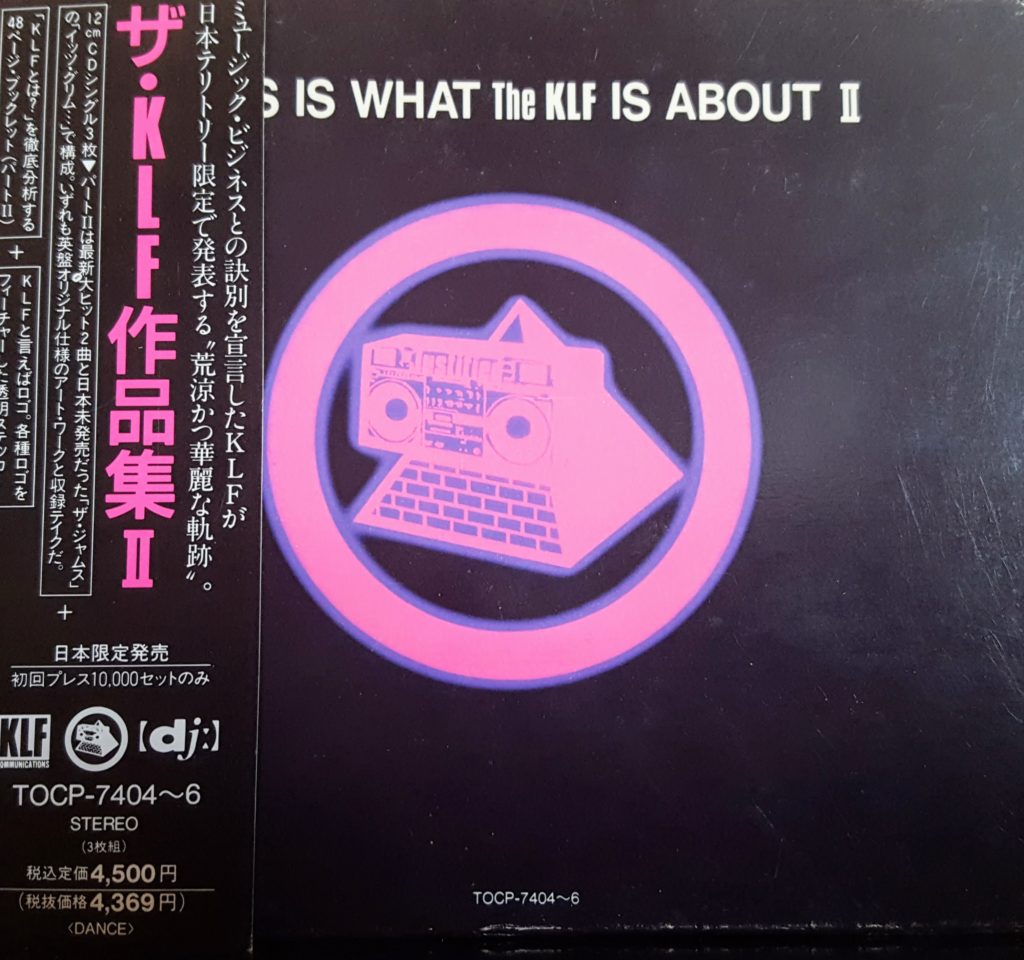
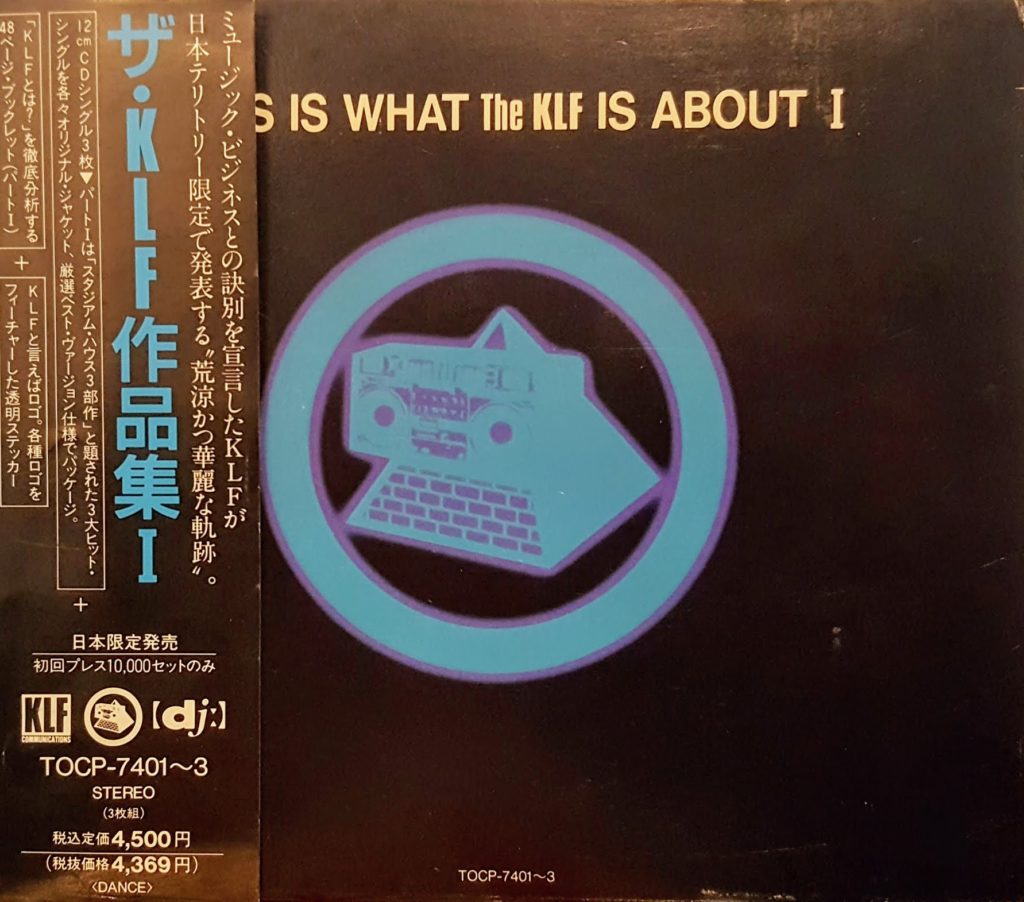
The KLF
What Time Is Love? (live at Trancentral/7″ radio edit)
What Time Is Love? (The KLF vs. The Moody Boys)
What Time Is Love? (The 1988 Pure Trance original)
3 A.M. Eternal (live at the S.S.L./7″ Radio Freedom edit)
3 A.M. Eternal (Guns of Mu Mu/12″ edit)
3 A.M. Eternal (1989 “Break for Love” mix/original Pure Trance mix)
Last Train to Trancentral (live From the Lost Continent/7″ radio edit)
Last Train to Trancentral (The Iron Horse/12″ version)
Last Train to Trancentral (The White Room version/import LP version)
Last Train to Trancentral (The 1989 Pure Trance original)

I’m writing this post before I even finish listening to the box set because it’s not like I’m going to hear one of these tracks, dislike it, and then decide not to share it. More epic KLF.

I don’t have much to say about these tracks (because they’re great and you should listen to them) so I thought I would use this space to plug the store that I bought the box set from. It’s called Shop Mecano and it’s located inside the Nakano Broadway shopping mall in Nakano. If you like my blog then you’d probably go apeshit in this shop, it’s dedicated almost entirely to electronic and new wave music from the late 70s to today, with a heavy bias towards anything influenced by Kraftwerk. The dude who runs this shop loves Kraftwerk more than you love Kraftwerk. For real. I’m pretty sure he actually wrote the liner notes for the Japanese re-issues of Kraftwerk’s back catalog a few years back. Dude is hardcore.

This store has all kinds of amazing stuff, from rare and hard-to-find imports of releases from western acts like Art Of Noise and Depeche Mode, to what seems like an endless supply of YMO and YMO-related music. This store is straight-up dangerous to my wallet, I’ve probably spent more here than I have at any other store in the greater Tokyo area. It gets the Lost Turntable seal of approval to the max. I’m not saying you should make your way to Tokyo just to go to this store, but if you made your way to Tokyo just to go to this store I certainly wouldn’t judge you for doing so.

And in case you’re wondering, you can find part II of this set here.

Barbarians and Slap Bass

Wednesday, June 21st, 2017

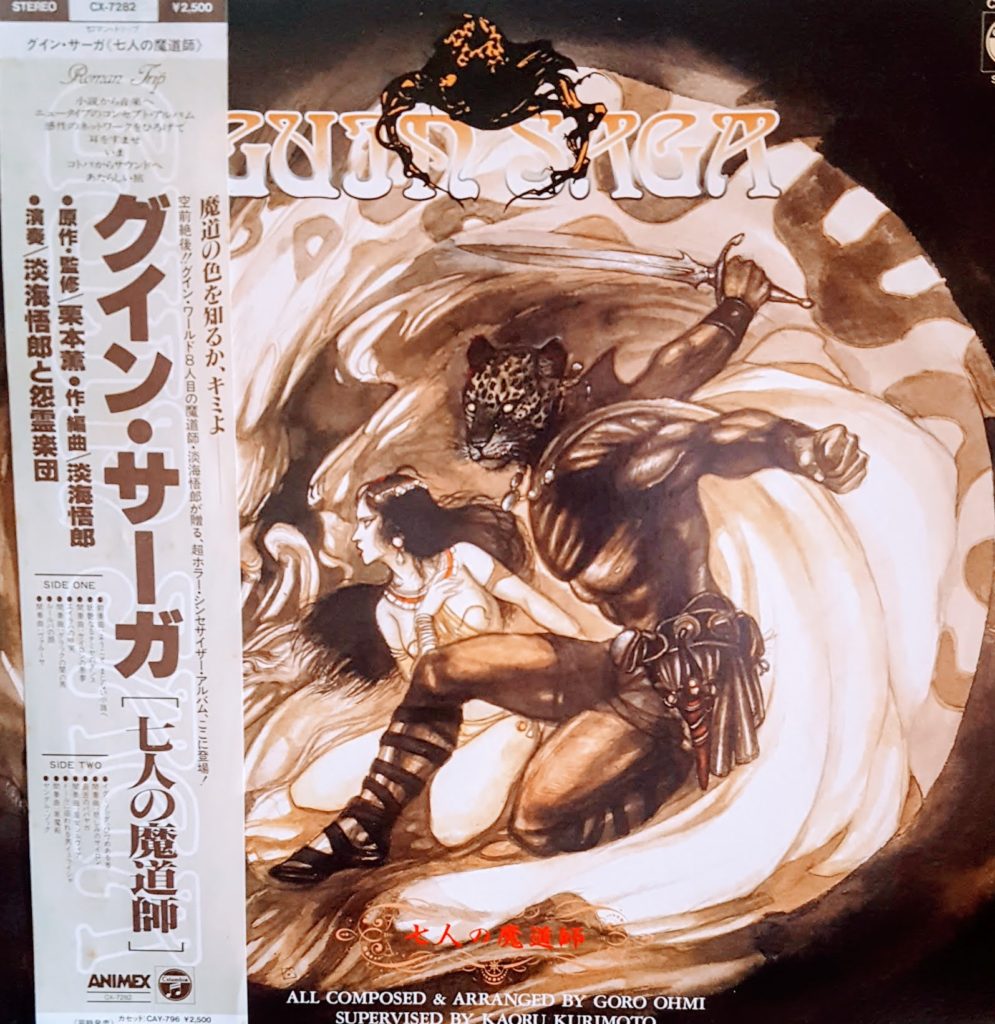
Guin Saga – Seven Mage Doctors (グインサーガ 七人の魔道師)

I have a lot of soundtracks to anime I have never seen. But they don’t hold a candle to the number of soundtracks I have to manga I’ve never read.

That’s right, soundtracks to manga.

In yet another example of how crazy a bubble economy can get, there were scores of soundtracks to manga in the mid-80s in Japan. Many of these were official releases sanctioned by the publishers, while a few were not 100% up-and-up affairs. You can always tell which ones were vaguely unofficial because they didn’t use any licensed artwork from the series, instead opting for abstract graphic designs. This is what an overwhelming number of the Synthesizer Fantasy albums do, which is one of the many reasons why they’re so dope.

From what I’ve noticed through my casual observations shifting through record store racks, a lot of yaoi (teen gay-themed romances written for straight girls) were given soundtrack releases. I haven’t bought any of them, mostly because I absolutely abhor the artistic style on the covers, far too flowery and fruity for this flower-loving fruit. I will probably pick some up eventually though, especially the ones by my favortie manga/anime synthesizer composer, Osamu Shoji.

One series that is not of the hot teenage manlove variety that I often see in the soundtrack section is Guin Saga, which is a long (long) running novel and manga series about a mysterious leopard-masked warrior who doesn’t hesitate to throw down when the time calls. There is an anime of this series now, and that anime has a soundtrack. I have not seen that anime, nor have I listened to that soundtrack. But no matter how good it is, it can’t hold a candle to the Guin Saga album I have.

Guin Saga 〜辺境篇〜 (roughly translated as Seven Mage Doctors, I think) is an all-synthesizer album much like the Digital Trip/Synthesizer Fantasy albums that I love. However, it is much more lush and varied than many of those albums are. That doesn’t have anything to do with the composer, Goro Ohmi composed many Synthesizer Fantasy albums as well as this record (and several other in the Guin Saga series), so I assume it must’ve been a stylistic choice. Whatever the reason, it certainly works this album. Guin Saga is a big adventure story filled with magic, monsters and barbarians, it needs a big sound, and this album sure as hell delivers.

The opening is very stereotypical synth, with an obvious synthesizer melody and mechanical drumbeat. But as the album progresses, Ohmi takes more liberties with his instruments at hand, delivering us synthesized string arrangements, echoing chimes and faux-choral accompaniment. It even becomes less like a collection of songs and more like a proper score at times, with ambient, moody pieces filling out a good chunk of the record.

One thing that really strikes me about the album is how much it sounds like the game music that would come in the following decade. While the SNES couldn’t have featured instrumentation as lush and involved as this, it has a similar vibe. If you told me that some tracks from this album were cut from a proposed Actraiser soundtrack, I’d believe you. I can’t really place why, it just feels right. Maybe its the rad synth slap bass. SNES tracks were all about the synth slap bass and this album is just overflowing with it.

If you’ve never heard of Guin Saga or Goro Ohmi, don’t let that discourage you from giving this album a test run. Anyone who is a fan of instrumental electronic music of the 80s should certainly check it out.

Golgo 13 Jams

Friday, June 16th, 2017

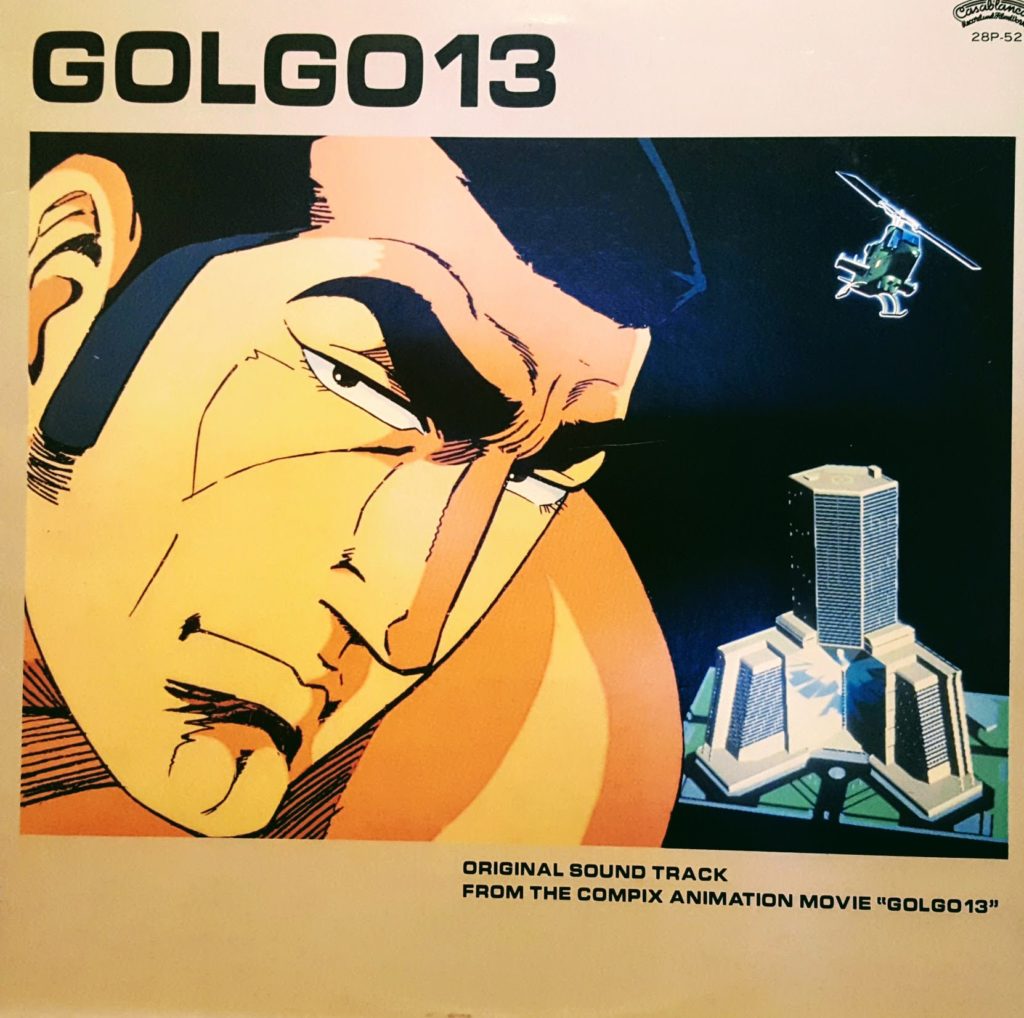
Golgo 13 Original Soundtrack
My father owned a video store until the late-90s. Around 1994 or so, he started to carry a lot of anime. The section was instantly popular with many of the high school kids in the area as he was the only store that dealt with it. All the other stores in the area were chain stores that didn’t even bother with the stuff.

I still remember that first batch he got in, stuff like Akira (of course), Wicked City, Riding Beam, and this – the first animated movie based on the Golgo 13 manga.

I, being about 13 at the time and entirely ignorant of manga as a whole, had no idea that the movie was based on the manga. I didn’t even know that the manga existed. Instead, I assumed the movie was based on the NES video game, which I played the shit out of when I was much younger. I loved that game, even though it was punishingly hard and disgustingly unfair. That didn’t stop me from playing it for hours on end. Shit, I even played the sequel and managed to somehow nearly beat it.

1994 me hadn’t played the game in a while, but I still loved it, so I jumped at the chance to watch a movie that I assumed was based on it. I snagged it from my dad’s store the second I saw it and popped it in on a lazy Sunday afternoon.

My mother was very displeased with the somewhat graphic nudity early on, but I recall her rolling her eyes and letting me continue to watch it. My mom is dope like that.

To be honest, I don’t remember much of the film. Reading the plot description on wiki, only snippets come back to me. The (disgustingly misogynistic) ending does ring a bell, but the rest of it is a blur. I certainly didn’t recall the soundtrack when I picked it up a few months back. I bought it mostly for nostalgic reverence for the video game, and the super dope cover.

I’m glad I picked it up though, because it’s pretty damn rad. The movie came out in 1983, but if the soundtrack is any indication, disco was still the hottest latest in Japan. The main theme is very disco, as are many of the instrumental numbers that accompany it. One thing that does surprise me is that it’s a predominately analog affair. While some dope keyboard riffs do pop up from now and then, the entire thing sounds very organic, more like mid-70s disco than the more electronic-influenced dance music that was popular in Japan at the time. It still sounds great though.

The composer is Toshiyuki Kimori, who worked on several other anime films in the 80s, including Dirty Pair and Arcadia of my Youth. He also released a Super Mario Bros. covers album in 1986. That goes for a pretty penny online, but I can entirely see myself caving and buying it in the relatively near future. I have no willpower for such things.

This soundtrack was only released once, in 1983, and appears to have been out of print ever since. The seller offering the sole copy available on Discogs is asking over $70 for it, which is about how much the last copy went for on the site. Happy that I found mine for less than $20! Living in Japan has so many perks.

Enjoy the assassination jams.

Moog – The Final Frontier

Sunday, June 11th, 2017

Welcome Retronauts listeners who are discovering this blog for the first time thanks to my recent appearance on that show. It was a lot of fun to be back after a long hiatus from it!

I do occasionally post game music here. I’ll probably be sharing some in the coming week or so. A good one too, something extra bizarre, so hold tight on for that. In the meantime, be sure to check out my other site, Mostly-Retro.com. I post a lot more gaming and Japan-related stuff there.

In the meantime, here’s an obscure album of synthesizer covers. Y’know, the hottest latest.

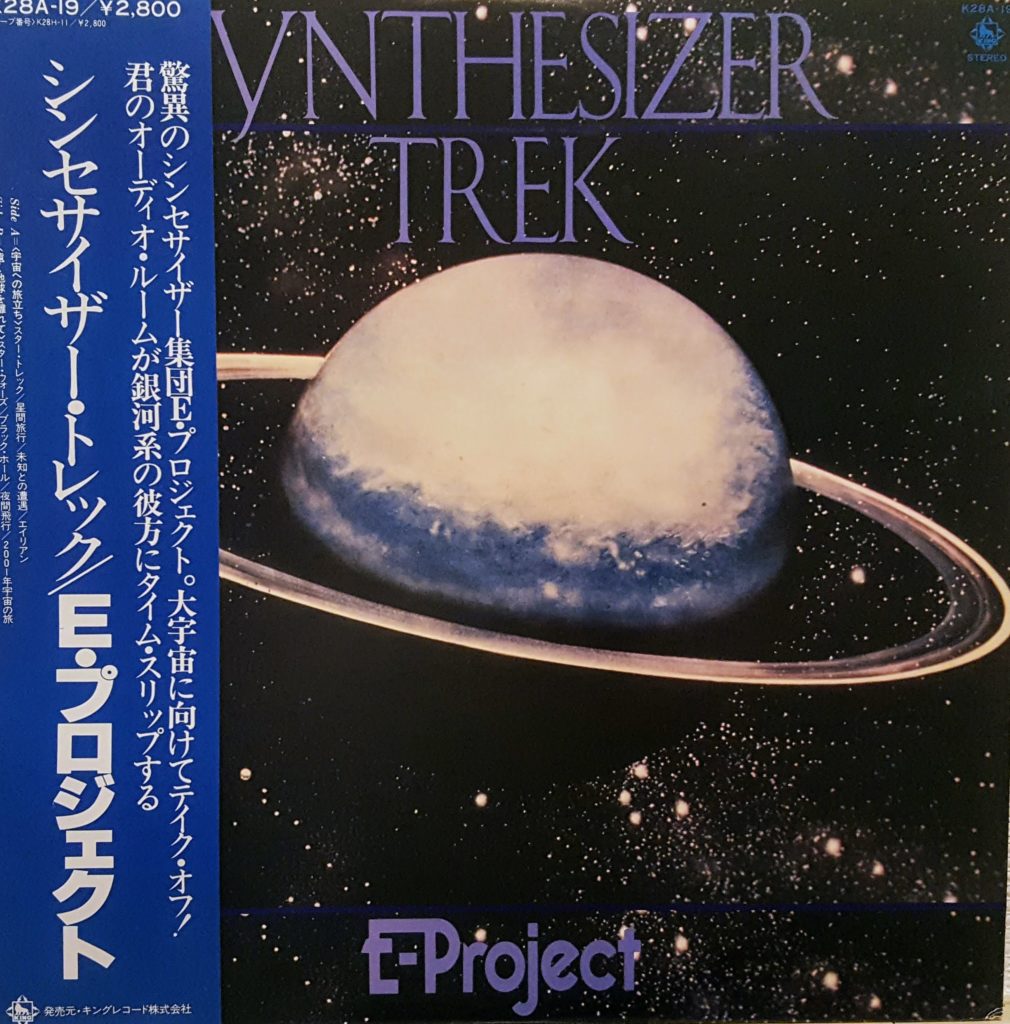
E-Project – Synthesizer Trek
The liner notes on this release don’t have a lot of details regarding who E-Project exactly is. But from digging around on the internet I discovered that E-Project is a duo comprised of Susumu Hirasawa and Takashi Kokubo. At least, that’s what a random website said.

It would certainly make sense though. Hirasawa is an incredibly influential and eclectic musician. He’s best known in Japan for his work with P-Model, an amazing group that did a bit of everything from prog rock to new wave synthpop, but he also has an extensive solo discography that I’ve been meaning to dive into a bit more.

Takashi Kokubo has also been around. He was in a prog rock act called Ring, but I don’t know anything about them. What I do know is that after this album was released in 1980 he started pumping out the amazing Synthesizer Fantasy anime/manga “soundtrack” LPs that I often mention here. He put out 10 of those bad boys in a scant three years. I own half and I can personally attest to how utterly amazing they are. Fucking rad shit even if you don’t give a shit about the anime they originate from (I certainly don’t). He also released a Bach covers album called Digital Bach, which I have, and I’m certain I’ll share here at some point.

Anyways, unlike a lot of the other synthesizer albums I’ve featured here recently, this one is almost entirely focused on newer (at the time) compositions, specifically it focuses on themes and songs from big sci-fi epics. That means you get synthesized covers of the Star Trek and Star Wars themes, as well as all-electronic takes on tunes from Close Encounters, Black Hole and even Alien. The main theme from 2001 is also included, because how couldn’t it be. Also along for the ride is the original track “Intergalactic Journey,” and “Night Flight,” a cover of an obscure song I’ve never heard of.

My favorite number on the album is the batshit interpretation of the Star Trek theme. It incorporates this wacky, weird synthesizer springy effect into the mix. Sounds like noises you’d hear if you came across Q-Bert fucking or something.

Sorry for that mental picture.

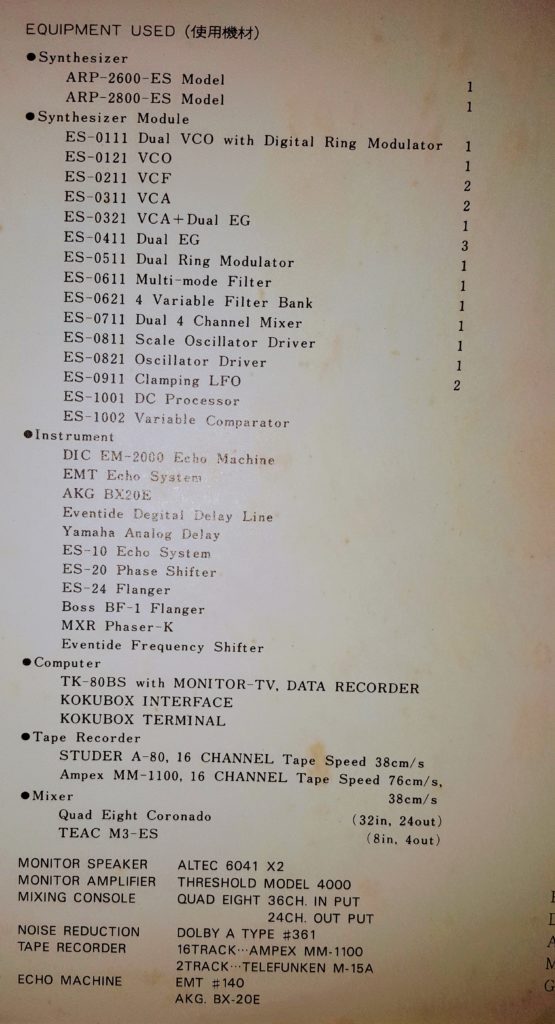
Please enjoy. And if you’re interested to find out what synthesizers were used on this album, you’re in luck, they listed them all.

Holy shit.

All Bound For Mu

Wednesday, June 7th, 2017

I’ve been ridiculously productive this past week. I revived Game Music Revue to write about the Famicom Game Sound Musuems, and I wrote a blog post about my struggles with converting analog-to-digital. I can’t believe I’ve been doing that for over ten years now. Does that make me an expert? I don’t feel like an expert.

Here’s a cassette tape. I hate them.

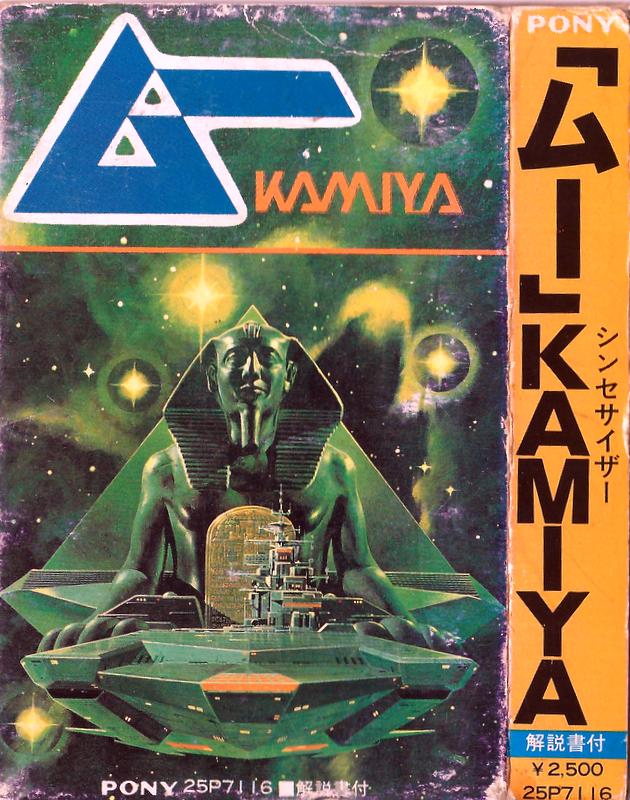
Kamiya- Mu
I hate cassette tapes, did I mention that? So I feel like such a hypocrite whenever I buy one. I was just on a podcast (coming soon) and I literally spent a good five minutes rallying against tapes and their unexpected and inexplicable revival here in Japan, only to then go out and immediately buy one.

It wasn’t my first choice though, if I would’ve seen this one on vinyl I definitely would’ve chosen that format first. I mean, look at that cover. That deserves the full 12″ treatment. (Yikes, that sounded like a euphemism.)

Anyway, I didn’t really know what it was when I bought it. I just saw that cover and assumed it was some crazy newage/synthesizer/jazz/funk thing. And I assumed right. I know that sounds like a stretch, but seriously, it feels like every other Japanese album from 1978-1981 fits in that genre.

This album is a real rollercoaster, swinging across all of those genres with some experimental and dissonant stuff thrown in as well. While it does run the gamut, its certainly more towards the easy listening, smooth newage side of the spectrum. If Kamiya was from the states, this would’ve been released on Windham Hill Records.

My favorite cut on the album is without question “Appalachian Road,” a jaunty jazzy little number with excellent vocoder use and a killer melody that’ll get stuck in your head for days. Peter Frampton by way of Herbie Hancock. “Barbarella” is a choice cut too. I imagine playing this in my space lounge, sipping space martinis with my space boyfriend – who is just my current boyfriend but with a jetpack.

Kamiya’s full name is Shigenori Kamiya and I found out after buying this that I actually have another one of his records. In 1982 he released a “soundtrack” to the manga Tomb Of The Pharoh. It was part of the Synthesizer Fantasy series, a collection of albums that present synthesized versions of popular anime themes, as well as a few original soundtracks inspired by manga. I’ve shared some Synthesizer Fantasy records before, they’re on the shortlist of my favorite things ever. If you ever find yourself shopping for vinyl in Japan and you come across any record with that label on, I suggest buying it. You probably won’t be disappointed.

Moog (Technically ARP) Tchaikovsky

Sunday, June 4th, 2017

My continued self-imposed Twitter exile has brought me more joy than I could’ve possibly imagined. Not only am I now joyfully unaware of what millions of worthless fuckball asshats have to say about important issues regarding society and the environment, I also have more time to dedicate to my writing and even some art projects I’m working on.

I mean, as I write this, it’s 7:30 on a Sunday morning. This is usually the time where I would be diving headfirst into Twitter, not only using it as a launching board to read several news stories across the web, but also to read reactions to said stories. And let me tell you, there’s no worse way to start your day than reading what Nazis think about climate change. In addition to being needlessly rage-inducing, it also is a real shitter on my productivity.

So now, instead of me wasting an hour of my life on needless bullshit that doesn’t matter, I can instead use that time to write about late-70s electronic covers of classical music.

You know, the important stuff.

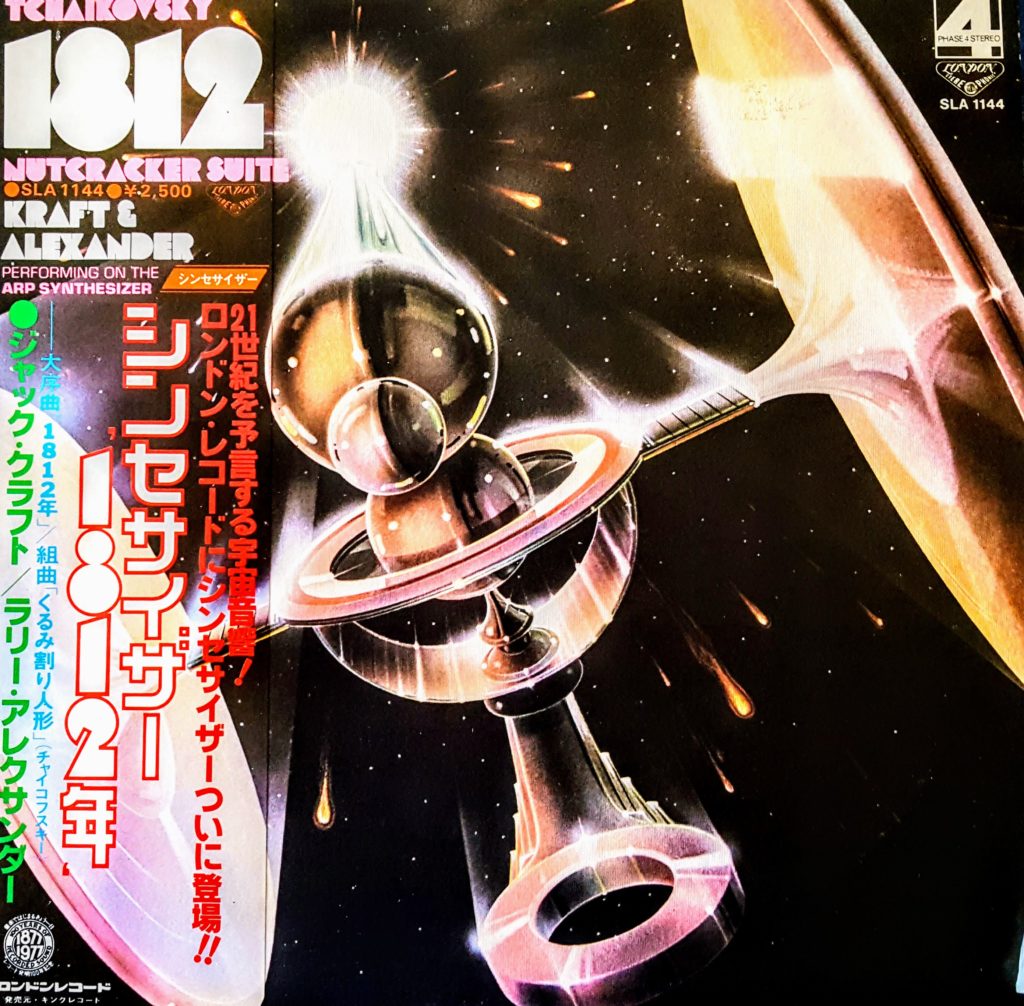
Kraft & Alexander
1812 Overture, Op. 49
Nutcracker Suite, Op. 71a
I’ve lost track of how many Moog and Moog-like (new phrase, I coined it) albums I’ve covered and written about in the 10+ years of Lost Turntable. I’m fairly certain one of my very first posts was a write-up on a Beatles Moog record. I’m not going to look that far back because it’s just embarrassing.

Regardless, I’m sure I spend many of those posts talking about how nearly all of these albums came in the wake of Wendy Carlos’ massively successful “Switched-On” series, which took classical compositions (and other works) and reworked on the then-new technology of modular synthesizers.

This doesn’t surprise me, it never surprises me when a trend, no matter how obviously limited, is milked for all its worth by the less-creative peers of the originator. But I am continually surprised by just how many of these albums there were, and for how long they were made.

1812/Nutcracker Suite (herein referred to as 1812) was released in 1977, nearly a decade after Carlos’ original Switch-On Bach album. Could there have really been an audience for this stuff for so long? And for so much of it? I’ve lost track of how many Mooglike albums I own, probably over a dozen at this point, and I routinely see more that I don’t buy; either because they look too stupid even for me (I don’t need Moog Nashville, thanks) or because they’re so rare in my resident country of Japan that they’re priced beyond the point of me caring (I refuse to spend $30 on an album of Moog pop music covers). If I went out of my way to buy every single Mooglike album on the market, even just limiting myself to the initial wave that came out in the 1970s, I’d probably fill an entire record shelf with them. I just can’t believe they lasted as long as they did.

Like I said, 1812 came out in 1977, which is rather late in the game for this genre. As such, its rather advanced when compared to similar releases. For example, this was not recorded on a Moog. It was record on various ARP synthesizers, including the Odyssey which was actually able to play more than one note at the same time, unlike the earlier synthesizers used on the Switched-On records. It also makes use of the ARP Pro Soloist, a super-early example of a preset electronic synthesizer (no big bulky patch units required). As such, it has a slightly more lush and “big” sound than some previous albums of its type.

That doesn’t necessarily mean its better. I still prefer the early works of Carlos. Her performances have more personality, and I appreciate the (relative) stripped down sound they have compared to this. But I do enjoy this record quite a bit, if nothing else for the rather ambitious subject matter. I’m sure a lot of other “Switched-On” type records tried to tackle The 1812 and Nutcracker Suites, but I think this is the only one to perform both in their entirety.

1812 is credited to two performers, Jack Kraft and Larry Alexander. It’s hard to find much on Jack Kraft, that’s what happens when you share a name with a college basketball coach, but I think this was his only credited release.

This is also Larry Alexander’s only album, although he has a long list of credits working behind the scenes. He did remix work for Paul McCartney and Lou Reed, among others, and also worked in the studio with artists like Sisters Of Mercy and Diana Ross. He was an engineer at The Power Station, a famous studio where artists such as Bruce Springsteen, The Rolling Stones and, yes, The Power Station all worked at one point or another.

I wonder if any of them ever heard this record?

Fretting over the remote possibility of nuclear war with help from The KLF

Sunday, April 16th, 2017

Okay, look.

I appreciate concern, I really do. I like that people out there are looking out for me and care for my well-being, I really do. But if one more motherfucker out there asks me if I’m worried/going to do anything about the increasingly heated conflict brewing between China, North Korea and the United States (with Japan, and by extension me, stuck in the middle) then I’m going to go nuclear and vaporize someone.

Allow me to nip your concerns and questions in the bud right now. No, I’m not worried about the possibility of any kind of military strike against Japan. This is mostly because I have enough, far more tangible things, to worry about. But I also just don’t think it’s going to happen. While I’m rarely the kind of person who says things like “the media is hyping this new story too much,” well, guess what; the media is hyping this story too much. Calm the fuck down.

Additionally, even if I had some inkling that something (whatever that might be) might happen. No, I’m not leaving Japan. This is my home and my boyfriend’s home.

Besides, there are enough dope record stores here to make the distant threat of thermonuclear war worth it. Seriously, look what I found today.

The KLF
It’s Grim Up North (radio edit)
It’s Grim Up North (Part 1)
It’s Grim Up North (Part 2)
Jerusalem on the Moors
America: What Time Is Love? (radio edit)
America No More
America: What Time Is Love? (Uncensored)
America No More (Just the Pipe Band)
Justified & Ancient (Make Mine a “99”)
Justified & Ancient (Let Them Eat Ice Cream)
Justified & Ancient (“The White Room” Version)
Justified & Ancient (All Bound for Mu Mu Land)
Justified & Ancient (Stand by the Jams)
Maybe I’ve said this before (it feels like something I would’ve said before), but one of the best things about living in Japan is walking into a random record store and seeing an “import” that you first heard about on the internet 15 years ago and never thought you’d buy. And seeing it on clearance for less than $20. I just hope I can find part one for a similarly cheap price someday. Because this thing is fucking dope.

I have probably shared many of these tracks over the years here at Lost Turntable. In fact, I’m positive that I have. However, those were all vinyl rips and many were done back when I was still learning how to rip my vinyl, so a lot of them sound like garbage. If you’ve ever downloaded these tracks from me before, you should probably download these too, they sound a hell of a lot better.

Okay, change of plans. If the possibility of a nuclear conflict does increase, then I’m gonna put my boyfriend in a suitcase (he’s tiny) and hop on a plane for Mu Mu Land. Dope beats, acid house and Tammy Wynette await me.

Soviet Synth

Thursday, June 30th, 2016

20160629_194237


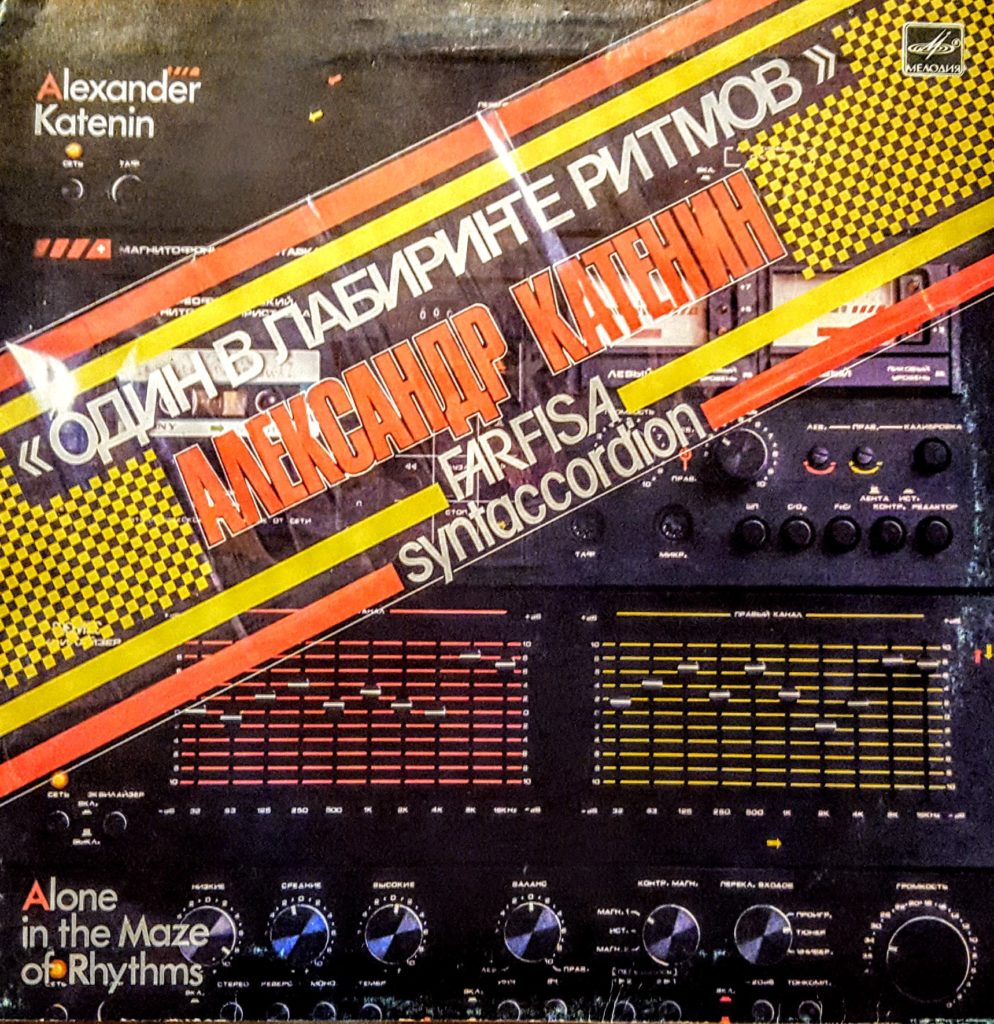
Alexander Katenin – Alone In The Maze Of Rhythms
I’ve been trying to write about this one for a few weeks now. First I was distracted by the horrible Boom Boom Satellites news and then work. But to be honest, most of the delay in posting this came not from external forces, but simply from the fact that this album is so weird that I’m kind of a loss of words as to what to say about it.

This is Alone In The Maze of Rhythm. It’s a synthesizer covers album. There’s nothing entirely unique or weird about that. There were a ton of these in the wake of Wendy Carlos’ seminal 1968 masterwork Switch-On Bach, “let’s take some classical and pop tunes and play them on Moog” was practically a genre in the early 70s. I have quite a few of them. All Moog Hair? Got it. Wanna hear Gershwin on Moog? How about Handel, Beethoven or even the theme to Flesh Gordon? Guess what, a Moog version of it probably exists.

But Alone In The Maze of Rhythm is unique, and just downright weird, for a few reasons. Firstly, while most Moog covers albums were released in the late-60s to mid-70s, this one came later. It came way later. It came 1986 later.

That’s weird. You see, the Moog covers album craze was mostly born out of the fact that most people had never even heard a synthesizer before, and that their sound was so alien that you could record damn near anything on them and someone would want to hear it, at least once. But by 1986, that just wasn’t true. Synthesizers had won. Shit, not only had the world become accustomed to synthesizers, but they were quickly becoming played out. By 1986, most of the innovation that the synthesizer brought to the pop world had been sullied and watered down to the point of banality. We weren’t getting “Cars” anymore, we were getting “I Just Died In Your Arms Tonight.” Synthpop was on its last legs.

I guess no one told the Soviet Union though, because that’s where Alone In The Maze Of Rhythm comes from.

20160629_194250

Yes, from behind the Iron Curtain comes Alexander Katenin, a man who…I know absolutely zilch about. Turns out there isn’t a lot of English information on the web about mid-80s electronic covers albums from the Soviet Union. Everything I know about the guy I dug up on Discogs. He released two albums a solo artist, both synthesizer-focused cover records, and one as a part of a duo by the name of…Гоги И Гия Бешитаишвили.

Yeah, I don’t know how to say that. You’re on your own.

So what we have here is a synthesizer-covers album composed in 1986 in Soviet Russia. And yet, we still haven’t reached the actual weird parts of this record.

One of them is the instrumentation behind the record. Not all synthesizer covers albums used Moog synthesizers, but an overwhelming majority of them did, so much that for some, Moog is shorthand for synthesizer. But there are all kinds of synthesizers out there, and this was especially the case in the 80s, with the rise of digital synthesizers like the Synclavier and the Fairlight CMI, two machines that literally defined the very sound of the 80s.

But Katenin didn’t use those. No. He chose the Farfisa Syntaccordion. That’s an accordion/synthesizer combo unit. Now, I don’t know how much of a synthesizer it really is. No way it has the range or capabilities that you might find in a Moog or Fairlight unit, but it was definitely advertised as a synthesizer, as this ad from Retro Synth Ads proves. And the album certainly has a synthesizer feel to it, far more than than an accordion one to be honest.

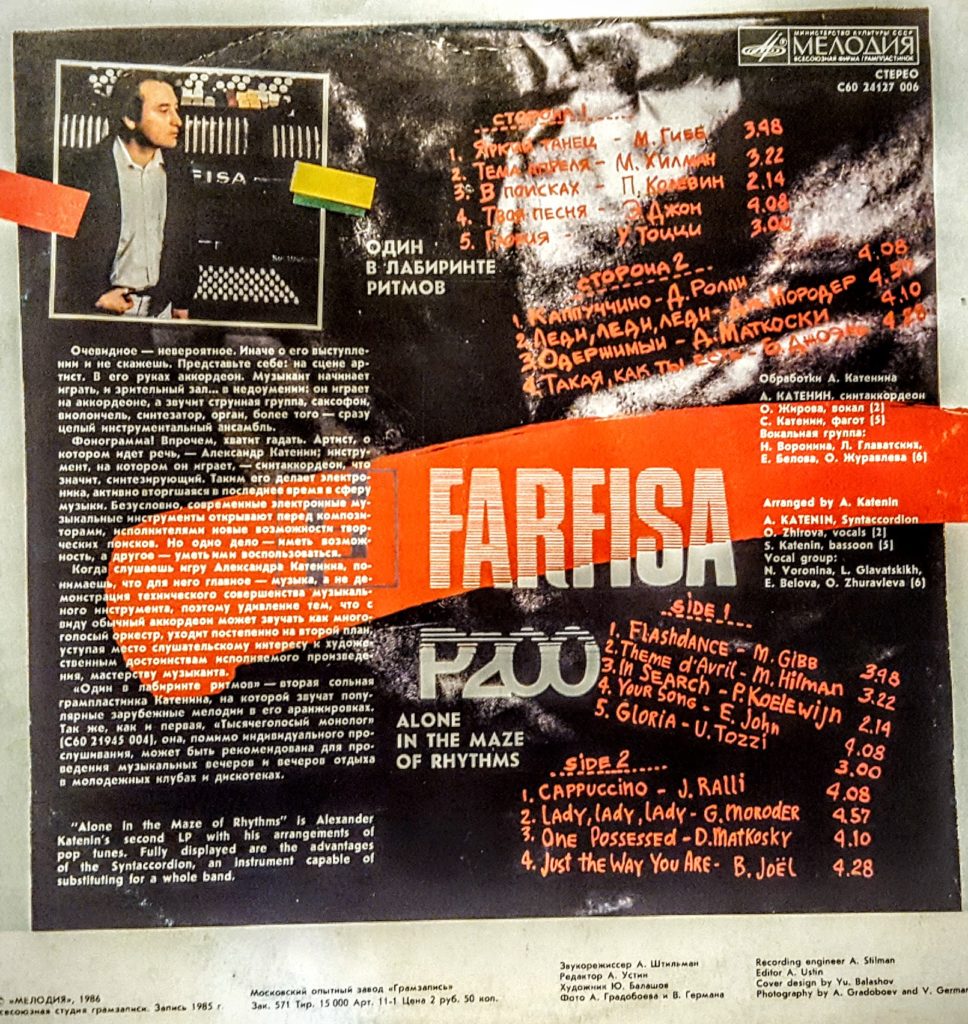
And so if you were ever thinking “I hope one day I can hear Frank Stallone’s ‘Far From Over’ performed on a strange accordion/synthesizer hybrid,” well then you’re in luck! Ditto if you were ever hoping to hear Soviet-electronica interpretations of Elton John’s “Your Song,” “Gloria” by Laura Branigan, and the theme to “Flashdance,” among others.

20160629_194254

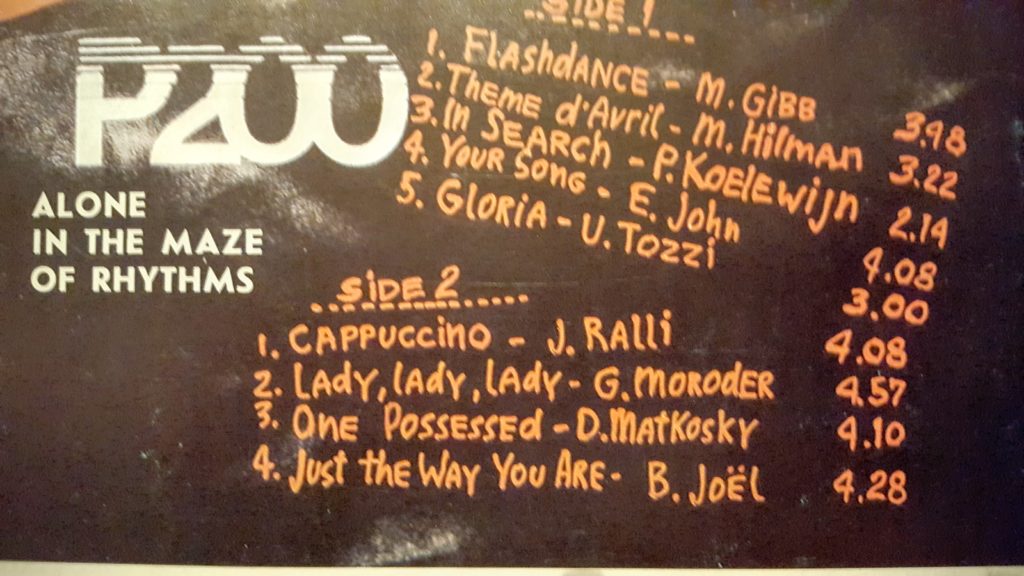
This album has an incredibly strange tracklisting, one that I can’t 100% verify, as the liner notes and record label are just straight-up wrong, with tracks in the wrong order and credited to the wrong songwriters. I did my best to fix them on my MP3s, but a few tracks, specifically “Theme d’Avril,” “In Search Of” and “Cappuccino” could still be wrong. So if you give them a listen and know what their real names/point of origins are, please inform me in the comments.

So it’s a weird record with a weird point-of-origin, a weird instrument of choice and a weird tracklisting, but is it any good? Well, I mean…no? It’s cheesy as hell. The cover of “Just The Way You Are” sounds like it was taken out of a compilation of elevator music. But it does have it’s charm. “Gloria” is a dope track that’s hard to fuck up regardless, and the tracks that I can’t properly identify are legit good. “Theme d’Avril” features an absolutely haunting vocal track that sounds all the more unreal when matched up to the cheesy beats coming out of the syntaccordion. And then there’s “Cappucino” which features a rad proto-acid house grimey bass-line paired up with odd, slightly creepy vocalizing that wouldn’t be out of place on a Goblin record.

Give it a listen. And remember that in Soviet Russia, records listen to you.

Hey, I’ve been writing about 1980s Soviet pop culture for the past two hours, I’m allowed one Yakov Smirnoff reference.

10 Years Of Being Lost: Berlin’s Information

Monday, March 21st, 2016

berlin

Berlin – Information

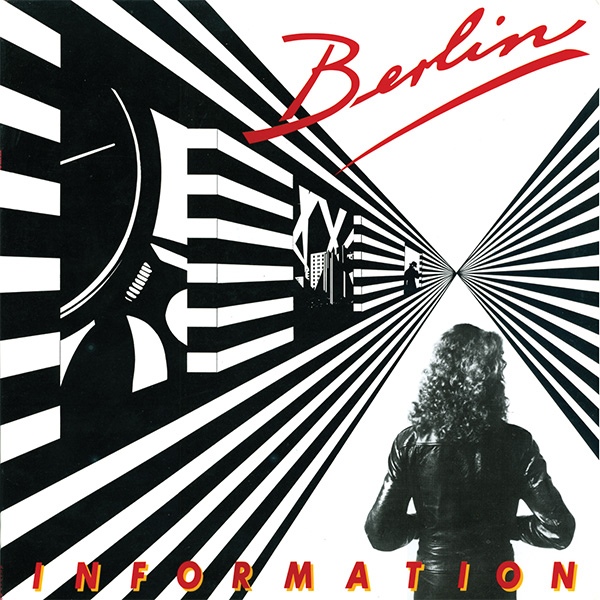
“Hey cool, Berlin. I like Berlin and this is cheap I’ll buy this” I thought, as I stumbled upon this LP in a record store nearly a decade ago.

Berlin remains one of my favorite new wave acts, and I’ve always thought they’ve fallen through the cracks of history for no good reason. They’re usually dismissed as a one-hit wonder, but that’s not the case at all. Sure, “Take My Breathe Away” was a mega-hit that made any other success they had seem minute in comparison, but before that Moroder-penned tune launched them to super-stardom, the group scored a few minor hits with awesome tracks like “No More Words,” “Dancing In Berlin,” and the incredible “Metro.”

All those songs are from the group’s 1982 major-label debut Pleasure Victim. And if you check them out on iTunes, any record store, or even on Berlin’s own webpage, that’s usually regarded as their full-length debut. But that was not the case, as I discovered when I bought this record. Turns out that Information was Berlin’s first album, recorded and released in 1980.

Although to be fair, it’s barely a Berlin album. Most notably, Terri Nunn is nowhere to be found here, having left the group for a short time to pursue an acting career. Replacing her is one Virginia Macolino, whose vocal stylings are notably different than Nunn’s. While Nunn dipped her toes in a more detached and robotic vocals to match her band’s all-electronic sound, she was never afraid to let herself go and really belt it out when needed. Macolino, on the other hand, is full new wave, almost punk rock, in her approach. Her style reminds me heavily of Patty Donahue from The Waitresses, detached with an aura of irony throughout.

Macolino isn’t the only change. This early incarnation of the group also features a different bass player by the name of Jo Julian, who also served as the album’s primary songwriter, alongside guitarist Chris Velasco (who did stick around for the band’s more well-known records) and original vocalist Toni Childs (!!!) who is credited as a songwriter for four of the album’s tracks. Keyboardist John Crawford, who served as the primary creative force for the band’s biggest years, only contributes to a handful of tracks here.

The result is a drastically different sounding record when compared to what would come just two years later. While Pleasure Victim is clearly influenced by the poppier side of synthpop that was just beginning to make itself known thanks to acts like The Human League and Flock of Seagulls, the Berlin of Information is far more robotic and futuristic. Again, comparisons to The Waitresses could be made here, as well as Gary Numan and pre-Dare Human League. Pleasure Victim was all about sex and romance, Information is far more of a socially conscious record, touching on themes like nuclear war and the drollness of middle class life, while bouncing back and forth sci-fi themes like robots and mind control as well. The only song on Information that sounds like the Berlin we would come to know is “A Matter Of Time,” which actually was a pre-Macolino track that was originally recorded with Nunn, with that version appearing on their greatest hits album.

Aside from that one track, everything on Information remains woefully out-of-print and hard to track down. It was only released in 1980, and from what I can tell it only got a single pressing. Turns out that I was lucky to score my copy for less than five bucks, good copies online usually go for between $20 and $40. Not a buried treasure by any stretch of the means, but a bit on the pricey side.

Equally hard to come by is information by the band members who left after Information. According to Discogs Jo Julian went on to work with some metal acts, including Alkatrazz and Samson, but that’s a pretty big geographic/style switch, so I suspect that might be another Jo Julian.

As for Virginia Macolino, for someone who never broke through to the mainstream she certainly got around. Before Berlin she fronted the punk act Virginia And The Slims, of which you can find an incredibly in-depth write-up on by a former band member here. After Information she returned to her punk roots with the hardcore act Beast Of Beast. They never made it anywhere either, but they did manage to record one album, 1983’s Sex, Drugs and Noise. It pretty rare now and goes for a mint online and one listen will tell you why – it’s a pretty damn great hardcore punk album, totally revolutionary and ahead of its time. More people need to hear that one.

After that, I can’t find much else. Apparently she dated Joey Ramone for a while in the 90s, so even though she wasn’t recording music professionally she was probably still involved in the scene at that point. Sounds like she’s had one hell of a life.

Information isn’t Berlin’s best, I still think that would go to Pleasure Victim, but it’s a great time capsule showcasing the pre-MTV era of synthpop, a darker, more eccentric sound that was still a couple years away from the shine and polish that acts like Duran Duran would give it. Of all the out of print albums I’ve found by accident while writing this blog, it’s one I treasure the most.