Obscure synthesizers and amazing suits

July 21st, 2020

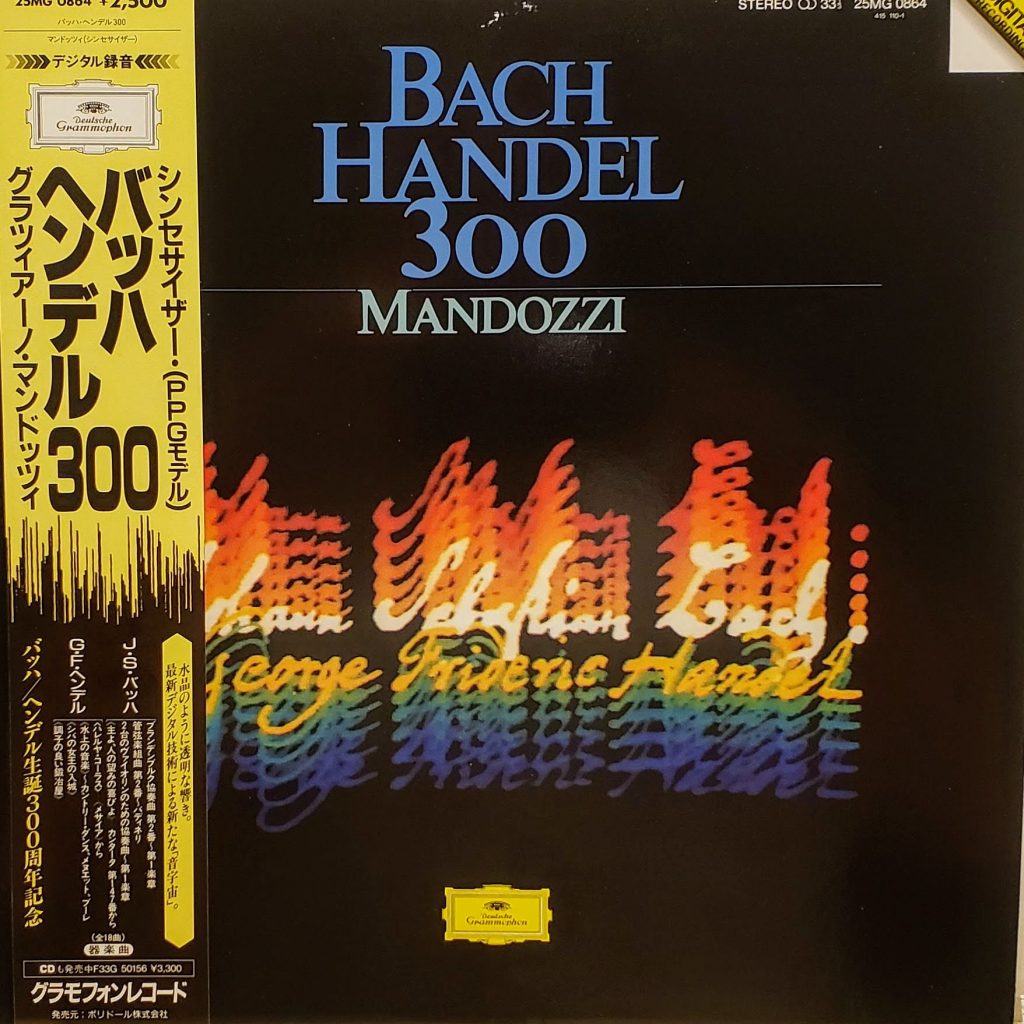
Graziano Mandozzi – Bach Handel 300 (complete album)
Sometimes I want to write about something even though I’m woefully lacking in the knowledge to do so. Here’s one of those times. Apologies for omissions or errors. Correct me (politely) in the comments!

Bach Handel 300 is a collection of synthesizer covers of compositions by (duh) Bach and Handel. It was originally released on by the influential and prestigious Deutsche Grammophone record label in 1985. Now, if you’re like me and you obsess over synthesizer covers of classical compositions, that date probably surprises you. Most classical synth albums came out in the first half of the 70s, all of them riding the coat tails of Wendy Carlos’ legendary Switched On Bach album. By the mid-80s, the novelty of the format had long worn off. Even in Japan, where synth covers albums seemed to be much more popular, I don’t see many from after 1978.

But this one probably had a very specific reason for existing; I think it was serving a commercial for the synthesizers used on the album. This album doesn’t feature Moogs, nor Korgs, nor any early digital synthesizers like the Fairlight or Synclavier. This album was made entirely on PPG Wave synthesizers. PPG was a German company. Deutsche Grammophone was a German label (duh) so, yeah, the synergy makes sense.

Never heard of the PPG synthesizer? Me neither! But apparently they were used a bit by synthpop acts of the era, if the Wikipedia page is to be believed. I’m not very good at picking up individual synths in songs aside from old-school moogs and the Synclavier, so I couldn’t tell you which songs have good examples of the PPG Wave, but I know they’re out there.
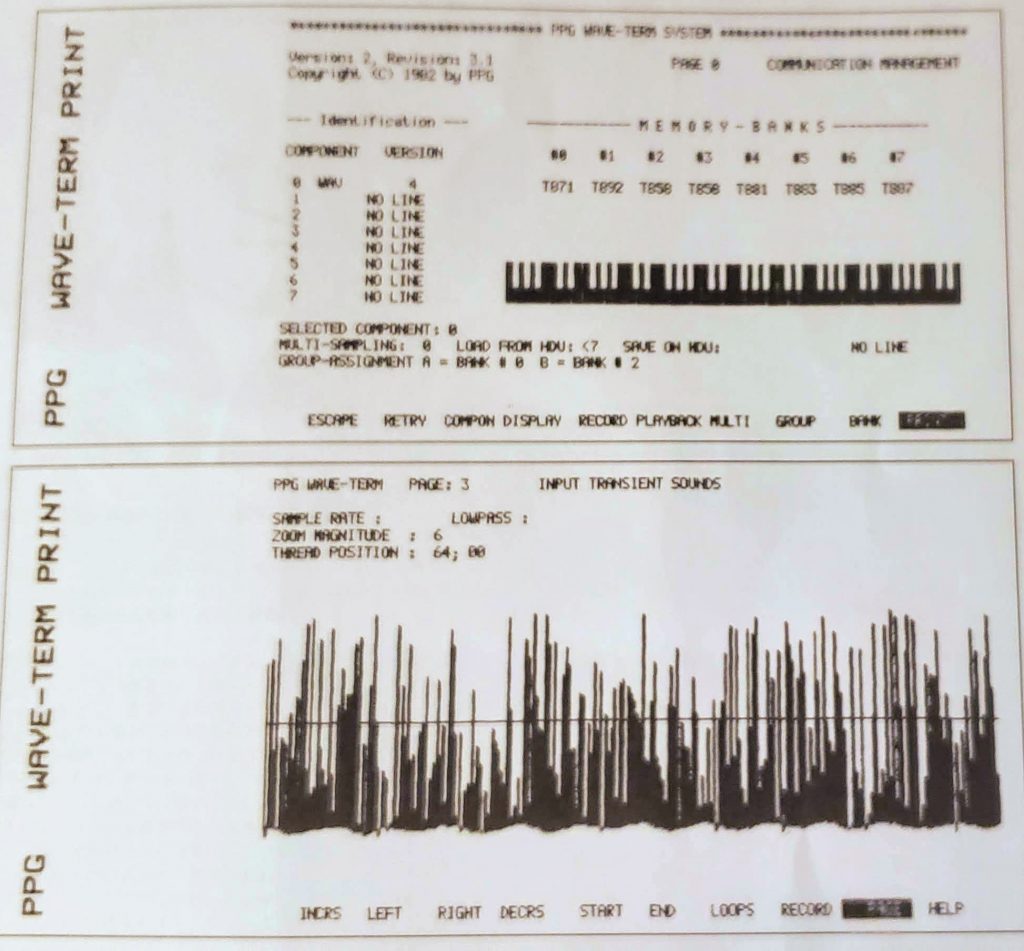
The PPG Wave was a different style of synthesizer. While the synths of the 80s were almost exclusively pure analog, and the synths of the 80s were digital affairs, the PGG Wave series were something in-between, analog/digital hybrids that provided a wide range of sounds with superior audio quality. They were apparently groundbreaking in a few different ways, but again, this is not my element so I’m not going to speak too much about it. But I will definitely say that the PPG has a unique sound that reminds me of analog synths of the 70s, with the variety and range of the 80s digital stuff. You get your warped, ghostly analog sounds alongside your crystal clear, bright, 80s notes. It also has a grit to it that was probably to its detriment at the time, but gives it a unique quality now that makes it stand apart from the cleaner all-digital synths of the era. I have another classical synthesizer album from the same year called Bachbusters. It’s on all digital synthesizers. It’s boring as hell. This one has way more personality.
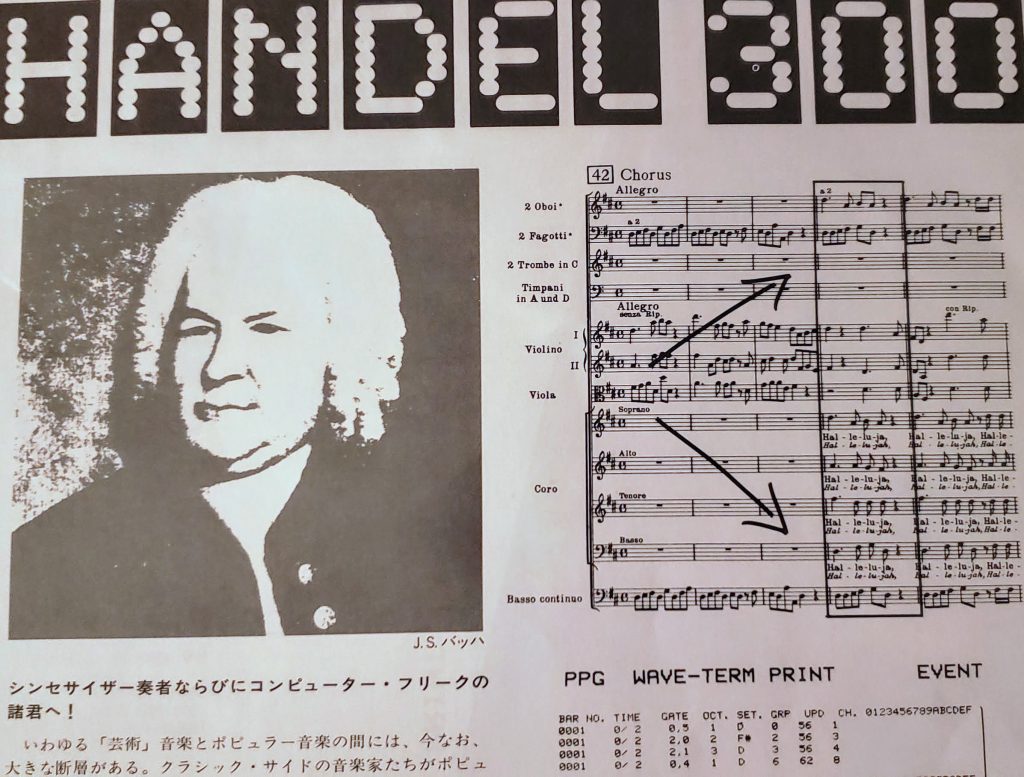
But it never did reach the popularity of those other synths, sadly. This album came out in 1985, and PPG went belly-up just two years later. A lot of PPG systems still seem to be out there though, so if you dig the sound on this album head over to YouTube and you’ll find more examples of the sounds it can create.

I just realize that I’ve spent over 500 words going over the synthesizers used on this album but I haven’t even mentioned the man playing them! The man with a fantastic mustache and wonderful suit, exuding the confidence that only a man surrounded by thousands of dollars of digital equipment can.
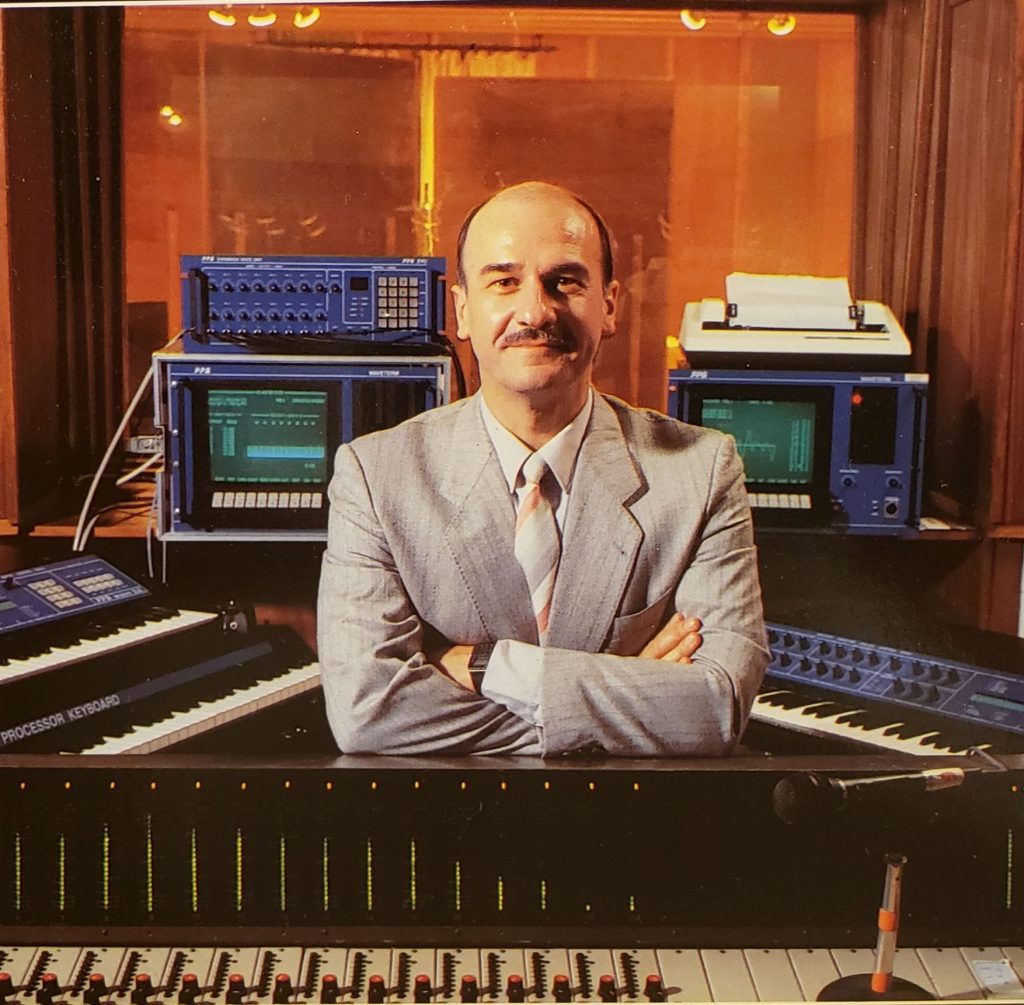
That would be one Graziano Mandozzi, credited on the album as simply “Mandozzi” like he’s synth Prince or something. Ballsy move. I respect it. A Swiss composer, Mandozzi has a short, but insanely interesting discography that I hope to dig into more. He has an album called Masada that was recently released on vinyl and digitally via Bandcamp that is just insane. It’s some funk/jazz/experimental/psych rock monstrosity that was apparently the soundtrack to a ballet?! How anyone danced to it is beyond me. It’s rad as hell though. If you download this and like it, do the right thing and go buy that album to show support. Digital copies are cheap, and the vinyl comes with a download code.

I feel like I end all my posts recently in the same way, but I hope you all are doing well out there. Things are really scary right now, especially in the states. If you can, stay home, listen to stupid records like this and get drunk. That’s what I’ve been doing and it usually works for me.
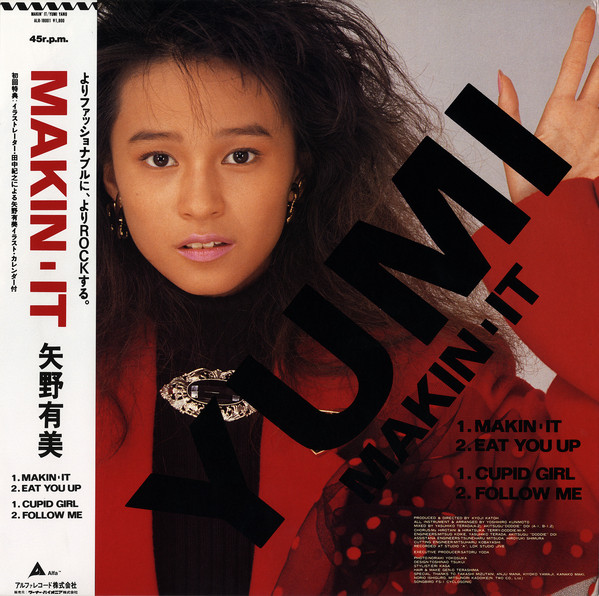

Yumi Yato Yay!

July 12th, 2020

Yumi Yato
Makin’ It
Eat You Up
Follow Me
Cupid Girl
Cupid Girl (Rollercoaster Version)

Yumi Yato is one of those artists that I stumble upon, get really into, and then hit a brick wall when it comes to finding out damn near anything about them. I feel that it’s safe to assume that she wasn’t all that popular, but developed a cult following years later. I parsed this out by seeing that she has an extensive Japanese wikipedia page, and many audio rips on YouTube, but no normal person in Japan that I’ve talked to has any idea who the hell she is, and original copies of her sole album and few singles go for a fortune on Discogs.

That, and my boyfriend has never heard of her, and he knows his 80 idols.

I assume her albums go for a bit online because nothing of hers was in-print or available on CD until last year, when a 2CD set comprised of her album and all her single tracks was released here in Japan. That’s how I found her, picking up the CD on the strong recommendation of the guy at Mecano, the synthpop music store in Nakano Broadway.

He knew I loved synth and sampler-heavy 80s pop and figured I would dig this. He figured right. Because while her album is good, not great, but very good 80s Japanese pop music, the bonus single tracks are fucking fire. They have all the synths. Give me all the synths. I need more synths. It’s the only way I can feel anything anymore.

The album proper came out first, the bonus tracks are from singles that came out later. They have an energy and an inventiveness that the album itself lacks. And the songs are just better. They’re catchier with better hooks and stronger melodies. “Makin’ It” is a killer track. It sounds like a theme song to a lost 80s sitcom about “makin’ it” in the big city. Or maybe it could have been used as a track to a raunchy teen sex comedy about “makin’ it” in a much more carnal fashion. “Follow Me” follows (hah) in the footsteps of “Makin’ It,” and is just as frantic and frenetic as that tune. The tempo never stops and it never gives you a chance to rest. It’s hard to listen to either track while sitting down. I’m tapping my feet so hard that my downstairs neighbors are liable to kill me. Or maybe I’m just drunk and have too much energy from being pent up in the house all day/week/month/year WHO KNOWS?!?!

“Eat Me Up” is a bit slower, but also a bit more emotional and powerful. Of the tracks I’m sharing tonight, Yano’s vocals are the strongest here. If this isn’t a touch song it’s definitely a “I need that ass” song. Good synth/sequencer/samplers here. Sounds like Erasure.

It’s actually hard to compare these tracks to Western pop music of the era. These singles all came out in 1985 or 1986. I’ve recently been writing a lot about music from that same time. Very little of it sounds like this. In mid-80s America, we were down with Dire Straits, Duran Duran and Mr. Mister. The biggest synthpop song of the year was “Take On Me,” and let’s be real that was because of the video. We just weren’t the audience for stuff like this. We were still giving hit records to John Cafferty and the Beaver Brown Band. We couldn’t take “Follow Me” and its layers upon layers upon layers of every computer, keyboard, and drum pad imaginable. England was giving The Art Of Noise hits in the 80s, maybe they would’ve been receptive to this stuff more.

Of these tracks, the only one that sounds like it could’ve been in a hit in America to me is “Cupid Girl.” It’s a little slower and a little more restrained. The synth keyboards are scaled back just a touch and it’s mostly just percussion and bass, a bit like a slower Madonna tune. And the melody has a melancholy feel that gives the song a slightly somber feel that’s definitely lacking on the other, hyper-energetic tracks. Of course, I have no idea how well if fared in Japan. Maybe it was her biggest hit! It’s a solid tune, but I prefer the “Rollercoaster Version” it takes the song and beats the fucking shit out of it. Sampled elements are chopped up and repeated, breakdowns are extended, some fucking record scratches thrown in for no damn reason. It’s crazy. It makes no sense. I love it.

Strangely enough, Yoshihiro Kunimoto, who brought us the game music remixes of my last post, worked on all of these tracks as well. I did not plan that. I swear. Cosmic synthpop powers are at work to make this coincidence happen. It makes sense though, his synth work on those tracks was top-notch, he would’ve had to have been an in-demand session guy at the time.

Also, he’s not the only game music connection on these tracks! All of Yumi’s songs were produced by Kyoji Kato, who went onto produce a lot of Yuzo Koshiro’s work, including the Streets Of Rage soundtracks!

Small world.

Or, more accurately, Japan is a small country with a small music industry.

Re-arranged Tecmo Tunes

July 1st, 2020

Yoshihiro Kunimoto
Star Soldier (Arrange Version)
Championship Road Runner (Arrange Version)
Super Star Force (Arrange Version)
Mighty Bomb Jack (Arrange Version)

I stumbled into a riches of vintage game music this week, thanks to a soundtrack sale at HMV, walking away with two rare game music vinyl records.

The first was the single for the theme to Star Soldier, a 1986 schmup by Hudson. This version of the Star Soldier theme is different than the arrange version (Japanese game music English for “remix”) that appeared on the Hudson Game Music LP. The version from that LP was great, this version is RAD AS HELL. It’s so good, seriously it’s so good! It’s great! It’s like the theme music to V meets the theme music to Dallas meets the theme music to Knight Rider meets Tron. It’s bombastic and big, with massive power chords rocking those keyboards 80s style. The drums got that gated reverb to the nines, and whoever was playing them was smacking the everloving shit out of them. And the bassline (SYNTH BASS YES MORE SYNTH BASS) grooves and just keeps the whole thing moving until it builds to a fantastic crescendo that then fades away for that dope as all hell keyboard melody’s encore performance. THOSE DRUMS ARE SO GOOD.

The b-side is another arrange version, this one for Championship Road Runner. It’s very weird. Again, it’s still all synthesizers but the mood is 100% different. It starts out as a music box lullaby. Eventually more sounds are added to it, giving a robust and big sound, but still more low-key and relaxed and the theme to Star Soldier. It reminds me of the underwater music in a Mario stage, kind of ethereal or dreamy. It’s not as much of a HARDCORE BANGER as the Star Soldier music, but it’s a solid take nonetheless.

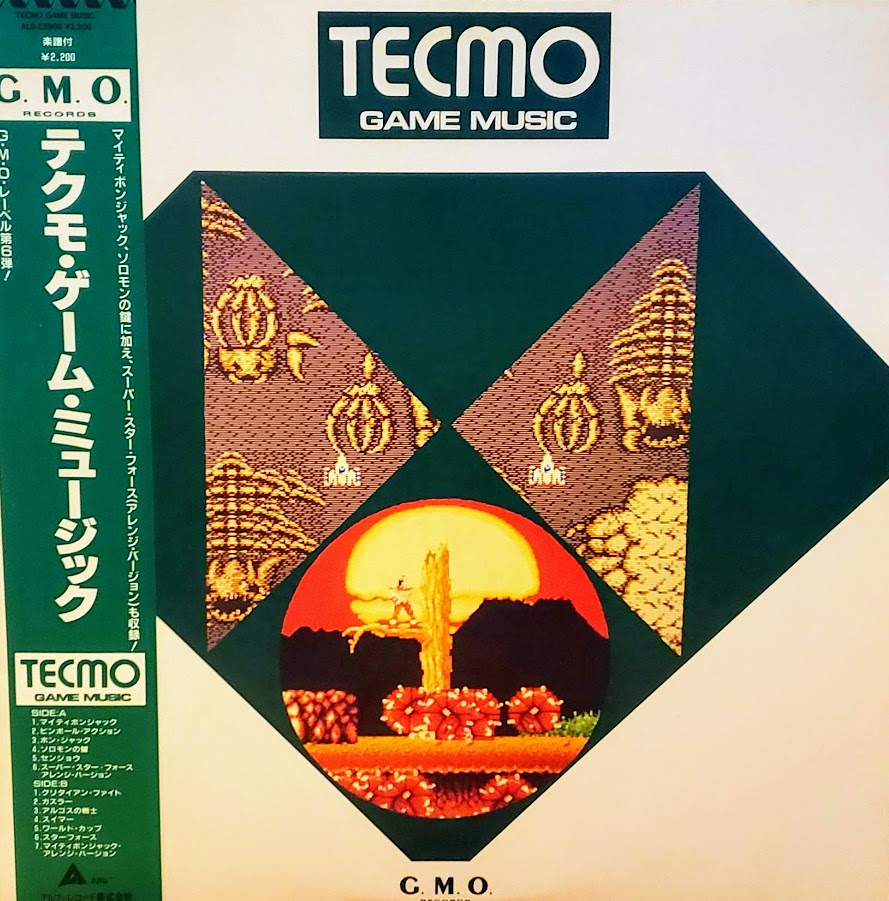
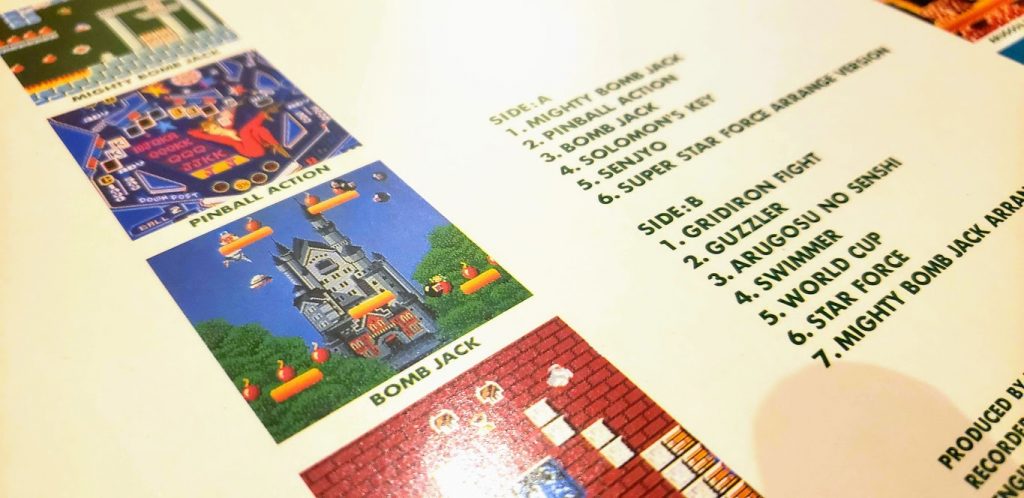
The other release I picked up was the Tecmo Game Music album, which also came out in 1986. Like the single, it was a GMO release. As I’ve mentioned before, GMO (Game Music Organization) was a sub-label of Alfa Records, set up by members of Yellow Magic Orchestra for the sole purpose of releasing game music albums. Almost all of their early album releases are compilations dedicated to single game companies. There’s Nintendo Game Music, Taito Game Music, Data East Game Music, and so on. Games didn’t get album-length soundtrack releases back then, I assume because no game had enough music to fill an entire LP. It wasn’t until Dragon Quest that we had proper video game soundtracks.

Like most of the GMO releases of the time, most of Tecmo Game Music focuses on straight rips of game audio. Sometimes they even had sound effects put over them, so it was more like you hearing someone actually playing the game than a proper recording of the game’s music. It’s honestly a little annoying.

But two tracks of Tecmo Game Music were arrange versions. The last track on side A is the remix of the music to Super Star Force, a strange-looking shooter that seems to be half Xevious and half The Legend of Zelda. It’s a space-themed game, but instead of going the over-the-top route of the Star Soldier arranged version, this one starts by playing up the “spacey” aspects of the music with more of a Close Encounters vibe. Very mysterious sounding. Then it picks up and goes full-on Giorgio Moroder in Electric Dreams. I dig it. Great keyboard melody.

Of the bunch, the Mighty Bomb Jack arranged version is the most video gamey. It’s very focused on the melody and sound effects from the game, and at times goes too minimal in my opinion, barely sounding like an arranged version at all. But the second half of the track picks things up with some great, light, upbeat synthesizer melodies and its saved. This sounds like the soundtrack to a children’s cartoon or something. It’s so damn happy. I needed that.

All of these remixes were by Yoshihiro Kunimoto, who was GMO’s in-house arranger for most of the mid-80s. I think he did the arrange versions on all their early releases. I wish it was possible for GMO (or whoever owns them now) to do a compilation of all his work, he was really good at this stuff. I assume legal rights to all of the music by all of the companies would make that an impossibility though.

Stay home and stay safe with arranged video game music everyone. And if you have to venture into the horrible, terrible, no-good world, for the love of dog wear a motherfucking mask.

Earth, Wind & Fire for an Earth on Fire

June 28th, 2020

Sorry I’ve been a bit absent this month. If you follow me on Twitter, you’ll know that I’d had a bit of a rough one. It’s all Doug TenNapel’s fault (again).

You can read a summary of it on my other blog. And I have a few Twitter threads that continue to elaborate on it. Here, here, and also here. I’ve blocked approximately 100,000 people because of all of this, so if you see any death threats or homophobic content directed my way on Twitter, please report it. Thanks.

In the meantime, how about some fun happy songs for fun happy times, should they ever return again.

I hope all of you America are doing the best you can to stay safe, and ignoring the asshat ignoramuses who aren’t.

Earth, Wind and Fire
Let’s Groove (Restless Soul Inspiration Information Mix By Phil Asher)
Shining Star (DJ Jin Asakusa Samba Remix)
September (FPM Beautiful Latin Mix)
Boogie Wonderland (Inspiration ’83 Mix By Slowsupreme)

Not to bring things down again, but it was recently announced that the fantastic Shibuya Recofan store would be closing down soon.

This place has a great and diverse selection of LPs, but for me their selling point has always been their jaw-droppingly massive CD section. When we found out that they were closing, my friend and I spent over two hours just browsing their used CDs, and we still weren’t able to get through everything. I’m going to have to make a return trip soon.

They just have everything, both cheap and pricey, mainstream and obscure, import and domestic. You want an SHM-CD paper sleeve re-issue of Manfred Mann’s first album? They got it. Want the budget re-issue in a cracked jewel case for Â¥500? They got that too.

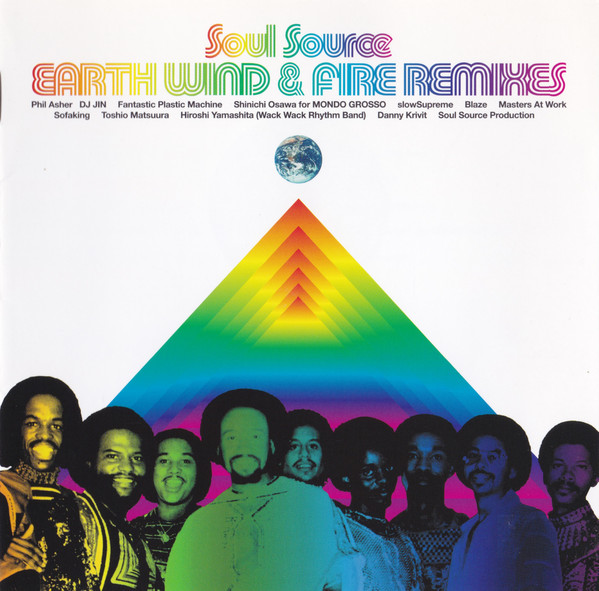
And every time I go there, I end up picking up something that I didn’t even know existed, like this strange Earth, Wind & Fire remix compilation. It’s called Soul Source, and from what I can gather it was only released on CD in Japan and Australia. It’s amazing, and I would have never even known that CD existed if it wasn’t for Recofan. Who knows what amazing, weird, and rare releases I’ll never discover after Recofan shutters for good. I shudder to think.

Oh yeah, this was supposed to be about happy times.

I’m sharing the biggest tracks on the album here. Let’s be real, you buy an Earth, Wind & Fire remix compilation to hear remixes of these four songs, anything else is a bonus. The rest of the album is pretty good, but these mixes blow the others out of the water, mostly because the original versions of these songs are all stone-cold all-time killer dance classics. We were lucky we got to live in a world that had 70s and early 80s Earth, Wind & Fire, I tell you what.

Of these four, my favorite is probably the remix of “Let’s Groove” by Phil Asher. Great acapella opening that transitions to a solid remix, even if it doesn’t change it from the original all that much. Let’s be real, it wasn’t broke, why try to fix it. The mix of “September” is interesting and brave, taking the original track and injecting it with a Latin style. I don’t know how well it fits together, and the original is of course the superior version, but it ain’t bad. “FPM” is Fantastic Plastic Machine, a dope as hell dance act from Japan that’s been making radical dance and club music since the late 90s. I recommend a lot of his work from the late 90s and early 2000s, but avoid all his YMO remixes, they’re atrocious.

I don’t know much about the other two remixers, but their mixes are great too. The “Shining Star” mix really changes the original instrumentation by adding what feels like mountains of percussion, but it doesn’t change the overall structure of the track, which is good. The “Boogie Wonderland” remix is way more electro than the original, with some good squelchy acid sounds put in. I could listen to squelchy acid sounds all day, so I approve.

Again, stay safe out there. If you’re looking for some content to absorb as you hopefully stay home more than usual, I have been updating my other blog, and not just with posts about has-been bigots. I’ve been doing a retrospective of MTV’s Top 100 of 1985. Check out part one here! I up to part four now and hope to get part five done this week!


A song no one has ever heard sine 1981.

June 8th, 2020

Tonight, a stupid post about nothing with a song of no substance whatsoever. Writing is hard at the moment but I’m trying. Everyone take care out there. Donate to Black Lives Matter if you can. I’m sorry I’m not up for making a more detailed or impassioned statement in regards to the matter, but y’all know how I feel about this stuff already I would hope.

Take care of yourselves.

The Tong
Data
You ever hear middling 80s rock and think, “boy these guys sure sound like…” but you can’t finish the sentence because the act is so bland, so boring, and so forgettable that you can’t even place who they sound like?

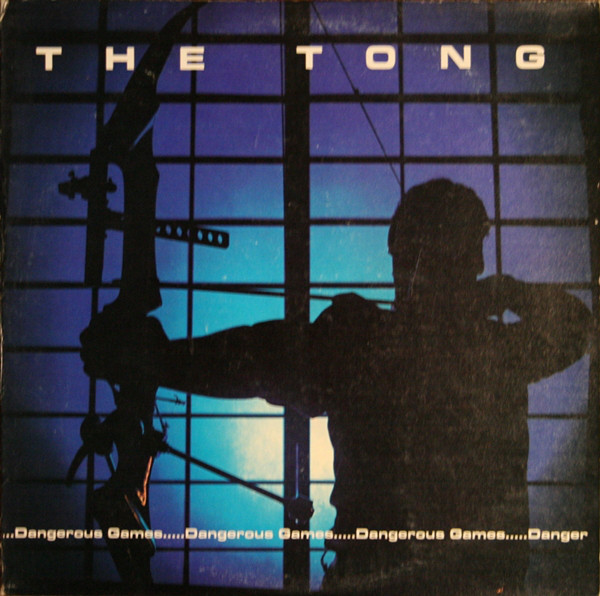
Yeah, that’s The Tong. If you’re like me and dig through crates forgotten new wave groups, you’ve heard a billion acts like The Tong, but good luck trying to remember the names of any of them. They all sound the same, Mr. Mister divided by The Cutting Crew. New Wave minus the New. They sound like a bad version of The Tubes (someone from this group was also in The Tubes, so I guess that checks out).

To be honest, this group sounds like every third-rate Canadian new wave band my Canadian friend tries to get me into, but somehow worse and less reminiscent of Corey Hart.

So why the hell am I posting any music by them? Well, while The Tong were not a good band, and their sole album, Dangerous Games, is not a good album, but they managed to put out one very good track on it. It’s a very good track because it sounds nothing like anything else on the album. “Data” is a purely instrumental space disco number built entirely on keyboards and sequencers. It’s fantastic, the kind of instrumental electronic music I always want to hear but can never find enough of. I wonder how the hell that happened.

Mingo Lewis wrote/performed this. He was the member of the group who was in The Tubes. He was also in Santana. So, dude knew his stuff. Too bad he didn’t do more electronic music, if this track was any indication he certainly has a knack for it.

BONUS TRACK
Sheena And The Rokkets – Radio Junk
This song makes me happy. It was written by Yukihiro Takahashi of YMO and features additional members of YMO performing alongside Sheena and her wonderful Rokkets. It’s my goto good time jam for bad times and I hope you dig it.

ACAB

June 7th, 2020

Took a week off. Too angry.

Still too angry, but oh well.

Fuck all racists. Black Lives Matter.

Body Count – Cop Killer
I’ll post this whenever pigs kill someone and think they can get away with it. You know me. I always like the classics. Too bad Ice-T sold out and became a TV cop on copaganda bullshit TV.

By the way, if you want to contact me on Twitter for the next 12 hours don’t bother.

I was mean to a racist posting anti-black nonsense and got suspended.

The white nationalist who threatened to kill me still hasn’t been suspended by the way.

Fuck all racists. Black Lives Matter.

PS: racists who want to reply to this, don’t bother. This is my site motherfucker.

Tomita covering Elvis and such

May 27th, 2020

Japan has been lifting its state of emergency gradually over the past couple of weeks, as cases of the coronavirus here have declined. Last week, most record stores in Tokyo finally re-opened.

I’m still being cautious. I don’t want to take the train right now, so I’m not going to a lot of my absolute favorite stores, but I did make the quick walk to Shinjuku to check out the Disk Union stores around there.

The first thing that struck me was how deserted the area around the stores was. That part of Shinjuku is usually crowded. It’s right next to a major entrance, has dozens of restaurants, and several department stores. But walking traffic was down by about 75%, there just weren’t many people out. A lot of bigger stores are still closed, and people aren’t eating out as much, so that probably had a lot to do with it.

The Disk Union stores in Shinjuku are absolutely wonderful, but they’re all a little cramped. Social distancing in those stores is an impossibility. There were signs up that said they might limit the number of people allowed in at once if things got crowded. Additionally, masks were 100% mandatory, as was using the provided hand sanitizer whenever you entered a new floor. There were also plastic curtains up that separated the customers and the clerks. Any floor that had windows (not many) had them open. The first floor Union Record store I went to had their front doors open. They were also the most reorganized, doubling the amount of space in front of the registers to allow for greater distancing between people.

Are their solutions perfect? No way. As I said, the stores are small and cramped, there’s no way for them to become 100% safe. But they’re trying their best. In a perfect world they could stay closed even longer, but that’s just not realistic unfortunately. Given the circumstances, I think that their precautions will help. Masks aren’t perfect, but they can help. If everyone is wearing a mask, using hand sanitizer, and keeping as much distance as they can, I think that will greatly work to minimize and potential risk of infection. Also, most of the people who go to the record stores go alone and don’t talk much, that alone cuts down any infection risk.

I’m doing my part by not going to eight million stores a week. I would hate to be asymptomatic and carry the virus around to all my favorite record stores. Tower Records is open now (HURRAH!) but I’m going to wait until next week before I go (BOO!). Then I’ll wait another week before I go to Coconuts Disk. And then another before I check our Recofan again. As much as they would all appreciate my business right now, it’s better to be safe than sorry. And I’ll for sure make up for any lost purchases when I go to their stores, that’s for damn sure.

I bought some cool stuff this week at Disk Union, but I still have to physically clean and record those records. In the meantime, here’s another weird synthesizer record from the 1970s. Shocking, I know.

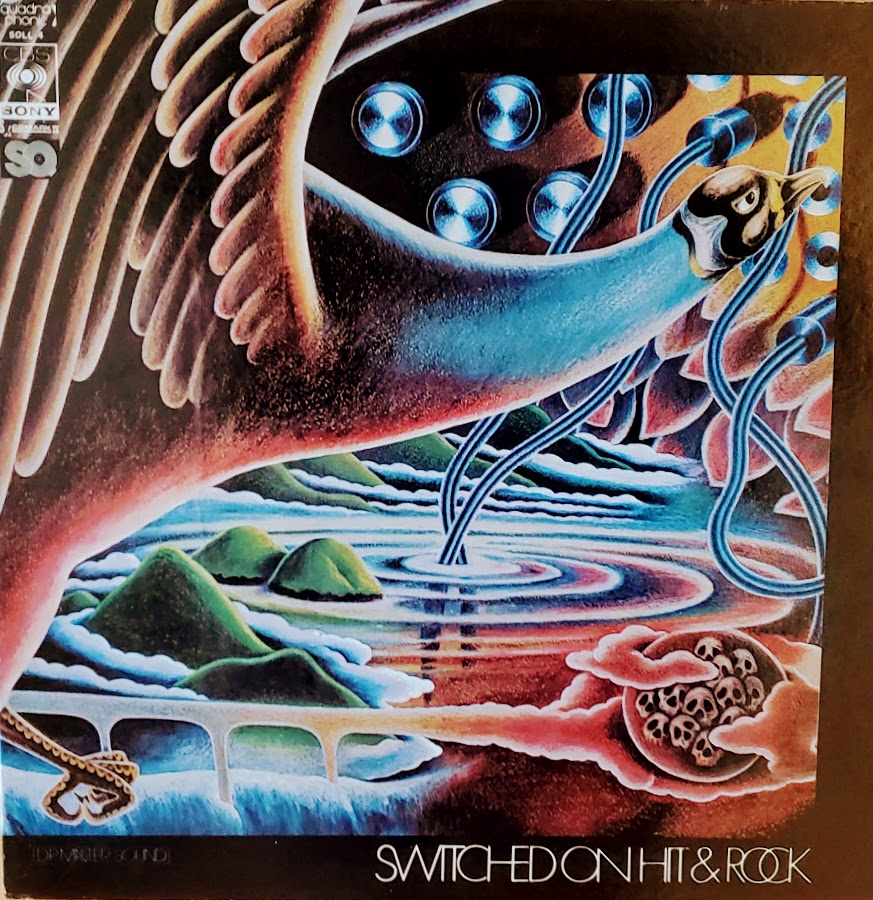
Isao Tomita – Switched On Rock (Complete Album Download)

Isao Tomita is one of the big three of early synthesizer music, right behind Wendy Carlos and Jean-Michel Jarre. His 1974 release, Snowflakes Are Dancing, which reworks compositions by Claude Debussy, was revolutionary when it came out. It charted on the American Billboard charts and even netted Tomita a few Grammy nominations.

But it wasn’t his first album. This was. Released in 1972, Switched On Rock is another in a seemingly endless line of synthesizer covers albums that flooded record stores after the runaway success of Wendy Carlos’ Switched-On Bach.

Like most Switched-On Bach copies, Switched-On Rock lacks the complexity and craft of Carlos’ original work. Carlos went through the hassle of recording layers upon layers of synthesizer melodies to build incredibly complex and detailed recreations of Bach’s original compositions. Synthesizers of the time were not polyphonic, so if you wanted a rich, full sound that meant lots of overdubbing.

Tomita didn’t go that route. He instead kept things simple. There’s some polyphonic work going on here, but not nearly at the level that’s found on Carlos’ record. Also, it’s not an entirely electronic album, with acoustic drums showing up on most tracks. Tomita also played it safe with track selection. As the title suggests, Tomita covers rock tunes here, not classical works. Rock songs, especially the rock songs he chose, are a hell of a lot easier to re-arrange for synthesizer than Bach or DeBussey, that’s for sure. They’re all little more than a basic melody and a backbeat. Lots of Beatles covers, Simon & Garfunkel, Elvis and other oldies.

That’s not to say that the album is boring or bland. Far from it. What Tomita lacks for in complexity here, he more than makes up for with weirdness. I’m not good with technical terms, so I don’t know what effects Tomita was applying here, I just know that it sounds weird. His synthesizers sound drunk, with the sounds often having a strange wobbling or bouncing effect added to them. And everything is put through an echo, giving it all a etheral dreamlike quality.

The album had a limited release. It came out in Japan first, and then was later released in the UK. There, Tomita was billed as “Electric Samurai” because Orientalism sells. It never got a release in the states and from what I can find online, there’s never been an official release on CD either, making it one of the rarest releases in the Tomita catalog.

Like all Moog albums, transferring the vinyl recording in a way that created a clean digital copy was not easy. Early synthesizers create harsh, abrasive sounds. Most audio cleaning programs pick those waveforms up as pops or cracks and they try to remove them. I could only do a very light pass on the lowest settings to remove the more drastic scratches. Then I went through again manually and removed more, before also scrubbing a bit of the background surface noise that’s found on all vinyl recordings. I think it sounds good, but if you hear a few mistakes or odd blips here and there, that’s why.

Listen to moog music and wear a mask. It’s the right thing to do.

Future Funk in a bummer future

May 19th, 2020

Goddammit I miss going to Tower Records.

There are lots of reasons. Walking to and from Tower Records after work was my designated chill out alone time whenI could listen to music and podcasts. So that was good. But I just miss being in Tower Records. I miss being surrounded by music, and by people who love music as much as me. The kind of people who will go to a physical location and buy a physical copy of a CD or LP, those are my people.

Also, Tower Records was my primary method of discovering new music. The listening station there are a godsend, and have led me to finding out about countless artists. Without the Tower Records listening stations I would have never discovered De De Mouse. I would have never found out about Supercrush. I would have never given Perfume a chance. Drahla. Bully. The Comet Is Coming. Mitski. TEEN. They’re all bands I found out about solely because I gave them a spin at a Tower Records listening station. I know some of y’all rely on YouTube or Spotify to serve you new music, but I’ve had terrible luck trusting algorithms to steer me in the right way for fresh tunes. I need that human touch, that nudge of a curated collection, to steer me in the right direction.

And if you pick something up when you’re there, Tower Records will occasionally give you bonus swag for it. Usually this is something simple like a button, sticker, or poster. But sometimes you get lucky and you get a full-on bonus CD with exclusive tracks. I got so much rare shit this way. It’s awesome.

Things are starting to look up in Tokyo. The number of new infections each day seems to be hovering around 10 to 20. Those numbers are a bit low mostly because testing here is rather limited, but other metrics that judge the rate of infection, deaths, hospital capacity, they’re decreasing too. Some indie stores are starting to open up again. Most are beyond walking distance for me right now (I still want to avoid the trains), so I haven’t made the trek. But it’s a good sign. I suspect that Tower Records will be the next to re-open, probably near the end of the month.

I will buy so many CDs. You have no clue. It’s going to be a problem.

You guys, I’m so stoked. I hope this doesn’t all go to shit again. I can’t take it much longer.

Hare Toki Doki
Brinq DJ Mix [future funk edit]
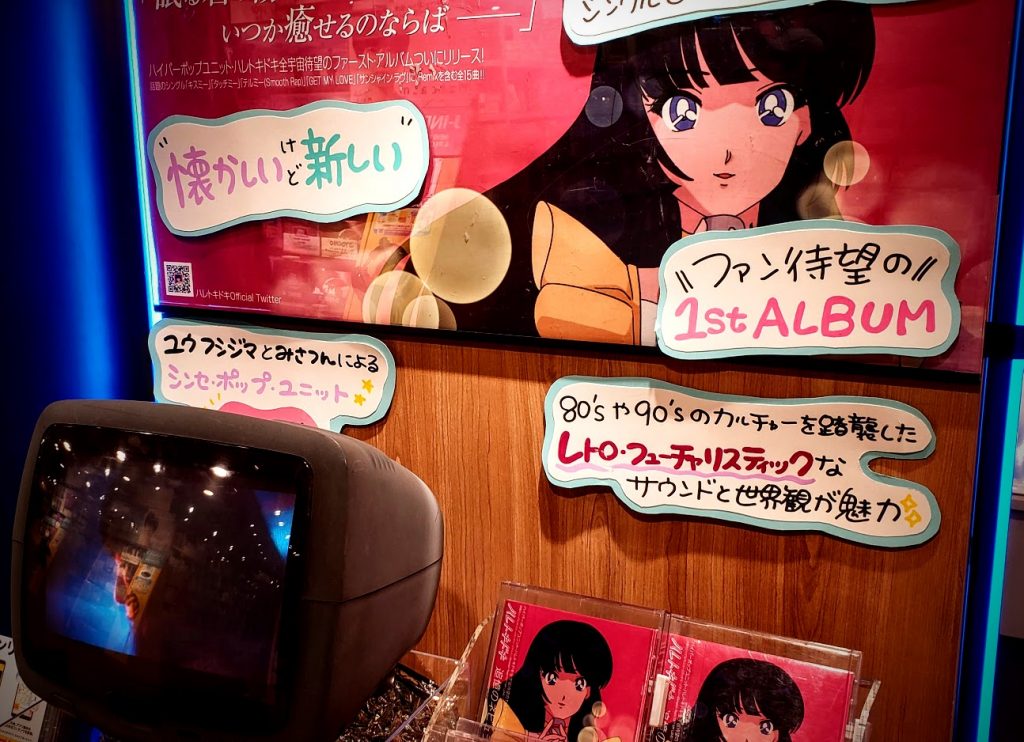
Speaking of bands that I discovered via Tower Records, this Hare Toki Doki (ハレトキドキ in katakana), a rather strange Japanese techno-pop act. They’re going for a HARD retro aesthetic, drawing equally upon online vaporwave future funk and their obvious adoration for 80s and 90s J-pop idols. Everything about them screams retro.

This display at Tower Records repeatedly touts the band’s retro sound, while a video for the band plays on a VHS tape that’s hooked up to an old-school CRT monitor. They’re not just wearing their influences on their sleeves, they’ve made a whole damn outfit out of them.

If you like Macross 82-99’s A Million Miles Away then you’ll definitely eat this shit up, trust me on that. If dance music so aggressively upbeat that it makes euro-dance sound like doom metal by comparison isn’t your thing, then you will hate this group with an unending fire of a thousand suns. From what I’ve seen there’s no middle ground with them.

When I bought their CD at Tower Records, I got a freebie bonus CD single, which contains this mix. It’s a great 17 minute overview of their entire album, and probably will let you know if this is your kind of thing or not. It touches upon all the album’s bangers in a non-stop HI-NRG way. This is usually the first track on my workout mix, and I have to be careful because it’s so upbeat it could kill me if I try to keep up to its beat.

If you like this and want to hear more from the band, check out their Bandcamp page. They only have one album, a remix compilation, and a few singles. you can get it all for about $20. Fair price.


Nostalgia for imagined genres

May 11th, 2020

Klaxons
As Above, So Below (Justice Remix)
As Above, So Below (French Version)

For the 20th century, looking back at musical trends is easy.

60s – British Invasion, Motown
70s – Disco, Funk, Prog
80s – Hair metal, new wave
90s – Gansta Rap, New Jack Swing, Grunge, bubblegum pop

Of course, that’s a bit reductive and ignores several other trends and movements, but in broad strokes that works well enough. But you just can’t do that with any decade after the 1990s. What was the big musical trend that encompassed the first decade of the 20th century? Krunk? Nu-Metal? Indie rock? It’s really hard to just pin one, or even a few, down. Throughout the 80s and 90s pop culture had begun to get more fragmented, but the 2000s really saw that trend kick up a notch, largely due to the fragmentation of culture as a whole and the internet. The 2000s were the decade where almost no one and nothing became omnipresently popular anymore.

This was doubly true with rock music. The splinters between the “indie” “alternative” and “mainstream” scenes became gulfs, and within those scenes you had your own splits and divisions. You had the mainstream rock fans who dug Linkin Park, the indie kids and their Arcade Fires, and us folks in the middle who lived on The Strokes and The Killers. And of course, things have gotten even more fragmented since. There can never be an “I love the [decade]” show ever again that can talk about music, unless it covers the uber-hits like “Umbrella” and “Uptown Funk.”

But one of the things I loved about the 2000s rock scene was just how fragmented it was. There wasn’t just one scene that was big and a few bubbling under, as was the case in the 80s and 90s. So many styles and sub-genres vying for attention. Post-punk revival, electroclash, neo-psych, synth-pop 2.0, new-rave.

New-whatnow?

Yeah, remember new-rave? No? Yeah, why would you? It was a a genre that the British press made up. But its one band, The Klaxons, were really good. I was always bummed that they were never able to carry the momentum from that first album. Shit, I was bummed their version of electronic-rock didn’t garner more attention. I feel as if this sound had its moment for about 20 seconds, before it was watered down and washed out into the electro-rock sonic wallpaper commercial jingle indie rock sludge we’re subjected to now. Maybe bands like The Klaxons are the Pearl Jam of their era, wholly original and fantastic, but influential in the formation of some of the worst music ever.

Although now that I think about it, for 20th century bands, that dubious distinction probably should be bestowed upon The Killers. I love The Killers, but I feel its safe to say that we wouldn’t have Imagine Dragons without The Killers first leading the way. If The Killers are the Pearl Jam of early-200s rock, then I guess The Klaxons are…lemme think…The Toadies? Sponge? In as much as they had one moderately successful album but failed to capitalize off of it despite the fact that the follow-ups were just as good?

Is that too much of a stretch?

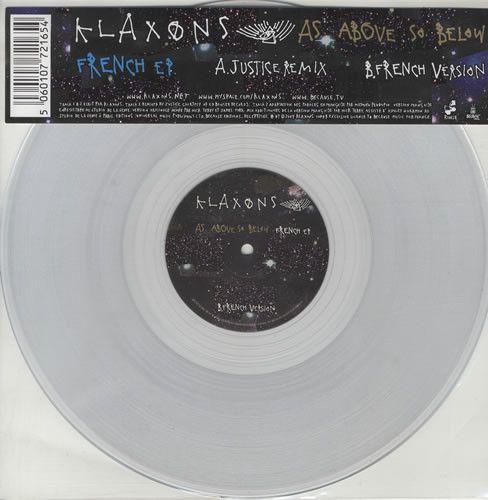
These tracks are from a clear 12″ single that I think only came out in France. Beats me how it ended up in a bargain bin at a Tokyo record store, but that’s where I found it. The Justice remix is dope, speaking of acts that vanished without a trace after one great record. I guess the world got sick of Daft Punk impersonators when the real thing returned.

Dracula’s coming. Duck.

May 4th, 2020

This post is rather short so I thought I’d take some time to give an update as to the situation here in Tokyo.

So, we’ve been under what some people have been calling a “soft” state of emergency for a few weeks now. This was in response to a surge of cases that happened (surprise) less than two weeks after a lot of restrictions were lifted that led to large groups of people gathering together.

Funny how that works.

Anyways, people have been calling this a “soft” state of emergency because it didn’t change much from a legal perspective. It made it easier for the government to start assistance programs and disaster prep/response, but not much else. There are no laws in Japan that can regulate people’s behavior in a way that could be called a “lockdown.” Everyone keeps saying that it’s impossible to pass such laws in Japan, but I just think that they’re lazy and don’t want to bother trying.

The soft state of emergency was implemented with the goal of reducing traffic by 80%. That goal was not hit, especially in the first week or so. But people have been getting the hint as of late. While too many office jobs haven’t seemed to close down, most retail and restaurants have shut or severely cut back their hours. Major shopping areas like Shinjuku and Shibuya are relative ghost towns now. Local shopping streets seem to vary neighborhood-to-neighborhood.

Cases do seem to have slowed down a bit as a result, but it’s very hard to tell because the government isn’t testing enough. About the only measurable metric we have to judge how well things are going is by how busy the hospitals are. They are all busy, but none have been pushed to the breaking point yet. So things are relatively under control, I guess.

The state of emergency was supposed to end this week, but thankfully the government has learned from their mistakes, it was extended all the way to May 31st.

That’s super-great awesome news and a rare example of a government actually LISTENING TO THE FUCKING SCIENTISTS and shutting things down as much as possible, for as long as possible. I feel that after this month, Japan will be able to open up more, at least to the point where retail stores and schools can have limited hours again.

While this, like I said, really good news from a prevention standpoint, I AM GOING INSANE. I’ve already gone two months without working, and a little over a month in isolation. I’m staring down another month of this shit and it’s giving me tremors. I am desperate to get out of my apartment, see my friends, drink at my favorite bar, and BUY SOME DAMN RECORDS.

While my boyfriend is here with me and he’s the best, it is getting rough. I’ve nearly run out of productive things to do. I’ve organized and sorted all I can. I’m trying to study Japanese but that gives stress and anxiety on good days, so I can’t do it all that much. I’ve been playing a few games. A lot of Animal Crossing. Talk about the right game at the right time. The boyfriend and I are also using this time to watch as many movies as possible. We’re currently knee-deep in 70s disaster films and 80s legal thrillers. Would love to hear some recommendations of lesser-known films from those eras.

Would also love recommendations for mental health tips.

And whiskey cocktails – which can be the same as mental health tips.

Anyways, here’s a really stupid song.


Monsieur Goraguer
Sexy Dracula
Sexy Dracula (Instrumental)

This song is about Dracula having an orgrasm.

Sorry to be overly crass and kind of gross. But there’s really no way around it. In terms of subtly, the lyrics of “Sexy Dracula” are about as understated as Donna Summer’s moaning in “I Feel Love.” A woman tells Dracula that she wants him to come. Then he laughs. Then she again tells Dracula that she wants him to come. Then Dracula (repeatedly) says that he is about to come. Then the woman (again) tells Dracula that she wants him to come. Then Dracula says, “I’m there, move it little girl, oh yeah.” Then Dracula laughs some more. The song ends.

Needless to say, the instrumental version of this one is better than the vocal one. With the overly detailed lyrics stripped away, the melody gets a chance to stand on its own – and the melody is really good! It has a good creepy vibe to it. And the bassline is just killer. It’s a good combination of lush, instrumental disco, old-school funk, and a touch of electronic music. Musically speaking, the song is just fantastic. Maybe they knew that and decided to throw the instrumental version on partially to vindicate themselves?

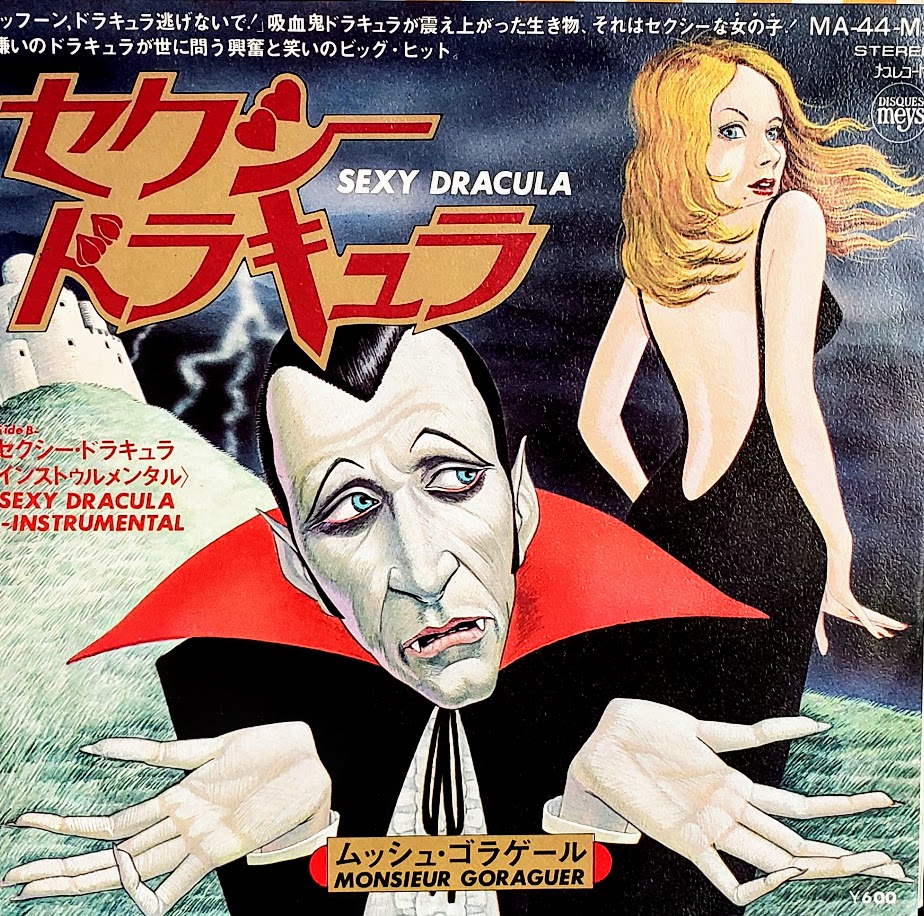
Whose responsible for this? Well, Monsieur Goraguer is a pseudonym. This track was actually composed by Alain Goraguer, a French composer who worked with Serge Gainsburg and composed the score for Savage Planet. I have no idea if this was him slumming it, him having a goof, or him trying to capitalize on disco for a paycheck. Whatever the reason, the song didn’t seem to get a wide release. I think it only came out on a seven inch single in Japan and that was it. It’s the only credited released under this pseudonym.

As good as the instrumental is, that’s probably for the best.

Also, for a song called “Sexy Dracula” the Dracula on the cover is decidedly unsexy, unless “sad daddy” is your type.