Archive for the ‘Complete Albums’ Category

Superman’s Synthesizers

Friday, July 17th, 2026

My collection of Moog/synth covers albums is…intense. I really need to comb through my collection and separate stuff by genre, setting aside a “Moog/synth” section. But that would involve using my lower back for prolonged periods of time. My health is getting better in a lot of ways, but it’s not there yet.

America and Europe had their fair share of synthesizer cover albums in the mid-70s, many of which I have already covered and will continue to cover here. But I think the genre really took off in Japan. Not only does the country seem to have a disproportionate number of electronic musicians in the mid-70s when compared to the size of its population, but it also imported more than its fair share of foreign keyboardists and composers for their own, Japan-exclusive releases as well.

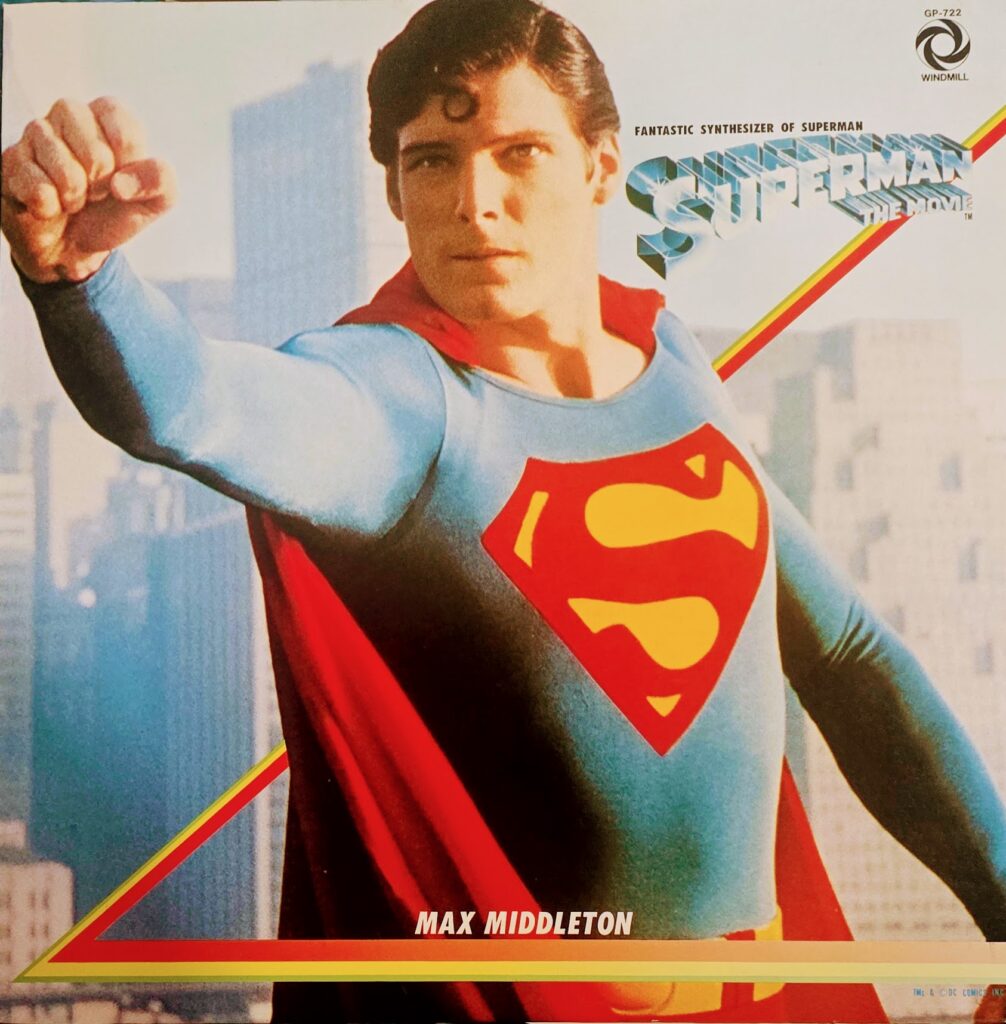
For example, Max Middleton and his Fantastic Synthesizer of Superman from 1979.

Fantastic Synthesizer of Superman (Complete Album Download – Click Here)

I would love the know the story as to how Max Middleton ended up releasing a synthesizer version of the Superman theme…in Japan only.

If you don’t know Max Middleton by name, don’t worry, I didn’t before I bought this record, but there’s a fair chance that you’ve heard him on the radio if you’re old enough to have ever listened to the radio. He was an early member of the Jeff Beck Group and he played on Beck’s Wired. He also played with Nazarth for a while, and was the keyboardist on the Hair Of The Dog album. And just a year after this album came out, he performed keys on Kate Bush’s “Babooshka”

I think at some point in his career, he must have either resided in Japan or built up quite the fanbase there. The latter would not surprise me in the least, Japan motherfucking loves goddamn Jeff Beck, believe me.

I say this because, for a brief period in the 70s and into the 80s, he shows up on a lot of Japan-only releases. He’s on albums by artists like Shinobu Sakagami, Raven Ohtani, and Mari Iijima. He’s also on albums by other non-Japanese artists that somehow only got released in Japan, like Alan Parson Projects’ Lenny Zakatek’s hilariously-titled solo effort Small But Hard.

Too….many…jokes.

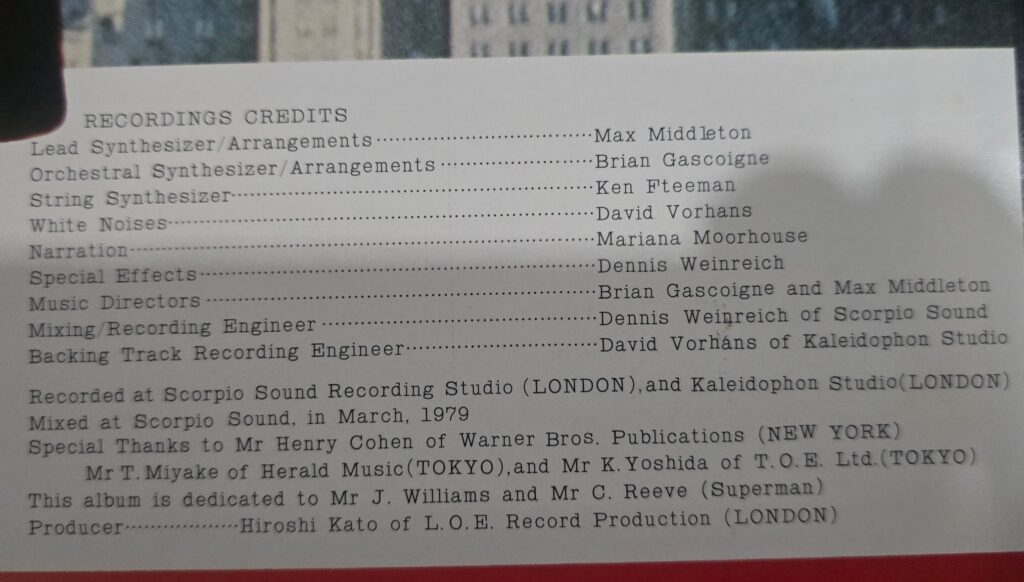
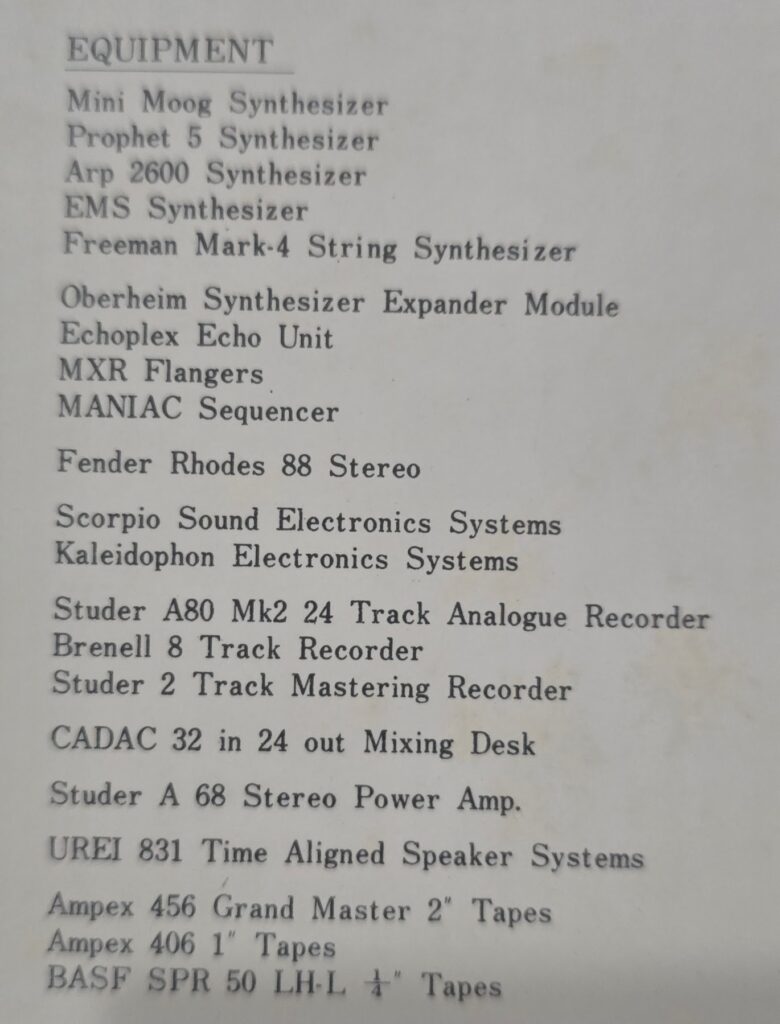
While this is credited as Max Middleton solo release, as the liner notes show, he did not work alone. There’s actually some impressive pedigree on this record. None of them are household names, but they all had serious synth and studio engineering chops.

The orchestral synths were arranged by Brain Gascoigne. Again, that’s probably not a name you’ve heard of, but he was a rather accomplished film composer for a time. He did the score to the cult flick Phase IV, which is quite bad but the music is good, and he played keyboards and synths on many other notable film scores, including Superman (uncredited and according to the IMDb, so take that with a grain of salt).

According to the liner notes, the string synths were handled by “Ken Fteeman.” However, Fteeman is not a real name. I’m going to assume they meant to say Ken Freeman, as he is yet another pioneer in early electronic music. He created his own synth called the Freeman String Synthesizer, and worked with artists like David Essex and Sally Oldfield. He also plays synths on Jeff Wayne’s War of the Worlds album.

With the awesome credit of “White Noises” we have David Vorhans. That credit is appropriate because Vorhans was in a group of the same name. White Noise (the band) also featured members of the BBC Radiophonic Workshop, of which Vorhans was a member. Another member of The BBC Radiophonic Workshop and White Noise was Delia Derbyshire, who most famously composed the theme to Doctor Who. And finally there’s Dennis Weinreich, who worked on the album’s “special effects,” His other credits are mostly technical, engineering and stuff like that. He engineered a ton of albums, including Talk Talk’s The Colour of Spring.

There is a credit for “narration” in the liner notes too, as one track has a very awkward spoken word bit. That credit went to Mariana Moorhouse. But either this is the only thing she ever did, it was a pseudonym, or a typo, because I can’t find anyone with any music or recording experience on the internet with that name. Mariana, you still out there? I have many questions about your narration.

This is a fun album. It’s not a very complex arrangement of the Superman music. It’s more low-key than I thought. It doesn’t try to match the outright bombast of the Williams original, because how could it. Instead, it goes for its own thing, and it mostly works. (That narration is weird.) Some interesting effects and noises on this too, I like the odd squelching that shows up in “End Title” and “Fortress of Solitude” has those super-chill synth strings that you might hear on a Tomita record. Of course, it doesn’t hurt that the source material fucking slaps I guess. The theme to Superman is a hard one to screw up.

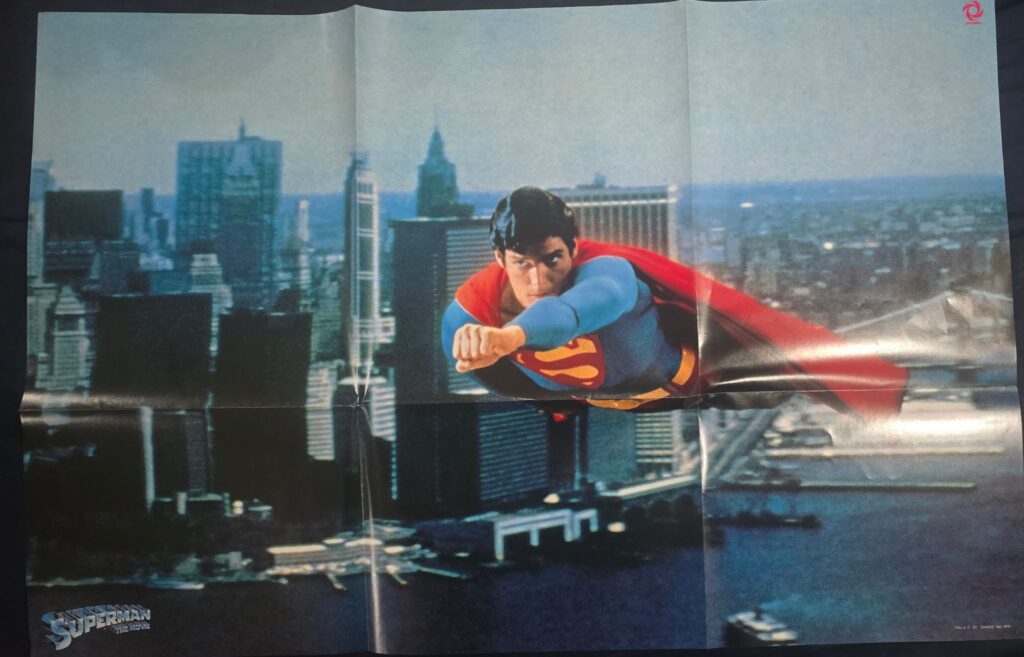
Oh, and it also comes with a giant poster!

That’s rad.

Wow, two posts in a week! That’s more than I’ve posted in some years this decade. Some of my chronic pain issues might actually be getting better soon. So if these trends continue and I actually steadily maintain my ability to function, who knows how much I’ll write this year! Don’t get me wrong, I’m still a broken mess , but this is the most I’ve felt like Superman probably since 2019. Yay!

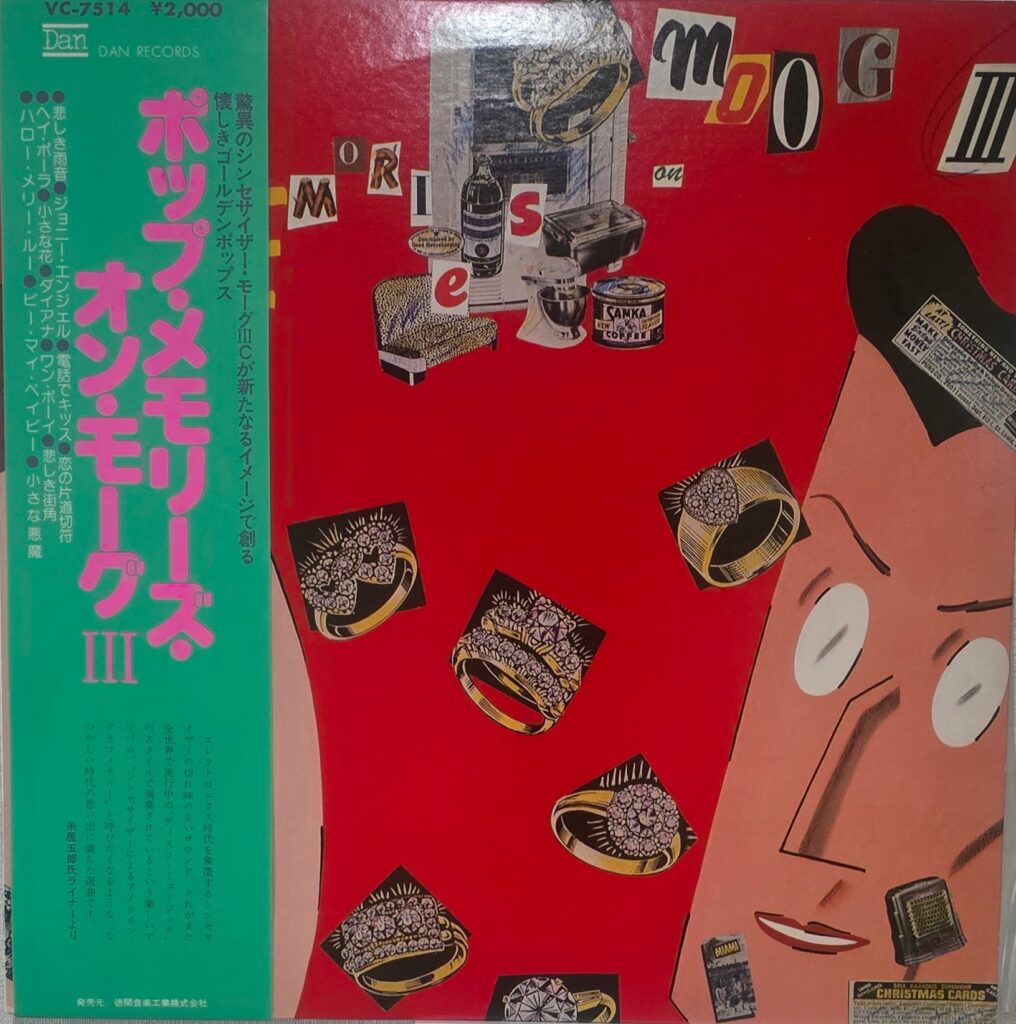
Pop Memories on Moog III – More Vintage Japanese Synths

Tuesday, July 14th, 2026

Pop Memories on Moog III (Complete Album Download – Click Here)

I’m back with a new post!

Yes, it’s another complete album download of an obscure Japanese synthesizer covers album from the late 70s.

But this time it’s in FLAC!

To be honest, I really don’t see the big deal about FLAC and hi-resolution audio formats. Our human ears can only pick up so much. Even more to the point, my human ears can only pick up so much. You play me a better-than-CD-quality 32-bit whatever FLAC file and then play me a 256 kbps MP3 of the same track, I’m probably not going to be able to tell the difference.

That being said, a lot of the vinyl rips I plan on sharing from this point on are very obscure, and in some cases I assume high-quality rips of them simply do not exist on the internet. Maybe they do on secret darkweb torrent sites dedicated to out-of-print Moog covers albums, but I don’t have an invite to any of those, so I don’t know. If you do have invites to those sites, yo, I’m on Bluesky.

Tonight’s Moog covers album is Pop Memories On Moog III. Now, if you’re asking, “why is he starting with number three?” The answer is “because volumes one and two don’t exist.”

At least, I can’t find any evidence of them online. Maybe they’re so obscure that they’ve just become completely lost to time, but I don’t think that’s the case. I actually think this album has a roman numeral three on it because it was the third Moog covers album released by Tsuneaki Tone, an artist who I’ve covered on my blog before. In 1976, he released All Of Synthesizer Vol. 1, following it up later in the same year with Cross Over Synthesizer, which had the subtitle All Over Synthesizer Vol. 2 (and the additional subtitle “Listening and Dancing”). I have a copy of Cross Over Synthesizer that’s in very good shape, I’ll probably share that soon. My copy of All Of Synthesizer is pretty beat up, I’ll have to see if my new vinyl restoration software can fix it up before I put it online. Vinyl restoration software often has a hard time fixing old Moog albums, too many square waves, I guess.

Anyways, this third album also came out in 1976, and apparently Tone decided to ditch the All of/over Synthesizer branding for Pop Memories On Moog, but the albums are clearly a series. And now that I think of it, I probably have those other two albums buried somewhere in my apartment, and I’ll get around to sharing them too, someday. I hope.

I don’t know much about Tone (which is probably pronounced to-nay). If the IMDb is to be believed, he composed the soundtrack to a 1973 documentary called Iwo Jima, and according to Discogs he also had a career working as a session musician for other artists in the 1970s. He has an arrangement credit on an album by Akiko Wada, who was a pretty notable singer in Japan in the 1970s. He also worked with Kazumi Watanabe, who was Yellow Magic Orchestra’s first touring guitar player. But Tone didn’t seem to work much after the 1970s. I don’t know if he passed away, retired, or simply moved onto other things.

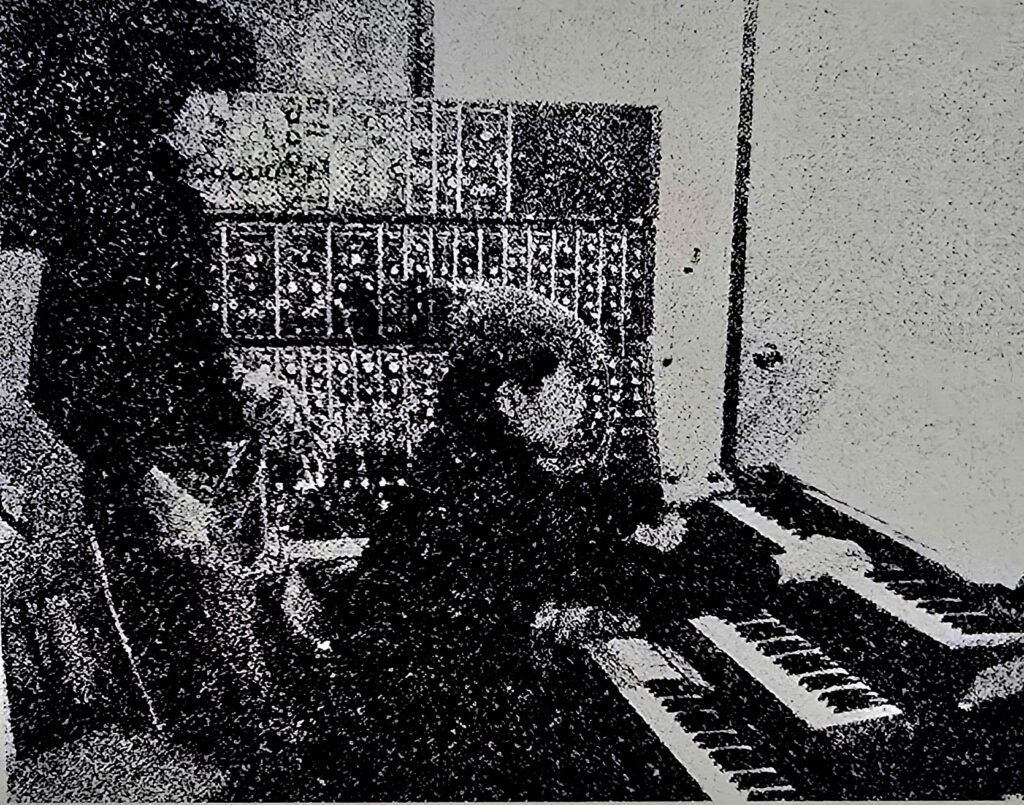
However, Tone isn’t the only credited artist on this album. While his first two synth albums were solo affairs, for this album he was joined by one Hideki Matsutake! Long-time readers of this blog should know who he is, as he programmed the synths and sequencers on the first few YMO albums! I met him! He’s nice!

This is not Matsutake’s first work on a major label release. He’s credited as a synthesizer player on the 1975 album Time Paradox by Hiroki Tamaki & SMT, but this is his first release as a credited artist, and not just a session musician. Later in the same year, he would release an album under the name Beautiful Chateau & Synthesizer (which you can find here), and then he would release the electronic ambient masterpiece Edo in 1977, working with fellow synth player Masashi Komatsubara and shamisen player Chojuro Imafuji. That album’s amazing! From there, he would start to release his own solo albums, collaborate with a few other artists, and then work with YMO.

But this is where it all began! A vital, important release in the history of Japanese electronic music!

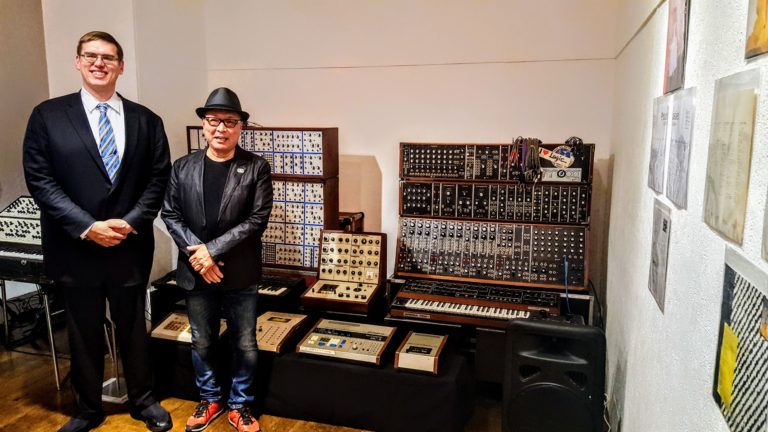
Hideki Matsutake and Tsuneaki Tone, bro-ing out with a mountain of synths. Taken from the back cover of the album.

But is it any good?

Well, I like it. But these are all covers of music from a very specific era. It is very cheesy. Cheesy covers of cheesy tunes. The Japanese liner notes refer to this being a release “full of nostalgic memories,” so that means that nearly all the songs here are pre-Beatles era rock and pop music. I’ll run them down track-by-track.

A1: Rhythm Of The Rain
Originally by The Cascades, a vocal group from the early 60s. They are a one-hit wonder. This is the hit. If you’re over the age of 40, you will recognize the melody. This is a nice version.

A2: Johnny Angel
This was recorded by a few people, but Shelley Fabares made it a hit in 1961. If you google it you’ll recognize it and probably hate it. I hate it. When people talk about how pop music hit a nadir in the post Buddy Holly, pre-Beatles era, this is the kind of shit they were talking about, in my opinion. One of many songs on here that actually benefit from the synth treatment, at least it gives the song some character.

A3: Kissin’ On the Phone 
This is a Paul Anka song, and it’s not the last you’ll see on this album. I don’t think this was a hit in the states. But it apparently was a hit in Japan, so much so that it has a Japanese wikipedia page. I find the melody of this song grating, no matter how it’s performed. And the telephone ringing sounds don’t help. Probably the weakest number on the record. At least it doesn’t have Paul Anka’s gross kissing songs. I can’t believe Paul Anka released a song that was basically about getting a boner with his girlfriend when he talked to her on the phone and society let him keep making records.

A4: One Way Ticket (To The Blues)
What I said about “Johnny Angel” goes double for Neil Sedaka. Sorry, Neil. Although I guess “Love Will Keep Us Together” is kind of a jam if you’re the right level of drunk. This version does kind of slap? There’s a whistle effect that’s very reminiscent of Morricone, and I like the synth train sounds.

A5: Hey Paula
Another example of me enjoying this synth cover a thousand times more than the original. This is also from 1962. If you recall, that’s when American Graffiti is set. And if you also recall, that movie has the line “Rock and roll’s been going downhill ever since Buddy Holly died” and, man, that dude was right. Sometime I think we have to give The Beatles even more credit than they already have. I hate this song so much I didn’t even check out the original on YouTube to compare it to this version, I never want to hear it again. Hey, hey Paula, and Paul, go fuck yourselves

B1: Petite Fleur
This is a jazz instrumental that was originally made famous by Sidney Bechet. I listened to the original, and it ain’t bad! This must have been a huge hit in Japan. There was a bakery near the English school I used to teach at with the same name.

B2: Diana
Okay, Paul Anka, this one’s alright. Although again, I prefer this version.

B3: One Boy
Originally sung by Joanie Sommers, and featured in the musical Bye Bye Birdie. I’ve seen Bye Bye Birdie but I don’t remember this song, let’s be real, it’s not “Kids.”. Sommers is most famous for “Johnny Get Angry” which is right up there with “Hey Paula” as a song that made me want to punch the radio when I was a kid and my dad put on the oldies station.

B4: Runaway
Okay yeah, now we’re talking. “Runaway” by Del Shannon owns hard. And this is a really good version. It slows down the tempo quite a bit, it’s a minute longer than the original version, and that gives it a bit of an easy-listening vibe, maybe something you’d hear in a dentist’s office, except, y’know, good. It’s really hard to fuck up “Runaway.” They don’t fuck up “Runaway.”

B5: Hello Mary Lou
Another huge one, made famous by Ricky Nelson in 1961. This version goes HEAVY on some kind of wah-wah effect, which makes it a little funky? Funky Ricky Nelson? Who knew?

B6: Be My Baby
They don’t even try to emulate the drum beat, and that’s probably a good thing. This is actually a pretty radical reinterpretation of the original song. Again, they slow it down quite a bit, and I think they were trying to emulate a big band sound with some of the synth effects they layered over it. Of course, it absolutely pales to the original, which is one of the top 10 greatest pop songs ever written. I wonder what Brian Wilson would have thought of this version?

B7: Little Devil
Neil Sedaka, AGAIN. That motherfucker got around. This is instantly more tolerable than the original because it doesn’t start with an ear-grating attempt at ripping off The Four Seasons.

A description of all the synths and such used to record the album, also taken from the back cover.

I have at least four more weird synthesizer covers albums that I want to share sometime in the near future, so I hope you all enjoy this goofy stuff. I never get sick of these albums, they got a vibe you just can’t recreate. I’m sure people have tried, but unless your synths take up an entire room and need to be constantly re-tuned because they overheat, it’s just not the same.

Hopefully I’ll be back with a similar post later this month or early next month! Expect a lot more weird synth albums or other Japanese obscurities. It’s just where my head is now and what I got on vinyl that I can share somewhat ethically!

Go “Bananas” for These Japanese Donkey Kong Tunes

Thursday, April 30th, 2026

One of these days I’m going to update my utterly massive guide to record stores in Tokyo and put it up on this site. That guide is a decade out of date. It desperately needs to be updated. For example, it mentions nothing about the recent(ish) revisions to the main Disk Union in Shinjuku. When I wrote the guide in 2016, the first floor was a boring cafe that I never set foot in. Now it’s an entirely new store dedicated solely to video game music and anime soundtracks. I went from never going in the place to going there at least once a week, sometimes more.

It’s a fucking problem.

I’ve bought so much game music there that I need to expand my shelving to accommodate it all. I don’t know why. It provides an easy dopamine fix, even when buying a soundtrack to a game I’ve never even played – usually because my hit rate isn’t too bad with the blind buys there. If I go to the heavy metal store and pick up some fun-looking old hair metal album by a band I never heard of, odds are that I never heard of it for a reason: it sucks.

However, when I buy the soundtrack to a Neo Geo game I never heard of, or some mid-90s arcade shooter, it usually fucking owns. The quality of a game’s music can often be independent to the quality of the game it comes from.

Did you know that Hatris has a soundtrack? Did you know it fucking rips?

That being said, sometimes the quality of a product’s music is equal to the quality of a product itself, and not in a good way. I try not to share “bad” music on this blog too often, because – well the reasons should be obvious – who the heck seeks out bad music?

But this was too stupid not to share. Also I paid too much too be the only person to suffer this.

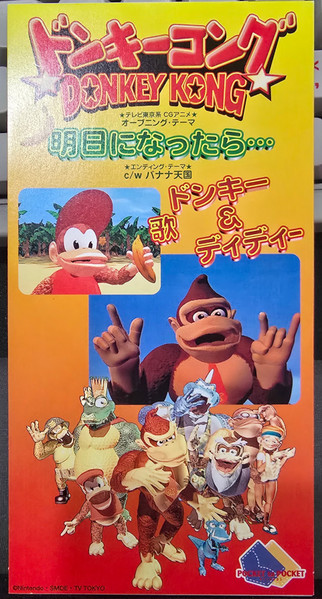
Donkey Kong – Ashita ni Nattara… (Right-click to download)

Rips of this exist on YouTube, I’m not sharing any “lost media” or anything, it’s even on the Internet Archive if you want FLACs of this stupidity, but I think I’m the first person to write in-depth about these songs, at least in a modicum of a critical capacity.

Donkey Kong Country is an animated TV series that was produced by Nelvana Limited, a Canadian company that also brought us such beloved children’s programming as Little Bear, The Magic School Bus, Beetlejuice, Franklin, and The Berenstain Bears. It debuted in the late-90s (premiere dates vary by country) and ran for three ungodly seasons. Donkey Kong Country was one of the first TV cartoons to be made using 100% computer animation, and if Wikipedia is to be believed, it was the first series to use performance capture technology as its primary source of animation – although this apparently changed for the second season, when Taiwan’s Hong Guang Animation took over.

I have attempted to watch this show on more than one occasion, as it pops up from time to time on various streaming services. I say “attempted” because the show is fucking horrible and I’ve never been able to make it through an entire episode. Sure, most Saturday morning cartoons were bad, but this one is just unwatchably terrible. Say what you will about 80s cartoons like Thundercats or Silverhawks, but they had a style to them. Even when they were dumber than bricks, they looked cool. Even when the animation was limited, the designs and characters would at least often be halfway decent.

But when you combine the horrible quality of C-tier kids’ cartoon writing with the comically primitive CGI, you get something that is only enjoyable as a historical artifact, if that.

All that being said, the show was popular…in Japan at least. The Japanese toy company Takara released toys based on the characters from the show, and I believe there was a card game too.

And of course, there’s this “soundtrack” which is really just two versions of two songs, which was released on the mini-CD format exclusively back in 2000. I’m not going to lie, I spent ¥8,000 on this stupid damn CD, which is thankfully only $50 right now because the yen is worthless, but I’ve seen this mini-CD on sale for upwards of double that. It has to be pretty rare. It’s rare enough that I had to be the one to add it to Discogs.

The CD just has four songs. The first track is “If I Become Tomorrow” (Japanese title: Ashita ni Nattara…), which is the opening theme for the Japanese version of the series. The second song is “Banana Heaven” (Japanese title: Banana Tengoku), which was the music that played over the end credits. The third and fourth tracks are the same two songs without the lead vocals. Japan calls these types of edits “Original Karaoke” versions because of course they do.

Vocal duties on the tracks are handled by the voice actors from the show, and the music was composed by Japanese hip-hop artist Harumi Kudo, who was the voice of Funky Kong on the cartoon. Here, he performs under the alias…sigh…Banana Ice.

Yes, the Asian rapper is calling himself Banana Ice. Is that a Vanilla Ice reference? Did Harumi Kudo understand the racial implications of calling himself Banana Ice? I don’t know.

I’m not one for Japanese rap, and the “singing” parts of the songs are mostly just yelling, because the voice actors are not singers. They’re bad songs.

THAT BEING SAID, I think the instrumentation on these is fine, and the “karaoke” versions aren’t half bad. They have a fun, bouncy energy to them that reminds me of a lot of good but utterly forgettable 90s dance music. If you told me that these were Baha Men b-sides I would believe you. It also has a vague, early-90s corny house music vibe too it. A “Jock Jams” aesthetic, if you will. Someone needed to remix this with some piano, a lady with a booming voice, or those 2 Unlimited keyboard slams, it’s almost something. I’ve definitely bought worse music this month. The horrors of obscure metal I subject myself to know no bounds.

But maybe that’s a story for another post.

(Thanks to the Mario Wiki page on this stupid cartoon for providing more information about this show and its music than anyone would ever need.)

Celebrating 20 years of Lost Turntable the only way I know how – with something no one will care about

Wednesday, March 11th, 2026

Holy shit, this blog turned 20 years old this month!

I don’t even know where to begin. My life has changed so much since I first launched this site in 2006. Let’s not even mention how much our nightmare world has changed over that same period of time (I want to keep this positive).

Despite the world being a hellscape, I think that my life has gotten considerably better in the two decades since I first hit “publish” on my very first blog post. I don’t need to go over the litany of ways that my life has changed during that time, do I? I went back to college, got a second (useless) degree, bought a house in Pittsburgh, sold said house in Pittsburgh, moved across the world to Japan, got a boyfriend (who I’m still with, by the way), came out of the closet, and so on and so forth.

I also like to think that I’ve become a considerably better person since starting this site. A lot of my old posts are fucking cringe to me now. I was a borderline edgelord shithead when I started this site in my mid-20s. When I look at right-wing shitheads outline, reactionary sexist gamers, and other assorted pieces of shit across the wastelands of the web, I often think “there but for the grace of several very influential friends go I.” Thanks to commenters back in the day who called me out for my bullshit, you made me a better person.

As I look back on this thing, it’s really clear to me that this blog has three, very distinct eras. First, the early years, when I was posting like crazy, multiple times a week, often focusing on then out-of-print and hard-to-find 80s music. The writing is sloppy, with a lot of ranting and raving about random bullshit. Big time morning DJ vibes. Not a fan.

Then there’s the middle-era, covering the tail-end of my time in the states up to when I first moved to Japan. While a lot of people appreciate and love the early years of my blog, it’s this mid-period that I’m most proud of. I think my writing got better and I started covering a more diverse selection of music around that time. It’s also about the time when everyone stopped going to websites and my readership fell off a cliff, but whatever.

Finally, there’s the current era of Lost Turntable, the “I barely have time to write about anything” era, also known as the “one post a year, usually in December, hurriedly written so I can keep the streak of writing something at least once a year” era.  Although I did manage four posts last year!

Yeah, I’m not too fond of this era either. As I’ve said before, it’s just hard to find the time to write these days, between my job, social life, having a boyfriend, and my not-so-great health. Also, it’s harder than ever to find interesting music to share that’s legitimately out-of-print that won’t get my ass sued. My YouTube copyright nightmare from a few years back really scared me away from sharing a lot of major releases by mainstream artists, if you hadn’t already noticed.

I’ve said in recent years that I really do want to get in the habit of writing more. And I still mean that. And I really think that this will be the year that I finally get to…once I finally ditch the idea of this being solely an MP3 blog.

Hey, it had a good run, but it’s just stifling at this point. I want to write more about movies, new music, my life, living in Tokyo, all kinds of stuff. I’ll still share out-of-print music when I can, but it’s going to have to be incredibly rare or obscure at this point, like what I have for you today.

One thing I can say, when I do get back to writing here more often, I can promise you that it will be 100% AI free content, which is a hell of a lot more than you can say about that other vinyl ripping MP3 blog that still exists (and asks for money). I can promise you that I will never use AI for literally anything that appears on this website. The writing will always be 100% human written, warts and all. And if I ever get around to actually updating the tech behind this site, and the graphics along with it, they’ll all be human creations too (although probably not mine, my graphic editing and website creation abilities are firmly stuck in 2006, I’ll pay someone else to do it).

Anyway, wanna download some weird-as-shit MP3s? Sure you do!

I’ve never done a multi-album post before. Let’s cover these in chronological order.
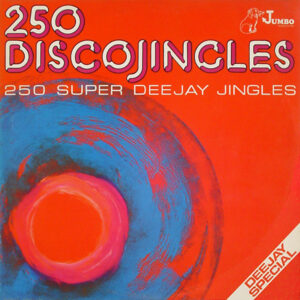
 

250 Discojngles (right-click to download)

The boyfriend and I don’t do much YouTube, but one of our favorite channels on is Reely Interesting, which is kind of like the video version of this blog – sharing rare and hard-to-find media. Sometimes they share things like rare HD versions of music videos and live concerts, which can be amazing. Check out their rip of Peter Gabriel’s Kiss The Frog video, you’ve never seen mid-90s CGI look so good.

Recently, they shared a really curious find, an HD tape from 1994 of what was either b-roll or test footage recorded for reasons unknown. I suspect it was recorded by Sony to test out their then-new HD cameras.

Stuff like this fascinates the hell out of me. It was something done by an industry professional, most likely to show other industry professionals. But it somehow sneaked out, and we can watch now on YouTube, devoid of any of its original context. Sure, most of it is just Japanese men working in a TV studio, but it has an aura of mystery around it, since any information about where it came from or why it was recorded has been lost.

That’s kind of how I feel about the records I’m sharing tonight. These are all collections of pre-recorded radio jingles, which were made for radio stations to use. They weren’t supposed to end up in stores. And if you told someone who worked on these records that, 40+ years later, they’d be on the internet for anyone to hear they’d be like “what the fuck is the internet and who the hell are you?”

First up, 250 Discojingels.

According to Discogs (which is also where I took the art, as I can’t find my copy of this record right now), this was released in 1977 by Jumbo Records & Tapes. This was a label that was dedicated to releasing material for offshore pirate radio stations. They were one of many labels that did this, it was a whole thing, and there’s even a website dedicated to it if you want to learn even more about it. I think some of these other records might also be for pirate radio stations.

250 Discojingles was one of several jingle collections that Jumbo Records & Tapes put out, and it’s by far the most famous. Content from this collection was later used in a break and beats compilation, which was then sampled for 2 Unlimited’s all-time house classic “Get Ready for This,” which is fucking crazy. To be honest, I can’t find it on the record itself. It’s so short and goes by so fast. Someone made a YouTube video with some clips from this record and you can find it there at about the one minute and 18 second mark. If you can find it on my MP3 rip, please tell me!

The jingles on this are VERY 1970s. Most are just five second (or less) snippets of various ways to say “more music!” or “number one!” but there are also odd little musical interludes, sound effects, and even some absolutely horrible jokes. According to whosampled.com, in addition to 2 Unlimited, this record has been sampled six other artists, including Freddie Goddamn Mercury (on a remix) but I bet there are even more records out there that have cribbed from this one, it has a lot of good bits.

Jingels From USA (right-click to download)

This one is a bit more obscure. Again, using Discogs as a source (and again for the art, because I can’t find this record in my collection at the moment, either), I know that this was first released in 1981 by a Belgium label called USA Import Music, it was then re-released several times throughout the decade by other labels, all of which were based in Europe. So I have no idea why it’s called “Jingels from USA” as it’s clearly from the EU (as if the “jingels” spelling wasn’t big enough a tip-off. This is volume one, by the way, this was part of a series. I might pick up the other ones and share them here at some point.

I can’t imagine that any radio station in the states ever used these “jingels.” While this was released in the 80s, most of it has an amazing mid-70s feel to it, and all the voices are incredibly European, with some even speaking very obviously broken, bad, English with a thick accent that I cannot identify (maybe Dutch)? It also sounds really disco at times. Disco was on its last legs in the states by 1981, but it never died in Europe, it just gradually morphed into house music and a billion other sub-genres. There is some 80s-esque stuff here too though, robot voices, random synths, things like that

I like this one more than 250 Discojingles, just because it’s so fucking weird. Was this intended for offshore radio too? If so, where? No one in the UK or US would be fooled into thinking these were from native English speakers. Maybe pirate radio stations in the Netherlands grabbed onto this one. Who knows? Do you know? Tell me if you know! I want to know!

Oh, and while this technically has no credited artist, I left the artist as Charles Fonderson because he was credited as “concept by” in the liner notes. Finally, while no house classics seemed to have sampled this one, the cover art was by Patrick Gypen, who did design the original cover art for Technotronic’s “Pump Up The Jam,” so there’s that.
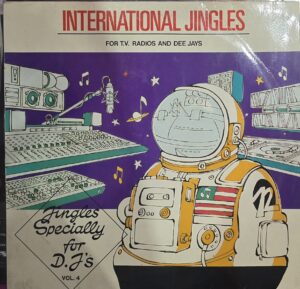
International Jingles For TV Radios and Dee Jays (right-click to download)

Of these three, this is my favorite. Firstly, that cover. That cover is amazing. An American astronaut man is here to deliver you specially made jingles!

It also sounds most like the radio that I grew up with. This came out in 1986, and while I’m sure some of these are recycled from older jingle compilations, it definitely has a stronger “80s vibe” than Jingels from the USA, and lacks any of the 70s cheese that 250 Discojingles is full of. The “Top 40” jingle, for example (the 10th track on side one) 100% sounds like something that the shit Top 40 station in Toledo, Ohio would have played when I was a kid.

I also like it because it’s kind of a hot mess. While 250 Discojingles and Jingels From USA throw you jingles at a non-stop, almost breakneck pace, this one gives you breaks between each jingle and even goes through the hassle of numbering all of them. But the numbering is wrong sometimes? And sometimes the man announcing the numbers stutters and stops, but they just decided “fuck it” and left those verbal blunders on the disc. Brilliant.

Also, some of these are just comically horrible. I’m sorry, Yannick Chevalier, Discogs tells me that you recorded a lot these compilations, but maybe you should have focused on quality over quality. “The Best Music In the City (Long Cut), which is the 15th jingle on side A, goes like this.

“The best music in the city! We got the B, we got the E, we got the S and the T!”

What the fuck does that even mean!? That’s not how acronyms or abbreviations work, Yannick. C’mon man.

I hope you all enjoy these weird audio oddities. I’ll probably be sharing more stuff like this in the future, but don’t worry, I still have some musical posts up my sleeve as well, in addition to the other plans I have in store for this place.

For the few of you who have stuck with me for these two decades, thanks! I’m not promising 20 more years of Lost Turntable, but I’ll do my best to keep this place going as long as my fingers can still type.
Comets and Synths

Saturday, November 15th, 2025

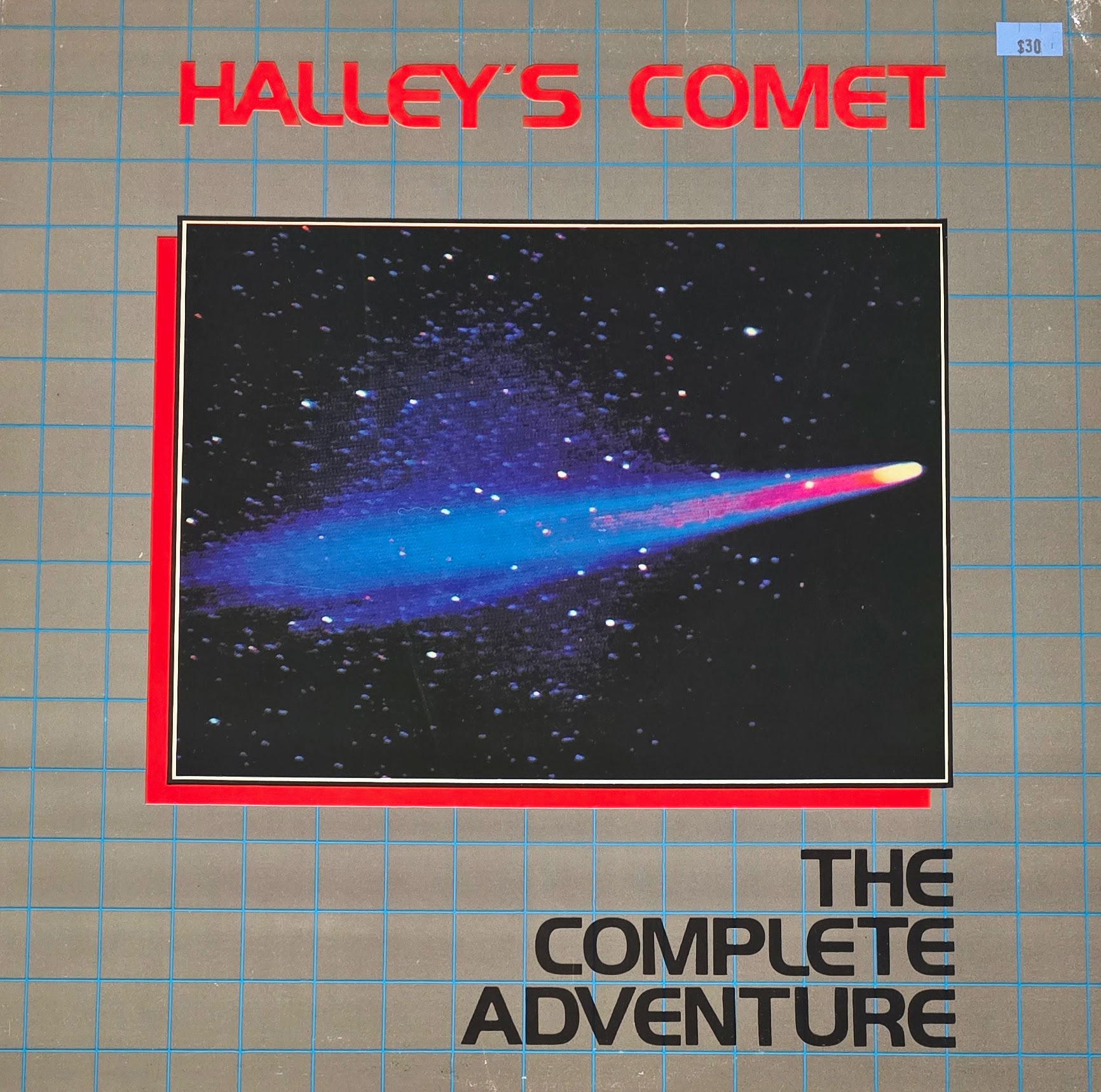
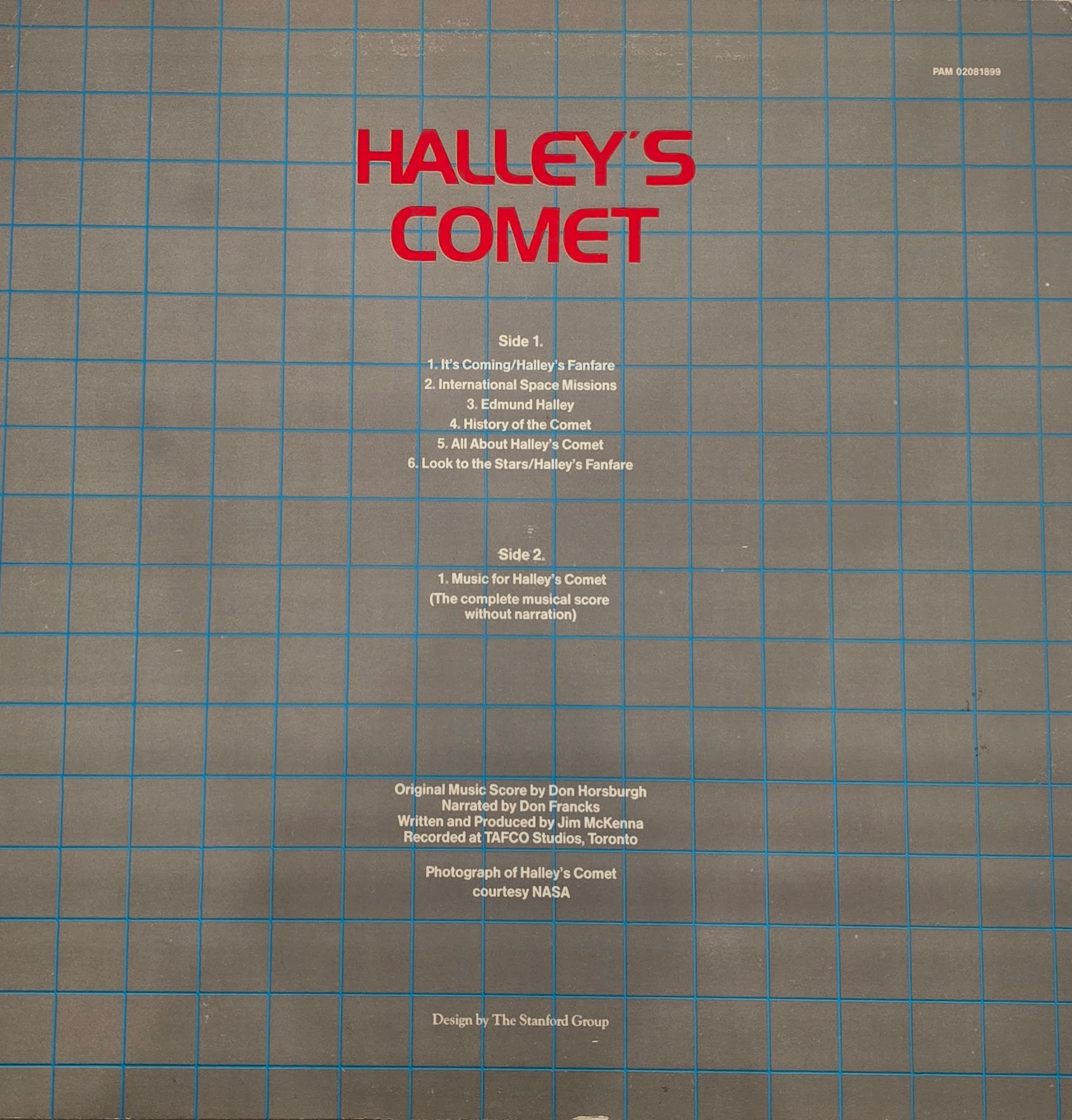
Halley’s Comet – The Complete Adventure (Click to download the album)

In 1986, Halley’s Comet made its regularly scheduled flight around the sun. I was six years old at the time and way into anything outer space, so I was pretty stoked. However, I, like most people on the planet Earth, could not see the comet that year. Read the wiki if you’re curious why. Long story short: conditions were shit for seeing Halley’s Comet in 1986. So a lot of people’s “once in a lifetime” chance to see the famous interstellar object shrank to “never in a lifetime.” Unless you were Emperor Hirohito. He apparently lived long enough to see it twice.

The closest I got to seeing the comet was watching Arnold and family on Diff’rent Strokes see it.

Anyways, I do remember the hype. The hype was real. It was all over the news, and we talked about it in school. So the fact that a record like this exists does not surprise me in the least. Halley’s Comet: The Complete Adventure is a 1985 Canadian release that was no doubt quickly cobbled together to cash-in on comet hype.

Side one of the record features some pretty threadbare narration about the comet, the history of its sightings on earth, and some overly flowery and optimistic ideas about what our planet might be like when the comet makes its next flyby in 2061, all while some wonderfully 80s synth music plays in the background

Side two of the record features the same music as the first side, but with the narration removed, so you can rock out with your comet out to the latest hi-tech electronic bleeps and blops that mid-range 80s keyboards had to offer. Some would probably write this music off as cheesy or corny, but I enjoy it quite a bit. It’s one part Yanni, one part Tomita, and one part Tangerine Dream (albeit nowhere near as good as any of them, obviously). This could easily be slowed down and distorted into vaporwave, I’m sure.

The narration on side one was by Don Francks, who was a Canadian actor, musician and voice actor. Most notably for anyone around my age, he was the voice of Boba Fett on the Star Wars Droids cartoon (and possibly on the Star Wars Holiday Special). He was also Sabertooth on X-Men. His daughter, Cree Summer, continued in his footsteps and has become an incredibly successful voice actress. She’s Elmyra on Tiny Toons, and also voiced Penny on Inspector Gadget.

His narration here is fine, as I said before, there’s not much to it. It reads like a NASA brochure about the comet, hitting all the basic points as quickly and plainly as possible.

I find the music a lot more interesting. It was composed and performed by Don Horsburgh. He has no credits to his name on Discogs, but he works as a stage music director and composer in Canada, mostly Alberta. According to this page, he’s worked on some pretty big shows too, including Canadian productions of Billy Elliot, Mamma Mia!, Sweeney Todd, and Mary Poppins. I wonder how often he takes out the keys and lets loose some newage jams.

The record was produced by a man named Jim MCKenna, a name that is far too common and plain for Google to be of any help whatsoever. There is a politician with that name in Canada, but I doubt he’s the same person.

And that’s about all I can find out about the record! Another blog shared this same record a few years back, and their copy came with a star chart that they helpfully scanned, so check that out if you’re interested (I think I enjoy the record itself more than that writer). The album has no barcode or spine number. The only identifying marks on it at all, is the stock number “PAM-080.921899” on the record label. Because of that, Discogs credits the album’s label as “PAM.” I would take that with a grain of salt, however, because Discogs also credits the album artist as “Halley’s Comet” and I’m fairly certain the comet itself had nothing to do with this release. Unless Halley’s Comet provided Don with the keyboards. God only knows how this thing was distributed. Was it solely for educational institutions? Mail order only? Who knows!

Enjoy! Maybe I’ll have another post up this year? Regardless, that’s four posts with music this year, which is the most I’ve managed to put on this site since COVID, I think. So I’m gonna take that as a victory.

As I said before, comments on this site are broken as fuck, so if you have something you’d like to share about this record, reach out to me on Bluesky!

Japanese Moog Disco Covers and More

Friday, August 8th, 2025

Hey, this blogging thing is fun, maybe I’ll try and do it more often again!

I just finished my most ambitious YouTube video to date, a massive 70+ minute look at Tower Records in Shibuya. I was really happy with the video I made about Tower Records a few years ago, but the store has changed so much since then that I thought it was worth re-doing with something a bit more expansive. I didn’t plan for it to be feature-length, it just kind of turned out that way. Give it a watch, leave a comment, click those like and subscribe buttons, you know the drill.

Also, and I’m going to keep saying this until someone responds, I want to work with someone to revamp this website, drastically. It’s a paid gig. If you’re interested, reach out on Blue Sky. Don’t bother leaving a comment here, as they are broken – like most things on this website.

Anyways, music time.

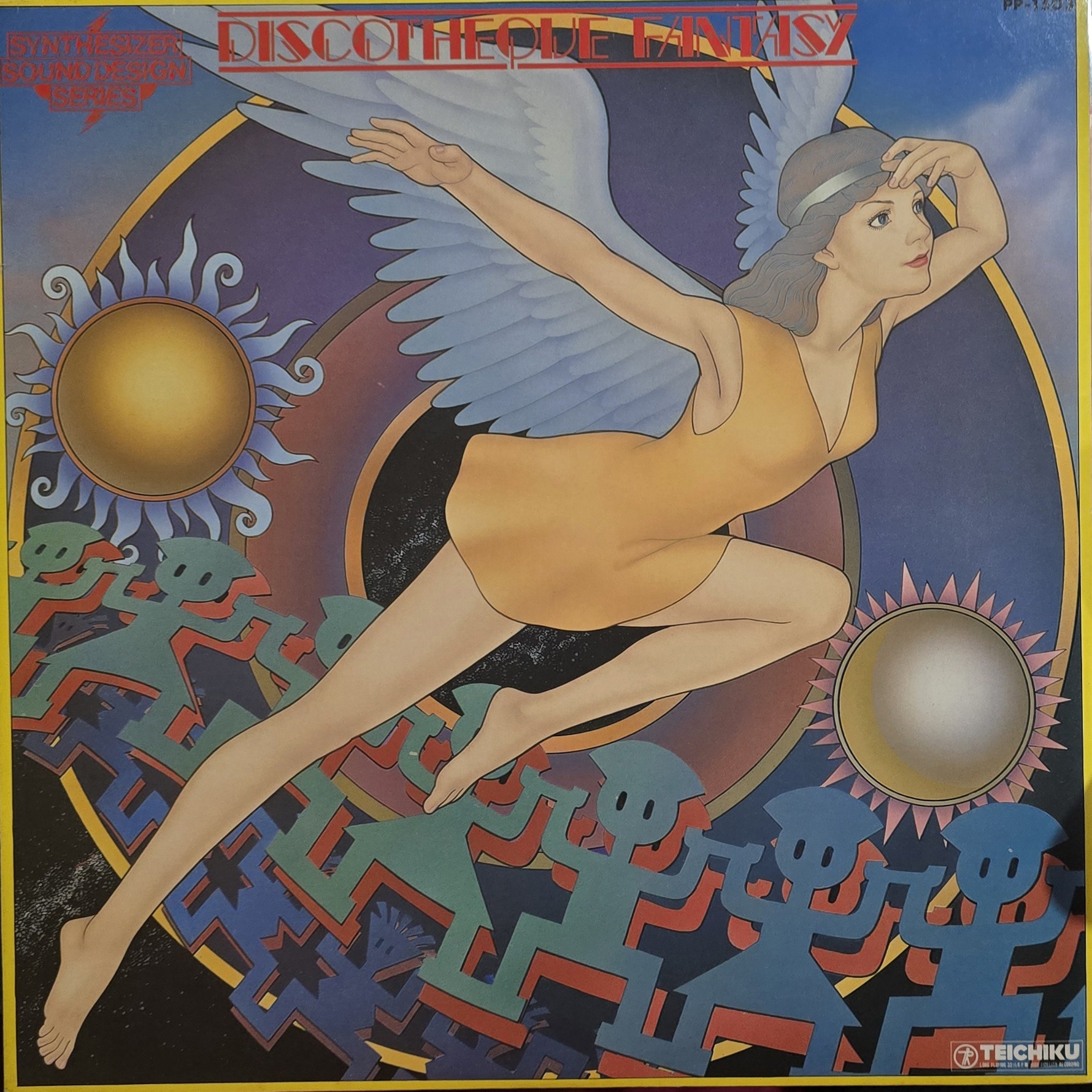
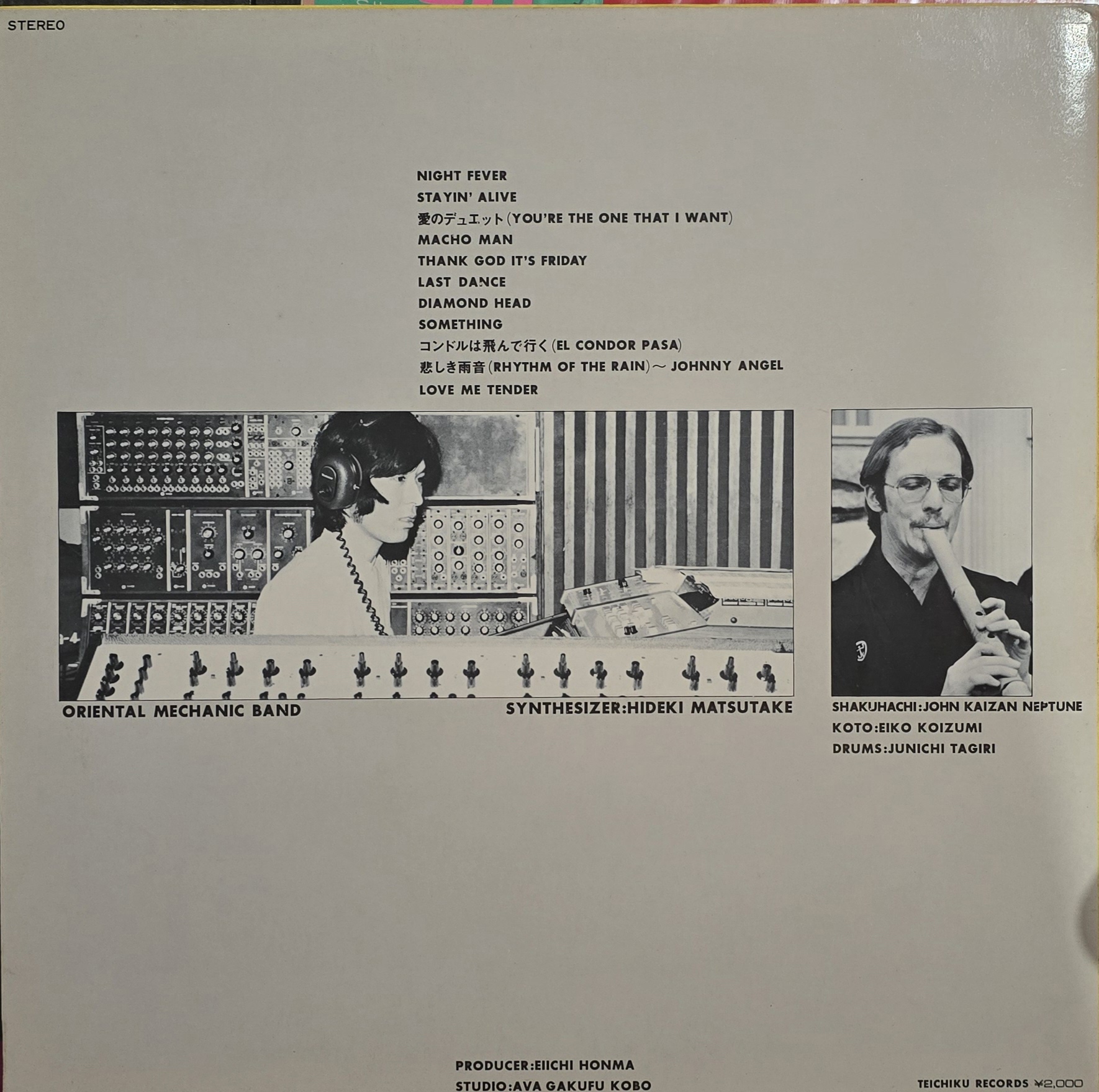
Oriental Mechanic Band – Discotheque Fantasy (Click here for complete album download)

How many times have I featured out-of-print and hard-to-find music featuring Hideki Matsutake (aka Logic System) on this blog? I’ve lost count and my tags are broken as shit (like everything else on this website) so who knows?

For those who may not know, Hideki Matsutake is a very influential Japanese electronic musician who is best-known for his work with Yellow Magic Orchestra and various YMO associates. He got his start in the industry at a young age, working with Tomita when he was still a teenager.

In addition to working on YMO’s first two releases, he also contributed to early albums by many other greats of the Japanese techno-pop and new wave scenes, including Sheena & The Rokkets, Akiko Yano, Rajie, Susan, Mioko Yamaguchi, and many more (as well as solo releases by all the members of YMO). If you have any notable Japanese pop music release from the late 70s or early 80s with prominent synthesizers or sequences on it, odds are he had his hand in it.

I also met him once. I tried not to be that big of a geek about it.

But before his work with YMO and other big-name artists in Japan, he released a few albums under other assorted names, a few of which I know I’ve shared in the past. One of my favorites is The Charm of Synthesizer: Japanese Melody (which you can find here), an album composed entirely of covers of Japanese enka tracks. He release that under the name Beautiful Shateau & Synthesizer. At the time I wrote that, I didn’t know what year that album came out, since then I’ve discovered that it most likely was released in 1976, meaning that it was one of his earliest releases.

This album, released under the name Oriental Mechanic Band, came out just one year later, but it’s a bit different. While that previous record was nothing but Japanese folk songs given the plugged-in/synth treatment, this album features more contemporaneous music, mostly on the disco side of things, hence the name.

The album opens with two Bee Gees covers, “Night Fever” and “Stayin’ Alive.” I’m an established Bee Gees hater, but I dig these takes on their tunes. Maybe it’s because there’s no high-pitched squealing distracting from the solid melodies or basslines. Or maybe it’s the totally radical shakuhachi playing?

These aren’t purely electronic arrangements. This is not a Wendy Carlos album. In addition to Matsutake’s synths, we also have Junichi Tagiri on drums, Eiko Koizumi on koto, and, most notably, John Kaizan Neptune on shakuhachi (Japanese flute). Most of those people haven’t done a ton, but Neptune has been around. He’s American-born, but lives in Japan and has apparently made the shakuhachi his life. Not only does he play the thing, he makes them. He’s released a ton of albums since the 1970s. I can highly recommend his 1981 album, Shogun, it’s some good jazz-funk with a Japanese edge. If the city pop people ever stumble upon that record, my vinyl copy is going to skyrocket in value, I know it.

Anyways, after the Bee Gees covers we get a take on “You’re The One That I Want” from Grease. Much like the Bee Gees, I’m assuredly not a fan of Grease. But I’m also not deaf and I realize that “You’re The One That I Want” slaps pretty goddamn hard. Matsutake infuses his version of the song with a synth sound that I can only describe as “bouncy as hell” and Neptune delivers a fantastic wavering flute melody over it all.

After that brief lapse into musical theater we go back into full disco mode with a cover of “Macho Man” that has vocoder and tons of random robotic bleeps and bloops. What was an anthem for hyper-masculine presenting gay men in the late-70s club scene now sounds like a declaration of independence by a queer robot. It rules. Disco-mode continues with equally entertaining covers of “Last Dance” and “Thank God It’s Friday.”

Things take a bit of a turn moving onto side B. First, there’s a cover of “Diamond Head,” a Ventures song. I had never heard of it before. I’ve lived in Japan a long time, but not long enough to get into The Ventures. I assume I’ll get there at some point. In case you didn’t know, The Ventures were INSANELY popular in Japan, second only to The Beatles. If the wiki for this song is to be believed, it was the first song to sell one million copies in the country. When people think of the phrase “big in Japan,” the first band that comes to mind shouldn’t be Cheap Trick, it shouldn’t be Mr. Big, it should be The Ventures.

Anyways, I’ve only listened to the original a handful of times after listening to this version. They’re quite different to the point that I didn’t think that they were the same song at first. Matsutake uses the synth like a bass here to good effect, giving it some great percussive energy.

Then there’s a cover of The Beatles “Something.” I have so many covers of “Something.” I have a version played on bamboo flute that I like quite a bit. I have a baroque arrangement by a group called Tokyo Solisten. I have two versions by Shirley Bassey. “Something.” It’s a good song. It’s really hard to fuck up “Something”. Good news, Matsutake and company don’t fuck up “Something.” But there’s only so much you can do with it. It’s fine.

I really like what comes next, however, a cover of “El Condor Pasa,” a Peruvian orchestral song made famous by Simon & Garfunkel. Apparently it was really popular in Japan, because this is the fourth cover I have that’s performed by a Japanese artist. I have a cover by funk musician Akira Ishikawa, one by Tomita, and another by koto (Japanese harp) performer Tadao Sawai. Much like “Something,” it’s a very hard song to screw up. The melody is so powerful and haunting. A basic cover of the tune is going to earn you an easy B+ at the least.

This cover is fantastic. While the main melody is playing on the synthesizer, the koto and flute do a lot of work, and it really transforms the song. This song has always made me think of Morricone, listening to other versions I always imagine a cowboy wandering the desert or something similar. This one evokes the image of a lone samurai wandering the Japanese countryside, sword in one hand…and possibly a keytar in the other.

We go back even further in time after that, with a medley of “Rhythm of the Rain” and “Johnny Angel,” the former by The Cascades and the latter made famous by Shelley Fabares. This is some real golden oldies stuff, pre-Beatles pop tracks from the early 60s. Honestly, not my thing and this doesn’t do much to change that. However, the medley still piqued my interest due to the opening that Matsutake plays on the synth. It’s there for just a second, but you listen to that and tell me that you don’t hear at least the glint of the opening to Yellow Magic Orchestra’s “Behind The Mask.”

Am I crazy? I totally hear it. The earliest version of “Behind The Mask” is from 1978, used for a Seiko watch commercial, and Matsutake worked on that version as well. It would not surprise me if he took the sounds he created for this album and applied them there.

And finally we close with a cover of “Love Me Tender,” another song that I’ve never been a big fan of, but I enjoy what they do with it. Who knew that an Elvis Presley song could be improved with concurrent synth and koto melodies playing along a synth drumbeat and a funky-ass bassline? Makes me want to hear more synth covers of songs Elvis made famous. And honestly, given the shocking number of Beatles-themed synthesizer albums, I’m surprised that isn’t more of a thing.

My copy of this also includes some liner notes. While my boyfriend can speak English and does translate things for me from time to time, the notes here are pretty massive. I went ahead and used Google Translate on them, which is better than nothing. My boyfriend says the translation gets the point across. You can read the translated notes here and here. If you want to read the untranslated original notes, you can see those here and here. I know that machine translation is no substitute for a real human doing it, but I wanted to get this post up relatively quickly.

Give this one a listen and let me know what you think of it. I’ll probably be sharing some albums similar to it later this year. I actually got really lucky since I started writing this post and stumbled upon two other super-early Japanese electronic albums, including what I think is Matsutake’s first ever credited release!

Matsutake released one more album under the Oriental Mechanic Band moniker, Sonic Syncopation, which came out the year after this release. I’m going to try and track that one down and if I find it I’ll be sure to share it here as well.

Ozzy’s Lost Live EP

Friday, August 1st, 2025

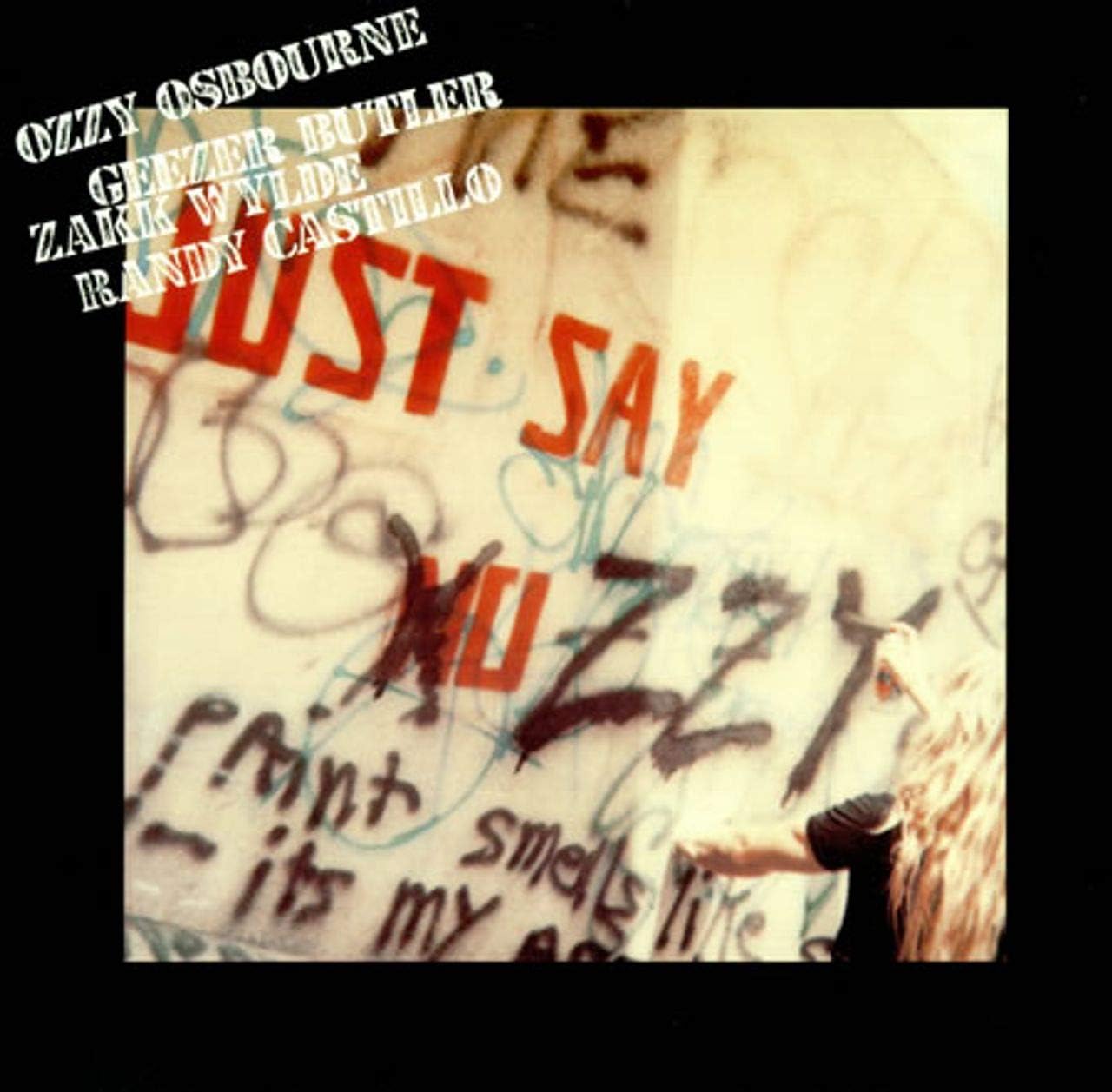
Just Say Ozzy (Click here for a complete album download)

As I write this, it’s been a little over a week since Ozzy Osbourne left us, and it still doesn’t seem real. Ozzy just felt like someone who would always be here. And it’s not just because he was a seemingly invincible madman powered by liquor and cocaine. He was just an overpowering presence in the world, as both a musician and a media personality. I was born in 1979, so I have only known a world where Ozzy was a goddamn motherfucking superstar; the biggest name in metal for over 40 years. No one name will forever be more synonymous with “fucking metal” than “Ozzy.” Even if you removed the entirety of his work with Black Sabbath, the band that literally invented the genre, Ozzy would still be one of the most important people in heavy metal music who ever lived thanks to some of the best popular heavy metal tracks of the 80s and 90s, and even in to the 21st century; and his last two albums were fantastic.

I’ll be mourning the Prince of Darkness for a long time. Thankfully I have a lot of his music to remember him by. So far I’ve been listening to a lot of Sabbath as well as his last two albums, as well as Ozzmosis. However, I haven’t really touched most of his 80s output after his second album. Shockingly, I didn’t own any of it. I owned it at one point, but I must have sold all of it for some reason, and before I was ripping all my CDs to my computer.

Well, thankfully I fixed that problem today. I went out and bought Speak of the Devil, The Ultimate Sin, and No Rest for the Wicked. I can’t wait to dive back into them. It’s been literal decades since I gave any of them a proper listen, so it will be like discovering them all over again.

I know that Ozzy’s mid-80s output isn’t considered a highlight by most people. Metal went pop/glam in the 1980s and Ozzy went along with it for a while, that’s for sure. His hair sure as shit got big for a few videos, and the man wasn’t afraid to don the sequins when on tour with the likes of Motley Crue.But I dig this shit. In the past few years I’ve gotten really into metal, to the point where I started buying 80s glam metal albums I previously scoffed at. And it’s just so fun. So upbeat. It’s hard to hate on it too much now. Besides, it just fucking sounds great. If you’re a fan of well-produced rock music, you can’t get much sleeker than this shit. And for some that might be a negative, but I ain’t too good for pop in my heavy metal, and you shouldn’t be either.

Just Say Ozzy is a live EP that came out in 1990. I read some (all negative) contemporaneous reviews of the release, and many of them juxtapose that the album was quickly hobbled together as a way to keep Ozzy’s name in the spotlight as he took a break for rehab. I don’t think Ozzy’s ever said much about the release, so it’s hard to say what the real motivations behind the EP were. In the album liner notes, he just says that it was the label’s decision to release the mini-album and that he was initially against it; but he changed his mind because he was happy with the performance and his band.

But there’s a bit of mystery behind this one, a lot of speculation online about when this album was recorded and just how “live” it actually is. In the original US and UK releases, the back cover claims that the album was recorded at Brixton Academy in 1989, but Ozzy didn’t play Brixton Academy in 1989, so…what gives? I’ve read some discussions online that suggest it was recorded almost entirely in the studio with the audience added in post. To be honest, it does kind of sound like that’s the case. I own a lot of live albums from this era, very few sound as crisp and clean as this one.

However, in my late-90s Japanese CD re-issue there are liner notes by legendary Japanese rock journalist Masa-Itoh, and he claims that the songs were taken from a concert at the Tower Theater in Philadelphia (which is really in Upper Darby). He also says that this concert was “streamed to home TV screens using the groundbreaking pay-per-view system.” (according to Google translate, but my Japanese boyfriend confirms this translation), and that’s just crazy. Late-80s/early-90s PPV was nuts, man.

Well, that concert has been preserved in its entirety on YouTube, so it’s easy to compare and contrast the versions here with that footage. They definitely sound different, at the very least, it’s a different mix of the same recording. Crowd noise has been damped drastically during the tracks, and fake crowd noise has been added between songs, most likely to ease the transitions between the songs. Ozzy’s banter has also been removed or changed too. In the video, you can hear Ozzy saying things like “c’mon clap you hands!” during the intro, those interjections have been removed for the CD, with the intros to many songs being shortened as well.

But it roughly sounds like the same performance to me. Zakk’s first solo on “A Shot In The Dark” sounds nearly identical on both versions. I bet there were substantial overdubs done, especially to Ozzy’s vocals, but this is probably more live than not. Also, I’ve read some reviews of this online that criticize Zakk Wylde’s playing, citing various mistakes he makes during solos. My ear is not good enough to pick those up, but if those mistakes do exist, I doubt Zakk would’ve made mistakes like them during a tight studio recording.

Regardless of the album’s authenticity, it still captures Ozzy’s live energy, and I feel it’s worth a listen if for no other reason than the line-up that’s supporting Ozzy on it. Just Say Ozzy is the first live Ozzy release to feature Zakk Wylde on lead guitar, who of course would stay as Ozzy’s guitarist for most of his career from this point on. The EP is also the live debut of Randy Castillo, who played on most of Ozzy’s 80s output and on 1991’s No More Tears (he’s also on the 1993 live album, LIve & Loud, alongside Wylde).

Most notably, however, is that this is the only official live Ozzy solo release that features Geezer Butler from Black Sabbath on bass (save for one track on Live & Loud as part of a Black Sabbath reunion set). Butler would later play again with Ozzy on Ozzzmosis, but didn’t join him for the tour.

Just Say Ozzy has been out-of-print for the majority of this century. The same goes for The Ultimate Sin and Live & Loud. There’s been no official reason as to why this is, but a lot of people contribute it to a songwriting dispute over “A Shot in the Dark.” Gonna guess it involves Sharon being Sharon.

However, while The Ultimate Sin and Live & Loud are available on most streaming services; Just Say Ozzy has completely vanished from the digital realm. I’m sure there are bootleg streams on YouTube and such, but if you’re like most people who aren’t me in the year 2025 and consuming your music entirely via streaming services, you aren’t going to find this one on any of them – which is why I feel fairly safe in sharing it here.

Again, this isn’t essential Ozzy by any stretch of the imagination, but it’s a solid little release. Wylde’s solo for War Pigs slaps pretty hard. The drumming is super-aggressive and gives the show a lot of energy, and I think that the live versions of “Miracle Man” and “A Shot in the Dark” surpass their studio rivals. I hope that more live releases from this era (and others, I’d love a Retirement Sucks live album) get released.

RIP Ozzy. Fuckin’ metal.

Dorf goes Techno

Monday, June 2nd, 2025

It’s been a minute since my last post, but I think this might be the shortest time between posts since 2022! So that’s something!

How’s everyone doing these days?

Sorry to hear that, yeah, me too.

Anyways, this site is still broken. If you leave a comment I’ll be able to read it but it won’t show up on the site. Sorry about that. I’m hoping to get that fixed very soon. I found someone online who said they’re willing to help. In the meantime, if you really want to reach out to me, give me a shout on Blue Sky.

I did manage to resurrect my YouTube channel with semi-regular updates! You should check it out! I’ve done some videos about records I recently bought, did deep dives on Mario and Zelda soundtracks, and even did some angry YouTube bullshit whining about AI. (Guess which video was the most popular.)

Right now, I’m doing a series where I rank literally every movie I’ve ever seen. Of all the projects I’ve done on YouTube, it’s by far the one I’m most happy about. I really enjoy making the videos. They give me a chance to talk about a lot of movies that no one has ever heard of, which is one of my favorite things to do, and I feel that it’s a unique concept that not many people have attempted before. No one is watching the videos, but I’m going to keep doing them!

Shit, no one reads this blog either but that’s rarely fucking stopped me. Remember that I also have a podcast. Some people do actually seem to listen to that, so that’s nice.

Tonight, a complete album by a band you have, without a doubt in my mind, ever heard of. Gee, for some reason I can really identify with bands that are completely forgotten and no one care about. Go figure.


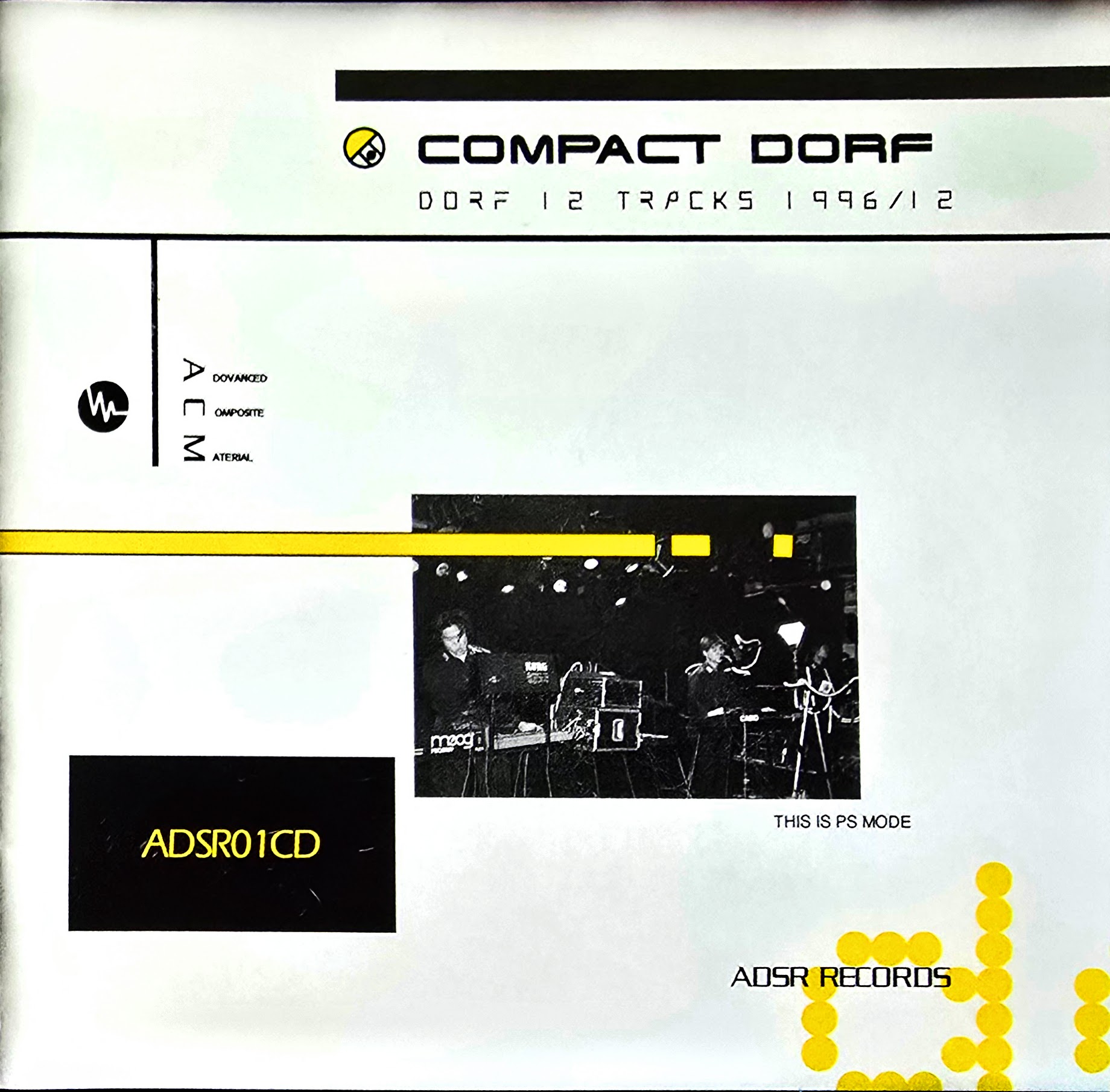
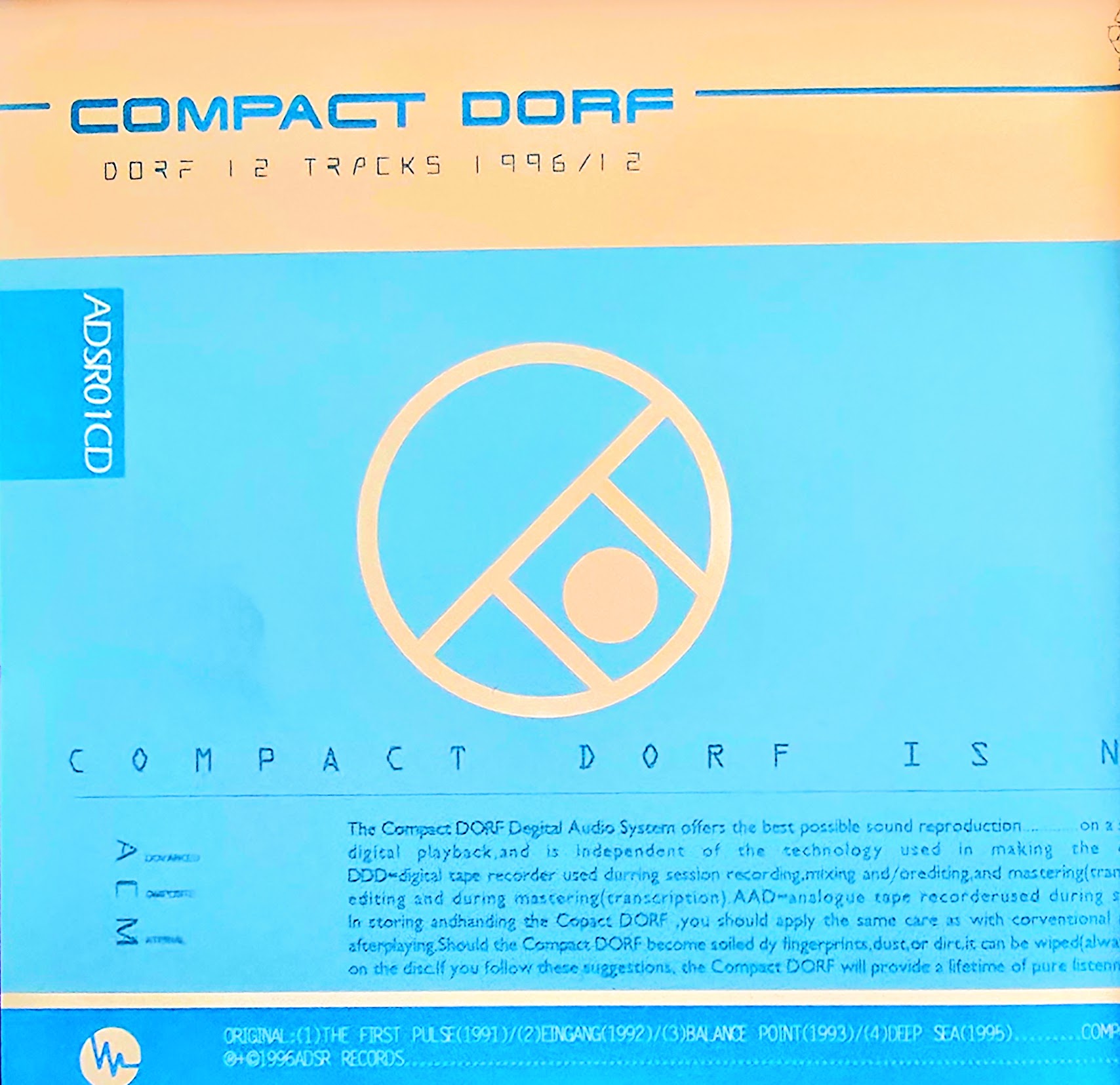
Dorf – Compact Dorf (Click here to download the album)

One of my favorite record stores in Tokyo is the Disk Union in Shinjuku. It is seven stories tall, and each floor has a different theme. In my 10+ years in this country, the first floor has changed layouts multiple times. It used to be the new release floor. Then it became an ill-fated cafe that I think I never once set foot in. That was a waste of floor space, let me tell you. A couple years ago, it was renovated again into an all anime and game music store.

Have you ever seen Hostel? You know that scene where the dipshit protagonist stumbles upon the snuff house and he bumps into the Japanese guy (Takeshi Miike)?


Yeah, it’s kind of like that for me. It’s a problem, is what I’m saying. They know me by name. I’m the Norm of that store.

Last week they had a sale. I bought a lot of CDs. I bought TWO soundtracks to TWO different Space Invader games that I didn’t even know existed. I bought the soundtrack to the Nintendo DS Araknoid game. I bought the soundtrack to the original Tekken (it has dub remixes). I bought the soundtrack to something called 1997 Nostalgia. I don’t even know what the fuck that is, but I liked the cover and it was ¥500 so I was like, “fuck it who cares.” Turns out it’s the soundtrack to some MSX game and it has a real dope mid-90s MIDI vibe.

I also bought this. Also because it was about ¥500. And I liked the minimalist vibes of the cover art. Really clean 90s Designers’ Republic shit. It looks like something the art team from Bungie would plagiarize, that’s how cool it is.

This is Compact Dorf by the band Dorf.

Bad band name. Bad album name. Really good music though!

The music is a bit hard to describe. Although maybe that’s just because I haven’t written about music in a few years now and I’m out of practice, who knows. It’s very much electronic music, that much I can say. There are no guitars here. It’s all synths, keyboards, drum machines, and samples. Some of the tracks have vocals, but nearly all of them are processed through vocoders and other electronic effects. I can’t even tell if they’re singing in Japanese or English.

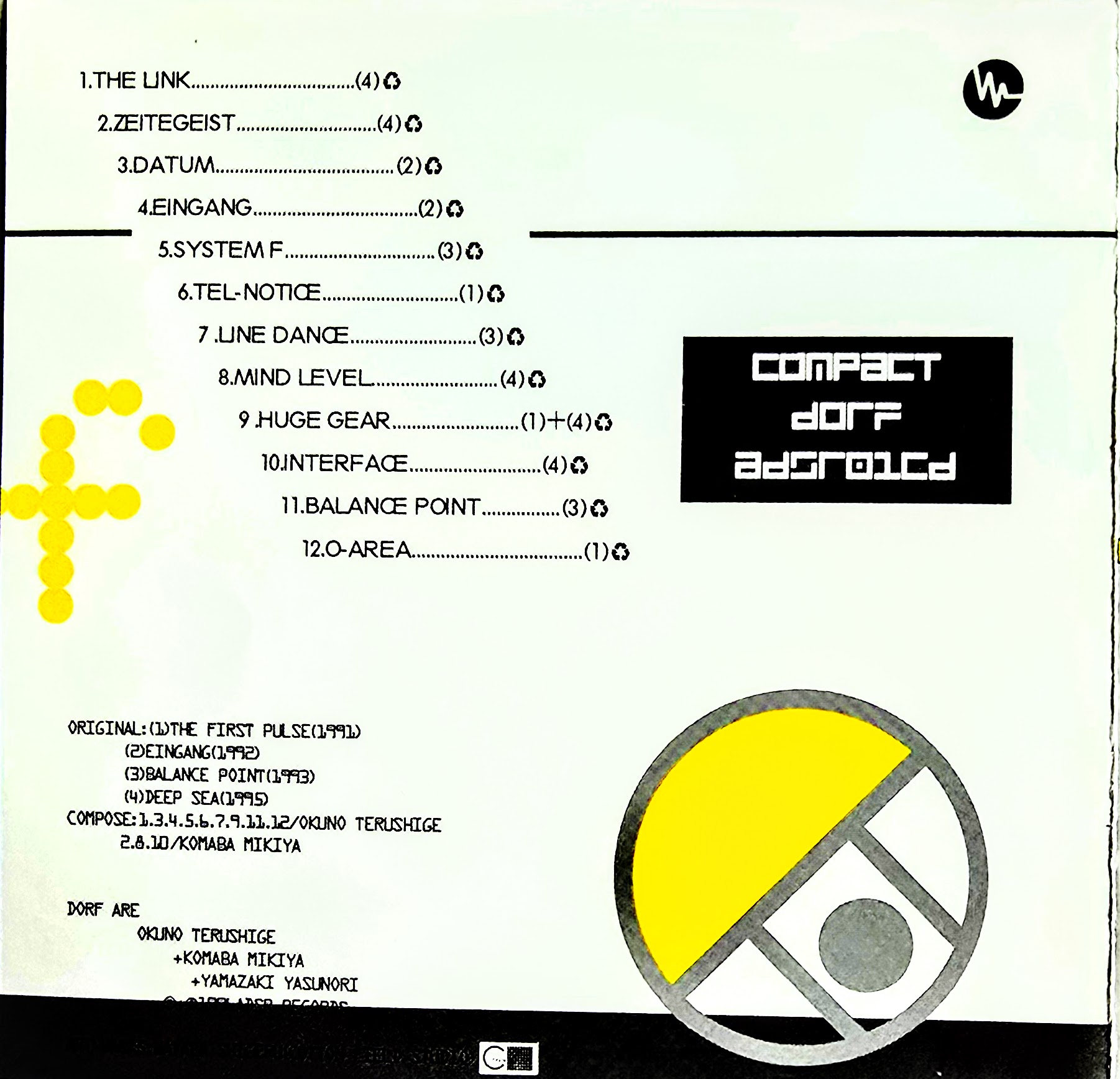
Tracks like “Datum” and “The Link” have big Kraftwerk vibes, with bouncy beats and robot vocals, while songs like “Zeitgeist” give me YMO energy, with an emphasis on traditional Japanese-sounding melodies. What makes the album really stand out, however, is the heavy chiptune sound. I’m sure that most of this was composed and performed on synths both modular and electric, but the whole album feels like it was arranged using sound libraries from Super Nintendo games.

And that’s really something because this album came out in 1996, and according to the one page I can find on the band, they formed in 1990! I have no idea what their earlier stuff sounds like, but if it’s anything like this I feel safe in saying that these guys were light years ahead of their time. What’s the earliest chiptune artist you can think of? Bit Shifter? Anamanaguchi? YMCK? These guys predate all of them by at least a decade. They even precede Polysics, whose chiptune meets Devo sound didn’t start to make waves until the second half of the 90s.

I was so stoked to discover this! You know how hard it is to find genuinely obscure music these days? It feels like everything’s not only been discovered at this point, it’s all on Spotify with YouTube essays about it and vinyl re-issues from Light In the Attic getting pressed. And not only is this genuinely obscure, it’s really good! It’s one of my favorite albums that I found this year! I can’t believe this has just fallen through the cracks like this. It’s probably because the album was self-released. And with the band kaput, there’s no one around to re-publish it or get it online in any way.

I am surprised that there’s almost nothing about them online, however. All I can find is on that one page, and a sole live performance from 2005 uploaded to YouTube.

From what I can gather on that page, the group went through several lineup changes both before and after this album. On Compact Dorf, they were a trio; the members being Okuno Terushige, Komaba Mikiya, and Yamazaki Yasunori.

I did a bit of digging on those names. Yamazaki Yasunori is on Discogs. Apparently after he left Dorf he went on to form an electronic duo called Uni. This was in the early 2000s. It appears he hasn’t released much music since then. He has a Soundcloud but there’s nothing on it.

I also found Komaba Mikiya on Discogs. He’s released several albums online under the name Komaba. It sounds a lot like Dorf, albeit with a bit less of the video game influence and more of a general “electronica” sound. I dig what I’ve heard.

As for Okuno Terushige, I got nothing.

Again, going back to that sole page with information on the group, I see that they have a few other releases, but a lot of them are tape only. I have no idea how to even begin a search to track those down. There are stores in Japan that sell old cassette tapes, but they don’t carry stuff like this: they’re more down to charge you $50 for a Billy Ocean tape or some bullshit. I guess I’m going to have to start scouring Japanese auction websites. I just know I need more of this band in my life. I hope you give this a listen and feel the same way.

Non-music from Japan, music from a Japanese band, and horror disco

Wednesday, December 6th, 2023

Oy.

Yeah so I hoped to write more in 2023 but that sure as shit didn’t work out huh?

So what had happened was my health got worse, my podcast work got more intense, my work got busier, my social life got more hectic, and I spent about a month in the states, which ended up exacerbating several of my health problems.

(Don’t worry, none of my health issues are life-threatening and I am currently seeing multiple medical professionals to improve my health. Also, I can afford all of this, so no need to offer donations or any financial support).

In addition to all of that, this was the year it finally happened: I couldn’t find anything out-of-print worth sharing here. You know my policy; for me to share something on this blog it has to be out-of-print in the majority of the English speaking world. Sure, I would occasionally bend the rules now and then, but after my Warner Bros/YouTube bullshit copyright battle, I’m extra careful now.

I guess I could have scoured the prog store from some ultra-obscure European jazz-rock album or something that has never been re-issued, but I learned a long time ago that whenever I buy music simply because it’s out-of-print, with the intent of sharing it here, it’s rarely something I have any interest in writing about.

But recently I got lucky with three releases that I am 99% sure have songs that are 100% out-of-print, at least in the forms I’m sharing today. And they’re not video game music! They’re proper songs (well, some of them) by artists you might have actually heard of.

I actually do have a few other out-of-print albums that I want to share at some point, but I am making zero promises as to when I will actually do that. Sorry. Life. It’s in the way. Hopefully my health will improve so I can dedicate more time to writing once more.

In the meantime, if you’re really hankering for any written word by yours truly, your best bet would probably be to check out my Letterboxd page. I review every movie I watch. Sure, sometimes it’s just a sentence or two, but sometimes it’s a bit more in-depth. Typical rule of thumb: the more obscure the title is, the more likely I am to write more on it. I’m not going to go deep on something like Robocop when I watch that. Everything that can be said about Robocop has been said. I have nothing to add to that discourse.

Additionally, I am still on Twitter (sigh) and I’m also on Blue Sky. As always, those remain the best way to keep in touch with me, especially since the comment section on this website is now broken. I had to close all comments because I was getting inundated with spam and no filters were able to fix the problems. Sorry about that.

And there’s the podcast! Cinema Oblvia is still going strong! I had to cut down my production schedule a bit, again because of my health, but I’m still putting out at least one episode a month. And I feel pretty safe in saying that I’ll be able to keep that going for a while now. It’s hard work, but I enjoy it more than anything I’m doing at the moment.

If you listen to my podcast and you want to hear more of my absolutely lovely voice that no one at all finds weird or irritating, I was recently on an episode of Gayest Episode Ever talking about Benson, and was also recently on Retronauts talking about Night of the Living Dead, a film that traumatized me so much as a child that I needed to go to therapy because of it. You can find those wherever you get your podcasts. You can find my podcast on most podcast places/apps/websites/whatever as well. Except for Spotify. Because fuck that company.

Have a good new year! I’ll see you here at some point in 2024, that much I can promise.


Fred Myrow and Macolm Seagrave
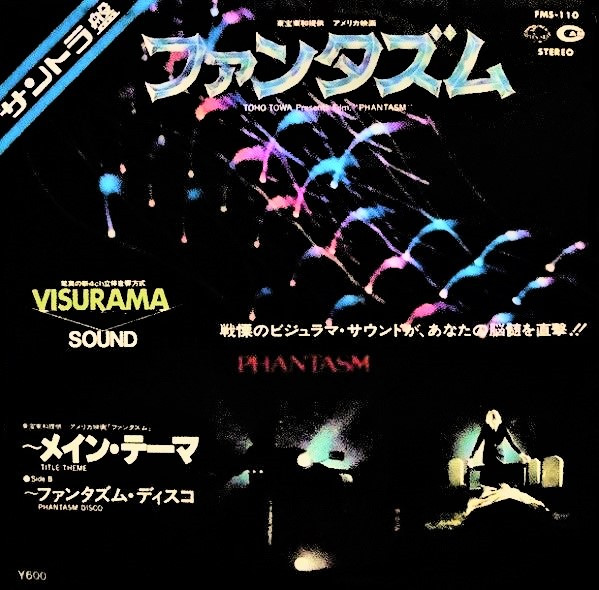
Phantasm Disco
Okay, so there are two different songs called “Phantasm Disco” that incorporate the theme from the 1979 film Phantasm. Yes, really.

One is by an artist called Captain Zorro, which is actually a pseudonym for the disco producer Biddu. People seem to really like that version, but I’ve never come across a physical copy of that 12” single. I would buy it in a heartbeat.

This is not that version, this is a version by the people who composed the music from the film, Fred Myrow and Malcolm Seagrave. In fact, a version of this track is on the Phantasm soundtrack proper, under the name “Phantasmagoria Silver Sphere Disco.” It’s a mix of two different tracks, actually, a spacey, creepy ambient bit followed by the disco tune.

This version is on a 7” single that completely removes the “Phantasmagoria” bits and extends the disco section. I think this version might be on the original Phantasm LP? But I don’t think it’s on the Mondo re-issue from a few years back, as that version (with both parts) is shorter than the 7” single version.

I love the fact that Japan had an exclusive 7” single for the theme to Phantasm and the B-side was an exclusive remix of an album track. Because…why?

If you haven’t seen Phantasm and you like beautiful, surreal horror films that aren’t that scary and don’t make a lick of fucking sense, I recommend it. Someday I’ll get around to watching the multitude of sequels and no doubt be disappointed by all of them.


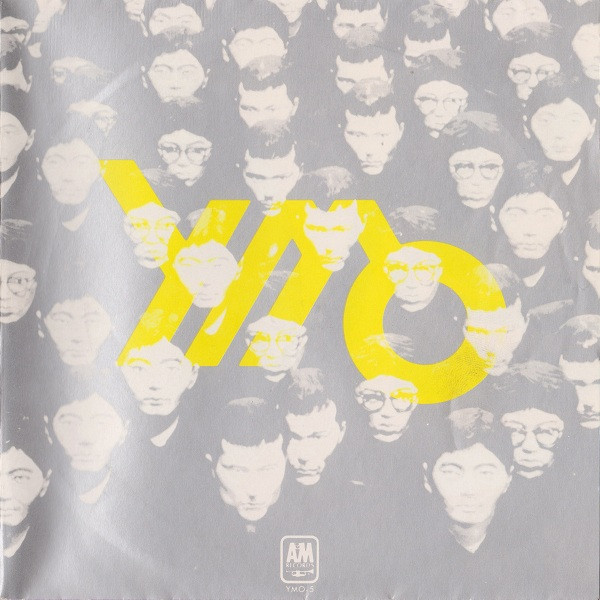
Yellow Magic Orchestra – The YMO Micro Sampler
A Message From YMO
Tighten Up With Excerpts From The Snakeman Show…
Edited Selections From X∞ Multiplies (Nice Age, Technopolis, Rydeen, Behind The Mask, Day Tripper)
I have so many YMO albums, singles, re-issues, appearances, and compilations that Discogs has just straight up given up counting them. This is the latest acquisition in my YMO collection, and one that I was trying to find for a very long time.

It’s a five inch record that was distributed as a promo item exclusively in America to promote the group. It came out in 1980, probably around the time that the export version of X∞ Multiplies was released. In Japan, that album was an EP that had both comedy skits and some previously unreleased tunes by the group. Europe and the United States each got exclusive versions that combined songs from their previous albums with some new tunes. The US version of X∞ Multiplies is actually how I discovered the group, buying it in a used record store probably close to 20 years ago. It’s a safe bet that me discovering that record led me on the road that ended with me moving to Japan, which means that my mom probably hates that record.

This promo has three tracks, a very short 15 second intro, followed by two very short medleys of YMO tracks, oddly with excerpts from the Japanese only version of X∞ Multiplies edited in. As a thing to listen to it’s not that great, but as a historical curiosity for maniac YMO fans like myself, it’s fun.


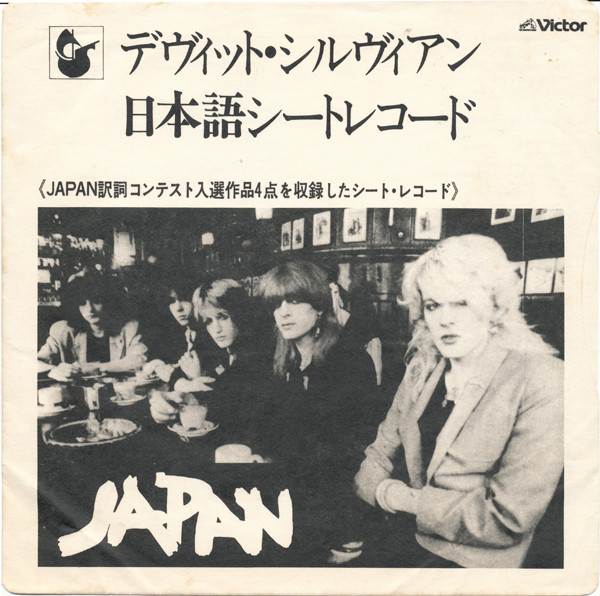
David Sylvian – 日本語シートレコード (Japanese Sheet Record)
Adolescent Sex = 果てしなき反抗 (Version 1)
Adolescent Sex = 果てしなき反抗 (Version 2)
Lovers On Main Street = 表通りの愛人たち
Suburban Love = 愛の回転木馬
Speaking of things that are interesting from a historical standpoint but maybe not the best listening material…

This is the strangest thing I’ve bought all year, and I bought a lot of stupid shit this year. I found it in a used hardware store for about ¥500, and I bought it without knowing what it was because it was ¥500 and I like Japan (the band, I mean, I like the country too but anyways).

But this is not a Japan record. This is David Sylvian only. And he’s not playing any music. Instead, he’s reading Japanese lyrics to Japan songs. The lyrics were submitted by Japanese fans of the band, and they are not translations of the original lyrics, but new original lyrics that are meant to convey the musical mood of the original songs. At least, that’s what the Discogs page says. (Also, for the record, all the art for today’s post was taken from Discogs, my records are currently packed up for an upcoming move.)

I have not bothered to translate these lyrics, and I haven’t asked my boyfriend either, he has more important things to do. Sorry, but it’s already been nearly a year since my last post. If I had put it off until we had time to translate this, I might not have posted anything again until the 2030s, sigh.


Merry Christmas With Double Dragon

Saturday, December 24th, 2022

Hey this thing still works, cool.

Wanted to get one more post out before the year was up. I know that a lot of you who still read this site (thank you) aren’t all that into video game music, but I’ve been meaning to share this for a long time now, and it’s what I really want to write about, so either it’s this or several more months of radio silence.

Before we get to the music, hey, hi, how’s it going? It’s been a busy year for me. Cinema Oblivia, my movie podcast, is still going strong so I hope you all check if out if you can! Unfortunately, we had to call it a day on Alexander’s Ragtime Band, the amount of work involved in researching, recording, and editing was just too much for us. Hopefully it will be able to return someday.

The same goes for my YouTube channel. I really like filming YouTube videos! Unfortunately, I really hate editing YouTube videos, and I REALLY hate doing voiceover on YouTube videos. I’m trying to think of ways to streamline the process. I don’t know how people like Techmoan can bang out multiple videos a month. Must be easier when it’s your full-time job. I do mean to get back into it soon though, I keep getting new subscribers! I have nearly 700 people following me on that hellsite now, I feel that I owe it to them to update with something sometime soon. Maybe over the holiday break?

Speaking of hellsites, I’m still on Twitter. As I write this I’m coming off of a 12 hour “twitter timeout” for saying that cisgender people commit more crimes than transpeople (yes really). I vowed to quit that shitshow multiple times, but I just can’t bring myself to do it. If nothing else, I need to use Twitter to find guests for my podcast. I also follow a billion Japanese record stores too, and how the hell else am I going to know when a copy of Capcom Game Music Vol. 3 is available on vinyl at a Hard-Off on the outskirts of Tokyo? That’s important shit.

Anyways, as I’ve said before, this blog isn’t going anywhere even if updates have slowed to a glacial pace. Thanks for sticking around in 2022 and I hope to get more written in 2023.

Now, let’s talk about game music on tape.

Original Sound of Double Dragon Arcade Version

For those who don’t know, Akihabara is an area in Tokyo that’s well-known the world over for its abundance of “nerd” friendly stores. Most of the biggest electronics stores are there, as are several stores dedicated to other geekly delights such as action figures, comic books, video games, and hardcore pornography of both the animated and live-action varieties.

Of the gaming stores, the most famous is Super Potato. It’s a really good store, don’t get me wrong. But for me, the best store in the Akihabara is Beep, a much smaller store located a bit off the main drag. It’s a tiny basement, and most of the store is dedicated to things I have no interest in, such as vintage Japanese computers and arcade game boards. But I still try to make my way to the store every week or so because they have often great game music releases that I never see anywhere else.

I got a crazy selection of vintage flexi discs taken from old game magazines there, for example. I also bought from them about about three dozen game music releases on motherfucking cassette tape.

I’m not saying I don’t have a problem, okay? I know I have a problem.

Most of them don’t even have any unique or original music. And I even owned quite a few of them on CD and LP. But…they’re tapes! Yeah, they sound like garbage, cost too much, and I’m probably only going to listen to them a handful of time at most, but…they’re tapes! They look cool. Sound bad. Look cool.

But I did pick up a few that were legit rare, with some honest-to-goodness hard to find tracks. Like this Double Dragon tape, for example.

This is the soundtrack to the original Double Dragon arcade game. The game came out in 1987, this tape came out in 1988. It was never released on LP, only on this tape and on a mini-CD that I have never found anywhere ever – not even online.

While it calls itself an arcade soundtrack, the tape is comprised entirely of arranged versions that I think are unique to this release only. At least, I’m pretty sure. The tracks aren’t on any other Double Dragon soundtrack release I have (and I have a lot, trust me).

They’re really good too! They all have that unique, 80s video game sound, just punched up just a bit. They sound too good to be authentic to 80s game hardware, but still sound like game music.  This version of the main theme fucking slaps. And I really dig the version of “The Battle Is Over” and “Forest” too. “Forest” hits especially hard. Sounds like music from a lost 80s ninja flick like New York Ninja (you should watch New York Ninja, by the way).

Another stand-out, simply for how batshit bizarre it sounds, is “Abobo the Giant Appears,” which is a remix of the main theme comprised entirely of sound effects from the game. Imagine Art of Noise covering Double Dragon. Bonkers shit.

It also came with this rad double-sided poster with liner notes. Love the artwork on this.

And it’s nice to know that I am, canonically, the same height as Abobo.

Anyways, Merry Christmas, happy holidays, all that jazz. I’ll be back next year at some point – I promise.