Archive for the ‘Complete Albums’ Category

German Electronic Avant-Garde Jazz Funk Fusion Top 40 Hits

Tuesday, November 7th, 2017

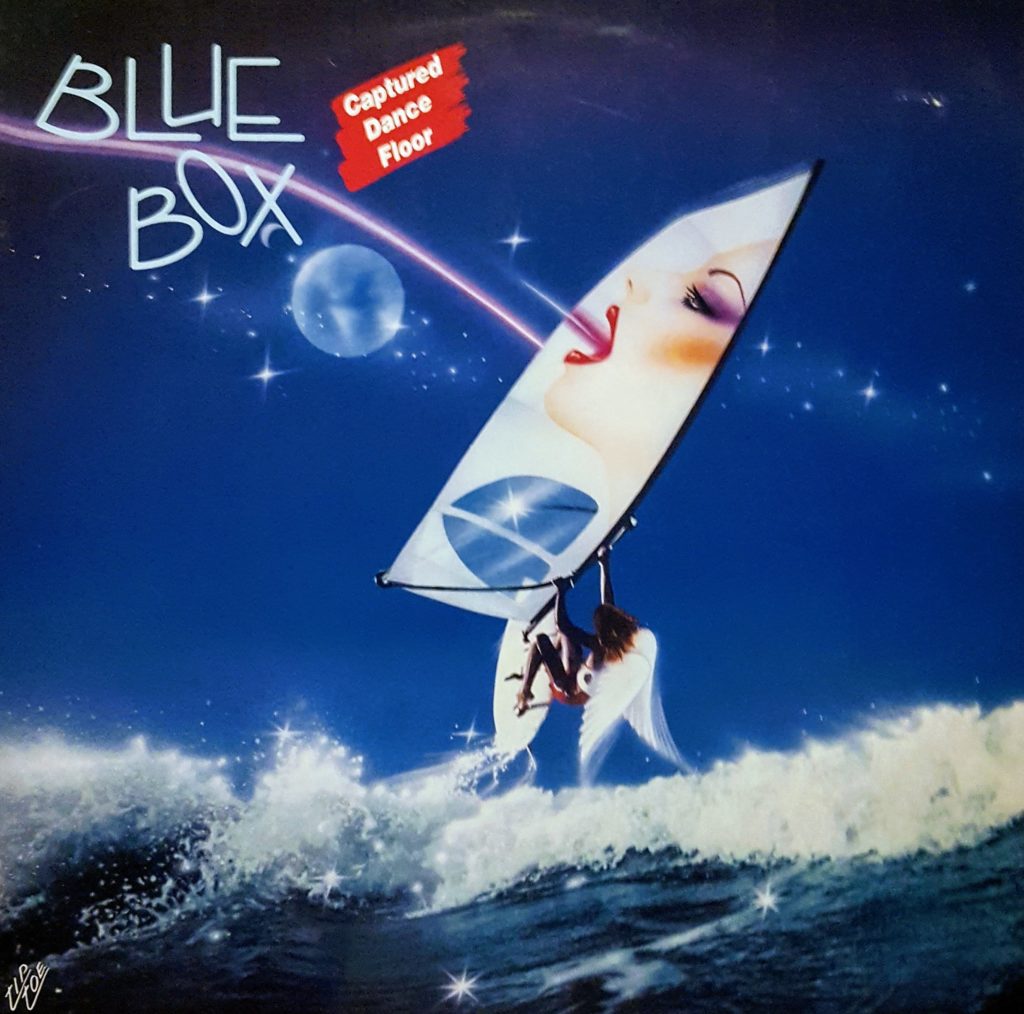
Blue Box – Captured Dance Floor
I’ve been sitting on this one for a while now, simply because it’s so weird that I didn’t know what exactly to do with it. As some have mentioned (with varying degrees of tact and politeness) my musical tastes have branched out a bit lately. But this one is out there even for me. It’s mental.

Okay, so what the hell am I talking about? Captured Dance Floor by Blue Box, originally released in 1989 in the group’s native country of Germany. In what little I can find on it online, it’s often categorized as jazz fusion, but I feel that categorization is wildly inaccurate. You say jazz fusion, and I think Steely Dan, Gong or Brand X. I think jazzy rock with an abundance of horns. I don’t think sparse mechanical beats overlaid with maniacal saxophone melodies, because that’s what this album is.

I get a bit of a Was (Not Was) vibe from this, but even far less commercial than that group’s most avant-garde mindfucks. But if there was an instrumental b-side to “Hello Operator…” it would’ve been a track from this record.

It’s hard to find much information on these guys in English, but I was able to dig up a bit. The group is a trio, featuring Alois Kott, Peter Esold, and Rainer Winterschladen. The first two were previously in a group called Contact Trio, who discogs describes as “on the more avant-garde end of jazz-rock.”

In the snippets of their first two records that I’ve found, Blue Box started out not all that different from Contact Trio, a bit more upbeat with some electronic drums thrown in, but definitely more jazz than anything else. This album is much different. I suspect that between their 1985 release and this one, someone in Blue Box discovered Art of Noise. The minimal jazz textures, trumpet and bass, are mixed in with seemingly random sound effects and vocal distortions.

It is just out there, man. And I’ll be 100% honest; I really have to be in the right headspace to hear this stuff. When I’m stressed out or a little under the weather, this actually makes me a little sick to my stomach. The ways it defies convention and traditional song structure are actually unnerving to me.  But when I’m willing to roll with it and let it overtake me, I find a lot to enjoy. I appreciate the combination of electronic loops with acoustic rhythms. I like how it sounds so alien that I, at times, can’t tell what’s a sample and what’s live. I really dig how it even sounds almost industrial at times, quiet a feat considering how sparse most of it is. A dissonant sax and a few random crashing samples go a long way I suppose.

Is this for everyone? Definitely not. Is it for most people? No. But is it worth at least one listen? Without question. Give it a try, and let me know what you think of it in the comments.

Oh and that cover holy shit.
Megagay Megatone Megamixes

Thursday, October 12th, 2017

Back to my regularly scheduled programming of unloading all the stuff I ripped to my computer before I moved to Japan. Now for some gay shit.

DJ Frank Schmidt
Megatone Records Greatest Hits Mix Side 1
Megatone Records Greatest Hits Mix Side 2

Tracks from Megatone work well in the megamix format, as nearly all of them kind of sound the same in the best way possible. I wish that the Megatone style of Hi-NRG disco had caught on more in the mainstream. I know it had an influence, you can hear elements of Cowley’s production work in tracks by artists like Erasure and Pet Shop Boys, but I feel that neither of them really captured the essence of the vintage Megatone sound. The Pet Shop Boys are often too subdued and/or depressed to be really Hi-NRG, while Erasure…I don’t know, they sound hella gay and camp, but not hella gay and camp enough. I guess no one can top Sylvester in that department.

Sylvester is on both of these mixes, alongside several other Megatone mainstays, the full tracklist for both mixes are as follows:

Side A

  1. Patrick Cowley – Mind Warp
  2. Sarah Dash – Lucky Tonight
  3. Sylvester – Do Ya Wanna Funk
  4. Modern Rocketry – (I’m Not Your) Steppin’ Stone
  5. Patrick Cowley – Megatron Man
  6. Magda Layna – When Will I See You Again

Side B

  1. Sylvester – Don’t Stop
  2. Earlene Bentley – Boys Come To Town
  3. Le Jete – La Cage Aux Folles
  4. Scherrie Payne – One Night Only
  5. Queen Samantha – Close Your Eyes
  6. Sylvester – Hard Up

Modern Rocketry’s version of “Stepping Stone” is really great, and both the Sylvester and Cowley tracks are, of course, out of the park fantastic. There really isn’t a weak track on either side of this one. All killer no filler for sure. If you download these mixes and enjoy them, I highly recommend checking out the Megatone Records collections that are currently on sale at iTunes. They have the 12″ mixes to all kinds of amazing tracks, including “Do You Wanna Funk,” “Right On Target,” Low Down Dirty Rhythm” and many others. Essential listening for dancing in the meat-packing district of NYC circa 1981, or, y’know, a really good workout mix.

Music From The 21st Century That Never Happened

Monday, October 9th, 2017

Sorry for the break in posts for the past two weeks. I got sidetracked with a horrendous disease! Actually, it was just tonsillitis, but it sure a fuck stuck for a while and really put a damper on my plans. Additional strife was caused by the antibiotics I was prescribed, which side effects included anxiety attacks and insomnia, making for a fun Monday night, I tell you that.

I did use the day off work to do at least one productive thing, however; I finished the sixth part of my YMO guide! This part covers the various acts in the YMO family, like Jun Togawa, Kenji Omura, and a lot of other awesome artists I’ve mentioned here in the past. Check it.

Then check out this crazy spacey music from the fuuuuuture*

*actually 1982

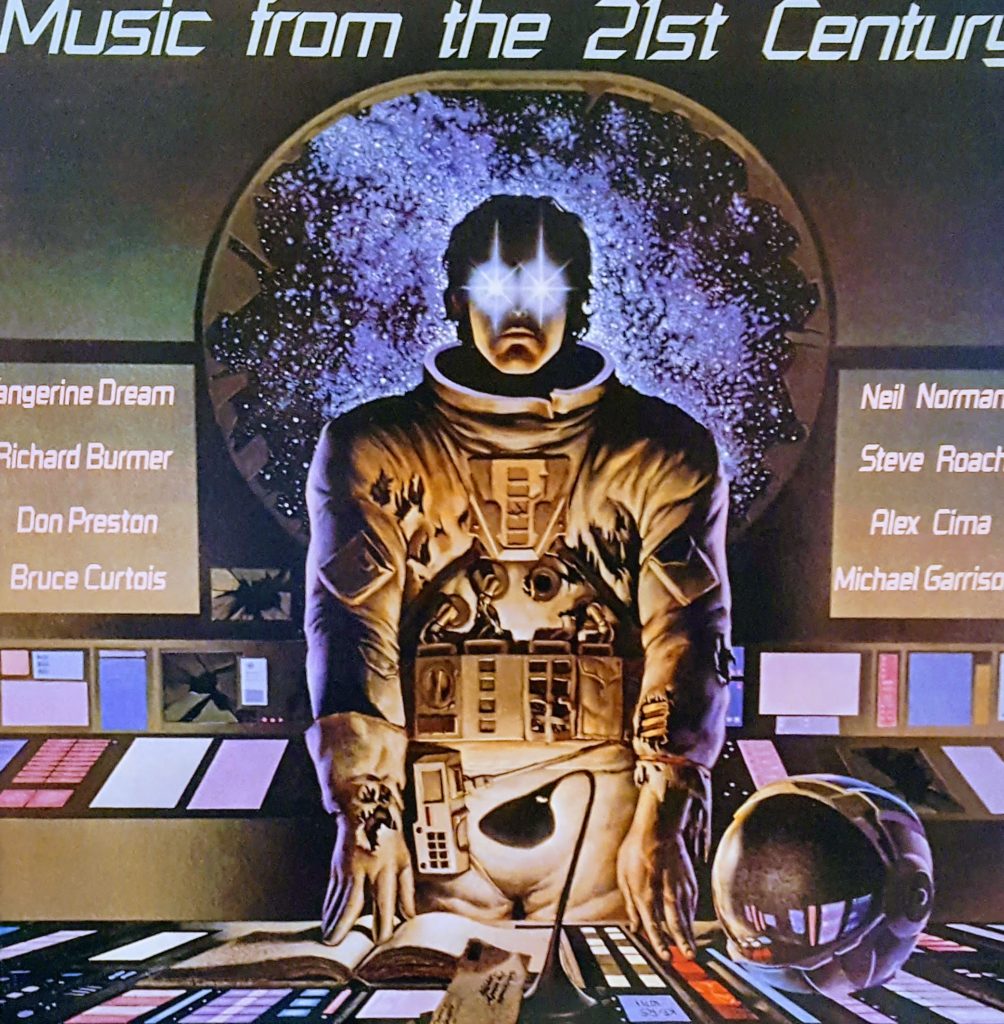
Music From The 21st Century

Remember when “the year 2000” had such a mystical ring to it and we all imagined that we’d be in flying cars, eat food out of capsules and wear skintight clothing is superfluous circles on them? Ah, nostalgia for a future that never came to be. Even though I was only a wee lad in the first half of the 80s, I remember that the idea of “futuristic music” back then meant “a shitload of keyboards.” That, and probably silver jumpsuits.

Music From the 21st Century is a compilation of space-aged electronic music, stuff that sounded very futuristic at the time, although I wonder if anyone aside from four-year-old me really thought that the music of the coming millennium was really going to sound all that different.

While I do think that the actual music of the 21st century has turned out alright, I’m sad that a future where this stuff was the mainstream never became a reality. Imagine a world where 20 minute ambient soundscapes were top 20 hit singles instead of Katy Perry?

Note: I’m not sharing side one of this, which is basically just one Tangerine Dream track that’s in-print and easy to get.

Alex Cima
Primera
Lithium
“Primera” is from Cosmic Connection, Alex Cima’s 1979 debut record. I’ve never seen this one in the wild, but from what I’ve heard on YouTube, it seems like my thing; part experimental electronica, part disco, part synthpop. My jam all the way. “Primera” is an okay tune, a bit too jazzy for my tastes, but “Lithium” is really top notch stuff. Rolling sequences, random space noises, a fast-paced beat, it sounds like Tangerine Dream on speed. Throw in some alien voices made via a vocoder, and it really sounds like music from the “the future.” Totally rad all the way.

Cima’s released three other albums, ranging from easy listening jazz to more experimental fair, but I think this stuff may be his best. Too bad it’s so hard to find.

Steve Roach
Karavan
Steve Roach likes Tangerine Dream, and it shows with his contribution to the record. If you told me this was a Tangerine Dream track, I’d believe you. Thankfully for Steve, it sounds like a good Tangerine Dream track. It could’ve been a B-side to the Thief soundtrack or something.

Steve Roach is actually a very talented and well-respected name in the ambient music scene, with a career that continues to this day with over 100 proper albums, so I don’t mean to sound flippant. He obviously carved a very successful niche for himself that went far beyond “dude who likes Tangerine Dream.”

Don Preston
On The Throne Of Saturn
Don Preston was a founding member of Frank Zappa’s Mothers of Invention. So it should come as no surprise that the motherfucker is weird. But this is a weird track, and entirely unlike everything else on this record. It’s very atonal and experimental, definitely straddling the line of what many people would call music. I also can’t figure out exactly how the hell he composed it. There aren’t any keyboards here, I think most of it is analog manipulation of analog sounds (i.e. tape music). I can see why he worked with Yoko Ono. Not exactly easy listening, but kudos for originality.

Neil Norman
Dance Of The Hyenas
Neil Norman organized this collection, and the only other artist whose name I recognized. Norman released those “Greatest Science Fiction Hits” albums in the 80s. This dude loves sci-fi. I bet he had a booth in at least one mid-80s Star Trek convention.

This is good, deliberately “sci-fi” sounding space music that deserves to be played as the background music in an episode of that new Star Trek series that probably isn’t very good.

Michael Garrison
Escape
Another Tangerine Dream-inspired keyboardist, Garrison released a lot of music in his life, and from what I can gather some of it is held in very high regard by ambient music fans. This is certainly a pretty good rejiggering of the Tangerine Dream sound (sensing a theme?), with a good mix of sequencer rhythms and a super-catchy melody. Feels like just part of a larger piece though.

Bruce Courtois
Inside The Black Hole
I can’t find much about out about Bruce. This is his only credited release on Discogs, and the only song of his I can find anything about on the internet (apparently its streaming on Spotify, who knew?)

I think, however, that he was in an early-70s glam band called Zolar X. They were a weird LA band with a sci-fi bent. Each of them when by pseudonyms, but the real name given for “Zany Zatovian” is “Bruce Allen Courtois,” so I assume that’s him.

It’s too bad he never pursued an electronic career proper, as “Inside The Black Hole” serves as a great album closer. Good upbeat spacey sound, good melody as well. I imagine this playing during a segment on 3-2-1 Contact about computers or something. It’s really evocative of the era it came from.

Das Computer

Saturday, September 9th, 2017

After emailing, messaging and DMing Twitter Support repeatedly and getting no response, justification or explanation for my ban, I’m finally giving up the fight for my old screenname. I will never know what exactly I did to earn this ban. Whatever. I least I work for a company that has a business plan and makes money, unlike whatever bastard decided to delete my account whilst keeping the racists, homophobes and other bastards’ accounts around.

My new screenname is @unLostTurntable. I was going for FoundTurntable, but that was somehow taken. Damn.

Now, whose ready for some motherfucking Hubert Bognermayr and Harald Zuschrader up in here!? That’s right get hype!


Hubert Bognermayr and Harald Zuschrader - Erdenklang – Computerakustische Klangsinfonie
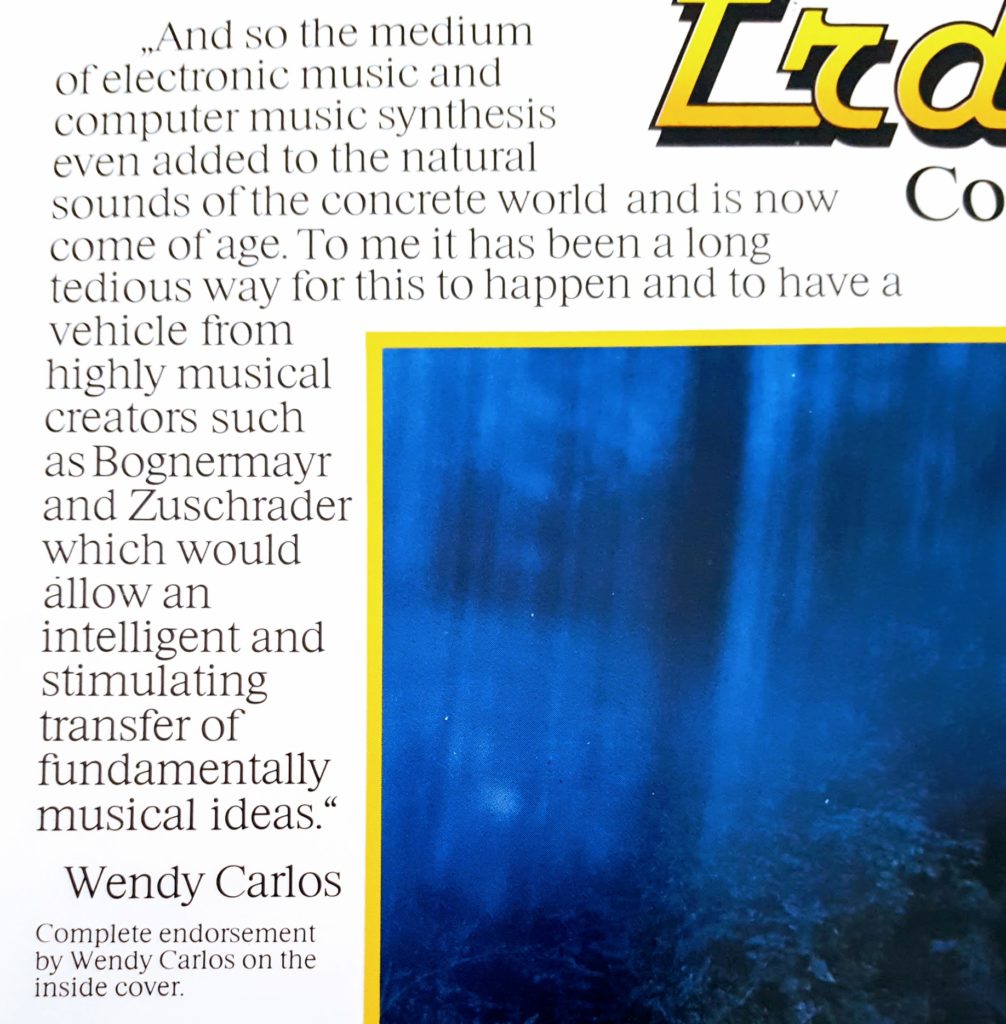
Okay, I didn’t know who these guys were either until I bought this one on a whim. What triggered the whim? Well, this blurb on the back cover.


Good work knowing your audience guys.

Hubert Bognermayr and Harald Zuschrader are both from Austria, and were in the obscure 70s prog rock act Eela Craig. I’ve never listened to that group, but I am aware of them, mainly because their LPs fetch huge prices at the local prog store I go to. The two were also heavily involved in Ars Electronica, a cultural institute that promotes new media art. That’s all I could gather about the duo in my short research. I’m sure there’s a lot more out there, but I don’t feel like regurgitating other sites’ information. If you end up listening to this album and want to know more about them, I’m sure you can go about doing that all on your own. I’d rather talk about this album.

Despite the Carlos endorsement on the back cover, this album doesn’t sound much like the minimal, purely analog synth work she’s most well-known for. Although, that’s not surprising considering that not a single analog machine was used in the recording of this album. The entire record was recorded using the Fairlight CMI, the digital synthesizer that helped create the sound of the 80s with its very robust sampling capabilities.

The Fairlight was also used a lot on Peter Gabriel’s early solo works, and some of this album really reminds me of the instrumentals on that one. Very ambient, but not always minimal, very textured, both the opening and closing numbers really make me think of Gabriel’s best work from that era.

The best track on this album though is the second one, the nearly 12-minute “Erdentief” and its sound is light years away from quiet and ambient. Instead, it really harkens to the anime soundtracks and other over-the-top instrumental electronic music from this era that I find myself listening to a lot right now. Very sample-driven, and even when its sparse, the sounds used are so artificial and bizarre that it still sounds jarring and even a little discordant. It also still sounds remarkably 80s, a little slap bass and drum samples really go a long way in that regard.

It’s a fun record, often upbeat while occasionally delving into more relaxing and meditative moods. I’m digging it right now, hope you can too.


Digital Tripping

Saturday, September 2nd, 2017

I have a tumblr because why the fuck not. I don’t know if I “get” tumblr. My friend who is hella into tumblr said that, based on the tumblrs I’m following, I like “synthwave” and “aesthetic” but not “vaporwave.”

I barely know what that means. I like synthesizers and 80s shit I guess. Gee who knew?

Speaking of synthesizers and 80s shit….

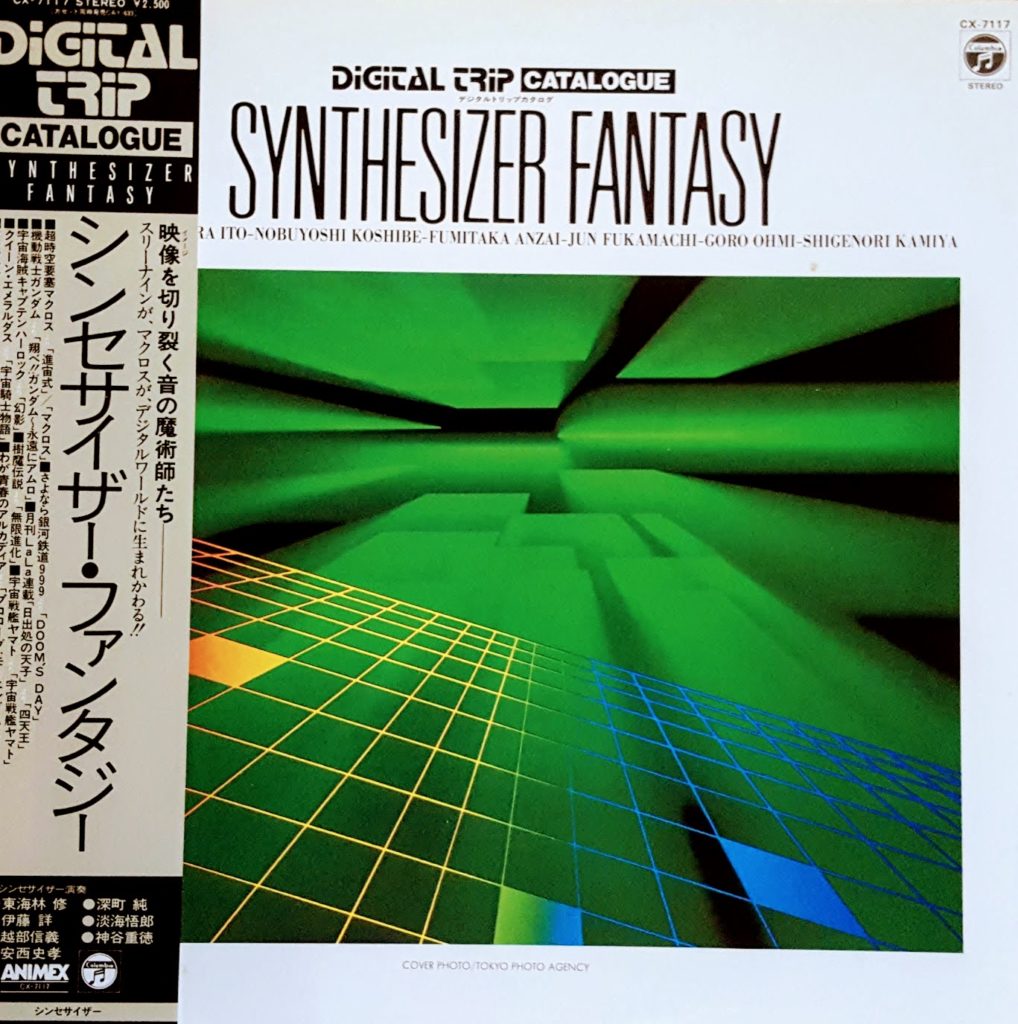
Various Artists – Digital Trip Catalogue Synthesizer Fantasy

For the past couple of year I’ve occasionally touched upon the Digital Trip Synthesizer Fantasy records. These albums are a collection of anime/manga themes re-imagined (almost) entirely on synthesizers.I’m not a big anime guy. I know, I’m a nerd living in Tokyo so that’s weird, but it’s just not my thing. But what is my thing is dope 80s synthesizer music, and these albums have that in spades.

I’ve only posted one Digital Trip album in its entirety, the Lupin the 3rd one, which happened to be the first one I found. Since then I think I’ve posted the occasional tracks from others, but I really didn’t want to go out and post another album in full. I was trying to instead focus on the highlights of the series and then craft my own sort of greatest hits of them all. Little did I know that they went ahead and did that for me in 1983.

Digital Trip Catalogue Synthesizer Fantasy is a compilation of tracks from the various albums in the series that had been released up to that point. By that time, only half of the series had been released, but they still had a quite a few standout titles to choose from, and I have to say that I’m pretty happy with what they chose.

They also went out of their way to showcase and a wide selection of artists who had contributed to the Digital Trip series, which is really great because it allows you to compare and contrast their different styles. Not all synthesizer cover artists are created equal you know.  For example, on one hand you have Osamu Shoji, who favors heavily modulated and layered sounds to create an almost explosion of synthesizers, while on the other you have an artist like Jun Fukamachi, an insanely talented jazz pianist who favors a more minimal arrangement.  I personally favor Shoji’s kitchen sink approach, but both are great and really work to showcase just how much variety you can get out purely synthesized arrangements of already written music.

Synthwave is good, for sure, but if you really wanna embrace electronic music and fall in love with everything synthesizers from the 80s had to offer, you’ll ditch that synthwave and go head first into Japanese Jazz Funk Synthesizer Anime Music….wave.

Naming genres is really hard.

Japanese Vivaldi Give Me Strength

Sunday, August 27th, 2017

Fucking hell.

Everything sure is shit, huh?

What the fuck do you do? I mean, seriously, I’m asking for some options. What the fuck do you do? I’ve found that a slight increase in the amount of evening whiskey helps a bit, but that’s just putting a band-aid on the problem. Donating to worthwhile charities is a more healthy outlet for suffering, provided you can afford it, but that can only go so far as well. Ignoring the problems doesn’t make them go away, but I can understand why some choose to go that route also.


I like to post something every Sunday, give or take. It’s when I have the most free time and it serves as a way to unwind after work. But with all the shit going on this weekend, I really didn’t know what to post. I only share out-of-print and hard-to-find music after all. Ain’t that much hard-to-find protest music worth sharing. I thought about reposting “Cop Killer” again, but I dunno, that much negativity just isn’t doing it for me right now. Thought about sharing some Digital Hardcore, Atari Teenage Riot also. I don’t know, not in the mood for that either.

Nothing I have seems to accurately encapsulate how I feel about the massive dumpster fire that is the world right now. So instead I thought I’d post something that serves as a moderate escape from it: jazz-influenced rock covers of classical music.

Look, don’t judge me, okay? I got enough shit going on.


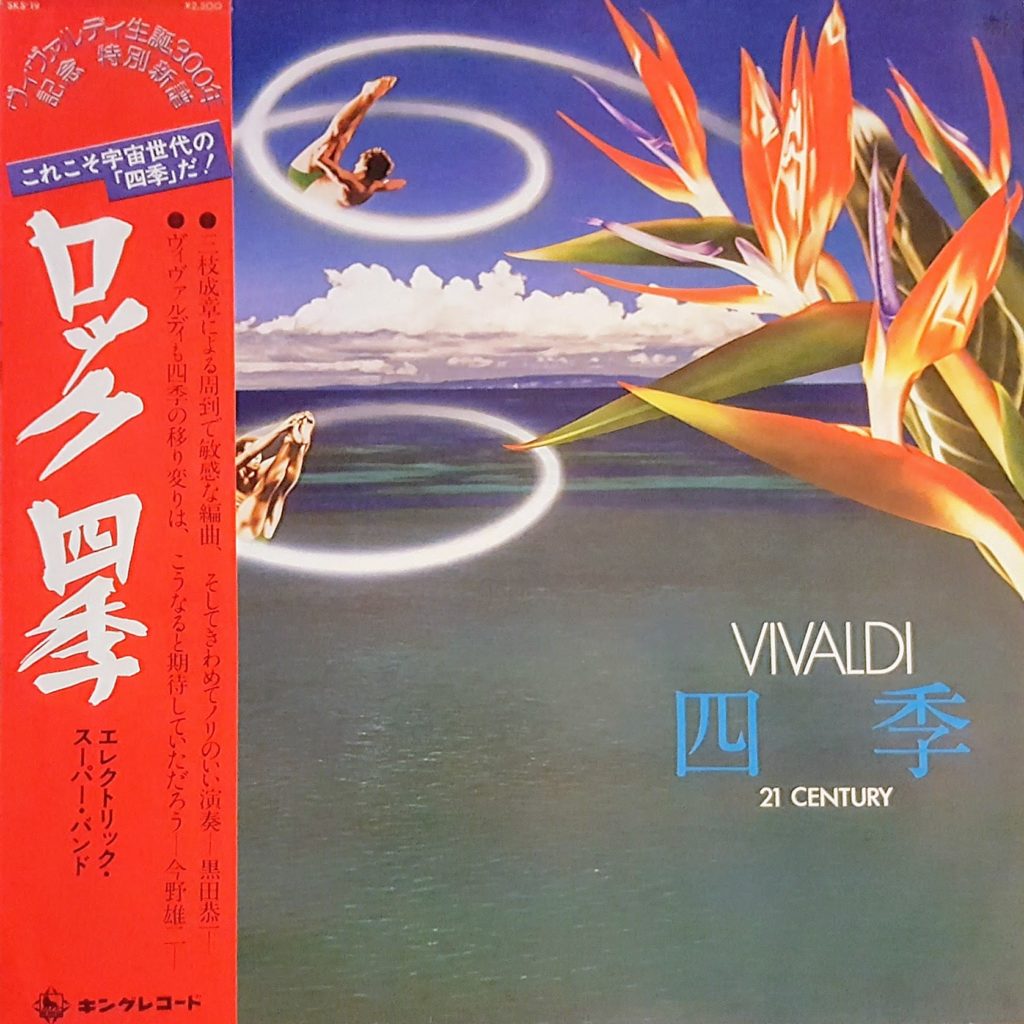
Shigeaki Saegusa and the Electric Super Band21st Century Vivaldi

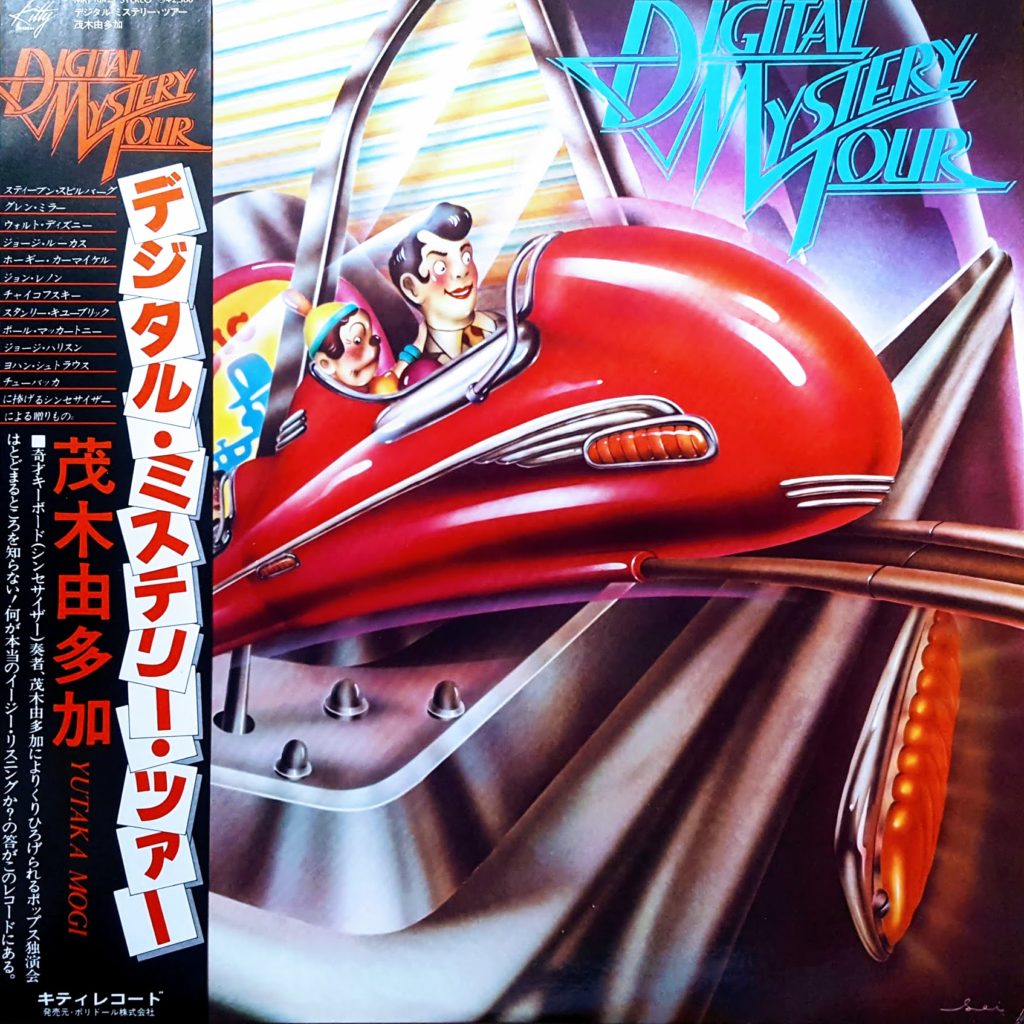
A covers album of Vivaldi’s Four Seasons. Let’s not act like this is weird, this isn’t even the weirdest shit I’ve posted this summer. I bought this the same day that I bought Mogi’s Digital Mystery Tour album. I’m just going to come right out and say it; this album is not as good as that one. But that’s like saying Oreos aren’t as good as getting head. Both are great, just in different ways.

For starters, this isn’t an entirely electronic creation. It features a full band. There are definitely electronic elements to be found here, but the album largely has a rock feel. But it still finds its own ways to be out there. The album features a lot of choral arrangements and vocalizing. Don’t ask me if those were present in Vivaldi’s original compositions (spoiler: I don’t know shit about Vivaldi), but even if they were I doubt they were handled like they are here. The vocalizing is ethereal, almost spooky at times. It reminds me of the vocal parts from some Goblin tracks. They sound less like melodies at times and more like demonic incantations.

That’s not to say the album isn’t goofy or fun in spots. A lot of it is lighthearted and playful. The 3rd Movement of Fall uses a synthesizer to create a joyous and buoyant atmosphere. While the finale of Summer goes full manic, again thanks to the abundant synthesizer. The album is also lifted by some killer percussion work by Shiro Ito, a session drummer who has performed on orchestral versions of Dragon Quest and Gradius soundtracks, to name a few.

The album was arranged by Shigeaki Saegusa, who I know even less about than Vivaldi. According to his Discogs page, he worked on a few Gundam soundtracks, and Astro Boy as well. He also put out an album in 1981 called Radiation Missa. If this YouTube clip is any indication of that album’s sound, I need to buy that shit immediately.

Yutaka Mogi’s Digital Mystery Tour

Friday, July 28th, 2017

I’m fairly certain I’ve stated this before, but I’m really happy when I say “boy I wish I could find a copy of [insanely obscure record]” and then immediately find said record, randomly, in a record shop for a steal of a price. I feel as if that happens far more often than it should, statistically speaking. Maybe I should start saying that for other things. Let’s give it a try.

Boy, I wish I could find a formula that makes affordable cold fusion possible! And maybe that Trump pee tape too! That would be great.

Okay everyone, expect the energy crisis, and the American political nightmare, to be solved with a few weeks. You’re welcome. In the meantime, here’s a fucking amazing synthesizer covers album you need to download right this second.

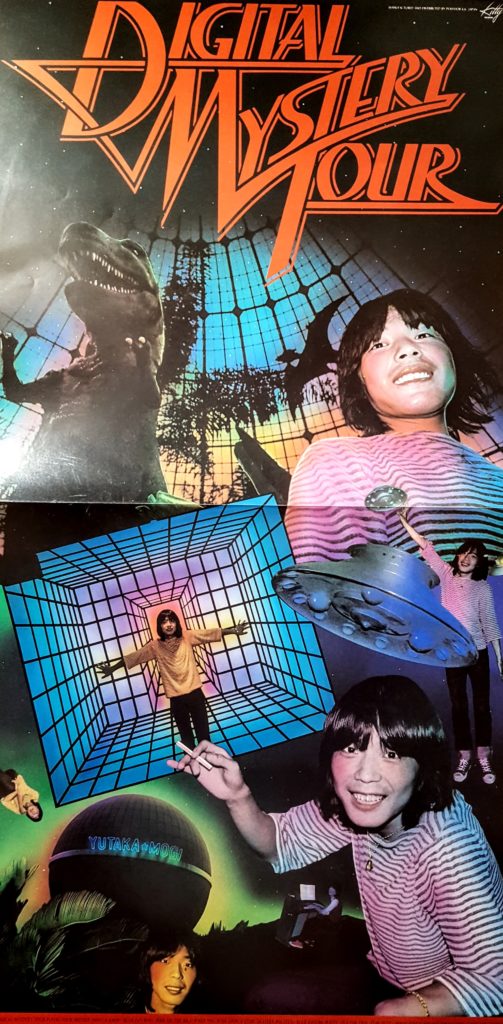
Yutaka MogiDigital Mystery Tour
I mean, I literally found this album less than two weeks after publicly proclaiming my desire to buy it. Fucking rad.

This is Digital Mystery Tour by Yutaka Mogi, like its title suggests, a large portion of it is dedicated to reworking Magical Mystery Tour with digital instruments. As such, that means we get all-synth takes on the Beatles classics “Magical Mystery Tour,” “Flying,” “Your Mother Should Know,” “Blue Jay Way,” and “Fool On The Hill.”

All of the Beatles covers are utterly brilliant, and are absolutely not afraid to radically tear apart the originals if needed. “Your Mother Should Know” is transformed into some wacked out funk track, and “Blue Jay Way” is re-assembled to be almost a new age number (and stretched out to be nearly twice as long as the Beatles original). Mogi also goes the quiet route with “Fool On The Hill,” with ethereal faux-strings and a quiet piano giving the song a strange, almost choral quality. The opening “Magical Mystery Tour” is a relatively straightforward cover, but Mogi’s insistence of using heavily modulated and just downright bizarre synthesizer settings will work to give it an otherworldly feeling.

For whatever reason, only half of the album is dedicated to The Beatles. Side two is dedicated to re-imaginings of much older numbers and features “When You Wish Upon A Star,” “The Skaters Waltzes – The Blue Danube,” “Tea For Two,” “Star Dust – Moonlight Serenade” and “Dances Of The Swans.” The rather pedestrian selection might make you think that the second half is filler, but Mogi really tears through these numbers as well. Just like The Beatles’ tracks, Mogi does what he can to give these songs new life. And the arrangements are just so lush. Early synthesizer covers records were sparse and simple because they had to be, due to the limitations of the hardware. This album came out in 1978. By then, synthesizers had become largely polyphonic, and a hell of a lot easier to manipulate and use. Mogi takes advantage of this, pumping as much life into these numbers as possible via a seemingly unending array of audio trickery and bombastic sound effects.

I need to start cataloging and ranking the myriad of moog/synthesizer covers albums in my collection. Every time I discover a new one I think it stands head and shoulders above the rest. I think I bias myself towards the new finds simply because I get so excited when I stumble upon them. Still and yet, I really do think this one is special, a fantastic showcase of what the synthesizers of the era could do, all performed by a wonderful musician who more people need to know about. If you listen and like it, be sure to check out this post, which also features some amazing music by Mogi.

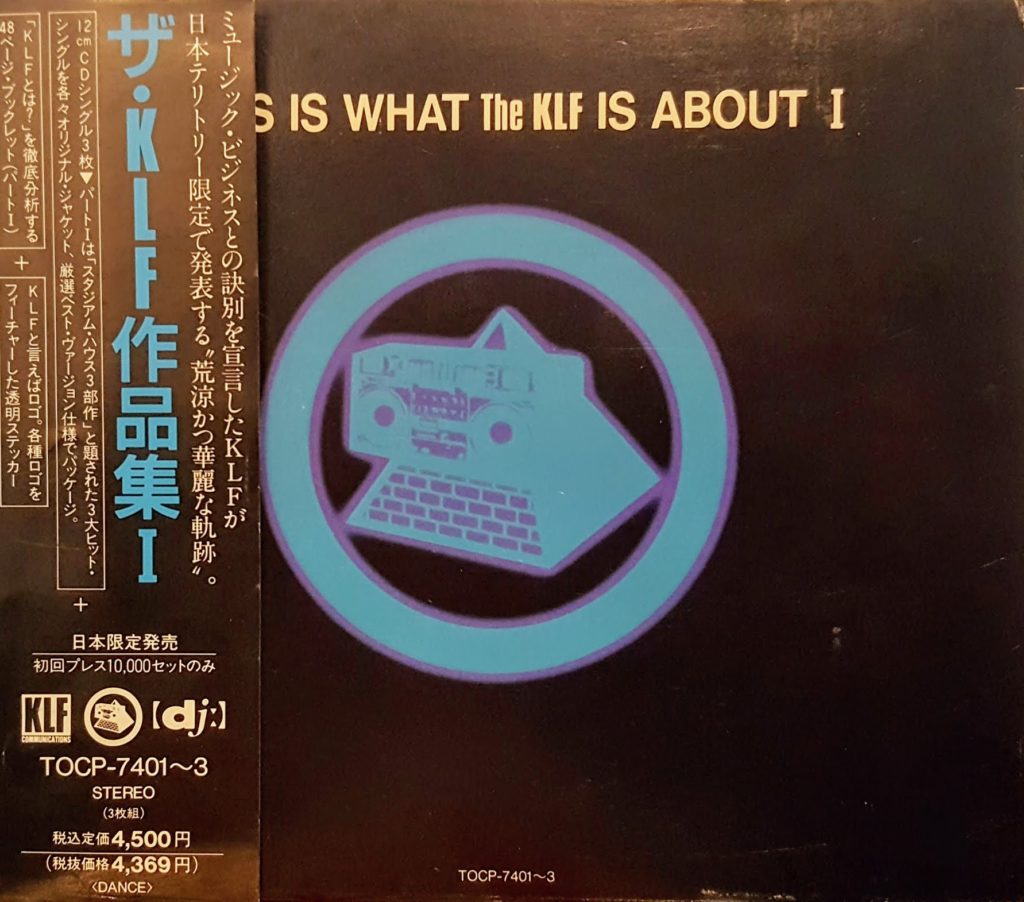
Continuing to fret over the remote possibility of nuclear war with help from The KLF

Friday, July 7th, 2017

Every time I buy one of these North Korea launches a missile. I’m sorry.

The KLF
What Time Is Love? (live at Trancentral/7″ radio edit)
What Time Is Love? (The KLF vs. The Moody Boys)
What Time Is Love? (The 1988 Pure Trance original)
3 A.M. Eternal (live at the S.S.L./7″ Radio Freedom edit)
3 A.M. Eternal (Guns of Mu Mu/12″ edit)
3 A.M. Eternal (1989 “Break for Love” mix/original Pure Trance mix)
Last Train to Trancentral (live From the Lost Continent/7″ radio edit)
Last Train to Trancentral (The Iron Horse/12″ version)
Last Train to Trancentral (The White Room version/import LP version)
Last Train to Trancentral (The 1989 Pure Trance original)

I’m writing this post before I even finish listening to the box set because it’s not like I’m going to hear one of these tracks, dislike it, and then decide not to share it. More epic KLF.

I don’t have much to say about these tracks (because they’re great and you should listen to them) so I thought I would use this space to plug the store that I bought the box set from. It’s called Shop Mecano and it’s located inside the Nakano Broadway shopping mall in Nakano. If you like my blog then you’d probably go apeshit in this shop, it’s dedicated almost entirely to electronic and new wave music from the late 70s to today, with a heavy bias towards anything influenced by Kraftwerk. The dude who runs this shop loves Kraftwerk more than you love Kraftwerk. For real. I’m pretty sure he actually wrote the liner notes for the Japanese re-issues of Kraftwerk’s back catalog a few years back. Dude is hardcore.

This store has all kinds of amazing stuff, from rare and hard-to-find imports of releases from western acts like Art Of Noise and Depeche Mode, to what seems like an endless supply of YMO and YMO-related music. This store is straight-up dangerous to my wallet, I’ve probably spent more here than I have at any other store in the greater Tokyo area. It gets the Lost Turntable seal of approval to the max. I’m not saying you should make your way to Tokyo just to go to this store, but if you made your way to Tokyo just to go to this store I certainly wouldn’t judge you for doing so.

And in case you’re wondering, you can find part II of this set here.

Barbarians and Slap Bass

Wednesday, June 21st, 2017

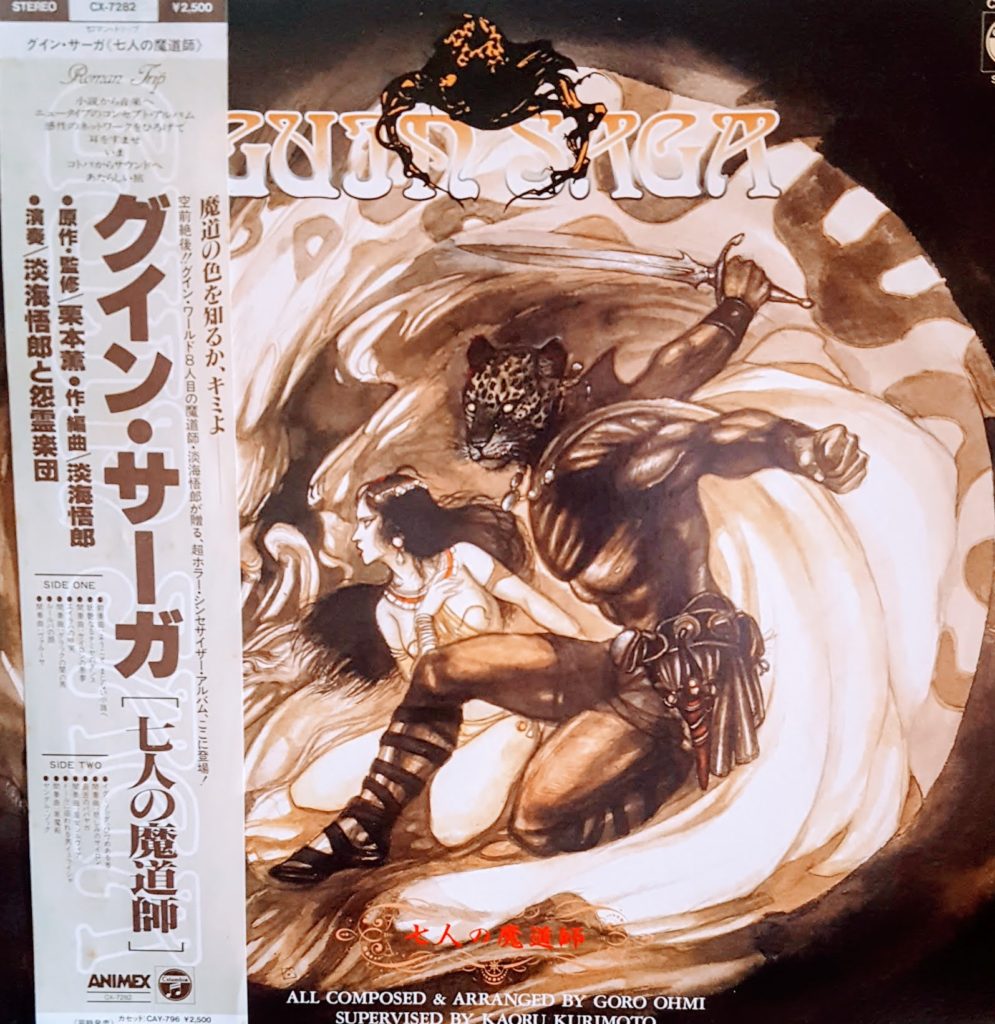
Guin Saga – Seven Mage Doctors (グインサーガ 七人の魔道師)

I have a lot of soundtracks to anime I have never seen. But they don’t hold a candle to the number of soundtracks I have to manga I’ve never read.

That’s right, soundtracks to manga.

In yet another example of how crazy a bubble economy can get, there were scores of soundtracks to manga in the mid-80s in Japan. Many of these were official releases sanctioned by the publishers, while a few were not 100% up-and-up affairs. You can always tell which ones were vaguely unofficial because they didn’t use any licensed artwork from the series, instead opting for abstract graphic designs. This is what an overwhelming number of the Synthesizer Fantasy albums do, which is one of the many reasons why they’re so dope.

From what I’ve noticed through my casual observations shifting through record store racks, a lot of yaoi (teen gay-themed romances written for straight girls) were given soundtrack releases. I haven’t bought any of them, mostly because I absolutely abhor the artistic style on the covers, far too flowery and fruity for this flower-loving fruit. I will probably pick some up eventually though, especially the ones by my favortie manga/anime synthesizer composer, Osamu Shoji.

One series that is not of the hot teenage manlove variety that I often see in the soundtrack section is Guin Saga, which is a long (long) running novel and manga series about a mysterious leopard-masked warrior who doesn’t hesitate to throw down when the time calls. There is an anime of this series now, and that anime has a soundtrack. I have not seen that anime, nor have I listened to that soundtrack. But no matter how good it is, it can’t hold a candle to the Guin Saga album I have.

Guin Saga 〜辺境篇〜 (roughly translated as Seven Mage Doctors, I think) is an all-synthesizer album much like the Digital Trip/Synthesizer Fantasy albums that I love. However, it is much more lush and varied than many of those albums are. That doesn’t have anything to do with the composer, Goro Ohmi composed many Synthesizer Fantasy albums as well as this record (and several other in the Guin Saga series), so I assume it must’ve been a stylistic choice. Whatever the reason, it certainly works this album. Guin Saga is a big adventure story filled with magic, monsters and barbarians, it needs a big sound, and this album sure as hell delivers.

The opening is very stereotypical synth, with an obvious synthesizer melody and mechanical drumbeat. But as the album progresses, Ohmi takes more liberties with his instruments at hand, delivering us synthesized string arrangements, echoing chimes and faux-choral accompaniment. It even becomes less like a collection of songs and more like a proper score at times, with ambient, moody pieces filling out a good chunk of the record.

One thing that really strikes me about the album is how much it sounds like the game music that would come in the following decade. While the SNES couldn’t have featured instrumentation as lush and involved as this, it has a similar vibe. If you told me that some tracks from this album were cut from a proposed Actraiser soundtrack, I’d believe you. I can’t really place why, it just feels right. Maybe its the rad synth slap bass. SNES tracks were all about the synth slap bass and this album is just overflowing with it.

If you’ve never heard of Guin Saga or Goro Ohmi, don’t let that discourage you from giving this album a test run. Anyone who is a fan of instrumental electronic music of the 80s should certainly check it out.

Golgo 13 Jams

Friday, June 16th, 2017

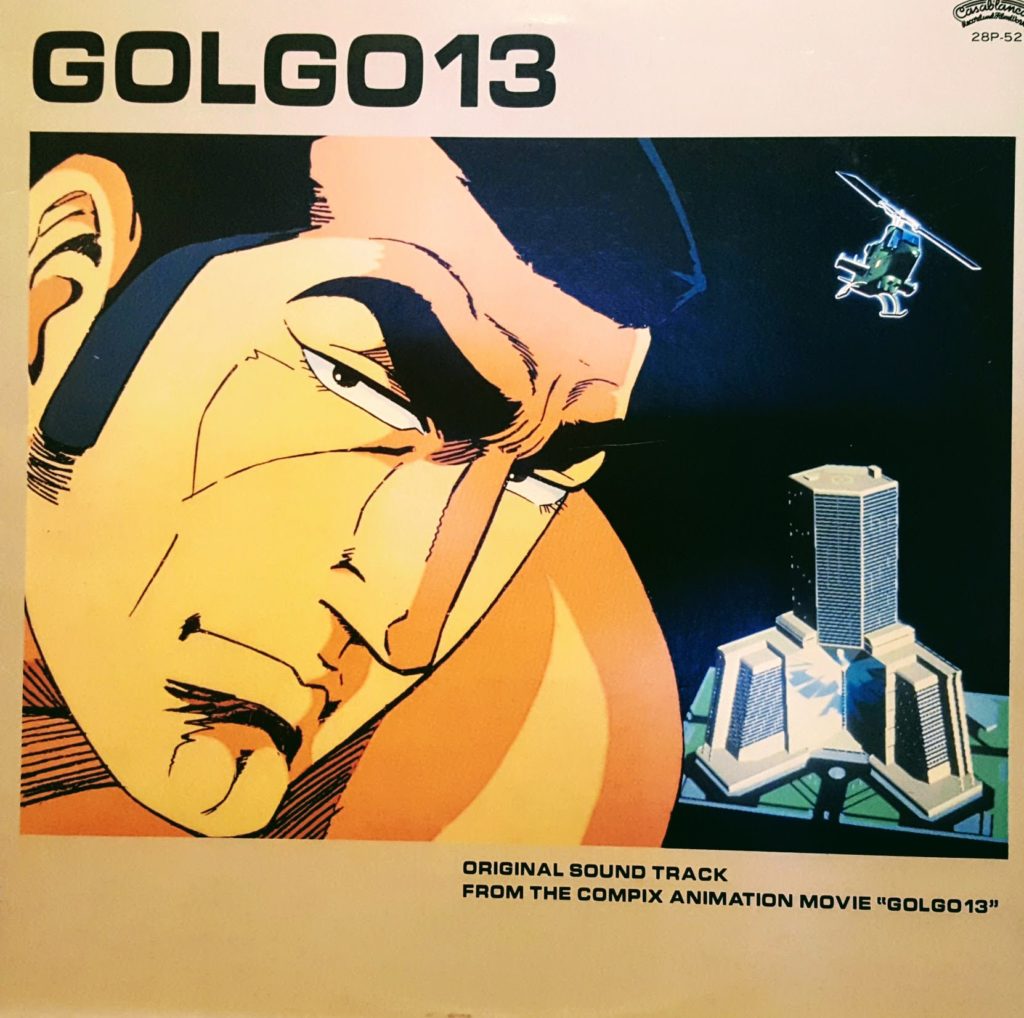
Golgo 13 Original Soundtrack
My father owned a video store until the late-90s. Around 1994 or so, he started to carry a lot of anime. The section was instantly popular with many of the high school kids in the area as he was the only store that dealt with it. All the other stores in the area were chain stores that didn’t even bother with the stuff.

I still remember that first batch he got in, stuff like Akira (of course), Wicked City, Riding Beam, and this – the first animated movie based on the Golgo 13 manga.

I, being about 13 at the time and entirely ignorant of manga as a whole, had no idea that the movie was based on the manga. I didn’t even know that the manga existed. Instead, I assumed the movie was based on the NES video game, which I played the shit out of when I was much younger. I loved that game, even though it was punishingly hard and disgustingly unfair. That didn’t stop me from playing it for hours on end. Shit, I even played the sequel and managed to somehow nearly beat it.

1994 me hadn’t played the game in a while, but I still loved it, so I jumped at the chance to watch a movie that I assumed was based on it. I snagged it from my dad’s store the second I saw it and popped it in on a lazy Sunday afternoon.

My mother was very displeased with the somewhat graphic nudity early on, but I recall her rolling her eyes and letting me continue to watch it. My mom is dope like that.

To be honest, I don’t remember much of the film. Reading the plot description on wiki, only snippets come back to me. The (disgustingly misogynistic) ending does ring a bell, but the rest of it is a blur. I certainly didn’t recall the soundtrack when I picked it up a few months back. I bought it mostly for nostalgic reverence for the video game, and the super dope cover.

I’m glad I picked it up though, because it’s pretty damn rad. The movie came out in 1983, but if the soundtrack is any indication, disco was still the hottest latest in Japan. The main theme is very disco, as are many of the instrumental numbers that accompany it. One thing that does surprise me is that it’s a predominately analog affair. While some dope keyboard riffs do pop up from now and then, the entire thing sounds very organic, more like mid-70s disco than the more electronic-influenced dance music that was popular in Japan at the time. It still sounds great though.

The composer is Toshiyuki Kimori, who worked on several other anime films in the 80s, including Dirty Pair and Arcadia of my Youth. He also released a Super Mario Bros. covers album in 1986. That goes for a pretty penny online, but I can entirely see myself caving and buying it in the relatively near future. I have no willpower for such things.

This soundtrack was only released once, in 1983, and appears to have been out of print ever since. The seller offering the sole copy available on Discogs is asking over $70 for it, which is about how much the last copy went for on the site. Happy that I found mine for less than $20! Living in Japan has so many perks.

Enjoy the assassination jams.