My collection of Moog/synth covers albums is…intense. I really need to comb through my collection and separate stuff by genre, setting aside a “Moog/synth” section. But that would involve using my lower back for prolonged periods of time. My health is getting better in a lot of ways, but it’s not there yet.
America and Europe had their fair share of synthesizer cover albums in the mid-70s, many of which I have already covered and will continue to cover here. But I think the genre really took off in Japan. Not only does the country seem to have a disproportionate number of electronic musicians in the mid-70s when compared to the size of its population, but it also imported more than its fair share of foreign keyboardists and composers for their own, Japan-exclusive releases as well.
For example, Max Middleton and his Fantastic Synthesizer of Superman from 1979.
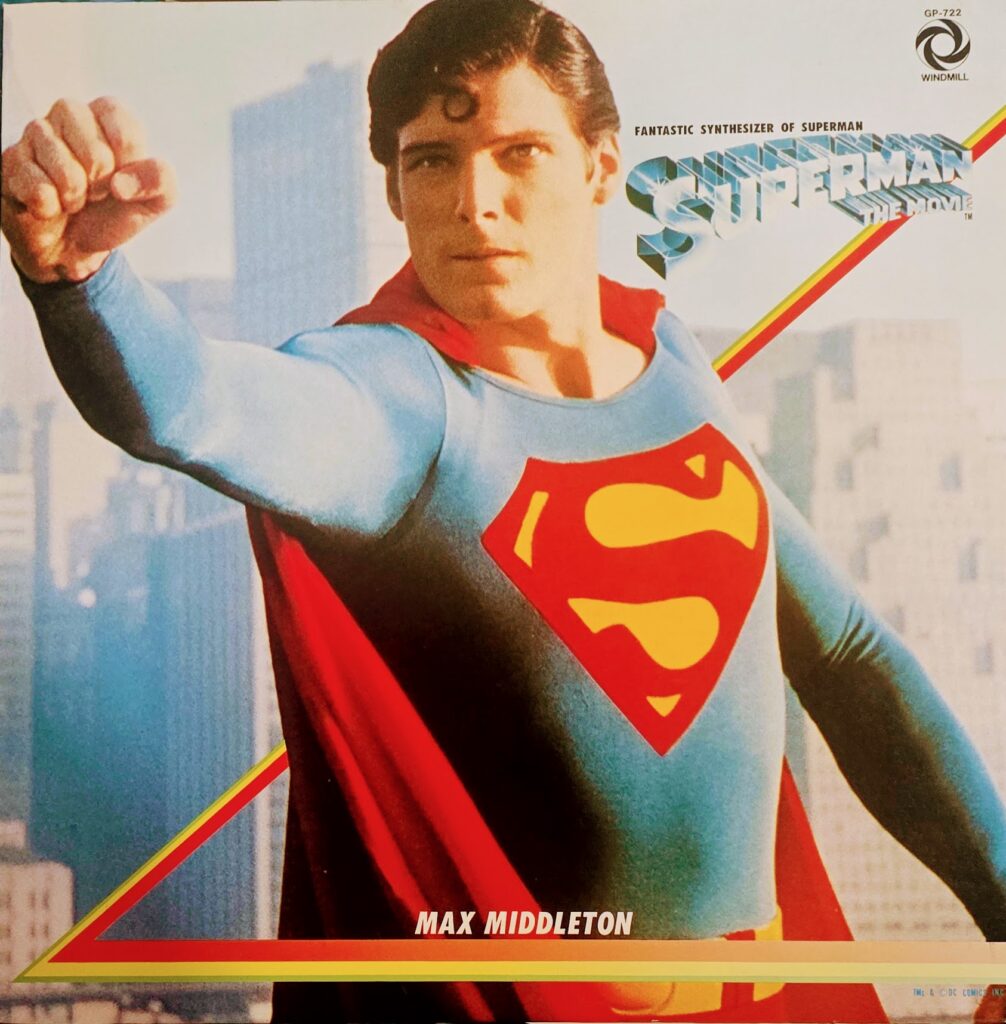
Fantastic Synthesizer of Superman (Complete Album Download – Click Here)
I would love the know the story as to how Max Middleton ended up releasing a synthesizer version of the Superman theme…in Japan only.
If you don’t know Max Middleton by name, don’t worry, I didn’t before I bought this record, but there’s a fair chance that you’ve heard him on the radio if you’re old enough to have ever listened to the radio. He was an early member of the Jeff Beck Group and he played on Beck’s Wired. He also played with Nazarth for a while, and was the keyboardist on the Hair Of The Dog album. And just a year after this album came out, he performed keys on Kate Bush’s “Babooshka”
I think at some point in his career, he must have either resided in Japan or built up quite the fanbase there. The latter would not surprise me in the least, Japan motherfucking loves goddamn Jeff Beck, believe me.
I say this because, for a brief period in the 70s and into the 80s, he shows up on a lot of Japan-only releases. He’s on albums by artists like Shinobu Sakagami, Raven Ohtani, and Mari Iijima. He’s also on albums by other non-Japanese artists that somehow only got released in Japan, like Alan Parson Projects’ Lenny Zakatek’s hilariously-titled solo effort Small But Hard.
Too….many…jokes.
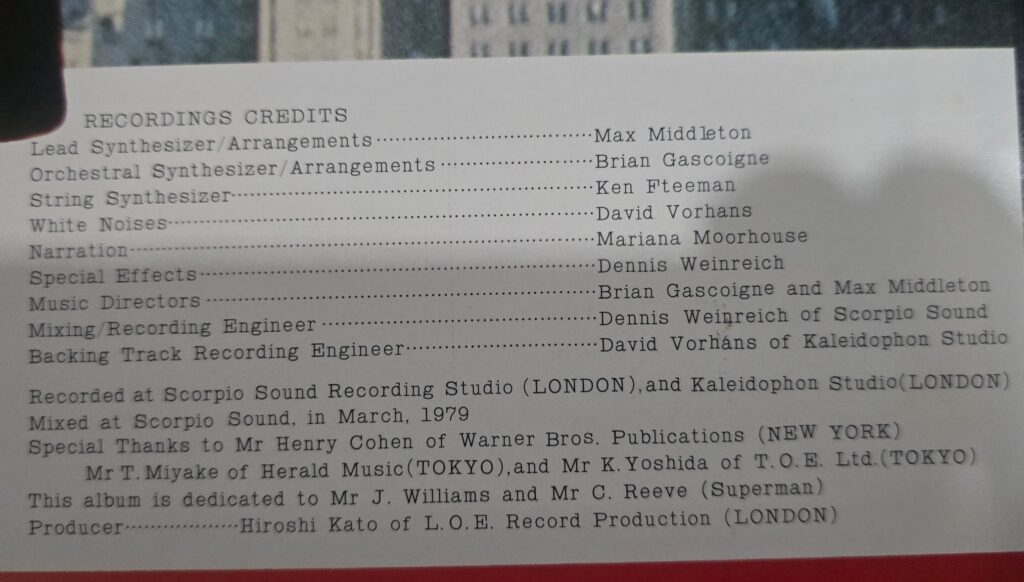
While this is credited as Max Middleton solo release, as the liner notes show, he did not work alone. There’s actually some impressive pedigree on this record. None of them are household names, but they all had serious synth and studio engineering chops.
The orchestral synths were arranged by Brain Gascoigne. Again, that’s probably not a name you’ve heard of, but he was a rather accomplished film composer for a time. He did the score to the cult flick Phase IV, which is quite bad but the music is good, and he played keyboards and synths on many other notable film scores, including Superman (uncredited and according to the IMDb, so take that with a grain of salt).
According to the liner notes, the string synths were handled by “Ken Fteeman.” However, Fteeman is not a real name. I’m going to assume they meant to say Ken Freeman, as he is yet another pioneer in early electronic music. He created his own synth called the Freeman String Synthesizer, and worked with artists like David Essex and Sally Oldfield. He also plays synths on Jeff Wayne’s War of the Worlds album.
With the awesome credit of “White Noises” we have David Vorhans. That credit is appropriate because Vorhans was in a group of the same name. White Noise (the band) also featured members of the BBC Radiophonic Workshop, of which Vorhans was a member. Another member of The BBC Radiophonic Workshop and White Noise was Delia Derbyshire, who most famously composed the theme to Doctor Who. And finally there’s Dennis Weinreich, who worked on the album’s “special effects,” His other credits are mostly technical, engineering and stuff like that. He engineered a ton of albums, including Talk Talk’s The Colour of Spring.
There is a credit for “narration” in the liner notes too, as one track has a very awkward spoken word bit. That credit went to Mariana Moorhouse. But either this is the only thing she ever did, it was a pseudonym, or a typo, because I can’t find anyone with any music or recording experience on the internet with that name. Mariana, you still out there? I have many questions about your narration.
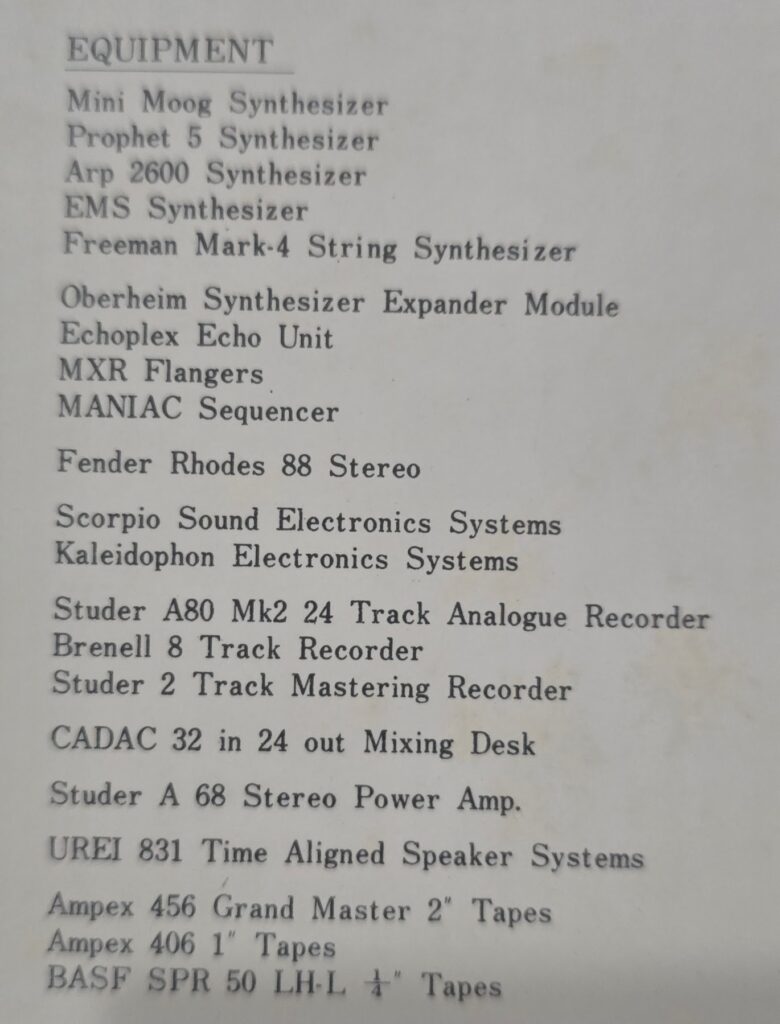
This is a fun album. It’s not a very complex arrangement of the Superman music. It’s more low-key than I thought. It doesn’t try to match the outright bombast of the Williams original, because how could it. Instead, it goes for its own thing, and it mostly works. (That narration is weird.) Some interesting effects and noises on this too, I like the odd squelching that shows up in “End Title” and “Fortress of Solitude” has those super-chill synth strings that you might hear on a Tomita record. Of course, it doesn’t hurt that the source material fucking slaps I guess. The theme to Superman is a hard one to screw up.
Oh, and it also comes with a giant poster!
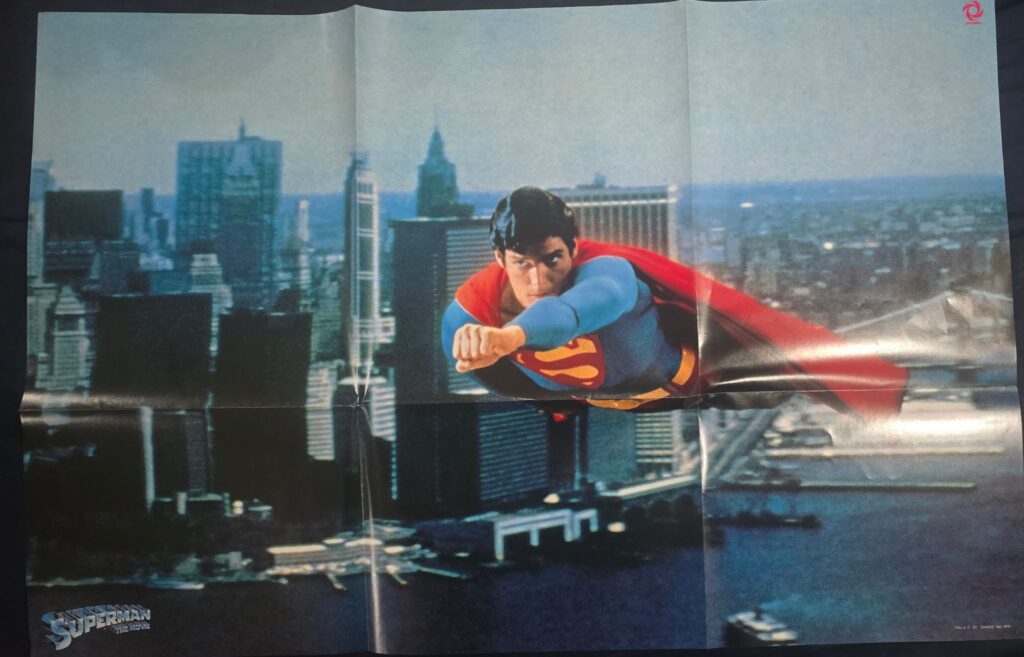
That’s rad.
Wow, two posts in a week! That’s more than I’ve posted in some years this decade. Some of my chronic pain issues might actually be getting better soon. So if these trends continue and I actually steadily maintain my ability to function, who knows how much I’ll write this year! Don’t get me wrong, I’m still a broken mess , but this is the most I’ve felt like Superman probably since 2019. Yay!