Archive for March, 2019

Bleachers – Terrible Thrills Vol. 3 #1 (High Quality Vinyl Rips)

Monday, March 25th, 2019

Bleachers
Let’s Get Married (by Mitski)
Mickey Mantle Comes Alive
There are probably two groups of people reading this right now; my regular readers, and Bleachers fans who stumbled upon this site somehow or another.

To the Bleachers fans (I assume you outnumber my regular readers), welcome! Here are some high-quality vinyl rips of those songs you’re looking for. They sound better than the ones you found on Dropbox. Trust me on this. And hey, if you like Bleachers, bookmark me, I occasionally share 80s pop and other shit you might enjoy. And you don’t need to jump through any hoops to download those songs. Just right-click and “save as.”

Now, if you’re not a die-hard Bleachers fan who came here specifically to find these songs (and hence, already know what they are), an explanation/backstory.

In 2016, Bleachers, a side-project of Fun’s Jack Antonoff (who also produced at least one hit song you like – he gets around) released Terrible Thrills Vol. 2, a track-by-track covers album of the group’s debut album Strange Desire that featured new versions of the songs on that album reworked by woman singers.

(In case you were wondering, Terrible Thrills Vol. 1 was a single by Jack Antonoff’s earlier group, Steel Train).

While Terrible Thrills Vol. 2 can be easily purchased digitally on iTunes and other digital storefronts (and I assume it’s on Spotify, but fuck if I care),(edit: apparently this is no longer true) it only received a limited, vinyl-only physical release. That sucker is pretty rare now, goes for about $50 on Discogs. Even if you can’t track down a vinyl copy of it, I highly recommend buying the digital versions. With vocals by such amazing artists like Charli XCX, Susanna Hoffs, and Sia, in some ways, it’s better than Strange Desire itself, not a small feat considering that’s probably my favorite album of 2014.

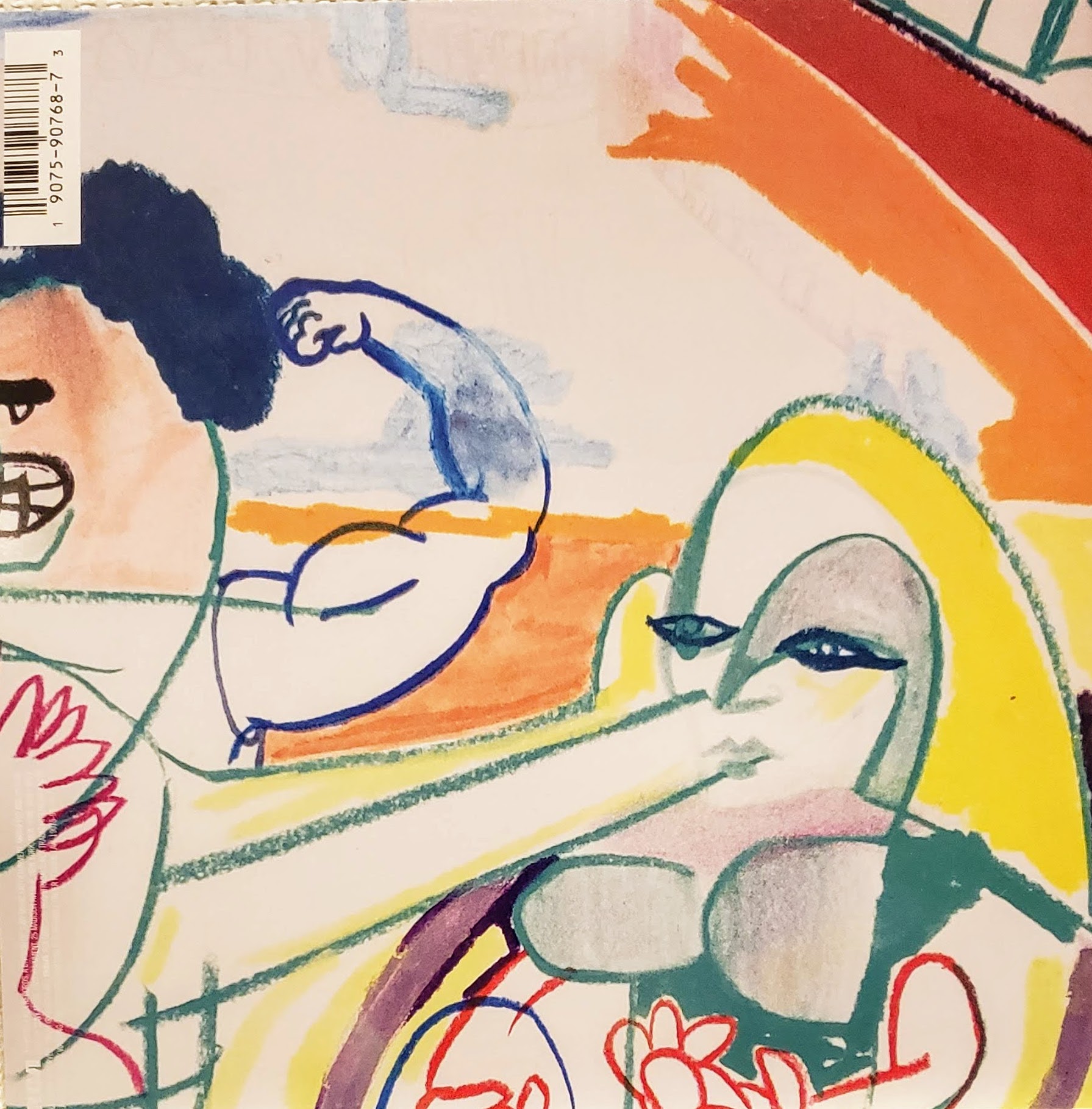
Now Bleachers’ sophomore effort Gone Now is getting the “Terrible Thrills” treatment for Vol. 3. But this time, Antonoff has decided to do something a bit different. For starters, it’s not a track-by-track collection of covers by women artists, half of it is that, but the other half consists of new versions by Antonoff himself, featuring reworked lyrics and different production. Secondly, it’s not an album at all, and is instead a collection of 7″ singles that are now being released piecemeal.
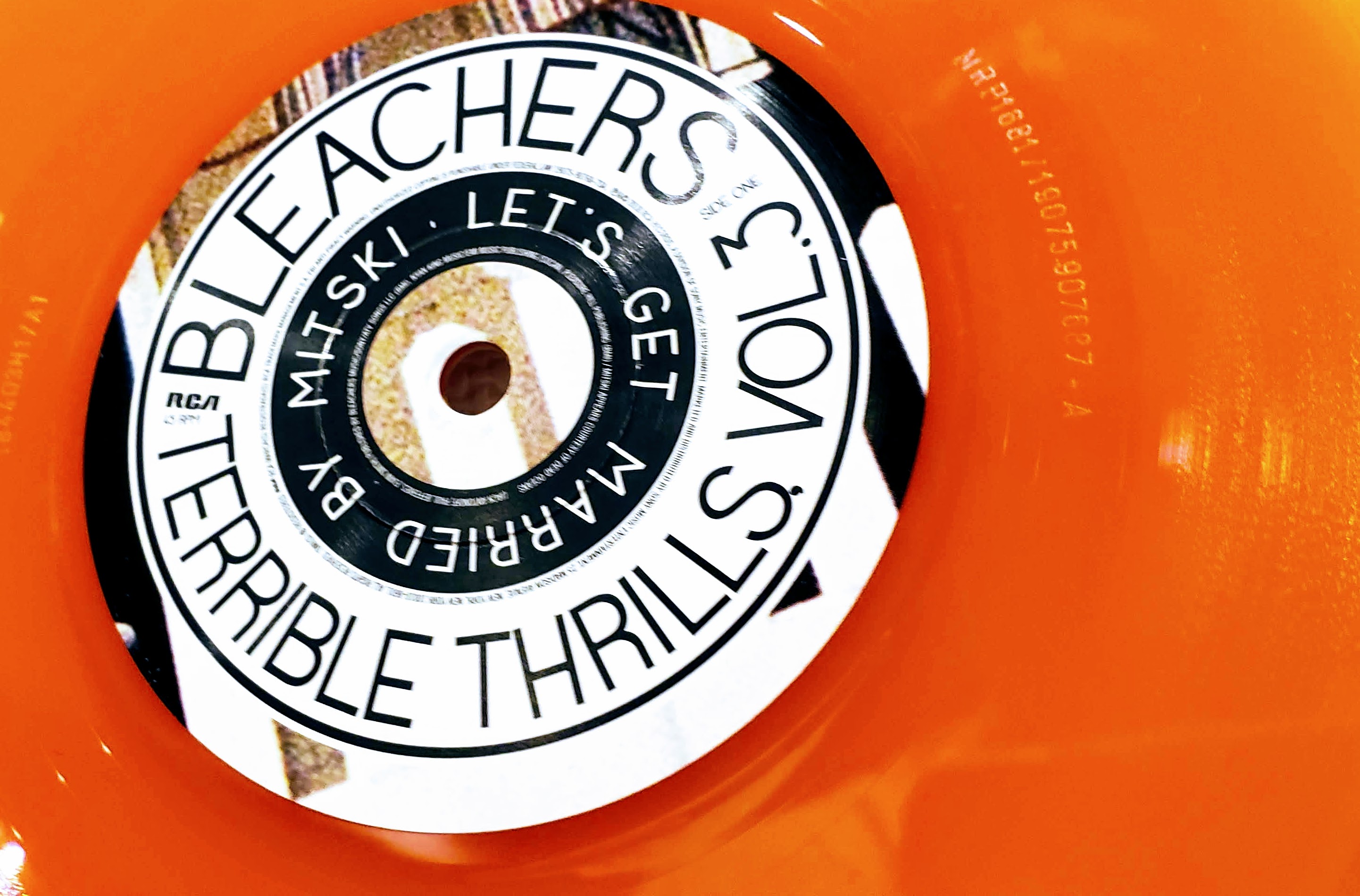
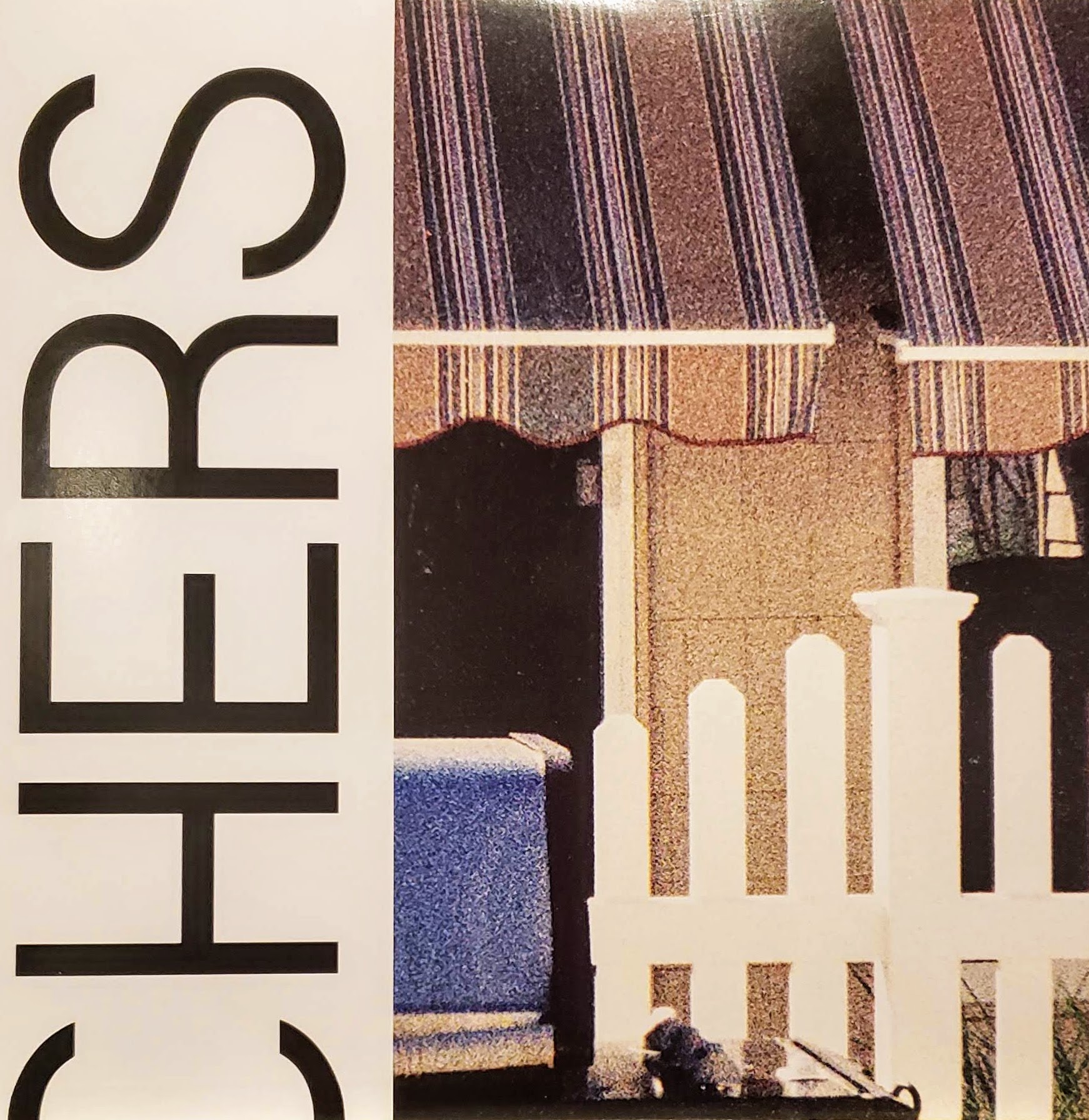
The first part in the set came out a few weeks back, and I finally got my copy in the mail this week (I live in Japan, shit takes time).  And if this introductory volume is any indication as what’s to come, I’m very stoked to hear the rest of the records when they come out.

The A-side is a cover of the single “Let’s Get Married” that features new vocals by Mitski. I’ll be 100% honest here. I don’t know anything about Mitski at all (I’m a middle-age out-of-touch gay white man in Tokyo, I can’t keep up with everything). But after hearing her take on this track, I’m eager to check out her stuff. The song is entirely re-imagined. What was once a big, bombastic ode to gated reverb (like most of Antonoff’s stuff – and I mean that in a good way) has now been reworked as a ballad with the majority of the instrumentation coming by way of vocal harmonies and simply synths. It sounds halfway between a demo and the fully-fledged final version. Love it.

The B-side is reworking of Gone Now‘s opener “Dreams of Mickey Mantle,” retitled “Mickey Mantle Comes Alive.” It’s an odd rejiggering, featuring purposely distorted vocals and an extended outro that’s a barely audible conversation. Taking what was previously a rather standard (if fucking great) pop song and morphing it into Sleigh Bells-lite was a bold choice, and I’d be lying if I said I’m 100% in love with it. I do like the added drums though, and the new production on the choruses is good too.
I mentioned at the top that these rips are better than the ones that have already been made available. I think the fans that ripped these earlier didn’t really know what they were doing. Not their fault, they’re not idiots like me who have been ripping vinyl for over a decade. While those were just straight-up audio rips, mine have been cleaned up a bit. I ran it through some noise reduction to get rid of the background noise, and also scrubbed it clean of clicks and pops. Finally, I gave it a slight EQ boost to give it a richer, fuller sound. If none of that is your game, then hey, those raw rips are still on Dropbox.

If you do like my rips, please feel free to share them however and wherever you like. Antonoff said himself that we can rip and share these tracks!
Epo Depot

Sunday, March 24th, 2019

Epo
Performance (Overture)
Shang-Hai Etranger
Tibetan Dance
Tibetan Dance (Edited Version)

I posted some Epo tracks a while back.

She’s fun.

To be honest, I really don’t know what else to say about her. She’s just…fun. Bubbly upbeat synthpop with a sound so “1985” that it’s gone from hip to dated to retro to dated to retro to hip three times over. Epo was incredibly prolific (a common trait I’m finding in 80s J-pop), releasing a whopping 13 records between 1980 and 1992. Her early stuff is much more “city pop,” that funk/soul/pop hybrid style that vaporwave artists are always drawing their samples from. But by the time the mid-80s rolled around she traded in that downtempo jazz for some uptempo 808s and went to work, releasing several fun albums during that period.

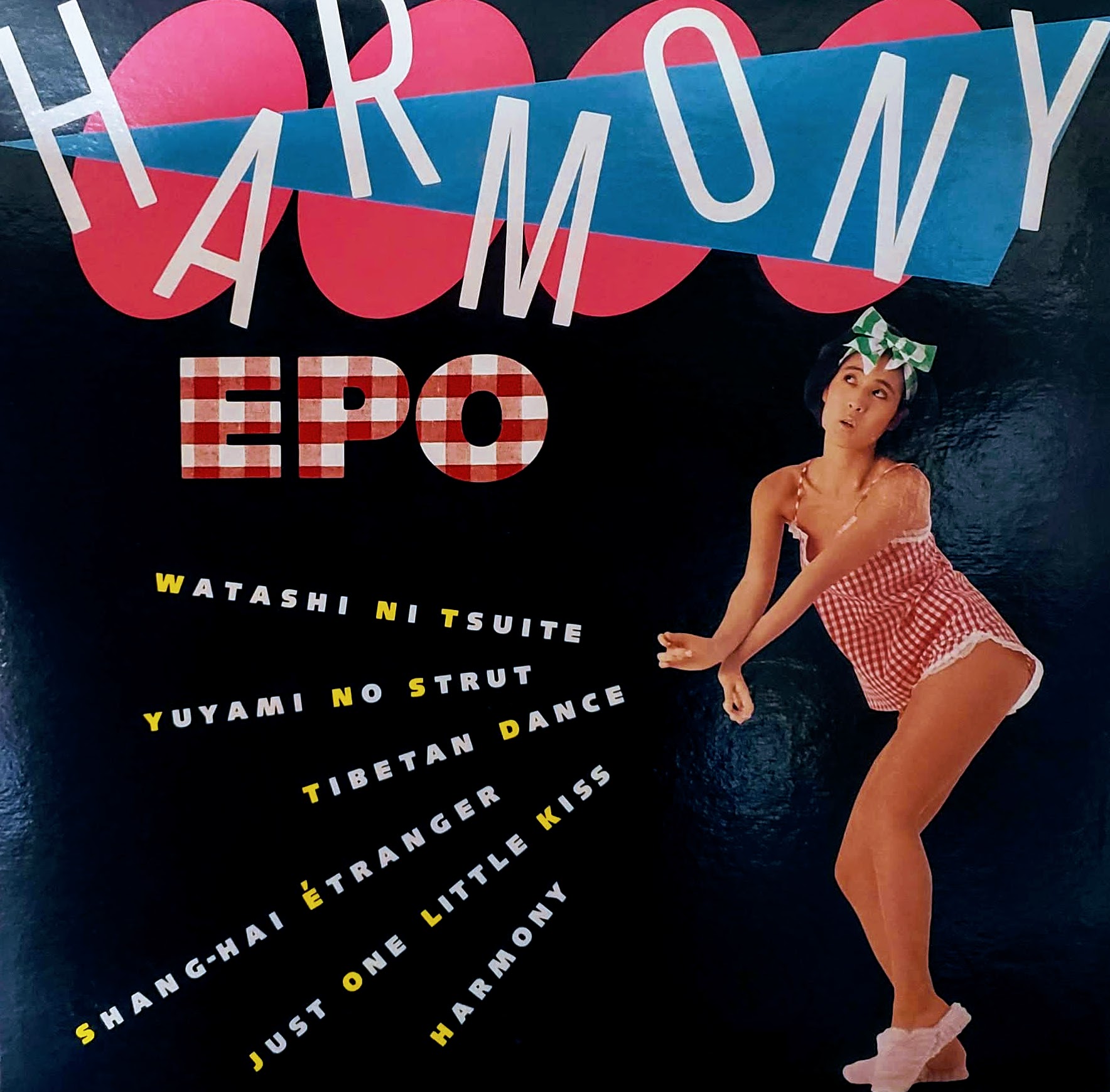
I’ll be honest, every Epo album I’ve bought to date has been a little uneven. Even the best of the bunch that I’ve found, Hi-Touch Hi-Tech, was a little touch and go, with slow ballads dragging it down just when it was getting good. Ditto goes for Pump! Pump! an album far more sedate than it’s double-exclamation point title would suggest. Harmony, the album from which tonight’s tracks are pulled from, suffers the same fate. Just when it gets the blood pumping with some upbeat bangers, a plodding mid-tempo ballad or a forgettable filler track slams the brakes on the whole thing.

But the bangers are bangers, man. I feel like I should point out that Epo is not just a “pop idol,” meaning a pretty face put in front of a microphone. She was a singer/songwriter, often writing the majority of tracks on her albums. Usually working with her was Nobuyuki Shimizu, a musical ubergenius who played with just about everyone of note in Japan. The back cover of Harmony proudly proclaims that Shimizu plays “all keyboards, guitars, bass, drums and many other instruments” on the album. The same goes for a lot of other albums he worked on at the time. He’s like the Jack Antonoff of Japanese 80s pop music.

Like I said, Harmony is an uneven affair, but when it’s on fire damn its on fire. The opener “Performance (Overture)” melds disco string melodies with driving electronic beats like its taking the best of “On The Radio” Donna Summer and “I Feel Love” Donna Summer. “Shang-hai Étranger” is another high point, with how it combines traditional Japanese melodies with some truly radical synthesizer work. Feels like it could be a YMO b-side.

The album’s true highlight, however, is kind of a ringer, it’s a cover of Ryuichi Sakamoto’s “Tibetan Dance,” which first appeared a year earlier on his Illustrated Musical Encyclopedia album. However, calling it a cover is a bit of a misnomer. It’s straight up the track that appeared on that album, with a bit of edits and overdubs, including Epo’s vocals. The back cover just flat-out says that the backing track for the song is taken from the Sakamoto album (with permission, of course). I wonder how often such things happen, pop singers taking solid instrumental tracks from electronic producers and just singing over them with minimal edits. If it doesn’t happen a lot, why the hell not? Seems like a good, valid shortcut for finding decent backing tracks. In addition to the album version, I’m also including a special edited version that appeared on a 12″ single.

I don’t think that Epo was ever a massive huge artist, but she must’ve been at least modestly successful in the 80s if her non-stop output is any indication. Strange then that so much of her stuff is woefully out-of-print. Some of her records haven’t even been re-released on CD (although all of her best ones have). I feel like this is a common fate for B-level J-Pop acts of that era. There were just so many of them (bubble economy y’all) that some have just gotten lost in the shuffle over time. And unless you were a megastar (Seiko) or found cult success later (Taeko Ohnuki) you kind vanish to the past. Someone really needs to compile this stuff Nuggets style so the world can rediscover the hidden gems that have been lost to Disk Union 100 yen bins.


This blog post is best viewed on a three-monitor display

Thursday, March 14th, 2019

Zuntata
SELF – BIG Beat Remix
Living in Japan has many benefits, amazing food, a fantastic public transit system, affordable health care, no guns, and of course, easier access to limited run special editions of games.

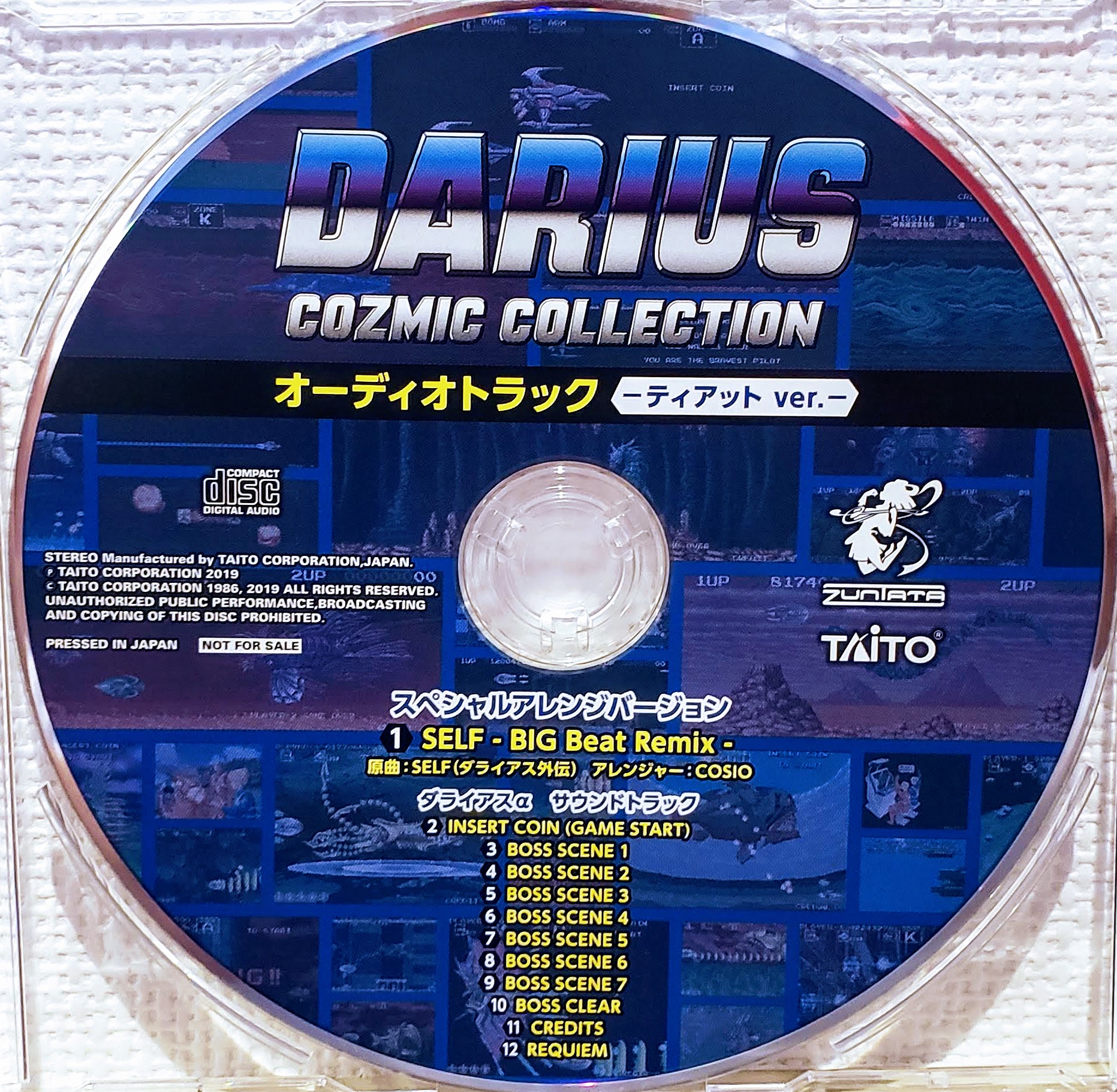
Taito just released the Darius Cozmic Collection, which includes several versions of early Darius games, both from the arcades and home. It comes in a massively-oversized box that also serves as a home for a wonderful book full of pictures and information about the games (albeit entirely in Japanese).

All that stuff is great, and I’m happy that I finally own decent home ports of these classic games. But I’m going to be real, the the main draw for me when it comes to Darius has always been its amazing music, and this collection is no exception. Included in the box set is the Darius The Omnibus II CD, a compilation featuring remixes of several classic Darius tunes, as well as a super-limited edition bonus CD. Most of that CD is dedicated to the soundtrack to PC Engine exclusive Darius Alpha, but it opens with this exclusive remix to the track “Self.” I might be mistaken here, but I think “Self” first appeared on Darius Gaiden. It’s hard to say though. Yo, there are a lot of Darius games.

While this track is impossible to buy without shelling out $300 for an import collection of 80s arcade shooters, it’s worth mentioning that most of Zuntata’s music is not only in print, but able to buy in America on iTunes. Want the complete soundtrack to Darius Gaiden? They got it, as well a soundtracks to deep cuts like Sonic Blast Man, Space Gun, and Kid Kaikai. Credit where credit is due, good on them for making all that stuff easy to get.

ALFH LYRA
Street Fighter II Medley (GMF Version)
Nearly all Street Fighter II music is in-print and easy to come by, thanks largely to Brave Wave and their amazing Street Fighter II re-issue from a few years back. But a few tracks have fallen through the cracks, like this live medley featuring the greatest hits of Street Fighter music. This was originally performed at the 1992 Game Music Festival in Japan, and was included on the CD of the same name.

The Game Music Festival was a thing in Japan for at least a few years in the early-90s and possibly the late-80s as well. The 1990 Game Music Festival CD bills itself as “Zuntata vs SST Band” and holy shit I’m jealous that I can’t track that disc down.

Again, if you like the music to Street Fighter II, be sure to pick up Brave Wave’s absolutely incredible release that features the game’s complete soundtrack, even both the CPS-1 and CPS-2 variations. In a time where so many game music releases are limited releases manufactured with scarcity in mind, it’s important to call out the studios that are doing it right.


Hot Sax and Sequencer Jazz

Sunday, March 3rd, 2019

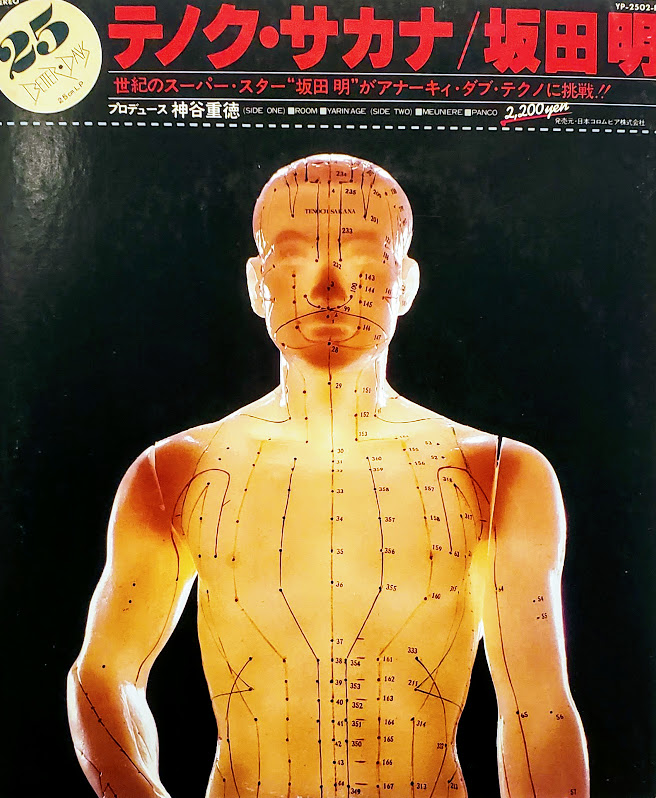
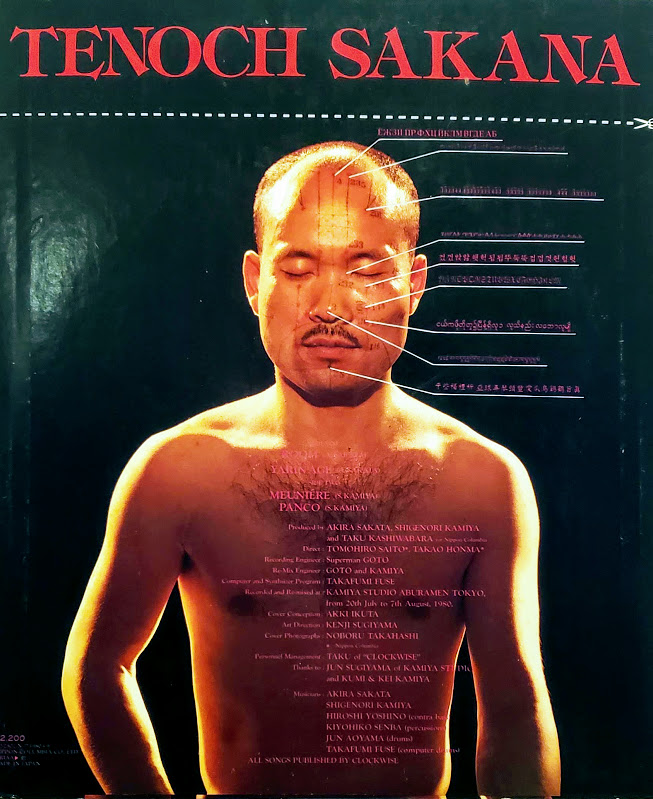
Akira Sakata – テノク・サカナ 
Room
Yarin’Age
Meuniere
Panco

Akira Sakata is a Japanese saxophonist who has worked with Bill Laswell and Jim O’Rouke. If you know anything about those artists, then I feel that pretty much says it all. Working as a frequent collaborator of those two usually earmarks you as a “weird avant-garde motherfucker for whom ideas like ‘genre’ and ‘traditional song structure’ does not apply.”

I bought this record not knowing who Sakata was, grabbing it instead because I noticed that it was put out by Better Days, a label known for their avant-garde pop releases by artists like Ryuichi Sakamoto and Yazuaki Shimizu. And this record certainly didn’t disappoint in that regard. Even if Sakata didn’t work with Laswell, I would be forced to compare the two here, this sounds like something Laswell would’ve cooked up around the same time, since its an intersection between the then burgeoning electro scene (this came out in 1980) and free, almost 100% improvisational jazz. But while Laswell’s experiments with melding electro and jazz gave us mainstream smashes like Herbie Hancock’s “Rockit,” this swings hard in the other way. The electro elements don’t make the music more mainstream, in fact, the opposite happens. Sakata’s sparse, wildly unpredictable playing takes the beats and bloops of the electronic instruments and transforms them into a tool for his free jazz freakouts.

On side A of this four-track release, that’s nearly as annoying as it sounds. Neither “Room” nor “Yarin’Age” strive to achieve any sense of form. If they’re truly improvisational sessions, they sound like them, meandering around in search or a hook or theme, and largely failing. As experiments, they’re interesting. As songs, they’re pretty nerve-grating.

Side B fairs far better though, the electronic elements are more locked-down. On “Meuniere,” the Sakata’s sax is moved far into the back of the mix, and the wild electronic sequences are given center stage. For me, this is the highlight of the album, and almost krautrock in execution. The pulsing beat is interesting enough on its own, but Sakata’s saxophone gives the song a style and sense of life I don’t hear often in electronic music. It’s Ninja Tune by way of Can. “Panco,” is the most traditional-sounding number one record, and the most full-sounding one too. Real drums are mixed with electronic beats, both serving to steady Sakata’s wailing sax. All the while, a menacing synth-strings section plays behind it all. If there was a bit more form to it, it could even work as film music.

Sakata wasn’t working alone on this, among his collaborators on this release was Shigenori Kamiya, whose name some readers of this site might recognize as he’s responsible for one of my favorite Japanese electronic albums of the 1970s, Mu. It’s probably safe to assume that the electronic bits were more his doing that Sakata’s.

Another release that’s definitely not for everyone, maybe not even me. But if you like posts I’ve shared in the past by artists like Blue Box, Toshinori Kondo, or Jun Fukamachi, then you might enjoy this one too! Let me know what you think in the comments!