
Switched-On Gershwin

July 17th, 2013

Quick reminders/shameless plugs/pleas for cash!

I wrote this review of the Maniac vinyl by Death Waltz over at my other website! It’s really good! (The record, I mean…although yeah, my website is pretty rad too.)

I wrote this little piece about audio warnings you’d find on old CD-ROM games at my other website too! It’s really dumb (The article I mean…although, y’know.)

I’m selling a bunch of stuff on eBay, if you like Criterion discs and really really low price (and I mean LOW) check them out!

Finally, I’m still trying a sell a TON of records, while I’ve been adding a few to eBay every now and then, I’d still prefer to sell them direct via my website. So if you’re interested, head on over to this post to find out more about that.

Now for Moog covers of Gershwin songs.
2552597774_f3e1e4865c_o

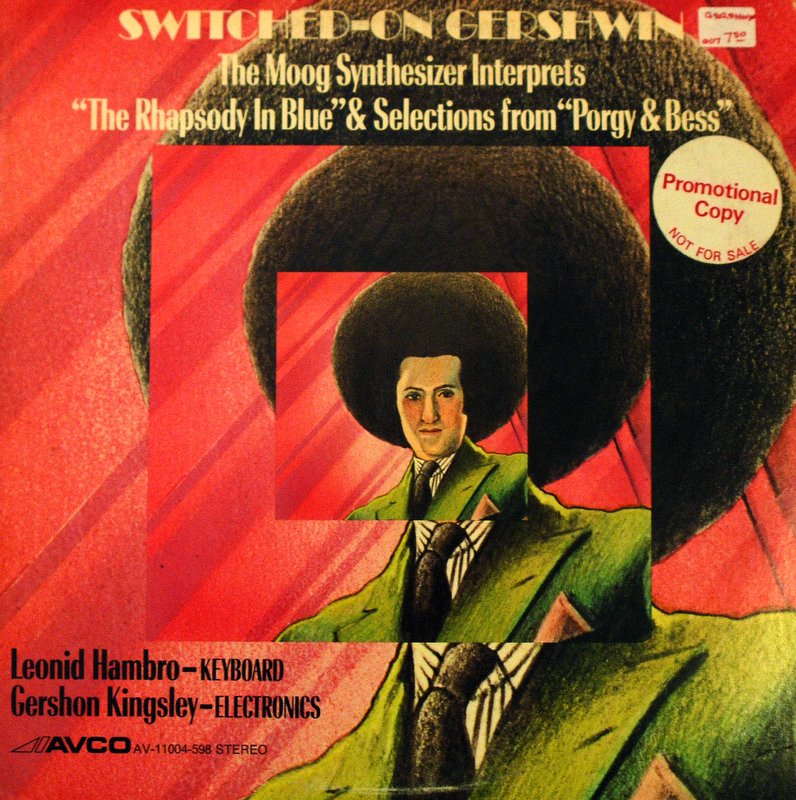
Gershon Kinglsey – Switched-On Gershwin
Rhapsody In Blue
I Got Rhythm
Porgy and Bess Introduction And Opening Scene I
Summertime
My Man’s Gone Now
It Ain’t Necessarily So
Clara, Clara
Crown’s Killing
In America, three people are widely credited with bringing early electronic music into the pop realm; Wendy Carlos, Dick Hyman (hehe) and Gershon Kingsley.

Wendy Carlos took electronic music and made it mainstream with Switched-On Bach, creating the first best-selling and Grammy award-winning electronic album, while Dick Hyman, who was already an accomplish jazz musician, took electronic music and made it respectable with his all-Moog albums full of original material.

However, sometimes I think that Kingsley gets lost in the shuffle, as he (along with with collaborator Jean-Jacques Perrey) were experimenting with the Moog and creating electronic pop music years before either Hyman or Carlos.

Carlos’ Switched-On Bach came out in 1968. Hyman’s first all-Moog album debuted in 1969. Perrey And Kinglsey’s debut album, The In Sound From Way Out, came out in 1966. The same year that The Beatles released Revolver, the same year that Tom Jones won the Best New Artist Grammy (really), these two crazy bastards were experimenting with previously unheard of electronic instruments, literally creating a sound that no one had ever heard before.

And they were doing it with mostly original tunes, not covers or interpretations of classical material. They were breaking ground in every way imaginable. It’s really amazing when you think about it. Of course, the true innovators never get the credit they deserve, and it was Wendy Carlos who broke electronic music through to the mainstream with Switched-On Bach. It makes sense though, better to expose modern audiences to electronic music via a sound they know than one they don’t. And Switched-On Bach is an amazing record, one that still sounds awesome and futuristic to this day.

It also inspired a legion of rip-off “Switched-On” albums. For some reason, in the coming years the term “Switched-On” came to mean “electronic music” and artists were releasing “Switched-On” country music, Beatles covers, showtunes, you name it, it got a “Switched-On” treatment.

It was such a popular trend that even innovators like Kingsley cashed in on it with Switched-On Gershwin, which as you can probably guess from the title, offers a selection of George Gershwin pieces redone as Moog tracks.

However, this “Switched On” albums differs from many imitators in a few ways.

Firstly, it wasn’t always a “Switched On” release. The record was first released in 1970 under the name Gershwin: Alive & Well & Underground, and may have come out so close to the original release of Switched-On Bach that it’s probably not fair to call the album a cash-in on that other record’s success. Kingsley’s decision to cover Gerswhin tunes was most likely independent of the success of Carlos’ LP.

Secondly, it’s not an entirely all-Moog album. The showcase track of the record, the 14-minute take on Gershwin’s classic “Rhapsody In Blue,” employs ample piano performed by Leonid Hambro. It may seem like a minor thing to mention, but the track’s constant interplay between the traditional piano and the more experimental, modern Moog effects really makes it stand out in a way that other Moog albums can’t lay a claim to. It also wonderfully showcases the playful and upbeat feeling of the original piece.

Finally, and most importantly, while most “Switched-On” records were bland and unoriginal albums created by people without a creative bone in their body, Switched-On Gershwin is fucking amazing.

Kingsley may be performing someone else’s music here, but he interjects as much originality and creativity within the confines of those songs as humanely possible. These tracks are layered with all kinds of sound effects and really showcase the power of the Moog far more than Carlos’ album did. It’s obvious listening to this record that Kingsley probably knew more about the Moog and what it was capable of than nearly anyone else who was using it at the time, radically altering these tracks and making them his own. Listen to his version of “I Got Rhythm” or “Porgy And Bess Introduction And Opening Scene I” and tell me they’re mere covers. You can’t. He transforms them into something entirely unique and beautiful. It’s really incredible.

And that cover is fucking DOPE.
Pet Shop Boys – Relentless

July 14th, 2013

Pet Shop Boys
My Head Is Spinning
Forever In Love
Kdx 125
We Came From Outer Space
The Man Who Has Everything
One Thing Leads To Another
In 1993, the Pet Shop Boys released Very, an amazing album that contained some of their greatest singles, including “Go West,” “I Wouldn’t Normally Do This Kind Of Thing,” and “Can You Forgive Her?”.

Very is one of the band’s most well-known and best-selling albums, and has never gone out of print since its original release. It was put on iTunes at the same time as the rest of their catalog, and was even remastered and re-released in 2001 with an added disc of bonus cuts and B-sides.

However, when the album was first released it was made available in two different versions; the standard single disc edition that most people know, and a limited edition two-disc set that featured a bonus disc called Relentless; this version is often just called Very Relentless.

As far as I can tell, this version, the most complete and comprehensive version of the album, was only released once, right when the album first came out. In the 20 years since, none of the songs on it have ever been remastered or re-released at all. Not on a greatest hits, not on a rarities or b-sides compilation, and not as a standalone release. You cannot get the songs on iTunes, you cannot get the songs on Amazon, you simply cannot get the songs.

If there was ever an example of a record label/artist forcing you to steal their music, this would be one.

I feel like it happens a lot though, whenever an album is released in multiple versions with different tracks, the most basic, cheapest one is the one that becomes part of their official discography. The versions with more tracks, with added video content, or extra-cool packaging, they’re the ones that vanish into the bargain bins of time.

It makes no sense, like the record labels are actively telling you that they don’t want your money, but whatever, makes it easier for me to pick tracks to share here.

Relentless is a great collection of tunes that would work fine as a standalone Pet Shop Boys release. It’s just six tracks long, but with an average track length of around six minutes, the album still fills out to a hefty 37 minute running time.

Musically, the album is a bit different than Very. Both are dance albums for sure, but while Very is a pop record you can dance to, Relentless is a dance record through and through, one that I suspect was influenced heavily on the growing dance scene that was spreading across the UK at the time of its release

Like I said before, the songs on Relentless are long, and they don’t conform to the typical pop structure that Pet Shop Boys usually operate in. Don’t expect at lot of Neil Tennant’s trademark vocals here. Sure, he pops up from time to time, but this is largely an instrumental affair, focused instead on hard-driving, pulse-pounding beats made to make people get up and dance.

I don’t know how different Relentless is when compared to the entirety of the Pet Shop Boys discography (I collect their singles more than their albums) but as someone who has always liked their remixes and dance versions more than their short single edits, I love this record.

Additionally, it is the ultimate synthpop workout record.

Mission Beat Manifesto

July 10th, 2013

I’ve been thinking a lot lately about what I do, what I want to do, and how I should do it.

I recently launched that other website to expand my writing a bit (and make a super tiny bit of money along the way) and that’s been great, although I still think that has a lot of growing pains to go through. I need to update that site a lot more, along with this site. New posts have been scant for a bit now, and I apologize for that, family stuff and some extended travel have really put a crimp in my writing schedule as of late.

Additionally, the shocking death of Ryan Davis really got to me in a way that I did not expect. That man (and all of the Giant Bomb crew) has been a massive influence in what I do for the past few years now, and losing him has been pretty brutal on me.

And, not to fall into the most horrible of all cliches, it kind of made me think. I got to get going on my goals, you never know when your time is going to be up.

Journalism has been on the skids for a while now. Shit, the demand for writing as a whole has been on a pretty steady decline for years now. I’ve been trying not to accept it, but it’s pretty hard to deny. Like a silent film star faced with talkies, I have to look at the future head on and realize that for the most part, people aren’t interested in reading one man’s views about random movies, video games and music anymore.

That’s not to say that I want to quit doing that. People might not be interested in what I have to say about new wave bands and acid house acts, but that doesn’t mean I’m no longer interested in writing about them. If my sites both peak out at a few hundred readers a day, then whatever, I’ll live with that. Writing has always been an outlet for me, and it will continue to be.

But pride, and my unending desire to create something that people actually fucking care about, have made to to decide the time is right to try something new. Maybe it’s time I sit down in front of a camera.

So stay tuned…I guess? I got some ideas.

If my timetable with Mostly-Retro was any indication though, expect something around late 2015.

Meat Beat Manifesto
Dog Star Man
Still Falling
Dog Star
Dv8
Transmission (Stately Pleasure Dub)
Transmission (Burning Fire Mix)
Mad Bomber/The Woods
Semi-serious mission statement about my own personal future follwed by tracks by a band whose name is a disgusting masturbation reference.

The Internet is stupid.

Electro > Most Other Things

July 2nd, 2013

Music music music music.

Mark Shreeve
Legion (Razor Mix)
Legion (Single Edit)
Legion (Satan Mix)
Legion (Space Mix)
Mark Shreeve was an early electronic musician/composer who put out a lot of stuff on Jive Electro during the 80s. He also wrote a lot of Samantha Fox’s stuff from that time period as well, which I assume made him a shitload more money than anything with his name on it.

This is a damned weird song. It’s like Afrika Bambaataa by way of Hellraiser. I don’t know if the “Call me Legion!” snippet at the beginning of the track is a sample from a film, or something that Shreeve recorded himself, but it’s creepy nonetheless, although not as creepy as the freaky-ass laugh that pops up from time to time. Seriously, this sounds like break-dancing music from hell.

You think Pinhead could do the worm? I’d pay to watch that.

Oh, and also apparently a version of this song is in the 1986 film The Jewel of The Nile, which is pretty damn random. I actually saw that move in the theaters when it came out, but I was six at the time, so I don’t remember much. Doesn’t Danny DeVito walk on hot coals or something like that? Whatever, flick was a total Indiana Jones rip-off.

These next four tracks I snagged from a vinyl copy of Disco Not Disco 2, a compilation album that features more “leftfield” dance tracks from the late-70s and early-80s. I’m only featuring these four because everything else on the album is in-print elsewhere.

Alexander Robotnick
Problems d’Amour
Alexander Robotnick (of no relation to Sonic villain Dr. Robotnick, at least I don’t think so, he was MIA for most of the early nineties…) is a godfather of 80s electro, thanks in large part to this amazing track, which is a killer combination of electro and disco. It’s great, but if you want to hear something that’ll really melt your brain out of its pure awesomeness, check out Robotnick’s “Analog Sessions” project, his collaboration with Ludus Pinksy. Just two old dudes in a cabin rocking out with a mountain of old-school analog gear. Shit is epic.

Material
Ciguri
Material is yet another side-project of mega-productive bassist Bill Laswell, who has been in more bands and produced more records than I care to count. Some of his highlights include his production work with Herbie Hancock during his electro phase of the early 80s; and Praxis, an experimental supergroup that featured him, Buckethead and Parliament’s Bernie Worrell.

Material appears to be a Laswell-centric project, with other members coming and going through the years, including Bootsy Collins, Sly & Robbie, Fred Firth, Buckethead, the Jungle Brothers, William S. Burroughs, Ginger Baker and even Whitney freaking Houston.

Material’s genre, as you can imagine, is pretty hard to pin down, but if I had to name it I would probably go with “music that James Murphy ripped off 30 years later.”

The Coach House Rhythm Section
Timewarp
According to Discogs, The Coach House Rhythm Section was an alias for Eddy “Electric Avenue” Grant. And if that’s the case, then damn, I have to give that dude some credit for range. This sounds nothing like his reggae work, and is straight-up avant-garde, new-wave inspired dance music that’s really unique still.

But it’s no “Electric Avenue.”

OY!

Connie Case

Get Down

Is “lo-fi electro/disco” a genre? Because that’s what this sounds like.

I got no clue as to who this is. So if anyone wants to help me out go for it. All I can find on her is that she worked on an album called Extra Funky that featured not one, but two versions of a song called “”Haven’t Been Funked Enough.”

I guess she never met Sylvester, he would helped her out.

Disco > Hate

June 26th, 2013

Other website news:

Wrote up a review of David Yow’s insane solo debut.

Did a mini-rant on how I think limited editions are fucking it up.

And in case I didn’t mention it before: YO, THIS IS A SONG ABOUT DIG DUG BY THE MAN WHO SANG DREAM WEAVER. 

I’m moderately stoked about that one, sorry.

Also, since everyone else on the Internet seems to hate me for this one, a while ago I wrote a thing on Doug TenNapel’s Kickstarter, and why you shouldn’t support bigots. With his Kickstarter hitting the tail end of its fundraising, I would appreciate it if you read it, and if you agree, share it.

And now on a completely unrelated note: some fabulous motherfucking disco.

All of tonight’s songs are all taken from DiscoNet Volume 6, a 1979 DJ-only 2LP set meant for club play.

Afrika Bambaataa/Kraftwerk/Lipps. Inc
Planet Rock/Tour De France (Extended Edit)/Choir Practice
Like most DJ-only compilations I’ve managed to come across, the first side of DiscoNet 6 is a non-stop mix. However, unlike most every other DJ-0nly compilation, this one kicks ass. This set came out in 1983, which was really a great time for dance music. Disco was finally dying out, and being replaced by the Moroder-influenced electronic dance music that would go on to dominate the rest of the decade. Producers and engineers were discovering crazy new ways to use synthesizers and digital equipment, and DJs were taking the art of the mix to places it had never been before. Pretty rad stuff all around, and I think these tracks show that pretty well, starting with this mix that combines American rap, German electronic music and some good old-fashioned disco that still kicked ass.

The “Planet Rock” part of the mix is pretty minor, just the first few seconds honestly. Most of the track is dedicated to “Tour De France,” in an awesome extended edit form that really draws it out to awesome epic length. The closer by Lipps. Inc is also great, and shows that their categorization as a one-hit wonder may have been a bit unjust. Great stuff here.

Valerie Oliver
Get The Money (Extended Club Mix)
I have no idea who Valeria Oliver is. She apparently released just three singles, this being her first, before vanishing from the pop music scene in the mid-80s. This song is pretty silly, an ode to getting yo’ cash from yo’ man, but it’s fun. And I love the Blondiesque rap breakdown about halfway through.

Stefano Pulga
Love Taker
I LOVE THIS SONG.

I love disco sung through a crazy thick Italian accent. I have no idea why. Couple that with the awesome 808 (or possibly 303) squelching and goddamn I’m in love with this Italian man and his amazing hair. I also don’t know what the hell a “Love Taker” is aside from a wicked burn that rhymes well with “Heart Breaker,” but hey, I’m not a songwriter so I can’t judge.

Pamala Stanley
I Don’t Want To Talk About (Extended Edit)
Pamela Stanley has an unreasonably long Wikipedia entry that I highly suspect was created, edited and moderated by either Pamela Stanley or someone who knows her personal phone number. She put out one album in 1979 and had a handful of minor hit singles, but that was about it for her mainstream success. Glad to see she’s still going at it tho. The world is always in need of more disco divas, no matter the decade.

Terri Nunn is Cooler Than You

June 18th, 2013

First and most important order of business: Everyone go listen to this song about Dig Dug by Gary Wright. It will change your life.

Okay, now some other pressing matters: I want this.

Unfortunately, Death Waltz can’t ship it to the US (sidenote: Death Waltz needs better lawyers). Anyone want to help me out? I’ll pay for it of course. Cover shipping too. Be your best friend, buy you cake, you name it.

I got a copy! Thanks everyone for your help.

Now, a strange combination of remixes.

Aerosmith
The Other Side [Matt Dike ”Honky Tonk” Version]
The Other Side [Club Mix]
Theme from ”Wayne’s World”
For a rock band, Aerosmith sure as hell has a lot of remixes. At one point in my life, I had remixes of “Love In An Elevator,” “Dude (Looks Like a Lady),” and even “Rag Doll.” I wonder what the point of these mixes was? I can’t imagine people in the clubs were ever really clamoring for Aerosmith dance mixes. And if they were, then where the fuck is the dance mix of “Mama Kin”?

Of these two mixes, the “Club Mix” is exactly what you’d expect. However the “Honky Tonk Version” is really…something. It transforms the tune into a country-flavored rock tune. Very, very odd.

And finally, yo “Wayne’s World” theme. Live. Awesome.

Terri Nunn
89 Lines (Club Mix Edit)
89 Lines (Blurring The Lines Remix)
Terri Nunn is the lead singer of Berlin. She is fabulously awesome and amazing, and no one bought her single solo CD because the world is a dark horrible place and we’re not allowed to have nice things.  I found this promo CD-single in a dollar bin at a record show last week and it was like a beacon of light surrounded by used Jimmy Ray and Constantine CDs. Say what you will about Terri Nunn (I fucking dare you) but she deserves better than that.

Sulking In Pittsburgh

June 14th, 2013

Who wants an update in my continuing adventures in audio insanity?

Okay, so when I left off last time, I discovered that my my new computer did not like my previous setup of hooking my turntable up to my computer via my Art USB Phono Plus. It was creating a muddy sound that cut off a lot of high frequencies. I then discovered that if I used my Art USB as a traditional pre-amp, and hooked it up to my computer via my line-in, then I got rid of that problem.

The downfall there was that I was getting increased line noise. A problem that I could then reduce by editing the file using the excellent DeNoise program. It was still there, but not in a way that bothered me significantly.

Well, for at least a week or two.

Anyways, before I figured that out, I went ahead and ordered another stylus to see if that was the problem, picking up an Audio Technica AT 120E/T from Amazon, a decent mid-range cartridge comparable to my Nagaoka MP-110. Even though I had solved the problem, I went ahead and gave that cartridge a go with my new setup. I liked how it sounded, just a little fuller with a little more treble, and decided to keep it.

So tonight, I was having problems recording my Blade Runner vinyl. It’s a great-sounding record, but it’s also very quiet, I was having a hard time getting rid of the line noise in the recording. On a whim, I decided to hook up my Art USB to my computer via USB once more, and see how that sounded with the new cartridge.

Holy shit! The “muddy’ problem was gone! Apparently there was something about my cartridge that was angering either the Art USB or my computer. I don’t know how that works, but whatever, now I got a setup that has the best of both worlds; no muddy sound from my previous USB connection, and no line noise caused from a crummy line-in connection.

I’m sure I’ll find something about it that’ll piss me off in a week or so though.

By the way, these were all recorded a while ago and are not indicative of any audio revelations.

A Guy Called Gerald
Voodoo Ray (Extended Mix)
Voodoo Ray (Gerald’s Rham On Acid Remix)
Voodoo Ray (Paradise Ballroom Mix)
Voodoo Ray (Penthouse Mix)
Voodoo Ray (Voodoo Raydio Mix)
A Guy Called Gerald is Gerald Simpson, who at one point was a member of the legendary dance act 808 state. I do not know who Voodoo Ray is.

Now that I think about it, I don’t know what Voodoo Ray is. Perhaps Voodoo Ray isn’t a person, but a raygun that attacks people with the powerful force of motherfucking voodoo. And I saw Serpent and the Rainbow. That shit is fucked up.

Bran Van 3000
Drinking In L.A. (Dave One Remix)
Thinking In L.A. (Zoobone Remix)
Sinking In L.A. (Dub)
Drinking In L.A. (Who Mix?)
Drinking In L.A. (Fink Mix)
I grew up in Toledo, and we had a Canadian-based alternative station called 89x, so I actually heard this song when it first came out in 1997. Later that year, a 17-year-old me went to L.A. for the very first (and last) time to tag along with my dad for an industry convention. Within about about two days I thought, “yup, that Bran Van song has this city pegged pretty well, Hell A.” This is the Canadian hip-hop version of that one Tool song.

That was a weird sentence.

Anyways, these mixes are from a 12″ single. And if you’ve never heard of Bran Van 3000, check them out, they’re pretty fantastic.

And yo, don’t forget that I’m once again trying to get rid of some records! Check out this post for more info.

Yo! Wanna Buy Some More Records!?

June 13th, 2013

Here we go again, I’m looking to unload some of my massive collection of vinyl and CDs, and I thought I’d give you all first dibs.

In case you missed my first sale, here’s how this works:

1. Click here to check out what I’m selling.
2. Shoot me an email (lostturntable AT yahoo DOT com) with an offer, try to include “I WANT TO BUY” in the subject. I get so much spam it’s like woah.
3. Assuming we agree on a price, you I will then remove the items off my list.
4. You pay me within 48 hours.
5. I ship your records.

Any questions, also shoot me an email.

Happy bidding, new post with music tomorrow!

Ryuichi Sakamoto – Discord Gütninja Remixes

June 10th, 2013

Been neglecting Lost Turntable in favor of Mostly-Retro for the past week or so. Sorry about that, getting a blog up and running is hard work, especially when you’re trying to balance it with work that actually pays. In case you’re interested, some stuff I’ve put up there recently includes this review of the latest by Queens Of The Stone Age, and a rather obscene take on Microsoft’s rather obscene used games policy they seem to be adopting with the Xbox One. If you miss my foul-mouthed rants of old then you should probably read that post. I suspect you’ll like it.

Now music.

Ryuichi Sakamoto
Discord - Gütninja Remixes (complete album download)
I bought this in Tokyo, and recorded it last month. About the only thing that has stopped me from sharing it here is trying to figure out how to write about it, as well as the realization that only about five other people in the world will care about it. But hey, I’m sure those five people will be stoked.  For the rest of you, I’ll try to talk you into downloading this and giving it a chance.

I’ve written about Sakamoto on this site before, but in case you missed those posts, here’s a quick refresher. Ryuichi Sakamoto was part of the super-influential/amazing/incredible Japanese electronic pop group Yellow Magic Orchestra; a group who helped to lay the groundwork for synth-pop, electronic dance and even chip-tune. After they disbanded in the mid-80s, Sakamoto embarked on his wildly diverse and successful solo career, which includes mainstream rock music, ambient electronica, and orchestral compositions. He even won an Oscar in 1987 for his work with David Byrne and Cong Su on The Last Emperor.

In 1997, Sakamoto released Discord, his first classical work that was not for the screen (although many of his previous works had some classical elements). Primarily orchestral with a touch of piano, the album also featured some guitar and even some turntablism from DJ Spooky, so even if classical isn’t your thing, I think you should give it a chance. It’s really different.

Two years later, Sakamoto (or someone on Sakamoto’s label) handed Discord off to various DJs, producers and other electronic musicians for remixing, and the result is this album. It’s something special and unique, thanks largely to the remixers chosen for the project, who include Amon Tobin, Coldcut, Andrea Parker and Tavin Singh (a lot of Ninja Tune is on this record). They really work to transform the classical compositions into entirely new tracks, sometimes removing and reworking so much of the original pieces that they’re nearly unrecognizable. That’s not a bad thing in this case, however, all these tracks are great, even when they have little to nothing in common with the source material.

In case you can’t tell, I really dig this record. It’s pretty much everything I love all rolled into one big ball of awesome; Sakamoto, Ninja Tune, crazy remixes, and awesome weird Japanese shit. I really hope I’ve convinced you to check it out too.

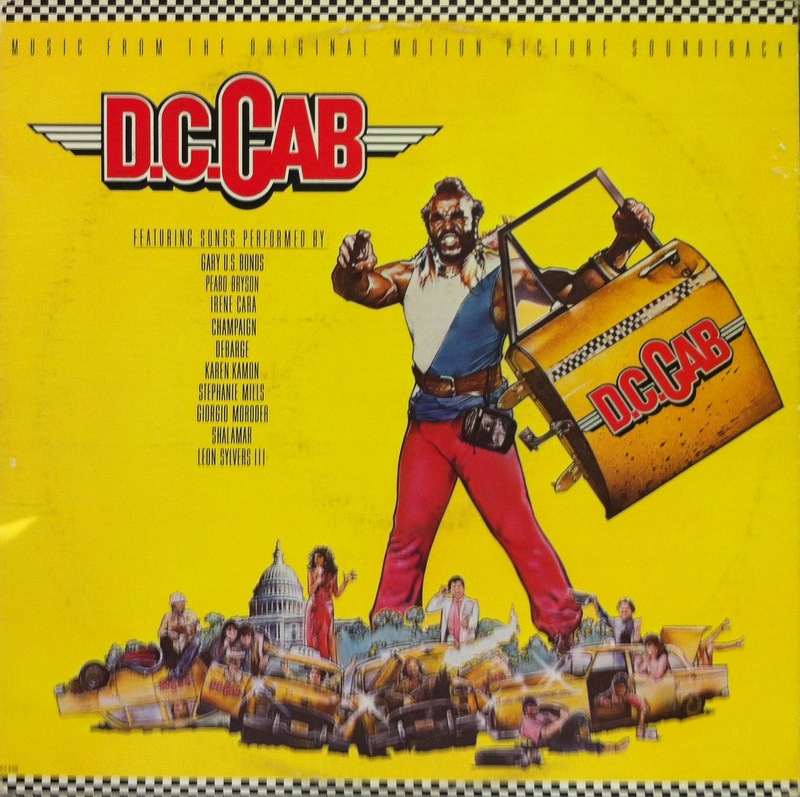
The D.C. Cab Soundtrack. I don’t know why.

June 5th, 2013

Giorgio Moroder produced three soundtracks in 1983.

The first was for Flashdance, it went on to sell millions of copies, win an Oscar for best original song, and helped influence the very sound of the 1980s.

The second was for Scarface. While not as influential, it certainly served as a memorable score for the film, and featured great songs by the legendary Debbie Harry.

The third was for D.C. Cab. And hey, two out of three ain’t bad.

fefb49ca-fa79-4dc5-9440-2bb89607ddb6-0


Shalamar
Deadline USA
Shalamar is how the world was introduced to Jody Whatley, an 80s pop also-ran who scored a few hits with tracks like “Looking For A New Love” and “Real Love.” She was rad. Shalamar was…less rad. But they weren’t bad, and were probably one of the only disco acts to successfully make the transition to 80s pop and score a few MTV hits. This song is certainly catchy as hell, and reeks of Morder’s production, even if it was actually produced by Pete Bellote, a frequent Morroder collaborator. Synthesized funk gold. Seriously, the more I listen to this song the more I love it. I want to set my own real-life 80s training montage to it.

Peabo Bryson
D.C. Cab
This is the hardest I’ve ever heard Peabo rock, which is saying absolutely nothing considering he’s best known for songs like “Tonight I Celebrate My Love” and his “Beauty and the Beast” duet with Celine Dion. If you hear this song and think “wow, I need more Peabo in my live!” trust me, you don’t. You really don’t.

Champaign
Knock Me On My Feet
I only barely know one other Champaign song, the minor 1981 hit “How ‘Bout Us,” which I forgot completely until I looked it up on YouTube, and then promptly forgot about again. That song is horrendous. This song is amazing, probably the most Moroder of the songs from the soundtrack that I’m featuring here. The guitar solo is dope!

Karen Kamon
Squeeze Play
Karen Kamon is a singer who is probably best known for her work on the Flashdance soundtrack. No, she didn’t sing “Flashdance,” that was Irene Cara. And no, that wasn’t her on “He’s a Dream,” that was Shandi. She sang “Manhunt,” the soundtrack for the other, other dance scene in the film. She released two albums in the early 80s as well, but I’ve never heard them and they’ve never even been re-issued on CD, so I can’t speak to them. This song is pretty great though. It’s no “Manhunt,” but it’s a nice dance tune. Unfortunately, the LP suffered from some drastic inner-groove distortion here, so it’s a little distorted.

Leon Sylvers
World Champion
Don’t know much about this guy either, apparently he was a big producer for a bit, but he hasn’t done much in a while. Not a bad song, but forgettable.

Stephanie Mills
Party Me Tonight
Stephanie Mills was the original Dorothy int the first Broadway production of The Wiz, and that’s fucking awesome. I don’t think her pop career was ever as big as her stage one though. This is a synthtastic example of Mordoder production, and would fit in perfectly on the soundtrack to Flashdance.

Gary U.S. Bonds
One More Time Around The Block Othelia
Gary U.S. Bonds sung “Quarter To Three,” one of the best soul songs of the early 60s. Twenty-one years later he was on the D.C. Cab soundtrack. Man, life can be rough. At least he got the theme song to the baddest motherfucker in the movie, Othelia, played by the ultimate bad-ass Marsha Warfield. But I’ll talk more about her when I review the movie on my other site.

Giorgio Moroder
Knock Me On My Feet (Instrumental)
I guess Giorgio had high hopes for this one if he felt he should close the soundtrack with this instrumental version. Like I said before, it is definitely very Moroder, but when you hear the other stuff he was putting out around that time, this just doesn’t compare at all. Eh, at least it’s not “Danger Zone.”

The D.C. Cab soundtrack also featured “The Dream” by Irene Cara (wow!) and DeBarge’s “Single Heart.” However, those are both available on CD and digitally, so I’m not including them here. Sorry!

Hope you enjoy these tunes, and after you grab them, head over to my other site for reviews of the Beggars 5CD box sets, Joyful Noise’s Cause & Effect Vol. 1, and the really bad vinyl version of the really good new Alice In Chains album. And if you’re feeling like hating humanity, check out this post too.