Archive for the ‘Complete Albums’ Category

A Rare Zelda Theme Remix (and more)

Friday, May 31st, 2019

It must be said that 1986 was a hell of a year for video game music. According to the VGMdb, only one game music album came out the year prior; The Return of Video Game Music. In 1986, nearly 40 records and singles with some connection to video games were released. That’s nearly one a week.

Some stone-cold game music classics came out that year. The first GMO releases with music by companies like Capcom, Namco, Sega, and Nintendo all went to shelves in 1986. Same for the Dragon Quest Suite, the first commercially released LP featuring a symphonic arrangement of a game music soundtrack.

Those are in-demand titles by game music collectors, but at least most of them have been re-issued at some point. For example, you can pick up CD copies of Famicom Music relatively affordably online (and I suggest you do, that’s a fantastic album).

But a lot of key titles from 1986 remain out-of-print and command insane prices online. One such title is this.
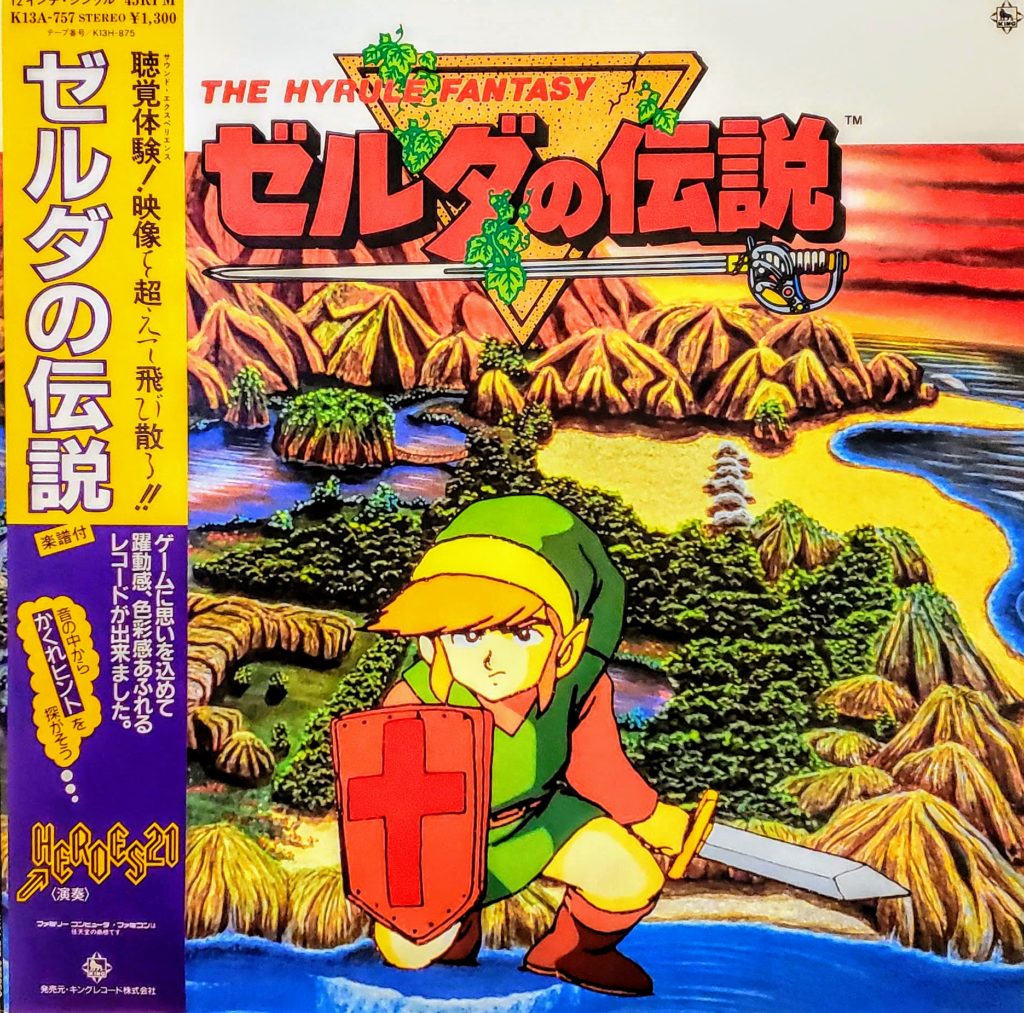
Heroes 21
ゼルダの伝説 (The Legend Of Zelda)
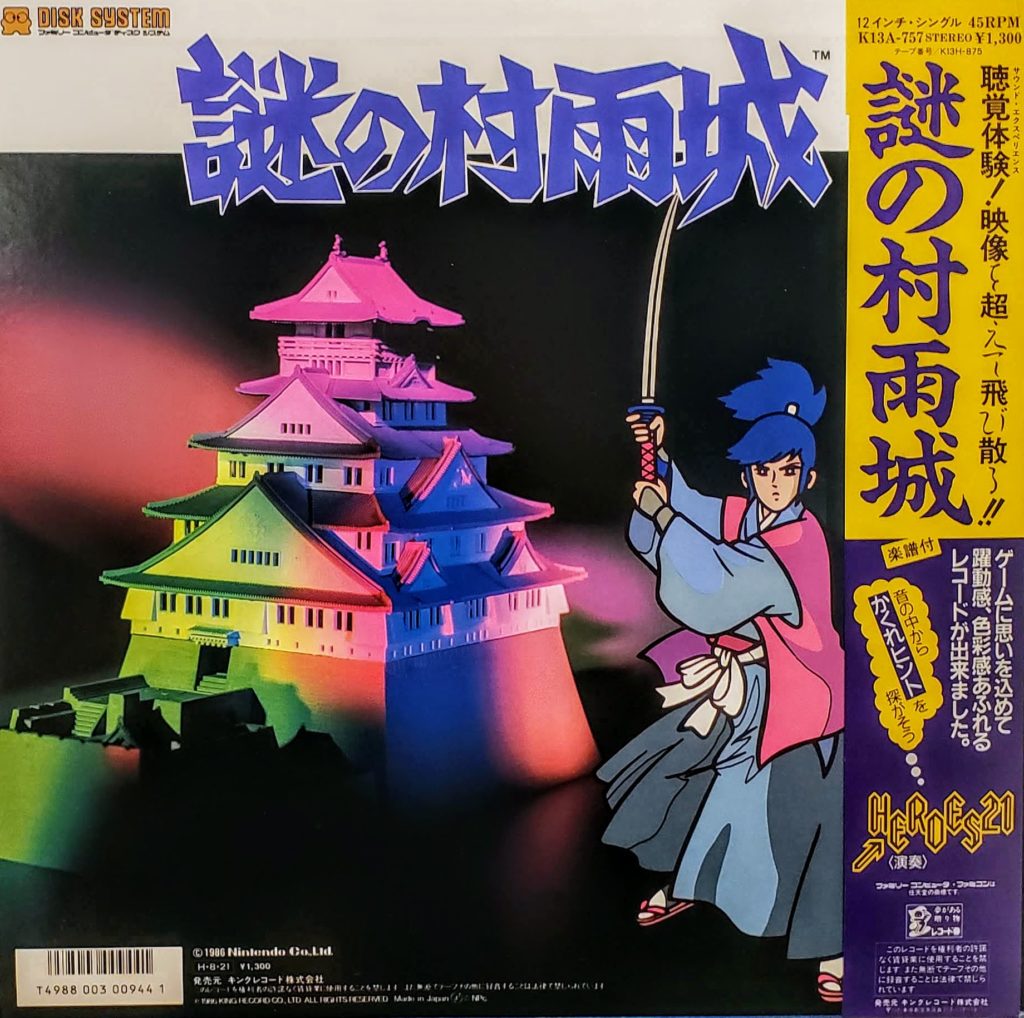
謎の村雨城 (The Mysterious Murasame Castle)

This is a two-track 12″ single. The A-side, as you can guess from the image above, features an extended remix of the theme to The Legend Of Zelda. The B-side features a mix of music from The Mysterious Murasame Castle. There is also a 7″ single with the same cover art and tracklisting, but that does not have the same music. The versions on that sound absolutely nothing like the ones here. The 7″ arrangements are more traditional, while these are wacky sample-heavy and much more experimental. They sound like Art of Noise by the way of Koji Kondo.
Speaking of Koji Kondo….

Every source I could about this record credited Koji Kondo as the performer on the album. Even on Discogs and the VGMdb. This is not true. Yes, the two tracks on this album are both based on music by Koji Kondo, but it would appear that he had absolutely nothing to do with this release. The actual performers are someone or something called Heroes 21. Their name is right there on the Obi strip, with the kanji for “performed by” (演奏) right under them. But that fact was somehow lost to time.

So, that begs the question, who the hell is/are Heroes 21?

At first, I thought that they might be the same people who were behind Bonus 21, the group credited on the the equally hard-to-find Mario Syndrome release that also came out in 1986. The title treatment of both artists is identical, and both releases are from King Records.
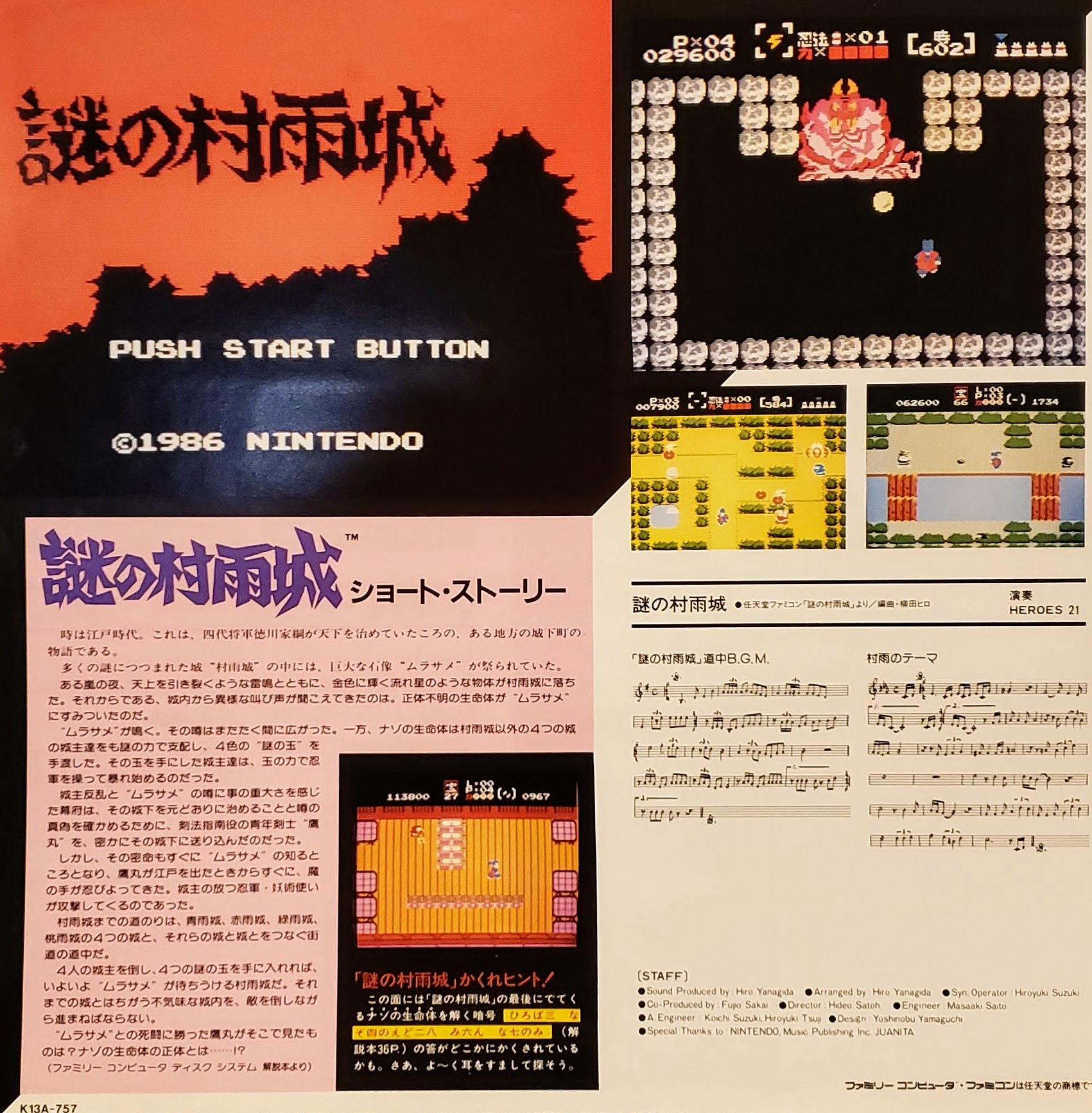
However, when I compared the credits on each release, I saw that only two people appear on both, and they’re both engineers. The arrangers on both albums are different. Mario Syndrome was arranged by Shunji Inoue (currently the VP of Bandai Namco). This single was arranged by Hiro Yanagida, the keyboardist for the influential Japanese rock group The Apryl Fool who went on to a mildly successful solo career as a prog rock musician.
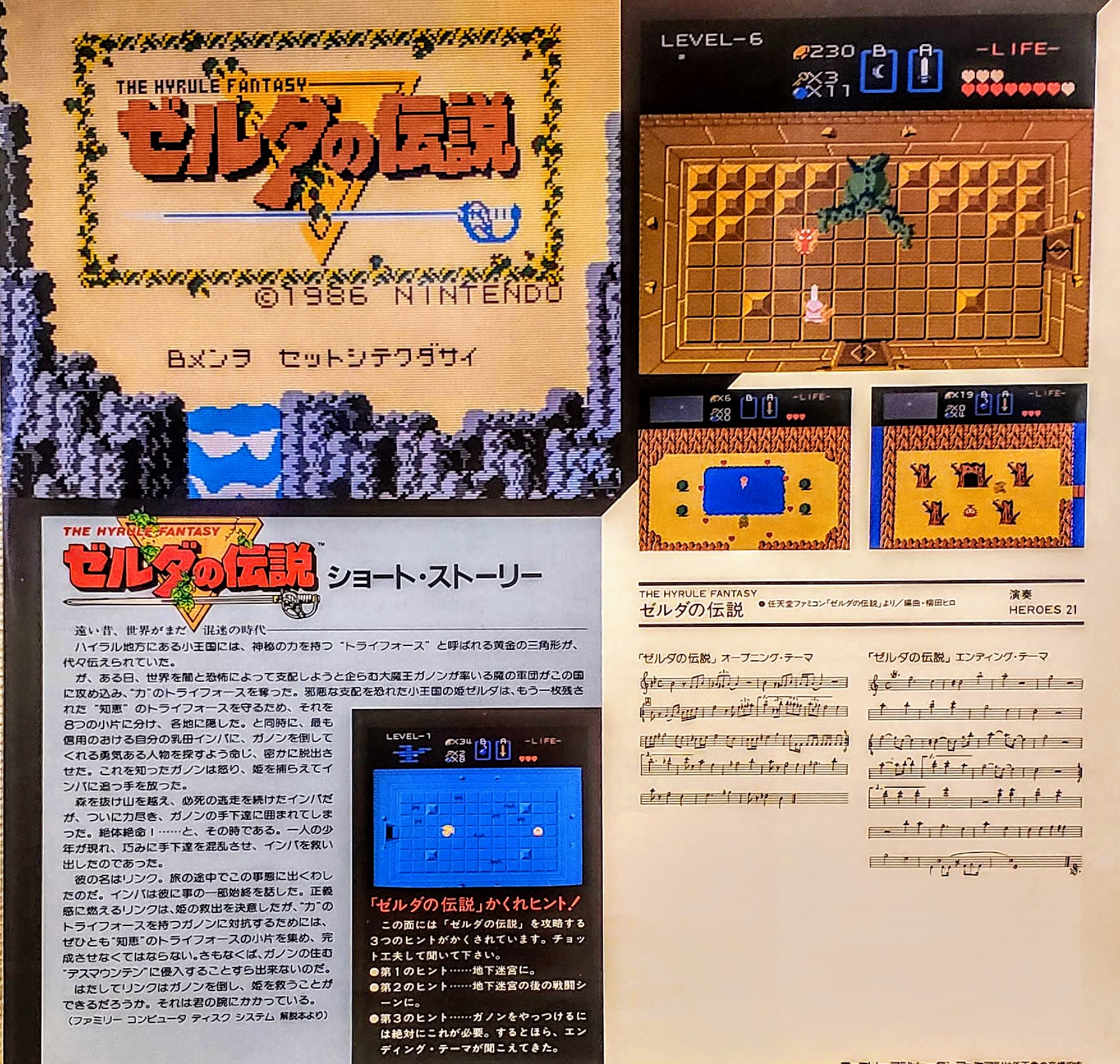
Doing further research (again, thanks largely to the amazing resource that is the VGMdb) I found that King Records also released a Solomon’s Key/Mighty Bomb Jack single in 1986. That release is credited to Replica 21. The arranger on that is Yoichiro Yoshikawa, a composer who put out a few albums and also worked with Togawa Jun, writing the music on her signature classic, “Suki Suki Daisuki.”

So all the artists are completely unrelated. Perhaps “_____ 21” was some kind of branding effort by King Records to lump all of their game music artists together? There’s so little information out there about these records, even less so in English, that it’s hard to say. I don’t think King Records kept the “21” formatting going in future releases either, so who knows what the deal was.

Even without the mysterious branding, these are must-have mixes for any game music aficionado. As I said, they’re really out-there, very indicative of what was happening with electronic pop music at the time. Samplers were a big deal when they came out, so there were a lot of tracks like this at the time, stuff composed almost entirely of samples. If you dig this, I recommend checking out Yellow Magic Orchestra’s Technodelic and Ryuichi Sakamoto’s Furturista, both are great albums built almost entirely out of samples.

And keep checking here to see if I ever score a copy of the 7″ version! Like I said, it’s totally different!
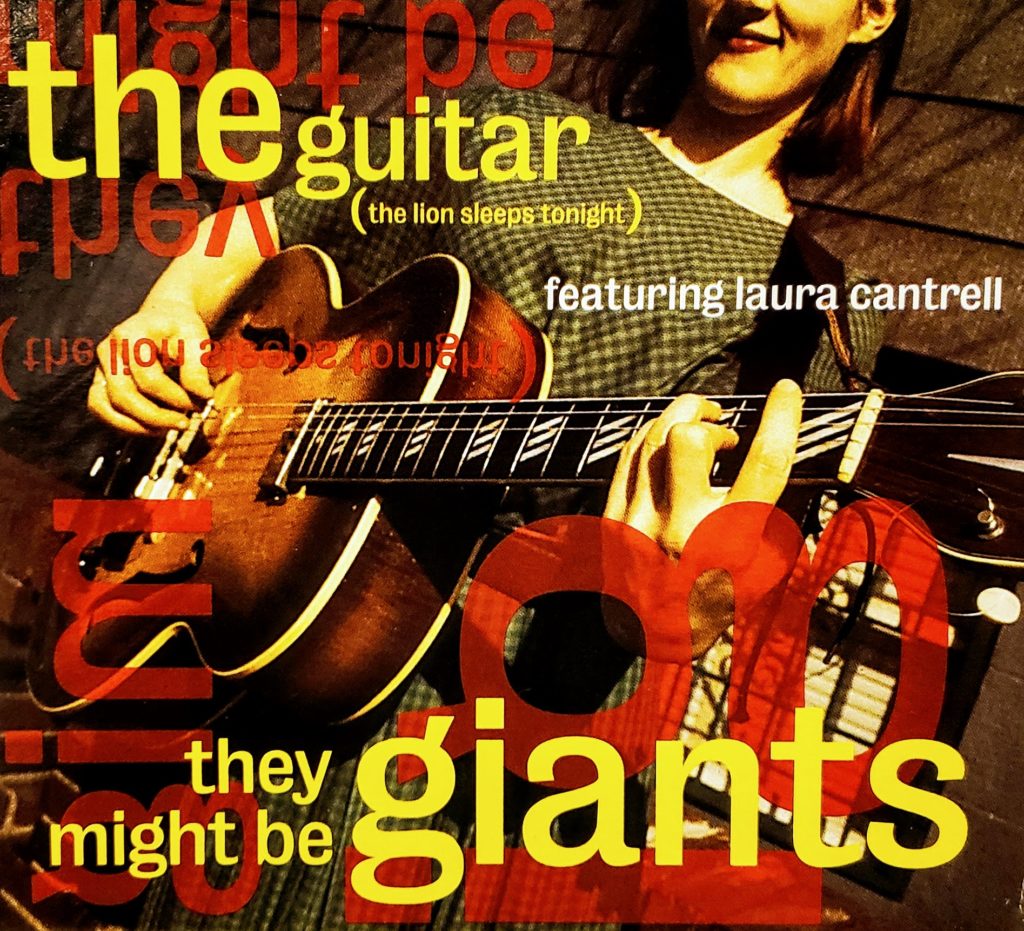
Who is that playing the guitar?

Monday, May 6th, 2019

The first week in May in Japan is usually “golden week,” a period where a number of national holidays are in a row to allow for a four to six day holiday. This year, with the abdication of the emperor and the ascension of a new one, extra holidays have been added, effectively giving the people of Japan a motherfucking 10 day holiday.

When I say “people of Japan” that’s a bit of a stretch. I sure as fuck didn’t get a ten day holiday, as I’m in the service industry. Ditto for just about anyone working retail. But a lot of office workers are enjoying an extended break, and good for them, they all work too hard and they deserve a break. But the post office also has a fucking ten day holiday. That means that, in a post office not 2km away from my home, my Bleachers EP is sitting in a box of packages somewhere. So, sorry to the new followers I’ve gotten who are checking up on my blog for those rips. It’s not my fault they haven’t shown up yet. Blame the monarchy.

They Might Be Giants
The Guitar (the Lion Sleeps Tonight) [Williamsburgh Mix]
The Guitar (the Lion Sleeps Tonight) [Outer Planet Mix]
Welcome to the Jungle
I Blame You
Moving to the Sun
The Guitar (the Lion Sleeps Tonight) [Even Further Outer Planet Mix]

I almost never, ever seen They Might Be Giants records or CDs here. I would imagine that the group’s lyric-focused college-rock doesn’t translate. But I got lucky yesterday when I happened to find the maxi-single for The Guitar just sitting out at Coconuts Disk in Ikebukuro for a steal of a price at 500 yen (about five bucks). Not only that, it was sealed.

Often I wish I could find out how these oddball and random releases make their way to Japan. Did a college rock DJ bring his collection to Japan and unload it one day? Did a wholesaler buy a shitload of random CDs cheap with the intention of dumping them off at various stores to make a quick buck? Did someone buy two by accident and decided to offload their extra? The world will never know.

In the 13 years I’ve been writing this blog, I believe that this is only the third time that I’ve shared They Might Be Giants tracks. This speaks to how well the group works to make sure their “rarities” don’t stay rare for very long. Nearly ever bonus track, B-side or remix that TMBG have ever released have eventually made their way to a compilation of some sort or another. The only fault I would give the band is that their compilations seems to have no rhyme nor reason to them. They really need a proper re-issue campaign with the rarities included all together. Who knows if we’ll ever get that though, considering that the band seems to still be putting out new music as a lightning pace. Did you know that they put out three damn albums last year?

I didn’t. Sadly TMBG are one of the bands that I’ve lost touch with sine moving to Tokyo. As you can imagine, the group doesn’t have much of a following here in Japan, this EP is the very first CD by the group that I’ve ever come across in the country, and the only vinyl I’ve ever seen are some 12″ singles for Flood-era tracks. A large part of my TMBG-fandom was seeing them live, and since I can’t do that anymore, I guess I just stopped thinking about them. Also, let’s be honest here, I love the group but their output a while ago wasn’t all that great. Nanobots was goofy, but completely forgettable, ditto for The Else and Join Us. Their albums for the past decade or so have just been hovering in three-star limbo. The last album by the group that I listened to with any regularity after its immediate release was The Spine, and the last album by the group that I absolutely fell in love with Mink Car (CYCLOPS ROCK FOR LIFE). Without the dangling carrot of their (still) amazing live shows, I just haven’t been able to keep interest in them. But hey, anyone know if those three albums that they put out last year are any good? I’d love to jump back on board the TMBG fandom if the tunes are there.

Anyways, about these tracks; the “Outer Planet” and “Further Outer Planet” mixes are a lot of fun, and make the trippy song even trippier. To be honest though, I can’t figure out how the Williamsburgh mix is any different than the album version. At first I thought it was just the album version, or a single edit, but it’s a bit longer than the album version. So hey, beats me. The B-sides are cute, 90s-style TMBG tracks with very witty and clever lyrics, “Welcome To The Jungle” is a hilarious-slight-of-hand, taking the title of the GnR classic and nothing else to create an entirely different song that is 100% literal about its titular jungle. “I Blame You” is a bit of a forgettable yet pretty mostly acoustic tune, while “I’m Moving To The Sun” is silly bit of hilarity about a man so fed up with someone that he’s packing his bags and quite literally moving to the sun. Maybe they met my brother.

Madonna – You Can Dance Single Edits

Thursday, April 25th, 2019

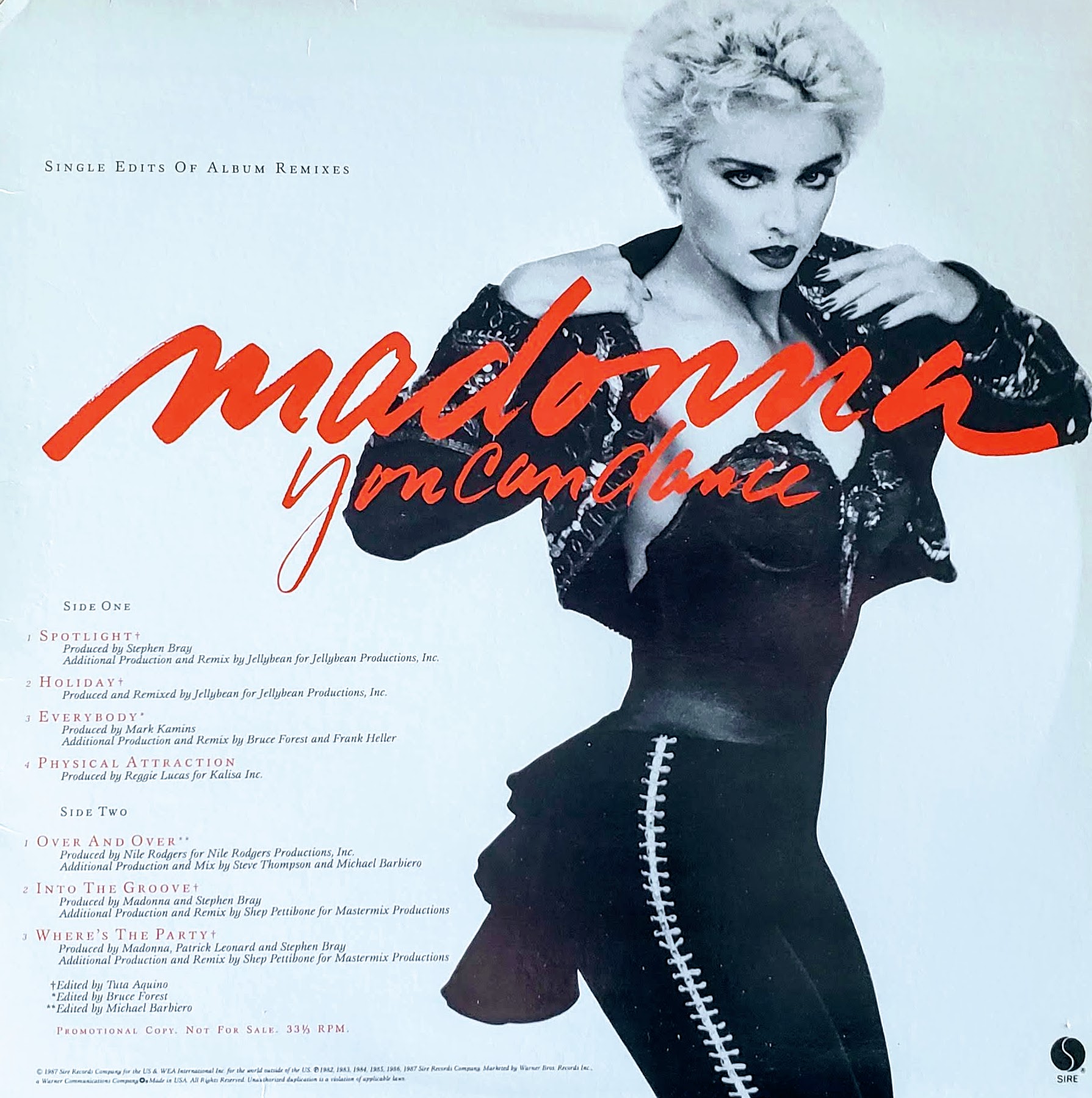
Madonna – You Can Dance Single Edits
Spotlight
Holiday
Everybody
Physical Attraction
Over and Over
Into The Groove
Where’s The Party
I’ve been obsessed with hunting down Madonna remixes for about as long as I’ve been collecting vinyl, so for about 15 years now. Learning that there were exclusive (and often very good) remixes of Madonna songs that were on vinyl were one of the reasons why I got into the format in the first place. According to Discogs, I own 101 releases that feature Madonna, and I assume that a good chunk of those are 12″ singles. I think that the only artists for whom I own more 12″ singles are probably Depeche Mode and Erasure, but to be honest I like Madonna more than both of those artists.

And while both those artists have some remixes or edits that are pretty hard to find, neither can hold a candle to level of rarity that some Madonna remixes hold. For example, did you know that there’s a mix of “This Used To Be My Playground” that’s only on a special Olympics-themed compilation called Barcelona Gold? Or that there’s a unique mix of “Human Nature” that was only included on a promo CDr that was never intended for commercial release? Madonna remixes are the Pokemon of music; there’s a million of them and I want to catch them all, regardless of quality.

If I knew the slightest about Pokemon, I would continue that metaphor to express the rarity/demand of these particular remixes. Instead I’ll just fall back on a crutch of a comparison and call them my holy grails. These mixes are from the You Can Dance promo LP, which was released solely to radio stations to promote the 1987 remix compilation You Can Dance.

You Can Dance is a bit of a footnote in Madonna’s discography, but the album was something of a big deal when it came out. It was one of the first remix albums released by a major artist, and featured mixes of many of her biggest dance-friendly hits, as well as an exclusive track, “Spotlight.” One thing that made the album stand out even among current remix compilations is that most of the songs are mixed together to create the feeling of a live DJ set. The only concrete break in the album is halfway through, as it was still primarily an LP release and such a break was needed to flip sides.

It’s a great concept and works great at parties, but didn’t lend itself to radio play. Hence, the creation of this special radio-only promo. It served as as a way for listeners to hear the newly remixed versions, while at the same time fitting them to into a more radio-friendly format.

The songs on You Can Dance weren’t the first Madonna songs to get radio-friendly single remixes. Hell, most of her singles from the era have separate, often radically different, single remixes. However, it’s the only album that locked those mixes behind a promo release (and an obscenely rare one at that). While many rarer Madonna 7″ singles would be released on commercially available singles, or make their way to a greatest hits compilation, all of the single edits for You Can Dance remain ultra-obscure rarities secluded to this release to this very day.

Some of the remixes aren’t very different to ones that are more widely available, to be honest. The version of “Spotlight” that was included on Celebration is pretty similar to this mix, with only a slightly different opening. Most of them, though feature some pretty notable deviations, especially in the breakdowns and instrumental sections, which are often heavily re-worked to be more dance friendly and use a lot of techniques that were common at the time, like vocal looping and reverb.

Discovering this record has re-kindled my interest in tracking down the remaining Madonna rarities I have yet to acquire. As such, I will hopefully update/finish my Guide To Madonna Remixes that I started on my other site eons ago. While a lot of people seemed to like that, to be honest I mostly did it for myself so I would know which remixes I still needed to get!

One final quick note about these rips; this record is absolutely flawless, with nary a scratch on it. I also gave it a good clean just to be sure before I played it. The resulting rip was nearly perfect, and once I ran it through my digital scrubbing I think I was able to remove damn near any imperfections, save for some incredibly minor sibilance. When “mastering” the recording, I made these tracks just a smidge louder than usual. If you ran them through a visualizer, you’d probably notice some slight clipping. However, you probably won’t actually hear said clipping, I didn’t. And making them just a tiny bit louder than usual gave them a much brighter sound in my opinion. They’re still far quieter and less compressed than the album versions, trust me.

Now that I got this one properly ripped and secured in my stacks, I don’t know what else I need to find in terms of obscenely rare Madonna remixes. Maybe the It’s That Girl cassette tape? Although the prospect of spending over $100 on a tape kind of makes me wanna throw up.

Tape is the devil’s format.

Frank Becker’s Synth Vivaldi

Sunday, April 7th, 2019

I was really surprised my last post didn’t take off. I’m not going to say that I wrote that specifically with getting a larger audience (at least for a short time) in mind, but it was definitely a factor. This may sound selfish and whiny, but having an audience feels good sometimes. That’s the main reason why I’ve severely curtailed my other site. People really dig the record store guides, and that makes me really happy. But damn never everything else I wrote fell on death ears, especially the posts that I enjoyed writing the most.

I’ll be honest (and I think I’ve mentioned this before) but my readership for this blog continues to decline. When I started this up I was quickly getting thousands of hits a day thanks to the attention given to MP3 blogs. Now, thanks to Twitter and Facebook, I get a fraction of that. People don’t want to read about music anymore. And people don’t even want to download it (legally or otherwise) it seems. They’re more than content to give a service 10 bucks a month for the right to borrow poor-sounding streaming music that they don’t even own.

Whatever. I’m an old man. I’m nearly 40 and feel more and more out of touch each year. When my clickwheel iPod finally croaked earlier this year, I really had a difficult time finding a decent replacement. I wondered why, but then it hit me – people don’t buy MP3 players anymore. They just listen to music on their phone because they’re getting most of it via Spotify or a similar service. I would say that made me feel old, but even people my age don’t buy music anymore, so I guess my obliviousness to current trends is more than just a generational divide.

Anyways, rambling. All this to say that I was once again reminded by all of this that I should never ever bother writing posts strictly “for the hits.” The posts will inevitably fail to find a substantial audience and I’ll just get bummed. Best for me to stick to my wheelhouse and write about things that will never find a meaningful audience.

Keep them expectations low.

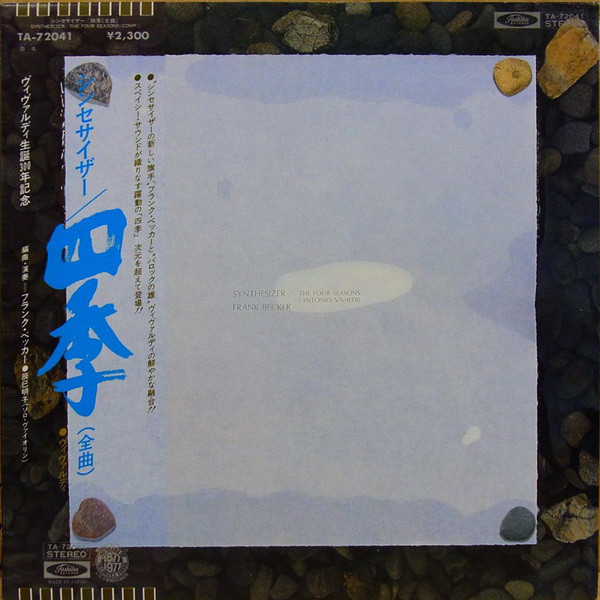
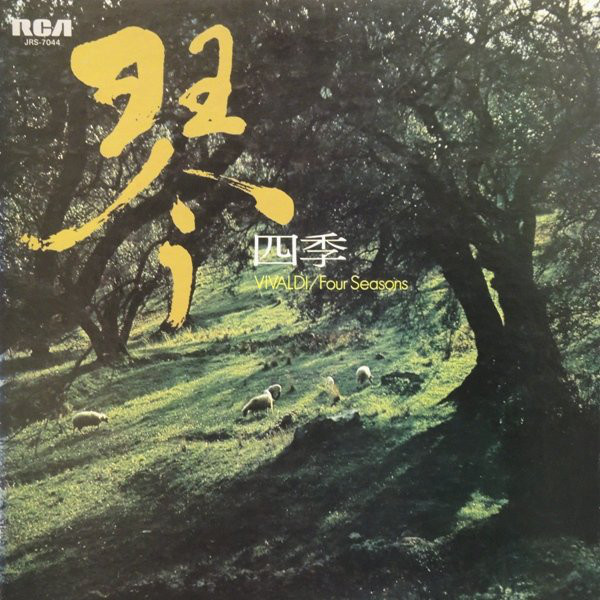
So yeah, here’s a post about a synthesizer rendition of The Four Seasons by Vivaldi.

Frank W. Becker – Synthesizer Four Seasons
Spring
Summer
Fall
Winter

This is the second time I’ve shared a rendition of Vivaldi’s Four Seasons. The first was an interpretation done entirely on the Japanese koto. This time I’m going the opposite route, with one done predominately on synthesizers.

One of the the many things I absolutely adore about Japanese record stores is their tendency to break things up into the most specific genres imaginable. Stores here don’t just have “rock” sections. For example, a rock section is properly segmented to include special sections dedicated to prog, punk, heavy metal, jazz fusion, and so on. It makes it so much easier to find new music. You can go to a sub-genre you like, find an interesting-looking album, and give it a whirl.

And while most record stores in other areas would neglect synthesizer-centric albums to a general “electronic” section, here they get their own placard. I chalk this up to the relative influence that Japanese musicians had on the early synth scene. Even before YMO, many Japanese musicians were embracing the synth craze started by Wendy Carlos. The most notable of these is, of course, Tomita, but there were many more, including new age darlings Kitaro and Fumio Miyashita, who both made a killing with “healing music” in the early 80s.

But a lot of synthesizer albums in Japan weren’t made by Japanese musicians. As I dig through the crates looking for obscure pieces of moog-ephemera, I often find Japanese exclusive synthesizer albums by artists from all over the world. Sometimes the albums are just reworked versions of records already available overseas, with altered tracklistsings or covers. However, on occasion, the album is an entirely new creation made specifically with Japanese audiences in mind.

That’s the case with the work of Frank W. Becker, who released six albums of synthesizer-focused music in just two years, from 1978 to 1979. His work with the instrument runs the gamut. A few are entirely original compositions that he made specifically for the synthesizer. Two are Beatles covers albums (and are quite good).

But the one I come back to the most is his rendition of Four Seasons. Of course, that has a lot to do with the source material. Four Seasons is a classic for a reason, and like I said in my first post where I wrote about it, very few pieces of music calm me down like Four Seasons. I also like it because it doesn’t force itself to be limited to only synthesizer. On the album, Frank’s synth work is accompanied by a violin. Why some who enjoy synthesized renditions of classical music might be let down by this, I find it to be a welcome addition. It gives the record a sense of life that would not have been possible by synthesizer alone in 1978. Also, the violin isn’t used as a crutch to hide imperfections or weaknesses with the synthesizer material. It’s just an accompaniment and nothing more. The crux of the album is still Frank and his amazing synth work.

Frank is still with us and still making music. He has a website. I even tried contacting him (several times) to see if it was okay for me to share his music. He never responded. (Frank, if you do find this and don’t want me sharing this, let me know and I’ll delete it immediately.) His website mentions his electronic work, but only in passing, and this album is absent entirely. Perhaps he only wants to focus on his original material, which I guess makes sense.

I have five of his six albums and cherish them all. His covers are fun, his classical pieces are soothing and well-done, and his original pieces make great use of the synthesizers of the day. I hope to share more of his work in the future.

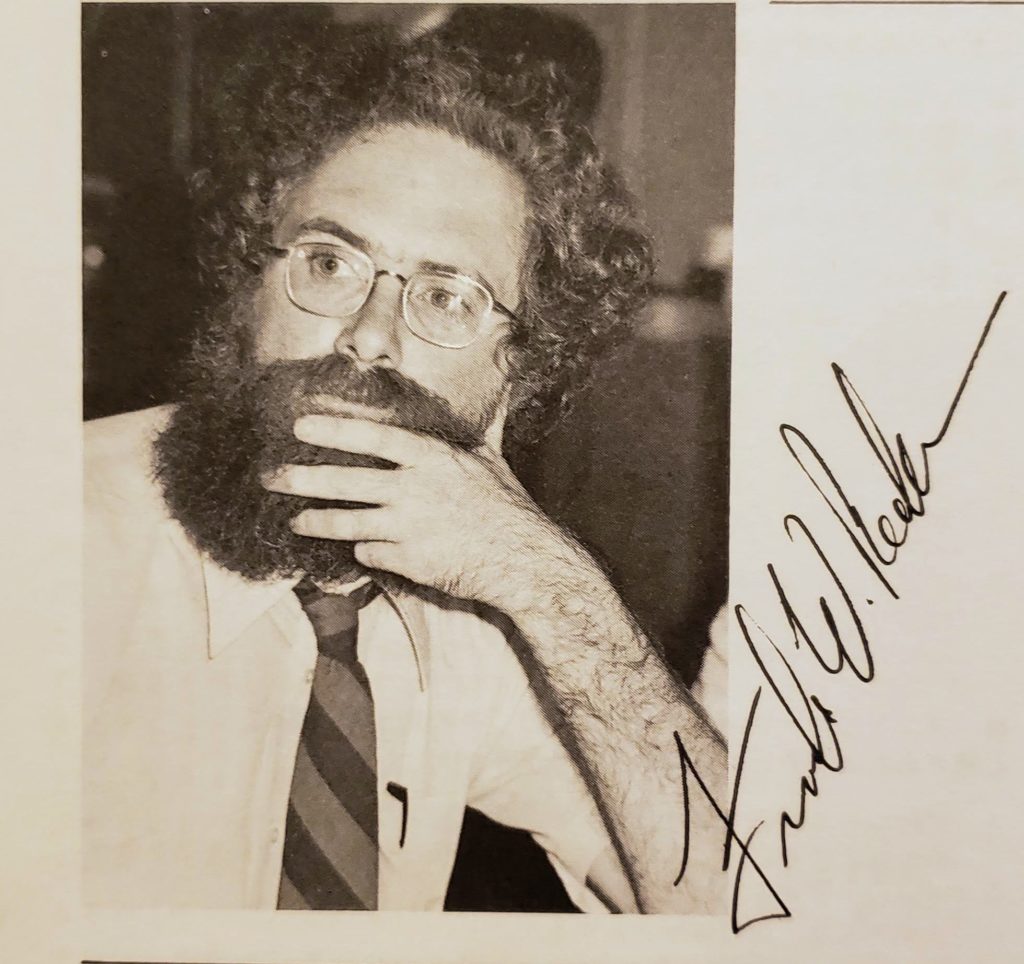
Frank, if you stumble upon this, just wanted to let you know, your shit rocks and you kick ass.

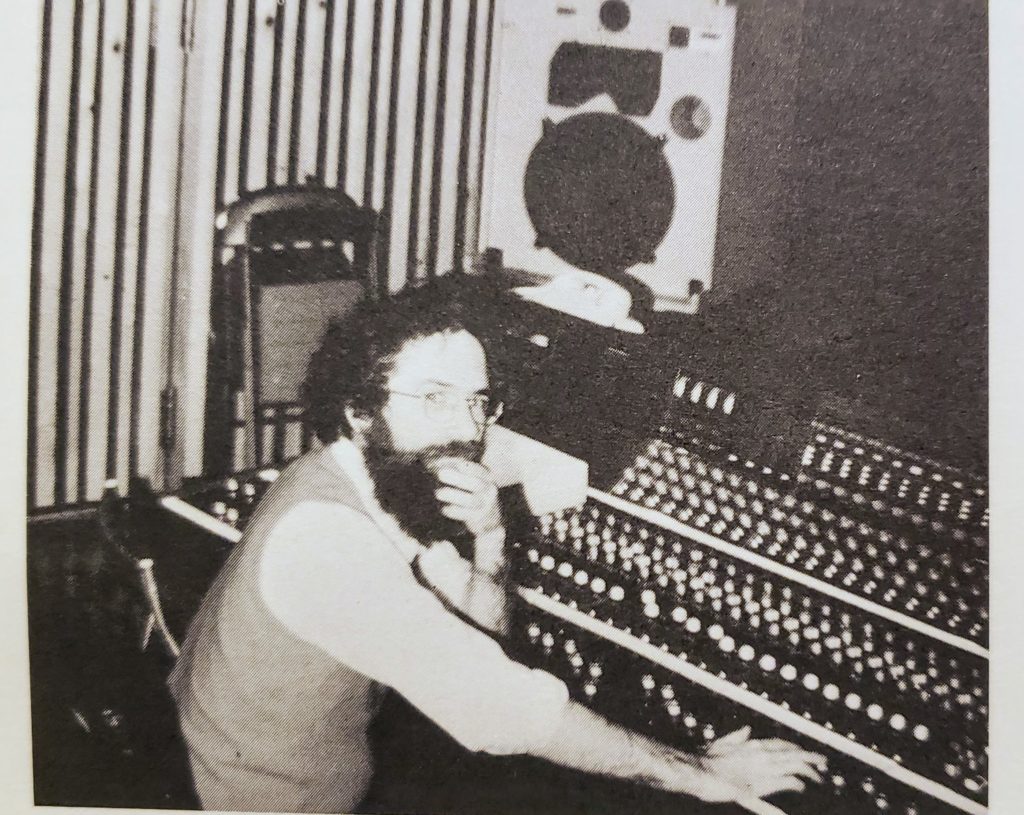
Dope beard too.

Zygoat is G.O.A.T.

Sunday, September 30th, 2018

I’m still waist-deep in my synthesizer/prog kick, and I expect I’ll be swimming in sequencers for quite a long time if I keep discovering lost masterpieces like this.

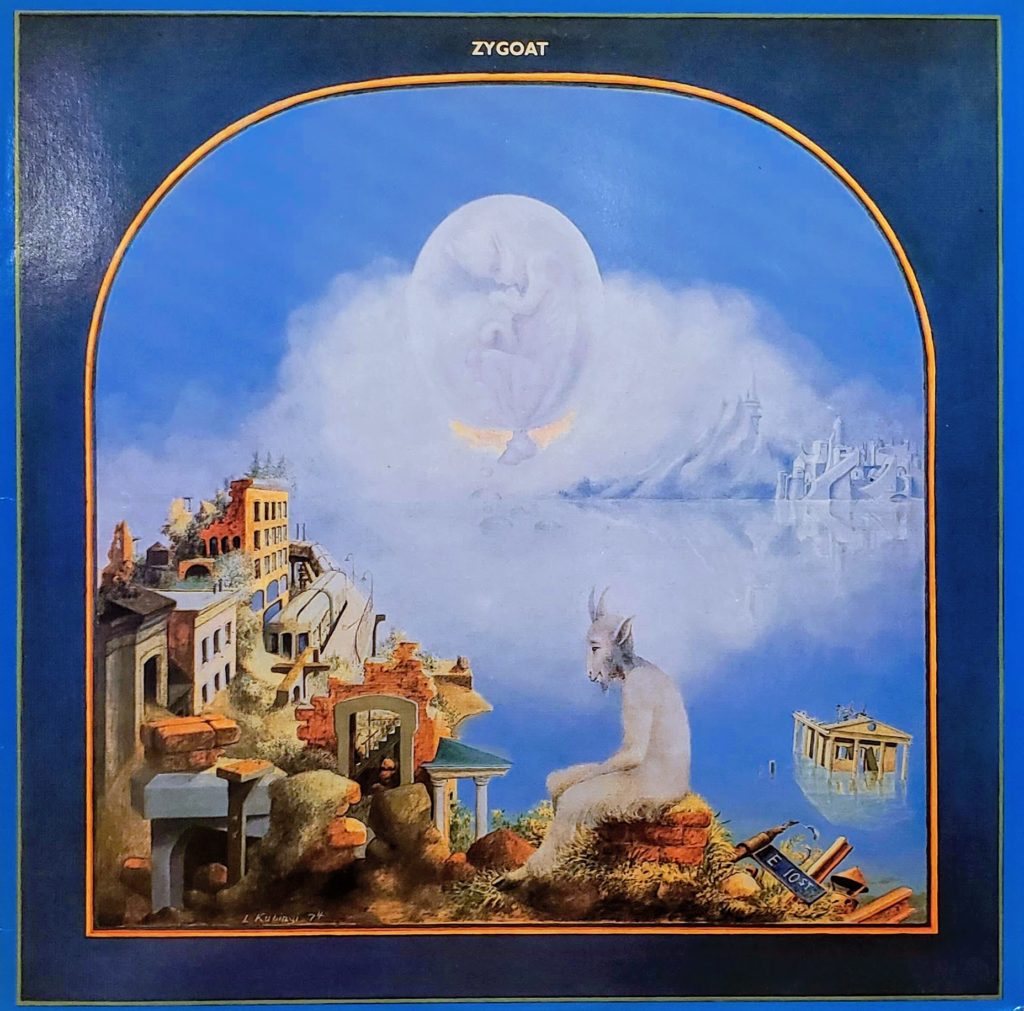
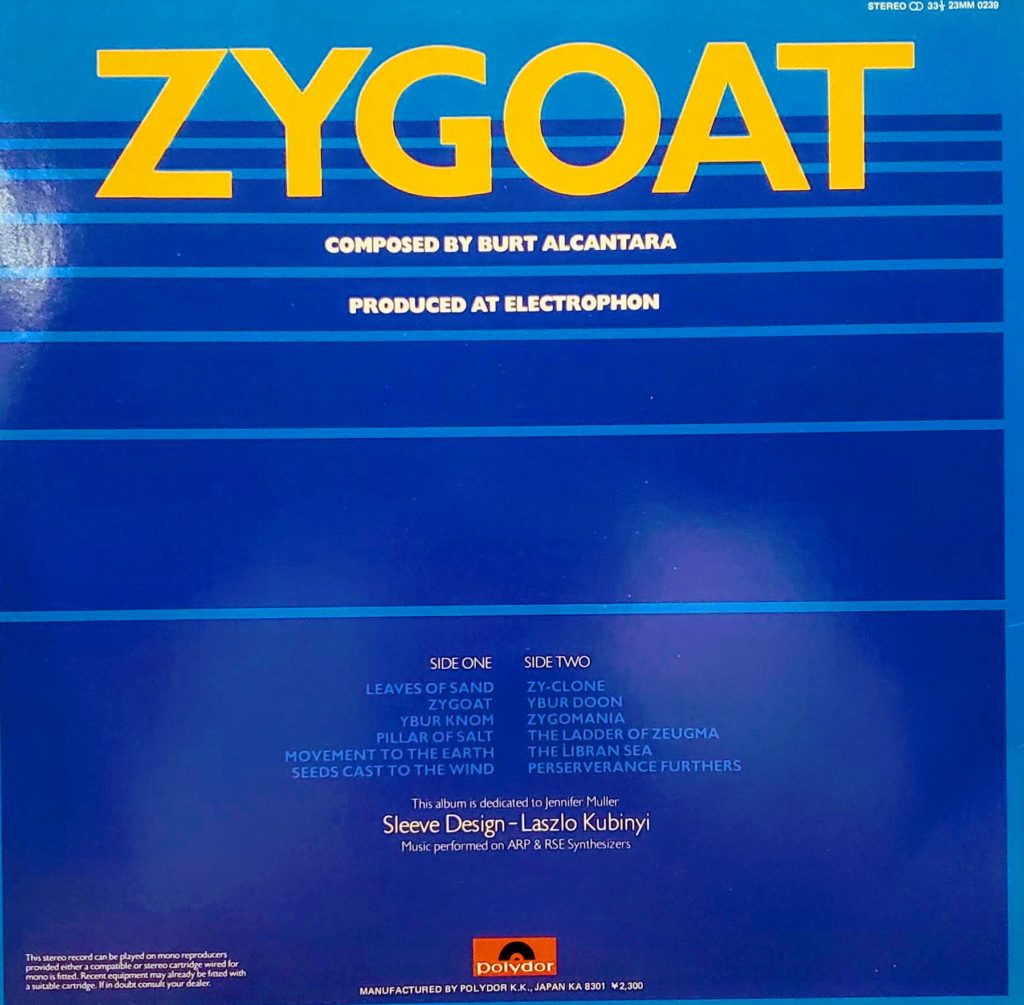
Zygoat
Side 1
Side 2

As I’ve no doubt mentioned before on this blog, most early synthesizer work was very simplistic because of the limitations of the technology. Early synthesizers were monophonic, they could only create one sound at a time. That means complex, well-arranged releases like Wendy Carlos’ legendary Switched-On Bach were comprised of seemingly endless dubs and layers, a terrifyingly complex process. While Carlos rose above these rather strict limitations, most others did not, leading to some two-dimensional, if still fun, recordings.

This is definitely not the case with Zygoat, a record filled with so many over-the-top and complex arrangements that it’s downright manic. It’s a good example of just how quickly synthesizer technology progressed in the six years between the 1968 release of Switched-On Bach and this record, which came out in 1974.

The sound here is just so unique that it’s hard to describe. There are definitely multiple synths at work here, some providing a fuzzy, distorted sound, while other give a cleaner, more symphonic, presentation. Most of the sounds themselves don’t sound entirely unique, I’m sure I’ve heard other records from the era using most of these settings and configurations. What makes Zygoat really stand out is just the tone of it all. It starts out rather basic, not too far removed from something you might hear from Tomita or even Carlos’ early work, but things escalate quickly, the pace picks up, and the record just explodes. Solos reminiscent of violin concertos (or classical guitar riffs) take dominance, as a barrage of out-of-this-world rhythms and backing harmonies accompany them. Fans of Stardrive might make a comparison with those legendary albums, but while Stardrive was funk, and while this certainly has funk elements, there’s a lot more going on here.

I guess what really gets me about this album is the pace. It has its slow spots, including an extended section where the tones are distorted and drawn out in a way that almost makes the synthesizers sound drunk (it’s pretty odd) the most memorable pieces of this album are the sections that work at a breakneck pace. When this album is firing on all cylinders, it’s just beyond words.

Zygoat is the brainchild of one man, a Burt Alcantara, but it’s nearly impossible to find out anything about him. According to Discogs this is the man’s only real release. The only mentions I find of him online are brief, and there appears to be no interview of him proper. What the hell became of this dude?

One of the few mentions I can find of Burt is in this interview with Brian Hodgson, who also worked on this album to some extent. Hodgson is a name that some of you might recognize, especially if you’re a Dr. Who fan. He was the man behind many of that show’s electronic sounds, including the iconic Daleks. After leaving the BBC, he went on to work on a few pioneering electronic albums, including fantastic works by White Noise and Wavemaker. He’s not credited by name here, but the album was recorded at his Electrophon Studios, so I imagine he was involved somewhat, if only tangentially.

I really wanted to pin down exactly what synthesizers were used in the making of this record, but that proved to be a bit tricky too. The back cover simply states that album was made using “ARP and RSE Synthesizers,” but it doesn’t go into any detail about make or model numbers. And, despite my interest in synthesizers from the era, I’m not very good at identifying them by ear. I would imagine that the ARPs that were used here were some variation of the 2500 though, as that was the big gun in the ARP line-up at the time. There might be an ARP String Ensemble at use here as well, which was one of the first polyphonic synths they produced.

What interests me more is the “RSE synthesizer” part of that credit, as I’ve never heard of that line of synths before. A quick scour through Google doesn’t turn up much either. All I could find was a brief mention in the book Analog Synthesizers, by one Mark Jenkins, where he says that the RSE model was a custom build by someone named Ken Gale, who worked at Electrophon. Other than that, I got zilch on that dude. I wonder what other albums feature these custom units, and if they sound anything like Zygoat.

So we got an unknown by unknown artists featuring unknown technology. I live for this shit and I hope you do too. In a year where I’ve uncovered so many fantastic obscure records (at least, to me they’re fantastic), this one might stand out as the absolute best of the bunch. Damn essential work for any synth fanatic out there.

I really did try to break this one up into individual tracks, but, even the track times of this record are unknown. And since most of the tracks segue together pretty flawlessly, I couldn’t even begin to tell when most of them ended and began. I thought it would be best just to leave them as is. Hope that doesn’t bother anyone.

And, as is always the case with this bafflingly obtuse obscurities, if you know anything about anyone at all who even had a remote connection to it, please let me know! I’m dying to find out more about this one!

PARTY LIKE IT’S 1992

Monday, July 9th, 2018

Well, forest fires, flash floods, and deadly heatwaves can only mean one thing: decades of inaction on climate change have doomed us to millennia of disastrous weather.

Also, time for some summer jams woooo!

Summer Hit Mix ’92
Mix 1
Mix 2
Mix 3
Mix 4

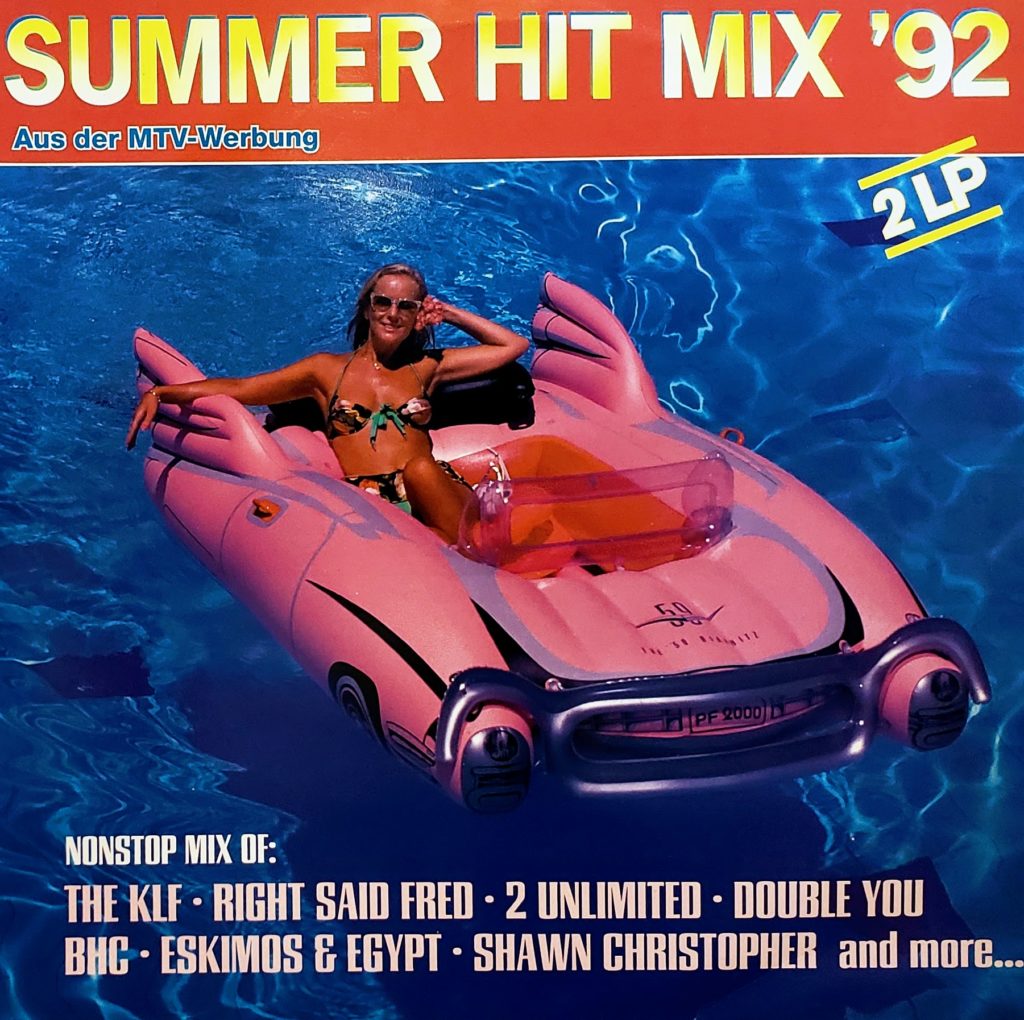
I fucking love the cover to this album, it’s like they had a $20 budget, 45 minutes, a moderately interested model and they were like “fuck it, buy a float, put her in it, and take a few pics. No, don’t worry about the lighting it’s not important let’s get this done.” There’s a Laura Branigan’s video for “Gloria” level of laziness here that I really respect.

The album itself is great though, four fantastic mixes featuring pop hits, euro-dance, house, and some hip-hop. You got some big numbers here that you probably know, two 2 Unlimited numbers, for example, but there are also some lesser-known jams that I never heard of. A club mix of the “Escape From New York” theme? Sign me up! A U 96 song that isn’t “Dos Boot?” Word! You can find the whole tracklist here if you’re curious.

These mixes were put together by DJ Torsetn Fenslau, who was a big name in the German techno scene in the early 90s before he sadly passed away in a tragic car accident in 1993. He also worked as a producer, and found huge mainstream success right before his untimely passing with the super-uber-huge house hit “Mr. Vain” by Culture Beat. And if you’re thinking, like I did before I went to YouTube to see the video, that you never heard that song, trust me, you have. In terms of insanely catchy 90s euro-house mainstream hits, it’s probably only second to “What Is Love.”

I was going to finish this post off by making a crack that the worst song on this mix is better than the best song that’s currently on the Billboard Dance Chart, but I did a quick look at the charts and found that both Donna Summer and Diana Ross remixes are currently in the top 10 so that’s just not true.

Everything on here is better than that Hasley song though because ugh fuck that thing.

Synthi Bach

Sunday, July 1st, 2018

Yuji Takahashi
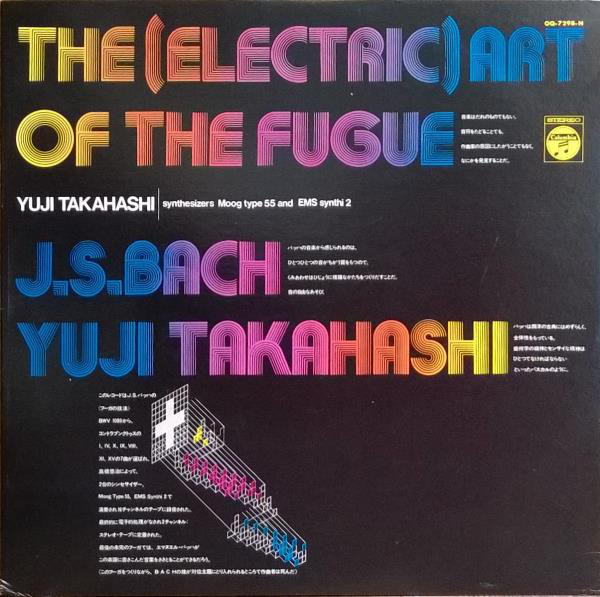
The [Electronic] Art of Fugue (Complete Album Download)

I’ve heard a lot of synthesizer renditions of Bach, so trust me when I say that this one is different.

There were a lot of electronic interpretations of Bach in the 1970s, obviously trying to capitalize off of Wendy Carlos’ Switched-On Bach. Nearly all of them (even the good ones) are pale imitations of that album that lack the sophistication and multi-layered approach that Carlos took when crafting her masterpiece. A reminder, synthesizers back then could only produce one note at a time. To create a proper Bach arrangement meant countless playbacks and tape dubs. Not everyone was up to it. Additionally, nearly everyone at the time was sticking to the similar Moogs that Carlos used. So you ended up with a lot of derivative works.

Yuji Takahashi’s take on Bach is a bit different, probably because Takahashi himself is a bit different. Takahashi is a classically-trained pianist, but he also holds an interest in the avant-garde and experimental. He started putting out albums in the late-60s, his earliest stuff being interpretations of John Cage works, while also releasing avant-garde and experimental works of his own. Even early on in his career he was working in left-field. In 1974 he put out an album with Masahiko Satoh, another acclaimed Japanese pianist, that consisted of performances on synthesizers and prepared pianos. I have no idea what that sounds like but I sure as hell bet it sounds different.

A year later, he released this. As far as I can tell, it’s the first electronic interpretation of Bach’s The Art Of Fugue, which is just one of many reasons why it stands out among the other classical Moog albums of the day. Not only is the material odd, but his arrangements are slightly more off-kilter than what you might hear on other electronic Bach albums.

A lot of that has to do with the instrumentation that Takahashi chose to use. Takahashi doesn’t just limit himself to the “traditional” Moog synthesizers of the day. Added into the mix is an EMS Synthi 2. The Synthi is a strange beast that can produce very unique sound effects, such as stark popping sounds and tones that have a unnatural drop off or arpeggio effect. Used poorly, the Synthi just creates seemingly random noises. Used correctly, it can be Pink Floyd. It has some range. Here, Takahashi uses it to pushes the limits of “music” from time to time, especially on “Contrapunctus XI,” but he shows enough restraint with the device that it never becomes grating, just supremely odd. And the more “normal” sounds of the traditional Moog help reign him in when things get dangerously close to pure noise.

I first bought this on LP a few months back, but that copy was pretty banged up. And it’s hard to digitally restore a record that uses harsh sound effects like the ones used here: they often get removed alongside the record’s scratches and crackles. Thankfully, the record was re-issued on CD a few years back and I managed to find one at not-too-crazy prices. These files are taken from that CD.

If this ain’t your thing, don’t fret. Next post will feature nothing but hot summer jams.


Happy Dopey Synths

Saturday, June 23rd, 2018

A few year back I first heard the term “synthwave” and kind of scoffed at it. Seemed to me like another made-up genre like “Nu-Rave” and “grindie.” But it stuck around long enough and I begrudgingly accept it now. Shit, even a few of my favorite artists, such as Survive and Power Glove, fall under the synthwave banner. But as much as I love synthwave, its omnipresent feeling of never-ending foreboding can be just a bit much at times. Like, I get it guys, you all like John Carpenter and Blade Runner. Would it kill you to give your songs more of an upbeat vibe just once in a while?

As I mentioned in my last post, I’ve recently been scouring the record bins for obscure prog and prog-adjacent acts that heavily feature keyboards, sequencers and other early electronic instruments. Through my purchases, I’ve discovered some real gems. I shared Lutz Rahn last time, but I also want to give a shout out to Zeus. His album Europium seriously blows my mind. It’s a perfect amalgamation of late-70s prog and early-80s synthpop. Totally amazing stuff that, much like Rahn, takes concepts and themes you’d find in 70s electronic music and places them firmly in a pop environment.

I’m also currently in love with Roland Romanelli’s 1982 album Connecting Flight. It’s like it was created in a vacuum. It seems to completely ignore the synthpop trends of the era and instead goes for a super energetic and over-the-top sound that sounds a bit like the purely instrumental disco of the early 70s, just played entirely on electronic instruments. Makes sense that this dude was in Space, a group with a similar upbeat and fun style (who I also recommend).

All of these bands are on iTunes. They’re easy to find and at affordable prices, so I won’t share them here. Instead I’m going to share an album that also gives me similar vibes, times a million.

Osamu Shoji
The Pumpkin Wine (complete album download)
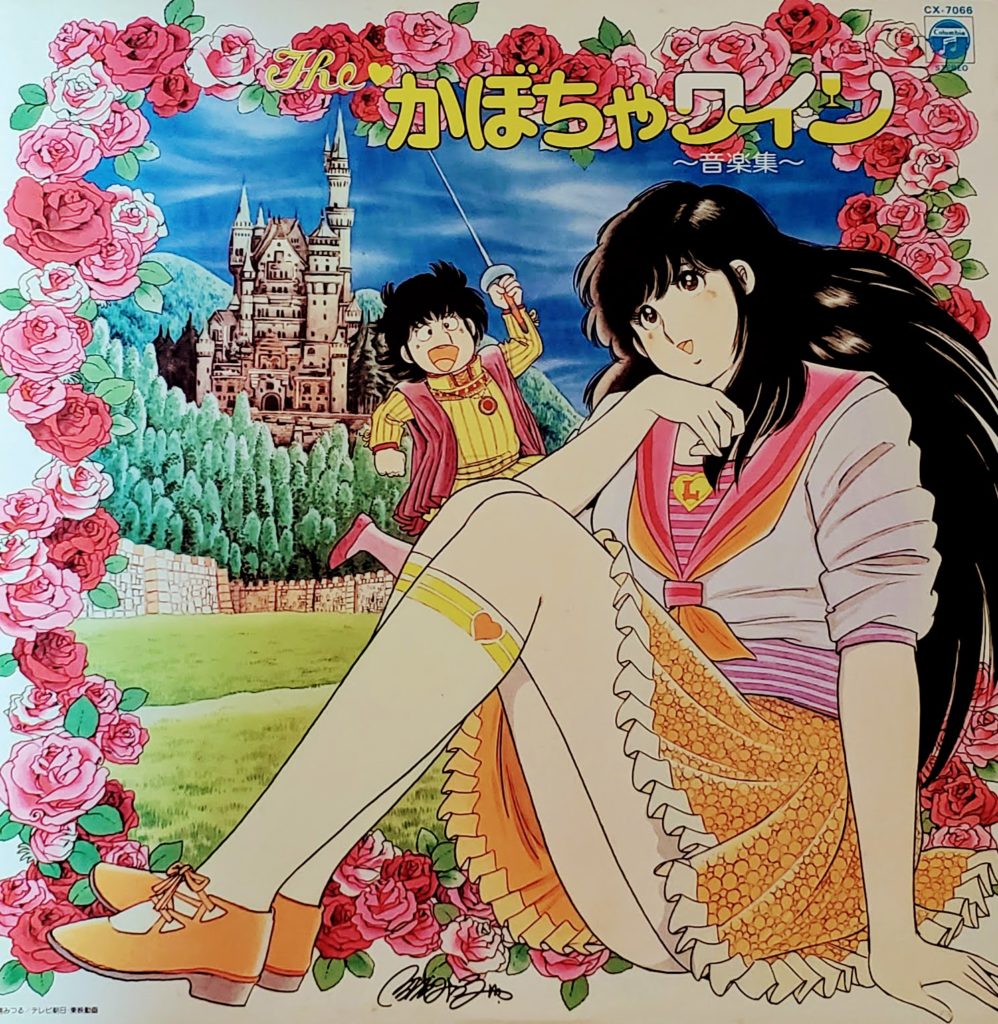
The Pumpkin Wine was a manga from the early 80s that got turned into an anime series in 1982, followed by an animated movie in 1984 and a live-action movie in 2007. This is the soundtrack to the manga I believe. That was actually a fairly common thing in Japan in the 80s. They gave manga their own soundtracks. I guess you were supposed to read the manga while listening to the LP.

Of course, I could be entirely wrong as it should be said that I know squat about The Pumpkin Wine in either anime or manga form. I bought this solely for the composer, the legendary Osamu Shoji. He sadly passed away this year, and I long for the day when his robust, eclectic and downright bizarre discography is rightfully rediscovered. He’s mostly known for his score to Wicked City, but I feel that this soundtrack is more indicative of his greater body of work; what I mean is, it’s goofy as hell.

One of the best things about Osamu Shoji was that he wasn’t afraid to go all out with his synthesizers and really try all the sounds they could produce. You don’t just hear the basic synth strings and drum beats on an Osamu Shoji piece, you get weird electronic bongos, non-stop slap bass effects, faux guitar, artificial bells, the works. This album has a track with not one, but two short synth-bongo drum solos. That’s the kind of idiosyncratic delights that Osamu Shoji specialized in.

The result is music that is cheery and upbeat. Sparkly and breezy. It’s not City Pop, it’s not jazzy enough for that, but it’s definitely a close cousin. This is music for a Sunday drive by the beach, or a stroll through an exceptionally charming neighborhood. It’s what you hear when you roll up to a town in an RPG. I get that the tones and textures used by Shoji may not be for everyone, especially those whose only exposure to synthesizer music is grimdark synthwave, but for me it’s a refreshing breath of fresh digital air. Music can be an escape sometimes. I don’t always need to be reminded that the world is a dark and scary place. Sometimes I want to be reminded that it can still, just sometimes, be a fun and happy place. Music like this does that for me. Maybe it’ll do it for you too.

Koto Vivaldi

Friday, June 15th, 2018

What’s your go to music when you need to calm the fuck down? Not chill the fuck out, but calm the fuck down? If I need to chill out, I got plenty. Banks, KLF, The Orb, a multitude of sub-standard prog, lots.

But when I need to calm down, when I need to put the anxiety dogs at bay or I need to stop thinking about any of the multitude of existential crises humanity is currently ignoring, I always gravitate to the same thing.

That’s right, obscure renditions of Vivaldi’s Four Seasons.

I know, you were totally going to guess that.

Tadao Sawai & Hozan Yamamoto
Vivaldi’s Four Seasons (Complete album download)
Tadao Sawai was a Japanese koto player. From what I can gather, dude was the Japanese koto player. The Clapton of Koto, expect with dramatically less cocaine (I assume). Hozan Yamamoto was a renowned Shakukachi (bamboo flute) performer who was well-known for his performances and original compositions.

Both often worked outside the realms of traditional Japanese music, and were some of the first classically trained Japanese musicians to work with westerners and perform western music on their respective traditional instruments. Yamamoto was performing with Japanese jazz acts in the late 60s, and in 1968 Sawai released an album of covers, featuring Koto renditions of pop tracks like “Over The Rainbow” and “Johnny Guitar.”

That same year, the two teamed up for Koto Sebastian Bach, a collection of Bach covers (duh) and this album, a full performance of Vivaldi’s Four Seasons. The album isn’t just koto and shakukachi, there’s some drum, guitar, bass along for the ride, but the koto and shakukuchi are definitely given the spotlight. It’s a wonderful interpretation, it goes well with glass of sake.

This is probably not your thing. And that’s okay! But it might be someone else’s thing, and it is my thing. So please think about that before you leave a comment whining about the music I’m sharing for free. And regardless if this is your thing or not, don’t expect many more posts like this in the future. I just thought it would be a good change of pace. Nice relaxing music for your weekend. Maybe it’ll help you calm down too.

Sure is plenty of stuff not to be calm about lately, it seems.


Yoshinori Sunahara’s Airport Of The Future

Monday, June 11th, 2018

I rarely buy albums because they look cool. I’ve probably said this before, but owning over 4,000 records spread across two continents quickly cures you of that habit.

Sometimes though, you come across something so odd or peculiar, that you feel the need to add it to your collection. Last week I came across such a record.

Yoshinori Sunahara
Tokyo Underground Airport
Music For Chicago
Preview
Stinger Stingray

Yoshinori Sunahara is a Japanese musician. I’ve mentioned him tangentially a few times now. He’s a member of Yukihiro Takahashi’s supergroup Metafive, and he’s also a collaborator on Towa Tei’s upcoming album Sweet Robot Against The Machine. Before all that, he was a member Denki Groove, an electronic act here in Japan that is oddly incredibly popular.

Yoshinori left Denki Groove in the mid-90s to go solo. He released albums at a pretty steady clip in the late-90s, but he’s slowed down his solo output as of late. His last album proper came out in 2011. I haven’t listened to all of work, but the stuff I have come across certainly has a flavor of its own, somewhat aligning with the more electronic acts of the 90s “Shibuya Kei” scene that made slight waves in the states at the time, with acts like Pizzacato Five and Cornelius getting some attention internationally.

During the late-90s, Yoshinori went full “lounge pop,” just like his frequent collaborator Towa Tei. I bet their house parties were dope as fuck. In 1998, he released two albums that I feel real exemplify his lounge dance-pop style; The Sound of the 70s, followed by Take Off and Landing. Both are obsessed with the international jet set culture of the 60s and 70s, specifically the style of Pan Am airlines. Hell, The Sound Of 70’s opens with a remix of music Pan Am would play on their flights.

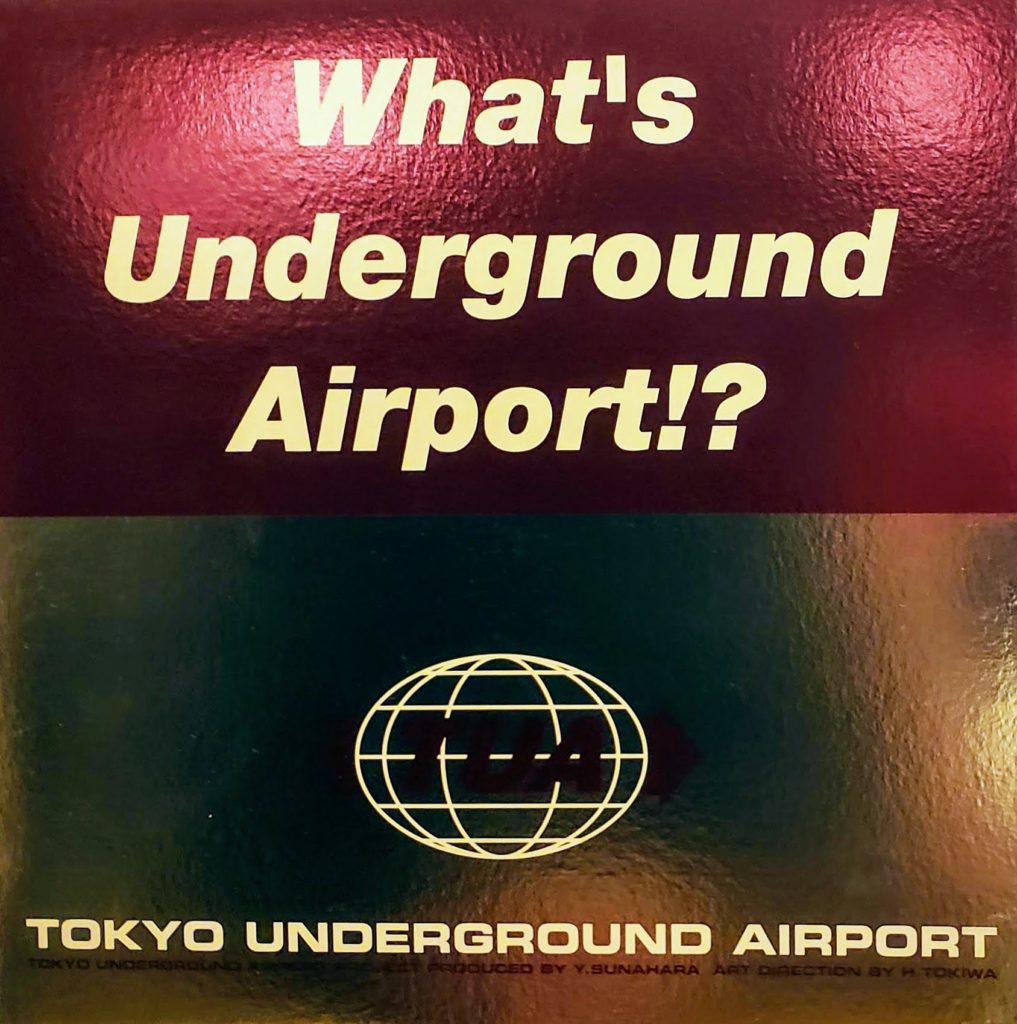
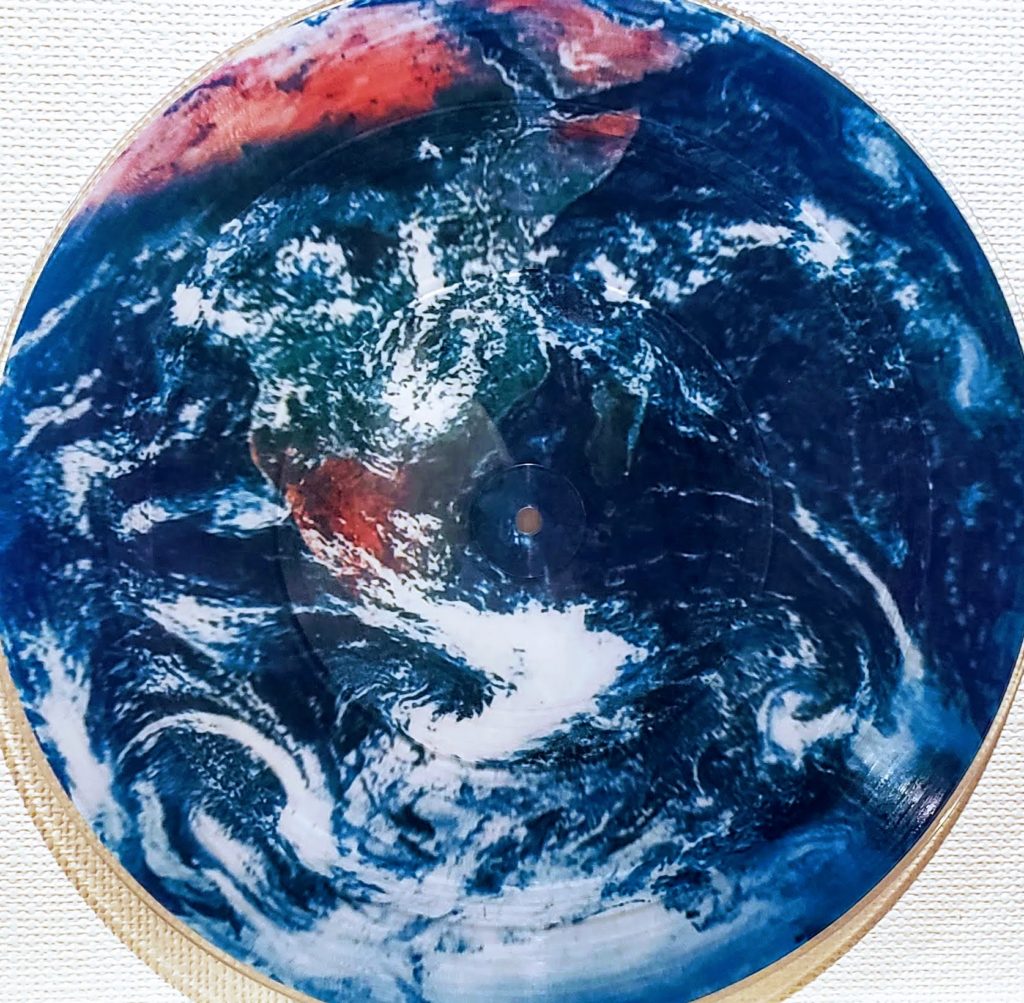
Yoshinori took this obsession to the next level for this single promoting The Sound Of Take Off and Landing, which I’m sharing tonight, an over-the-top deluxe style package that goes out of its way to express the magical retrofuturistic world he wanted to surround himself in.

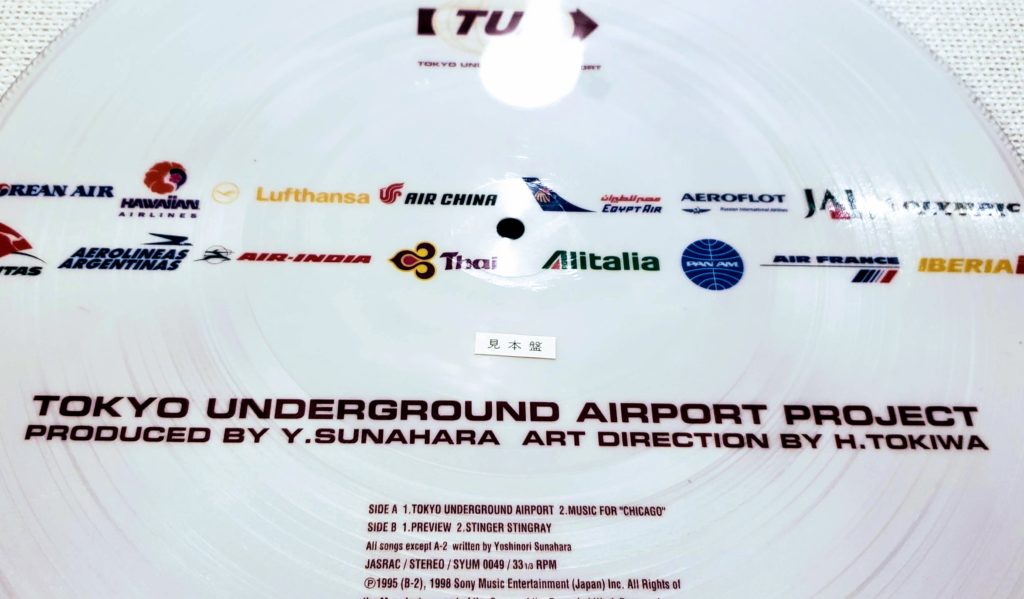
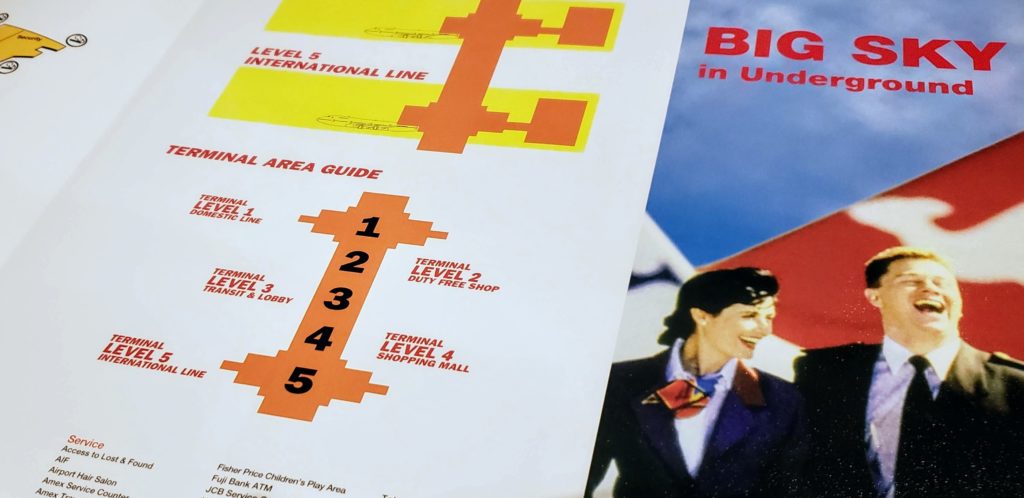
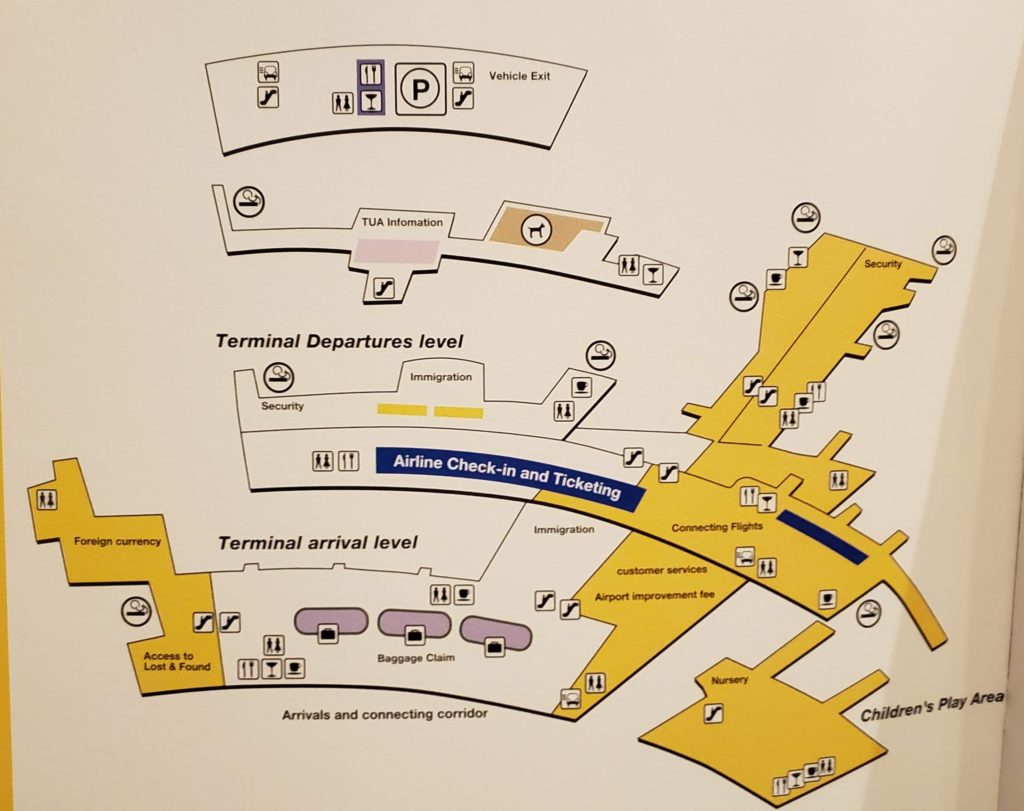
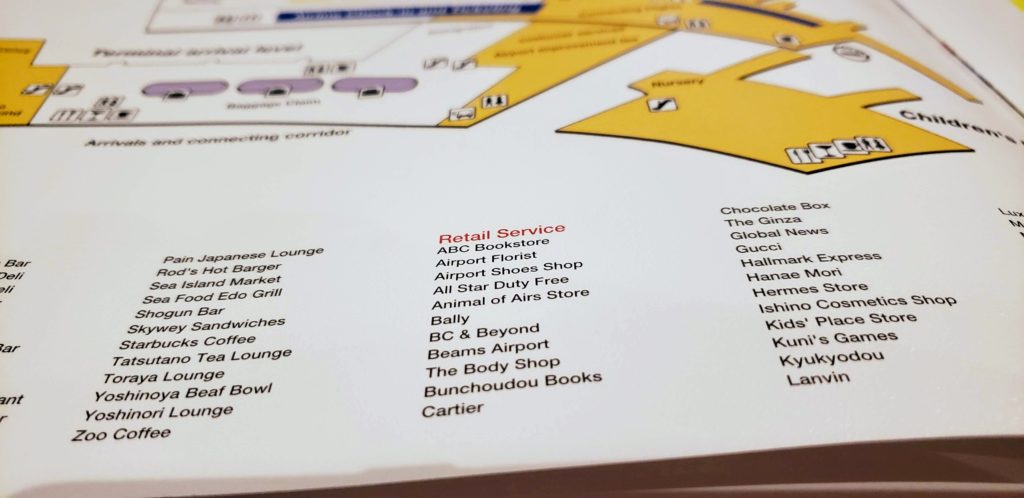
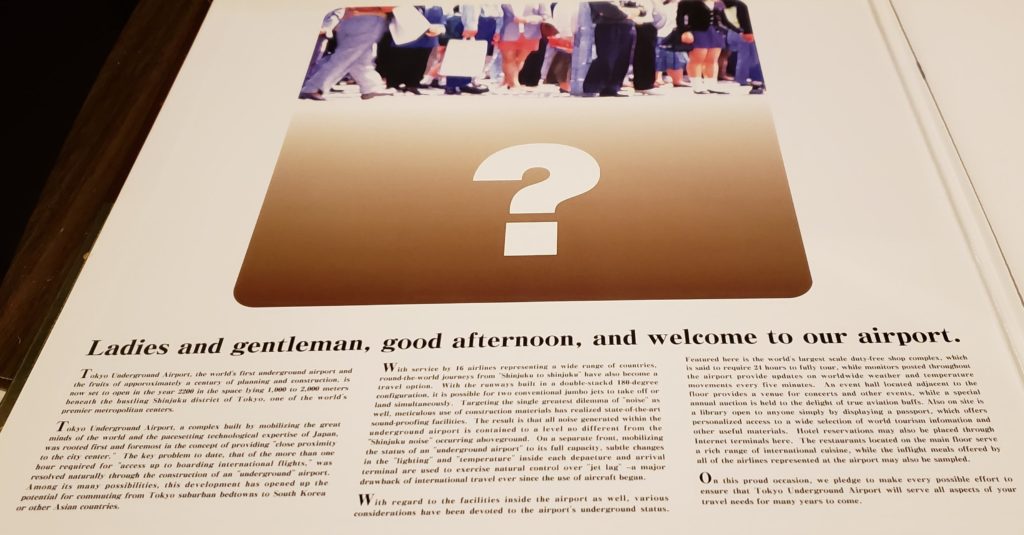
The presentation outweighs the music. Everything here is created to promote the fantastical Tokyo Underground Airport. The booklet inside features a detailed (future) history of the airport, and includes schematics showcasing the airport’s layout (complete with a list of businesses contained in the shopping center) as well as descriptions of every country serviced by the mythical flight center. The package even includes a sticker sheet with the (real) airlines that would travel through the underground depot. This single was available on CD, but I can’t imagine it would carry the same weight or work as well to transport you to the world Yoshinori was trying so hard to create.

The world-building continues onto the record proper. The first track is a nearly 14-minute guide to the Tokyo Underground Airport, and it goes into an insane amount of detail, giving the minutia an in-and-outs of nearly every aspect of the airport. The recording occasionally gets distorted and twisted, giving it a found object feel, like it’s some sort of damaged recording found by archeologists in the distant future.

Track two is a b-side “Music For Chicago,” that I believe is exclusive to this release. It has a vibe that I can’t pin down. But I feel like it’s something that would’ve played at an exhibit in a World’s Fair or something. “Preview” is a preview of the future featuring narration about the uptopian world Sunihara dreamed of, with music from the album proper. Finally, “Stinger Stingray” is an album cut from Yoshinori’s solo debut Crossover, albeit in a slightly different mix. While it’s not taken from the same thematic piece as the rest of the recordings, it’s style fits well enough.

What an amazing piece of design. A lot of deluxe packages today don’t come close to the level of detail in this. And damn, imagining this dream airport of the future does it Narita Airport suck even more.