Archive for the ‘Complete Albums’ Category

Synthetic Space – Early Japanese Synthesizer Tunes

Thursday, July 8th, 2021

I’ve been meaning to post this for over a year now. I kept putting it off because I wanted to do more research, or even pay someone to translate the liner notes. But I realized that it’s more important for the music to get out there than it is for me to spend literal months reading machine translated Japanese webpages, hoping to find tiny morsels of info that a small handful of people might find moderately interesting. So here it is.

Synthetic Space – Complete Album Download

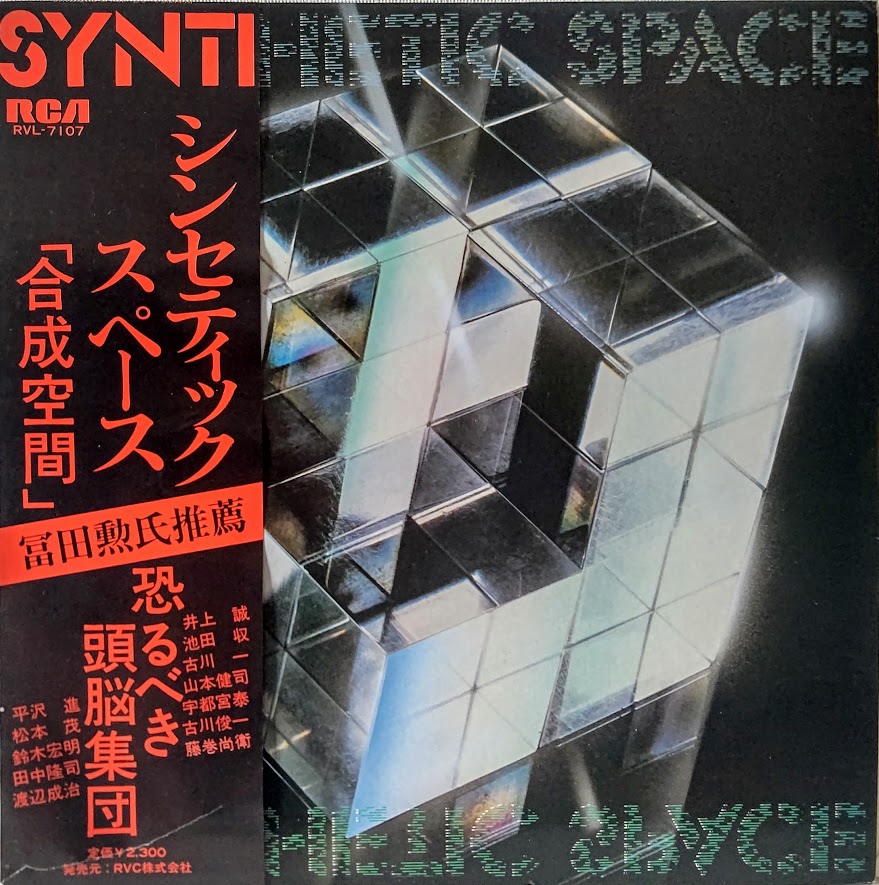
Synthetic Space was released by RCA Japan in 1978. It is a collection of synthesizer music created mostly be amateurs or non-professionals. They were the winners of a contest that was sponsored by a Japanese magazine called Weekly Playboy, of no relation to actual Playboy. From what I found online, judges for the contest included members of the early synth act The Bach Revolution, and synthesizer pioneer Isao Tomita, who also served as the album’s producer.

There are some notable people on this compilation.

Track one is credited to three people, one of which is Makoto Inoue. He was a member of Hikashu, a very strange kind of post-punk, experimental act that formed in the late 70s and released several interesting albums in the early 80s. He’s also a member of Inoyama Land, an ambient act that was on Yellow Magic Orchestra’s Yen Records in the 80s. Their debut album, Danzindan-Pojidon, is a masterpiece. Inoue is also the person behind the Godzilla Legend albums, amazing compilations featuring unique adaptations of music from Godzilla movies. I highly recommend those. Inoue’s track on this album, “Sunset World,” serves as the album’s opener. It’s a highlight, a fantastic, slightly creepy, track with a slight industrial bent.

Another major player in the Japanese electronic scene who is present on this album is Susumu Hirasawa, who is the main songwriter, guitarist, vocalist, and synth player for P-Model, a hugely influence Japanese post-punk synth-pop act from the late-70s and early-80s. While YMO was taking synthesizers and using them to craft elegant, sophisticated pop music ala The Human League, P-Model were much more interested in combining synths with more out-there and abrasive sounds. They’re much more in line with acts like Devo or early Talking Heads, really crazy stuff. His track on here is called “Cosmic Dancer.” It is of no relation to the T-Rex track. It kicks ass.

There might be some other people of note on this compilation, but I can’t seem to find any. The Discogs pages for most of them are completely blank. Hell, for a few it’s even hard to judge how to pronounce their names. Kanji names can have different pronunciations, and with no English frame of reference to go by on a few of these, I just left their names in kanji to play it safe.

This is early synthesizer music, and while a lot of those collections of early synth music skew towards the atonal, experimental, and avant-garde, this one is much more listener-friendly. Yeah, it’s a bit out-there at times, but most of these songs are recognizable as songs, really good songs at that. I would not be surprised if everyone involved with this record went on to work in the recording industry, if not as performers like Inoue and Hirasawa, then as behind-the-scenes engineers or producers. This is awesome stuff. It’s also insanely rare and from what I can tell, I’m the first person to share the complete album online.

I actually have another album like this, also comprised of contest winners. I hope to get that one up sometime this year. I promise.


Enka Synths

Sunday, April 4th, 2021

I hope you’re not sick of me talking about my podcast, Cinema Oblivia, because I’m about to talk about my podcast, Cinema Oblivia.

Sorry (not sorry).

The podcast has actually been going pretty well. It’s not setting the world on fire or anything like that, but I didn’t expect it to, especially out of the gate. I’ve been really happy with every episode so far. It’s been a while since my last post here, and I’ve put up quite a few episodes since then.

On March 18, Madeline Koestner and I talked about William Friedkin’s amazing forgotten film Sorcerer, a wild flick about a group of goons transporting nitroglycerin through a South American hellscape. It’s a fantastic movie (with a soundtrack by Tangerine Dream!) and you should totally watch it (and listen to that episode). After that Emma Buntrock-Miller joined me to discuss Brian De Palma’s wacked-out horror-musical Phantom of The Paradise. This movie stars Paul Williams and was a major influence on Daft Punk, so if that sounds cool to you, maybe check it out.

Last week I put up the strangest episode to date. Dr. Sparkle of Chrontendo fame called me up to talk about Seeds, a batshit crazy movie by the late not-so-great Andy Milligan. Even if you haven’t heard of that movie (and let’s be real, you probably haven’t) I think the episode is well worth a listen; we dive into some pretty cool topics like lost films and gay underground cinema.

I’ve already recorded the bulk of the episodes that are going up in April and I’m excited to share them with you. This week Shane Bettenhausen and I talk about the disco nightmare that is The Apple, and the following week an old friend of mine joins me to discuss the 1983 video game sex comedy (yes, really), Joysticks. After that, Erik Pepple, a film scholar and another old friend of mine, comes on for the first Cinema Oblivia double-feature, Rad and BMX Bandits! And finally, I’m very excited to say that I’m closing out the month talking about one of my all-time favorite movies, Bring Me The Head of Alfredo Garcia. Joining me on that episode is none other than Giant Bomb’s own Alex Navarro! Wow!

Let’s celebrate with the most obscure album I’ve ever shard on this site. Seriously. I think it’s the all-time winner.

Beautiful Shateau & Synthesizer
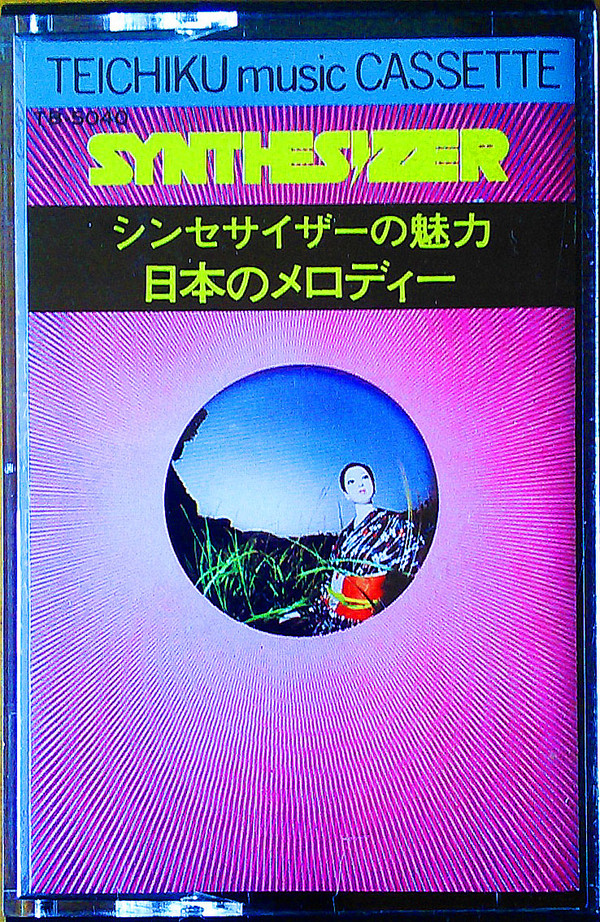
The Charm of Synthesizer: Japanese Melody (Complete Album download)

I’ve been sitting on this one for a while now. I keep saying to myself that I’m going to dig deep and try to uncover more about it, but each time I try, I turn up with nothing. Here’s what I know.

This is a very early project by Matsutake Hideki, aka Logic System. I’ve written about him before, (hell, I even met him once). He was the synthesizer programmer on the early Yellow Magic Orhestra albums, and he’s had quite the career aside from that both as a solo artist and a studio musician. Here, he’s working under the odd (and incorrectly spelled) name of Beautiful Shateau & Synthesizer.

From what I can gather, Matsutake released three albums under this name; Synthesizer 美しき日本の抒情; シンセサイザーが奏でる日本の名歌 – 都会の夜; and this one The Charm of Synthesizer: Japanese Melody. Again, from what I can tell, the first two were issued on LP, while this may have been a cassette only release. There may have been more “Shateau” albums too, I just don’t know.

I’m sorry for the all the caveats and uncertainty, but I literally can find zero information on these albums online in English. And what little I managed to find in Japanese haven’t been much of a help. Again, I can’t even find release dates on these albums. That’s insanely rare for Japanese albums. Most Japanese records print the release date on the cover, down to the day of the week. I don’t know why these are so lacking. I’m sure some of you are saying “well, just go to Discogs,” but they don’t have the release dates either. And trust me, I would know since I entered most of the data and took all of the pictures for all of the releases on the Discogs page!

However, one of the “Shateau” tracks did appear on the Logic System box set that came out a couple years back. On there, the track was given a release date of 1976. That’s the same year that Matsutake released his very first album under his own name, alongside fellow Japanese synthesizer pioneer Tsuneaki Tone, Pop Memories on Moog III. Again though, I really should caveat that with another maybe. There is a “III” in that album’s name, after all. They could have recorded something even before that. Still, I feel that it’s safe to say that the “Shateau” releases probably came out no earlier than 1975, and no later than 1977. These albums are very simple.  By 1978 he was experimenting with more complex arrangements, and in the following year he was working with YMO on their debut record.

All the songs on all the Shateau albums are covers of enka songs. Enka is a genre of music that’s often described as “traditional Japanese pop music” and I guess that’s accurate. It’s very pre-rock type stuff. Almost exclusively ballads. It’s the kind of shit that Japanese grandparents just fucking go apeshit for. Obviously, I’m not familiar with the original versions of any of these tracks. So I can’t tell you how many liberties Matsutake is taking with the source material. Given how barren and simple these tracks are though, I feel it’s safe to say that these are probably relatively faithful to the original versions, just like a lot of other early synthesizer covers of pop tunes.

Despite my complete lack of cultural awareness for anything on this album, I do really enjoy listening to it. Most enka songs are usually sad or melancholy, and it translates really well to the minimal arrangements that Matsutake put forth on all of these releases. They’re all so bizarre, like music out of time, obviously very old but recorded in a (then) very new way. Listening to them transports me to another reality, a retro-futuristic world where everyone is dressed like 1950s gangsters, but somehow all have cyberpunk gear hooked up to their trench coats. It’s detached and unfamiliar to anything else I’ve ever heard. It’s so my jam.

None of the Shateau albums I have sound particularly great from an audio perspective, sadly. The records are all pretty banged up, and this tape has seen better days too. Of the lot, I think this tape rip is the best though. It’s a little muddled, and there’s a weird audio glitch in one track that I just couldn’t remove, but overall it’s very clean and clear. I prefer a slightly muddy recording to a heavily scratched one, that’s for sure. If the quality bothers you, I recommend listening on your speakers instead of headphones, it sounds better that way for sure.

Let me know what you think of this one in the comments. I know it’s really out there, but I it’s so fascinating to me.


The Funky Monkey Magic of Donkey Konga’s Hottest Hits

Thursday, January 28th, 2021

I’ve been in and out of lockdown since March, but the one I’m currently in has been the hardest, and is soon entering its third month. And since Japan has not even approved a vaccine yet (because racism and stupidity), who knows when it will end.

What I’m saying is, the longer I can’t leave my house, the more likely it is I keep buying shit like this on Discogs. You can decide whether or not that’s good or bad.

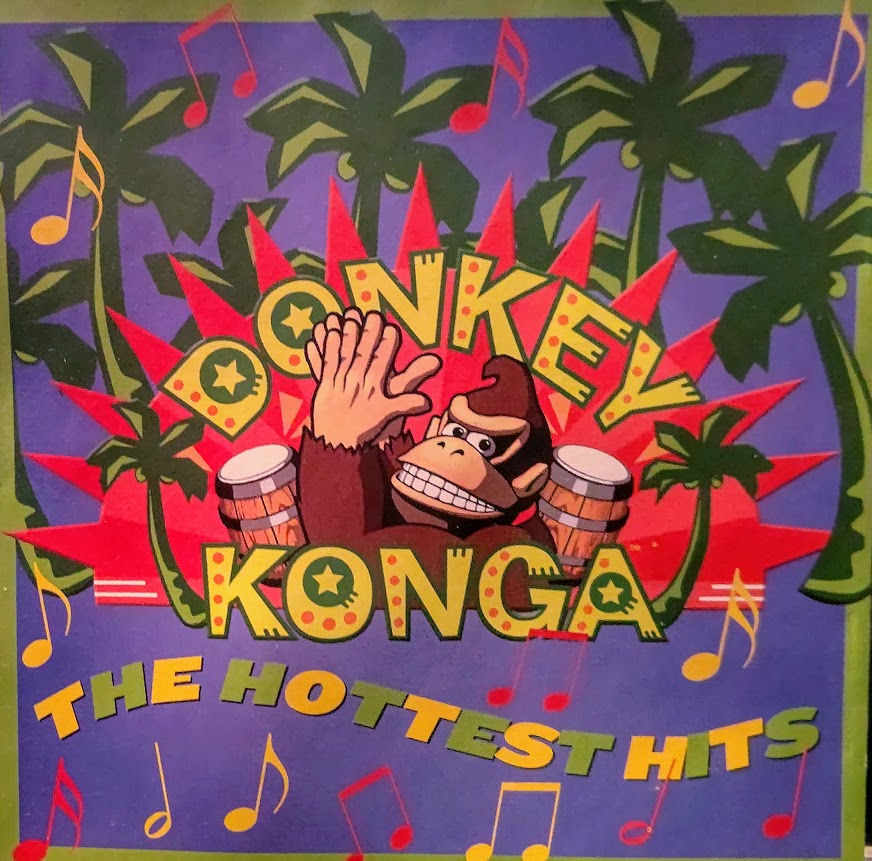
Donkey Konga – The Hottest Hits
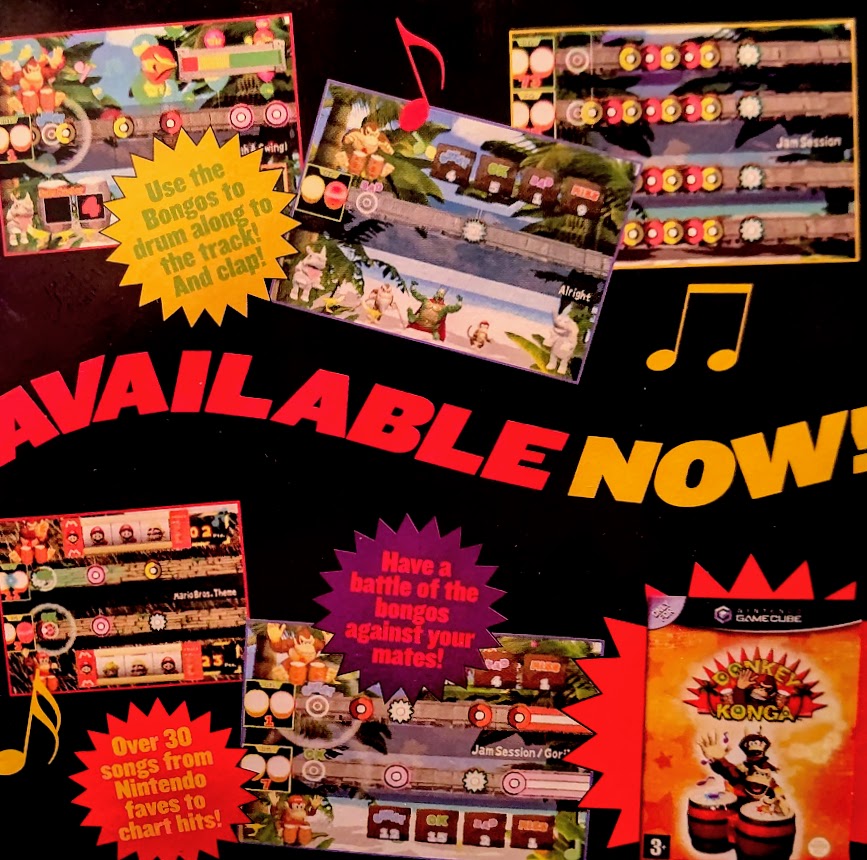
I never played Donkey Konga. It came out when I was living in a small apartment and had a roommate. Our relationship was already tumultuous, if I had started banging on plastic conga drums at all hours of the day he probably would’ve killed me. I love the idea though, and when its safe for me to go to Akihabara again and make regrettable purchases in person as opposed to online, who knows, I might pick it up. Does it even play nice on 4K TVs though?

I had no idea this album even existed. I stumbled upon it on Discogs just by typing “Nintendo” in the search field and digging through the results. Apparently it was a promo release that was included with some copies of a Nintendo magazine in Europe. It’s a very short CD. While it has seven tracks in total, each of them are very brief, leading to just a paltry 13 minutes of music, which is why I just went ahead and uploaded the whole thing.


The tracks included are:

  • Super Smash Bros. Melee Theme
  • Donkey Kong Country Theme
  • DK Rap
  • Donkey Konga Theme
  • Super Mario Bros. Theme
  • Rainbow Cruise
  • The Legend of Zelda Theme

Some of these are new arrangements, while others are just slightly modified or abbreviated edits of previously available versions. The Smash Bros. Melee Theme is similar to the original, from what I can tell. The DK Rap also doesn’t sound that different, although it is shorter. It cuts out after the third version. You can decide for yourself if that’s a good thing or a bad thing. I think the Donkey Konga Theme and Rainbow Cruise tracks are identical to their original versions that appeared in their respective games also.

However, the Donkey Kong Country Theme seems to be a new arrangement, it’s definitely CD quality audio and not a rip from the SNES game, that’s for sure. It’s a fun take on the theme too, very big band in the way that many of Nintendo’s themes are when they get a proper CD release.

For me, the real highlights of this disc are the arrangements of the music from Zelda and Super Mario Bros. I think that both are original versions that were made for Donkey Konga, meaning that they were never released on any other CDs or games. As someone who has about a dozen different versions of the theme to Legend of Zelda, and god knows how many variations of the Super Mario Bros. Theme (official and otherwise) I can’t be 100% positive of that fact, but I’m fairly certain.

I really like both of these arrangements. They have that big band sound that I already mentioned, but they got a jazzy vibe to them. They’re a bit looser and goofier. This is especially the case with the Legend Of Zelda Theme. That’s not one that usually gets an upbeat, percussive, fun mix. Nintendo likes to treat that number with prestige and gravitas with a full orchestra more often than not. It certainly doesn’t often get remixed into a calypso jazz number. I imagine Link slaying some Moblins and then meeting up with Buster Poindexter for a conga line when I listen to this. Great stuff.

I have a lot of CD singles and other weird shit coming from Discogs soon. Some video game music, some not. If you were jonesing for some old-school remix-focused posts like I used to do “back in the day” I have at least two of those planned as well.

As always, stay safe out there. May the Donkey Kongas give you the strength to go on.

Even more Japanese synthesizers, now with anime

Sunday, November 29th, 2020

My move to my new apartment is really kicking into high gear now. Since my new place is in the same building as my old place, I’ve been slowly moving a few things over everyday, as much as my back will allow. All my records are currently at my new place, as is my record player. This, coupled with a scary resurgence in COVID cases here in Tokyo, means that I can’t rip any LPs at the moment. Thankfully, I have an impressive backlog that I have to get through. However, nearly everything in said backlog is more weird-ass Japanese electronic shit. Or Madonna. So I hope you like stuff like this. Or Madonna. Cuz that’s what I have to offer in the immediate future.


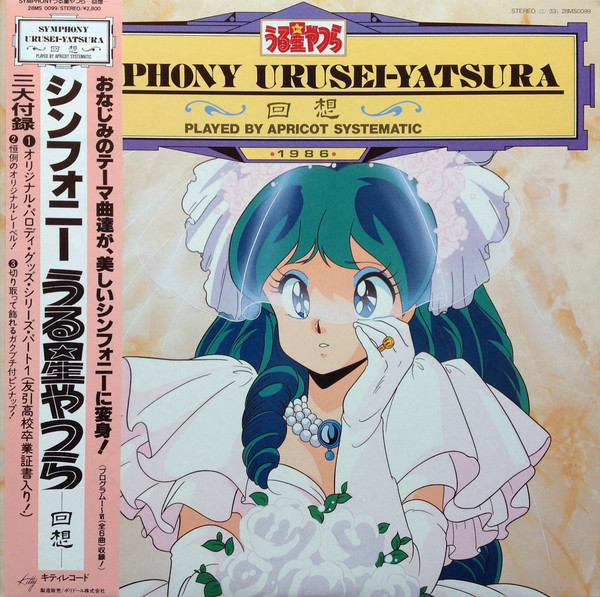
Symphony Urusei Yatsura

I’m not all that into anime, at least not anymore. I was a teen in the mid-90s after all, so I was super into it then. I owned Akira on VHS tape, watched Ghost In The Shell a million times, rented weird random shit like Gunsmith Cats and Riding Beam, and even may have covertly sneaked out some “adult” anime out of my dad’s video store from time to time. But as anime got more omnipresent in the early 2000s, I checked out. I think the last series that I followed obsessively was Cowboy Bebop, and even then I didn’t finish it.

One anime that I always knew of, but never really engaged with, was Urusei Yatsura. I don’t know how, why, or when, I’ve just seemingly always known of its existence. Perhaps laserdiscs of it graced my local Suncoast Video back in the day, who knows.

I finally watched Beautiful Dreamer a couple years ago, the second and most widely regarded movie in the Urusei Yatsura series. It totally blew me away. Not only did it have an incredible story, but it was full of gorgeous, surreal images. I learned where 8 million vaporwave Tumblrs got their gifs from. I super recommend it. Even if you’re not an anime fan I’d say it’s worth checking out if you’re into sci-fi, philosophical films, or just weird shit.

However, I haven’t checked out any additional Urusei Yatsura content since then, which is a roundabout way of explaining that I don’t really know the origins of the music on this release. I know none of the tracks here were in Beautiful Dreamer, but I couldn’t tell you if they showed up in any other movies or OVAs from the series. There are a lot!

So what the heck is this exactly? Again…I don’t really know! It’s a very strange release. Like the Digital Trip albums that I love so much, I think it’s an all synthesizer re-imagining of music from Urursei Yatsura animations? Maybe? Or it could be a collection of entirely original music that just happens to have the Urusei Yatsura name on it. A lot of manga in the 80s had “soundtracks.” Bubble economy, yo. I tried to do a bit of research for this, and I came across some references to a laserdisc of the same name. It sounds like some sort of longform AMV, with scenes from various films and OVAs in the series set to music. I imagine this might be the soundtrack to said laserdisc. But, like I said, this is 90% speculation on my part. Like so much of what I’ve been sharing lately, English information is nearly nonexistent.

Whatever the source, I sure do dig it. Aside from what sound like authentic Japanese instruments, this is all synthesizer. And like so many synthesizer albums from Japan that were coming out at the time, it’s playful as hell. It bounces back and forth between styles and sound effects like a rubber ball on speed. One second its a ballistic industrial explosion reminiscent of early Art Of Noise, the next it’s a classical Japanese piece, before transforming again into something that sounds like a pastiche of Close Encounters of the Third Kind, then there’s ragtime! Why not!. It’s a mile a minute, never boring, and fantastic background music for writing or packing up multiple boxes of records. Trust me.

The album is credited to “Apricot Systematic,” but I think the real person behind the album was Fumitaka Anzai. In addition to his work on the Urusei Yatsura series, he not surprisingly contributed to the Digital Trip album series as well. He also was a member of TPO, a fantastic, batshit bizarre Japanese synthpop act from the early 80s. He was also a member of Crosswind, a better-than-average late-70s/early-80s progressive rock act.

If you listen to this and dig it. I suggest checking out some of the Digital Trip albums. I’ve mentioned them many times before, they’re fantastic digital synthesizer reworkings of classic anime themes. I featured the Lupin one here a few years back, and there are also excellent albums in the series that feature music from Nausica, Bubblegum Crisis, Gundam, and many other classic anime titles. They’re all out-of-print, but you can find some good ones on Discogs and Amazon Japan at more than fair prices.

In the meantime, enjoy this slice of Japanese 80s ephemera.

Japan has four synthesizer seasons

Sunday, November 15th, 2020

I haven’t posted anything in a couple of weeks. I’m in the middle of a move right now (great timing, I know) and that’s been taking up a good chunk of my time. But boy, a lot sure has changed in the world since I last wrote anything here, huh? Shit, a lot’s changed in the time between me starting this post and ending it!

Trump lost! Yay! Good!

COVID cases are spiraling out of control! Boo! Bad!

In conclusion, October and November have been a land of contrasts.

My move to a new apartment is still ongoing and will take some time. I’m not leaving Japan, don’t worry. Shit, I’m not even leaving my current building. I’m just upgrading to a bigger place so my boyfriend can move in with me (double yay). But I have about a month to go before the move is final and I still have to buy some more furniture, hook up internet, schedule the movers, get rid of a shitload of junk I don’t need, and arrange to have someone from Disk Union come out to buy an extra few hundred records that I don’t want to lug up to my new place because I already have so many records that I’m going to have to get custom shelves built once I get settled in the new apartment.

I’m not an addict you’re an addict shut up.

Let’s enjoy the impending end of the the orange autocrat with some relaxing (or excitng?) synthesizers and keyboards.

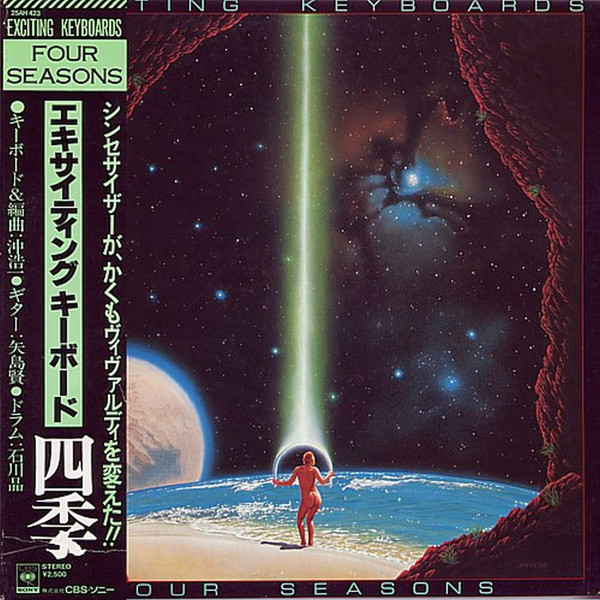
Koichi Oki – Exciting Keyboards: Four Seasons

It’s funny, for some reason I’ve been thinking about Vivaldi’s Four Seasons quite a lot lately. I wonder why.

This is not the first version of Four Seasons that I’ve shared on this blog. Shit, it’s not even the second. It’s the fourth. One was an all koto arrangement, while the other two were largely synthesized affairs. All were from Japan. Japan sure loves arranging Vivaldi. I think that’s because Japan has four seasons.

That’s an English teacher joke and trust me it’s hilarious.

This rendition of Vivaldi’s classic work is by a man named Koichi Oki. He released a few albums in Japan throughout the 1970s, and his work represents a unique subset of the Japanese record market of that time. Nearly all of his release were made, marketed, and sold solely to promote Yamaha keyboards. There were a ton of these records in the 70s and into the 80s here in Japan. The sub-standard ones really fill up the bargain bins. Yamaha really wanted people to know about their electone line of electric organs.

Oki’s albums aren’t even shy about this. On many, the Yamaha branding is downright omnipresent, and the name of the electone or synthesizer he’s playing on the album is often name-dropped in the album title as well. You have titles like Yamaha Superstar! Koichi Plays GX-1, and Koichi Oki Meets GX-707. These are basically demonstration records that Yamaha had the audacity to slap a price on and sell.

And I’m glad they did! Because the good ones are really good. This album owns. Comparing it to the previous synthesizer Vivaldi albums I shared, I would say it’s not as good as Frank Becker’s version of the suite, but it’s better than the Shigeaki Saegusa version. I really like Becker’s take since it’s just synthesizer and violin. Saegusa’s version features much more of a full band, almost too much at times. This one is a good middle ground. This record was made to showcase Yamaha’s keyboards after all, so they get the center stage, but a bit of guitar and some rad drumming on here as well. The opening of the Summer section, for example, slaps with some fantastic banging on the skins. I was not at all surprised to learn that the drummer on this is Akira Ishikawa, a legendary jazz drummer in Japan whose records are often sought after by DJs and producers because if their sick beats. Dude is a legend.

Of course, this is an Oki abum, so he takes the spotlight for most of it, and I really enjoy the sounds he’s able to pull out of that electone. The electone was an electronic organ, but I think that he has the thing patched through some other synthesizer to give it extra oomph. It’s not a combination you hear a lot (if at all) and it really stands out when compared to other synthesizer records of the era. He goes out there with some really crazy sounds at times, but he also knows when to reign it in with more traditional sounds that you’d hear from a normal-ass organ. It’s a great mix. It’s part classical, part rock, part funk, with a light dash of jazz thrown in on top.

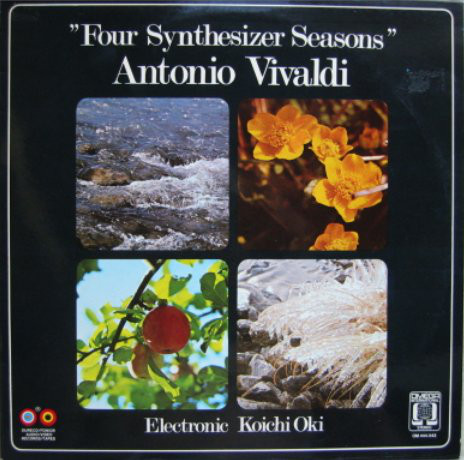
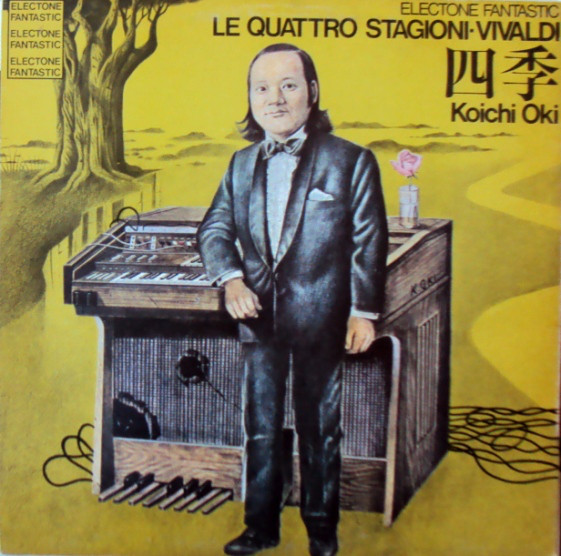
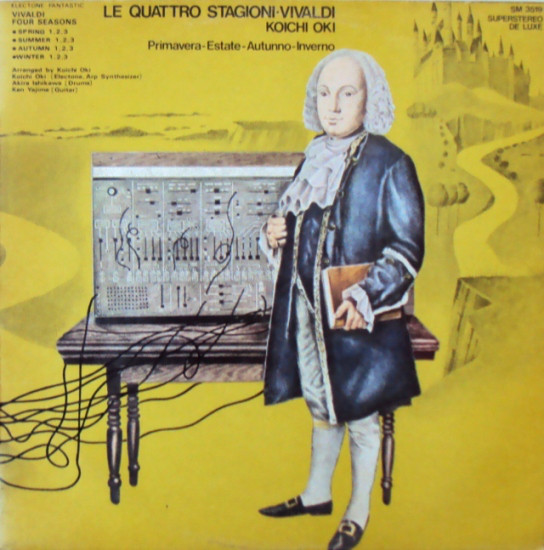
Strangely, this album was released many times, often with different titles and artwork. In was first released in Japan in 1973 under the name Electone Fantastic – Vivialdi Four Seasons. Big electone branding for the domestic market, not surprising. But the album was also released in a few different overseas territories. Discogs only has the Dutch and Italian copies listed, but I wouldn’t be surprised if it got released in other markets as well. In the Netherlands, the album was renamed Four Synthesizer Seasons, with simple classy artwork showcasing each season. In Italy, it was just called Le Quattro Stagioni – Vivaldi, which translates to, duh, The Four Seasons – Vivaldi. That cover is very similar to the original Japanese cover, but the caricature of Oki on the cover was replaced with what I assume is a cartoon portrait of Vivaldi. I will not stand for such synthesizer whitewashing!

However, I have none of those versions. For some reason, the album was re-released in 1978, with an entirely different title, Exciting Keyboards – Four Seasons. I mean, I like this album a lot, but I don’t know if it’s exciting. Fun, maybe? Refreshing? Uplifting? Sure, but exciting? Let’s not get carried away.

Speaking of getting carried away, check out that rad as hell album cover! The one at the top I mean. The one with the naked lady jumping rope with a freaking laser beam! In space! Forget what I said earlier, that’s some exciting shit for sure. I wish I could take a better picture of it, but I already packed up my records for the move, wrecking my back in the process. I sure as heck am not going to risk further injury just to take a high-res photo of the naked laser space jump rope lady. Sorry. Maybe some other time.

If you’re traveling through space with a naked lady and a laser jump rope, let me know if this album is a fitting soundtrack. Although please do the responsible thing and delay and trips (intergalactic or otherwise) until the coronavirus cases decrease a bit. Seriously. Stay at home. Listen to wonky 70s electronic albums and order a pizza. You can always go see your family and consume unhealthy amounts of turkey next year. Please.

Less Stress More Ambient Pop 2020

Sunday, September 6th, 2020

Hi. Are you stressed? I’m stressed. I wonder why. Maybe it’s the global pandemic and the still present risk that I or any of my loved ones could be stricken with a potentially fatal virus at anytime. That’s the kind of the thing that could keep one up at night.

Maybe it’s the unprecedented global heat waves, forest fires, and deadly storms. Rapid climate change is here, everyone! It’s not going to cause the extinction of humankind, but it sure as fuck isn’t a picnic. And the heat seems to be getting worse in Tokyo every summer. The masks don’t help either.

I think that it could be the election that’s making me stressed. Fate of the free world riding on an election that will probably be corrupt and rigged by the incumbent party. Scary thought. It’s definitely keeping me up at night.

Or maybe I’m stressed out, cant’ sleep, and am having a hard time writing because my big toe (right foot, for those curious…ew) decided to get an infection and swell up like a balloon before exploding in a rainbow of wondrous puss.

Might be that. Who knows. Anyways, stressful times call for relaxing tunes. And this is the most relaxing stuff I have at the moment.

And don’t worry, I went to the doctor and got a cream for my toe.


Dip In The Pool
Rabo Del Sol
Spring From The Surface
Sur Le Pois
Again

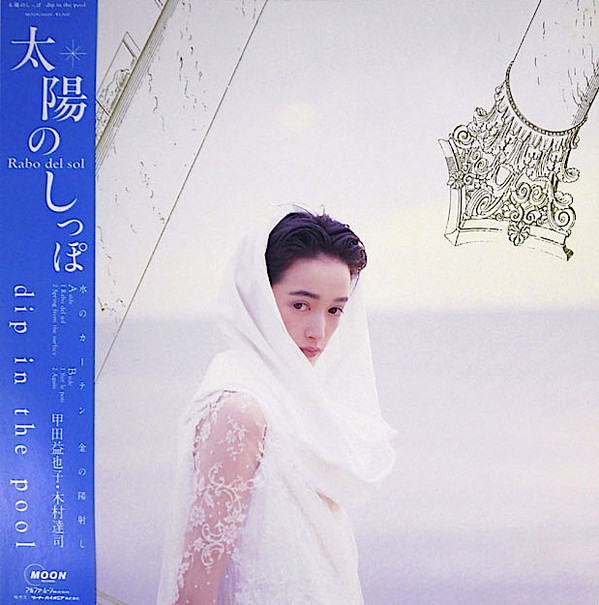
I first wrote about Dip In The Pool back in October of 2019. I called them a Japanese Cocteau Twins, chill as fuck, beautiful, awesome, and so on and so forth. I stand by all of that. And much of what I wrote in that post goes double here.

These tracks are from the group’s 1986 EP, Rabo Del Sol. All the tracks from it eventually made their way onto the band’s self-titled debut LP, which came out later that year. I don’t know if these versions are in anyway different than the ones on the LP, because I can’t find that album anywhere. For some reason, the overwhelming majority of this band’s output continues to be out of print. That gives me stress too, but I’m going to try and not focus on that.

These tracks aren’t all that different than the ones I featured before. Again, very chill. Very ambient. Very mellow. This is music for listening to with a nice red wine, preferably in a bubble bath. This is some of my go to music in the winter, when I go for late-night walks after work downtown. The city is quiet, almost alien-like, and the music serves as an incredibly fitting soundtrack to it. I’m not listening to them too much right now when I’m out walking, however. My walks at the moment tend to be in the morning, in the oppressive sunny heat, and are more about losing weight than chilling out. Dip In The Pool are many, many things, but “workout music” sure as hell ain’t one of them.

Enjoy the chill tunes for un-chill times and decidedly un-chill weather.

By the way, a quick programming note, if you will. Posts here might stay bi-weekly or so for a bit. Nearly everything I have queued up to post here is incredibly obscure and hard to write about. I don’t like to rush those posts. So I apologize if things slow down here again for a while. This could, of course, change at a moment’s notice if I happen upon a score of CD maxi-singles or something like that. You never know. I might also just say “fuck it” and write about Madonna singles for a while again. Still got a load of those to get through!

Also, I do plan on finishing my articles about MTV’s Top 100 of 1985. I’m very close with the next section. But…stress. Trying to be witty and funny about 80s pop is really hard when the world is on fire. I’ll give another go this week, I know a few of you really like those articles, so I appreciate your patience very much!

Stay positive. And chill.

I’m back and I brought the forgotten J-Pop

Sunday, August 23rd, 2020

If you were reading my site last week…you weren’t because it fucking exploded into fire.

It’s a long story, but I tried to update something, it very much did not work, and the efforts to restore it did not work either. This necessitated a off-site restore from my hosting provider, and that took much longer than they originally estimated. It was not a fun time. I was not happy. But it’s taken care of now. I’m still not happy, but that has more to do with the state of the world and my own personal health than the health of my website.

However, I really do need to get around to updating this site at some point. It’s a damn mess. This site an imported version of a 14-year-old Blogspot site. It’s extremely cutting edge for the mid-2000s. Although I really don’t know what I would “updating” this site would entail. It’s an MP3 blog. It’s gonna stay an MP3 blog. I could probably figure out a way to make it look slightly less ugly but, meh, it’s hard! I guess the only thing I really want to do is clean up the back-end and streamline it a bit. But again, I have no idea how to do any of this. I paid a tech-savvy friend to do all this years ago, she has since moved to Oregon and I have since moved to another country. That complicates things.

I’ll probably figure something out. In the meantime, if my site mysteriously vanishes again, be sure to check me out on Twitter, I’ll probably be posting vulgarity-filled updates if that happens. I should also mention that while Twitter is a garbage fire of rancid shit, it’s still the best way to get a hold of me quickly if you have any questions or concerns about anything. I check it more than I should.

Some other news, I’m still working my way through MTV’s 1985 Top 100 countdown over on my other site, and I’m probably going to get to the Top 20 sometime in the next week or two. I also plan on writing up something about all the amazing commercials that aired during the countdown. If you want a sneak peak of that, I uploaded a ton of them to my YouTube channel. I especially love this video store one, because I literally grew up in a video store and that triggers all them nostalgia dopamine triggers. Blurry VHS box art is like heroin to me, is what I’m saying.


Between both the world and my blog being on fire last week, I was swinging back-and-forth wildly between happy upbeat music to cheer me up, and supreme angry music to help me fester in negativity. I’m going to share the former tonight and not the latter. I don’t want to spread even more unneeded negativity in the world, and most of the angry music I was listening to was Korn’s dubstep album. No one needs to hear that. ALTHOUGH I SINCERELY THINK IT’S UNDERRATED.

Anyways, no Korn dubstep. 80s J-pop!


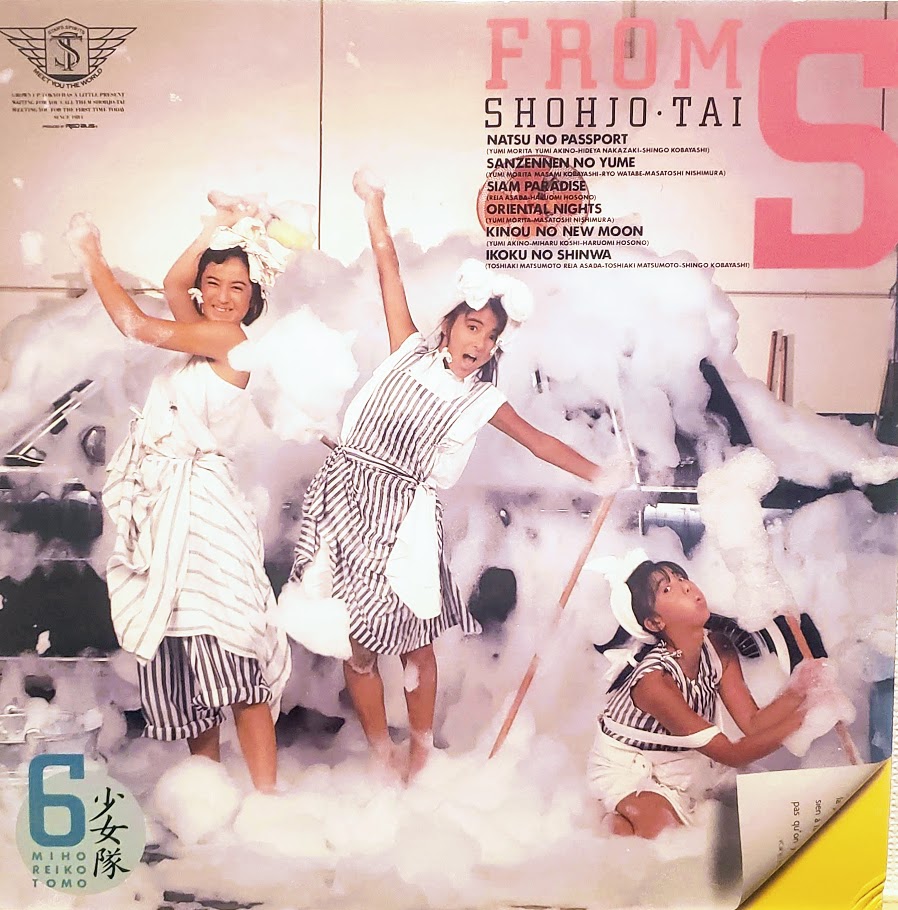
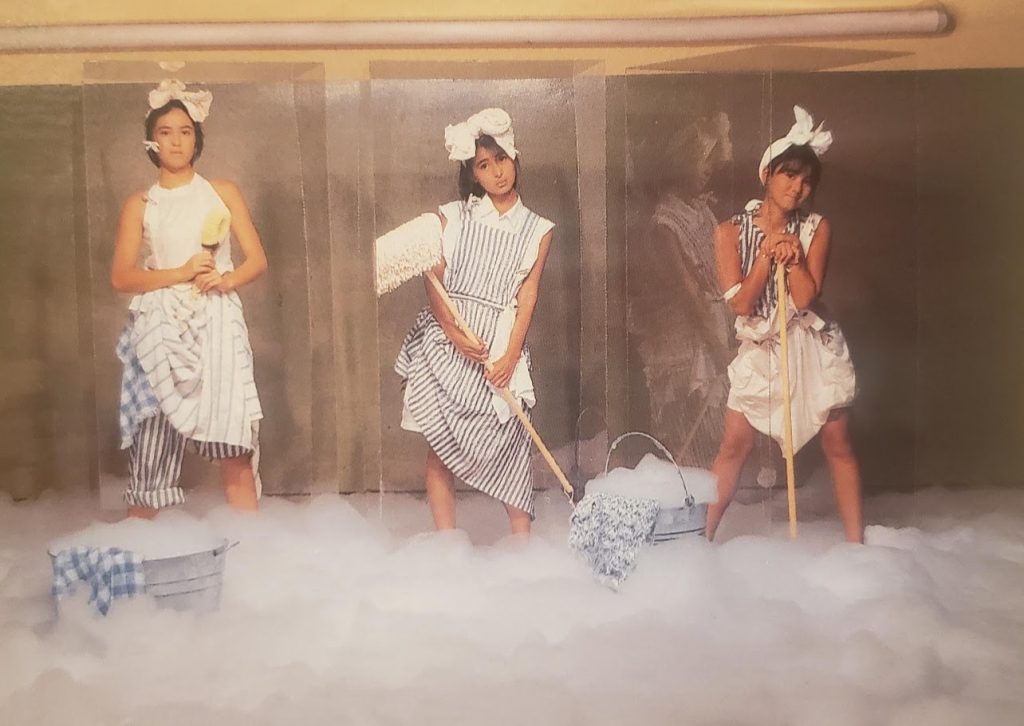
Shohjo-Tai – From S (Complete album)
There’s so much 80 J-pop out there (because bubble economy) that digging through it is nearly impossible. I always know that there’s good stuff buried in there, but I never know what to look for. I have no cultural context, plus I can’t even read 90% of the names, so that’s a problem. Imagine looking through crates of Western 80s pop music with zero context or understanding of anything about who was popular and when. You probably wouldn’t get lucky enough to stumble onto a Madonna record, you’d wind up getting something like the third Stacey Q record, or a Spoons album. That’s how it feels when I dig through a store’s stock of 80s J-pop. I’m looking for another YMO, but I usually end up with Japan’s answer to Mr. Mister or some bullshit like that. Thankfully I get help from my students on occasion, who direct me to groups like Shohjo-Tai.

I first featured Shohjo-Tai a couple years back. Not soon after a client recommended them to me I was able to find one of their singles in a store. I dug it, and got interested enough in the group to try and find more releases by them. Unfortunately, every other album or single I found by them just didn’t hold my attention as much as that first one. Everything was fine, they weren’t aggressively bad or anything, but they all had that overly polished, generic sound that far too much J-pop has. No personality, all kawaii, too many ballads. Boring.

I think a big problem with Shohjo-Tai is that they just put too much stuff out. Between 1984 and 1989, they released ten albums! Some were only EP length, but still, that’s a lot of music. Many of the very best artists of all-time, with careers that span decades, can’t put together 10 albums of great material. For a pop act to shovel out that much in such a short period of time is crazy.

In 1986 alone, they released four albums. I have two. One is Untouchable. It’s fine. It’s certainly not untouchable, but it’s decent upbeat pop music. The other is this one, From S. There are definitely more highlights in its six songs and 28 minute runtime than in the entirety of Untouchable‘s 43 minutes of 10 songs.

It’s a very creative album, and evens skews on the experimental side at times. “Natsu no Passport” opens the album strong with a synthesized bang, and a catchy keyboard melody helps carry it through. But then near the end the song completely breaks down into a short breakdown that’s reminiscent of The Art Of Noise’s best stuff, before re-assembling itself for the fade out. It comes out of left field and it really gives the song some character.

It’s followed by “Sanzennen No Yume,” a slower ballad. J-pop ballads usually bore me to death, but again, this one is just a bit different. The synthesizers, drum machines, and whatever other electronic doo-hickeys they got playing in the background give it something different, and it also has a fantastic breakdown near the end, with one of the strangest, most out-of-place solos of random sound I’ve ever heard in a pop tune.

The highlight of the entire album comes next, “Siam Paradise,” a pulsing tune with a fantastic beat. Awesome use of samplers and a great melody. This sounds like YMO. It really, really sounds like YMO (more on that in a bit). It’s super catchy and in my dream compilation of Japanese 80s synth-pop, it would totally be track three.

Most of the rest is also good. “Oriental Nights” is a little more generic, it lacks the crazy breakdowns and other innovations of the previous numbers, but it’s still a solid number. “Kinou no New Moon” picks things up again, with oodles of fantastic synths and drum machines. The only weak track on the entire thing is the finale, “Ikoku no Shinwa” which is just a generic 80s J-pop ballad. And if I wanted to hear those I’d listen to Yuming.

If you’re wondering why this album stands out so much when compared to the rest of their discography, well it probably has something to do with who worked on it. From what I can tell, all the Shohjo-Tai albums had fantastic production and session musicians on them. When I browse their pages on Discogs, nearly everyone who worked on their records have long careers across dozens of albums. But this one goes even above those.

Remember, how I said that the synthesizers here really stand out? And that the album occasionally reminds me of good YMO? Well, that’s because Haruomi Hosono of YMO and singer/songwriter extraordinaire Koshi Miharu both played keyboard and synthesizers here. Hosono even co-wrote a couple tracks on the album, including the standout “Siam Paradise.” That’s a hell of a duo to get on your album, especially in 1986, when both were at their peak in terms of their electronic music output. No wonder Japanese record geeks go after this one.

I hope this heavily synthesized, overly cheery synth-pop will serve you well this week. Enjoy.

Obscure synthesizers and amazing suits

Tuesday, July 21st, 2020

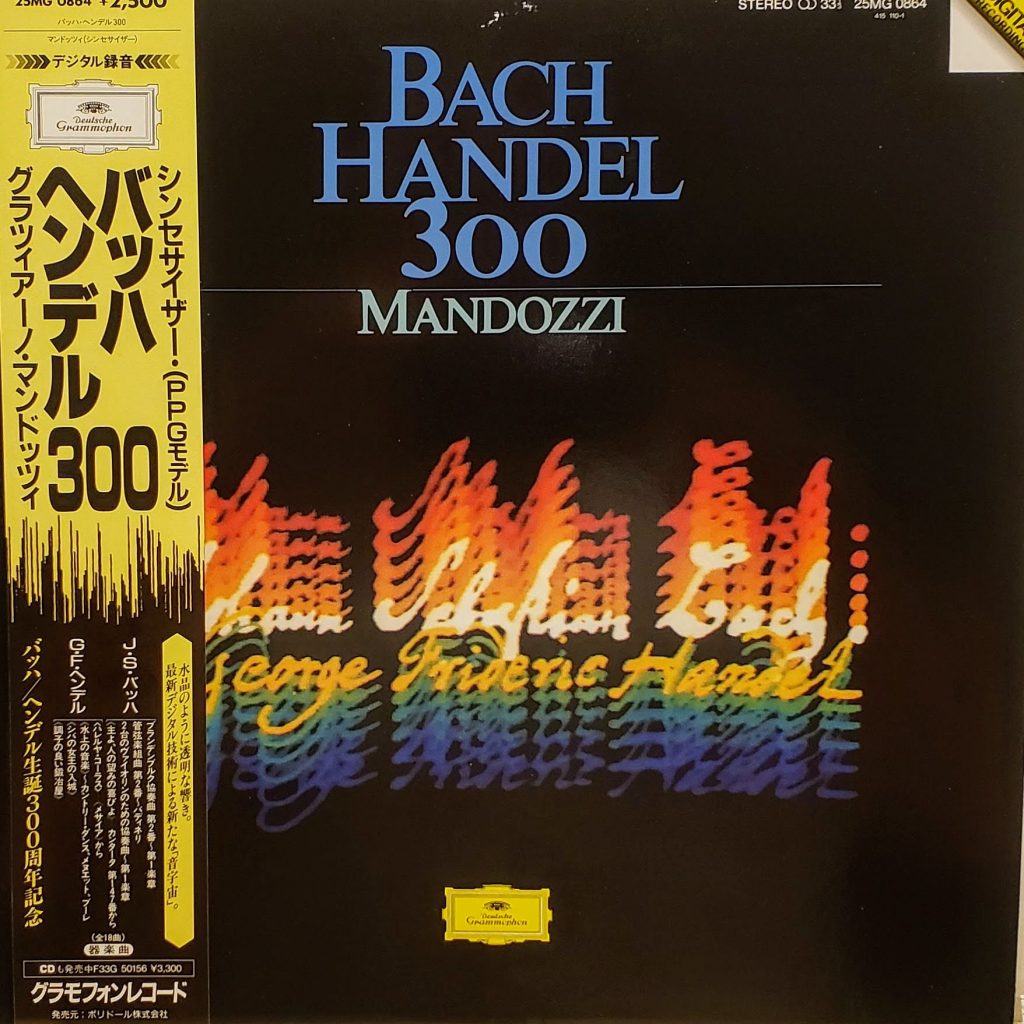
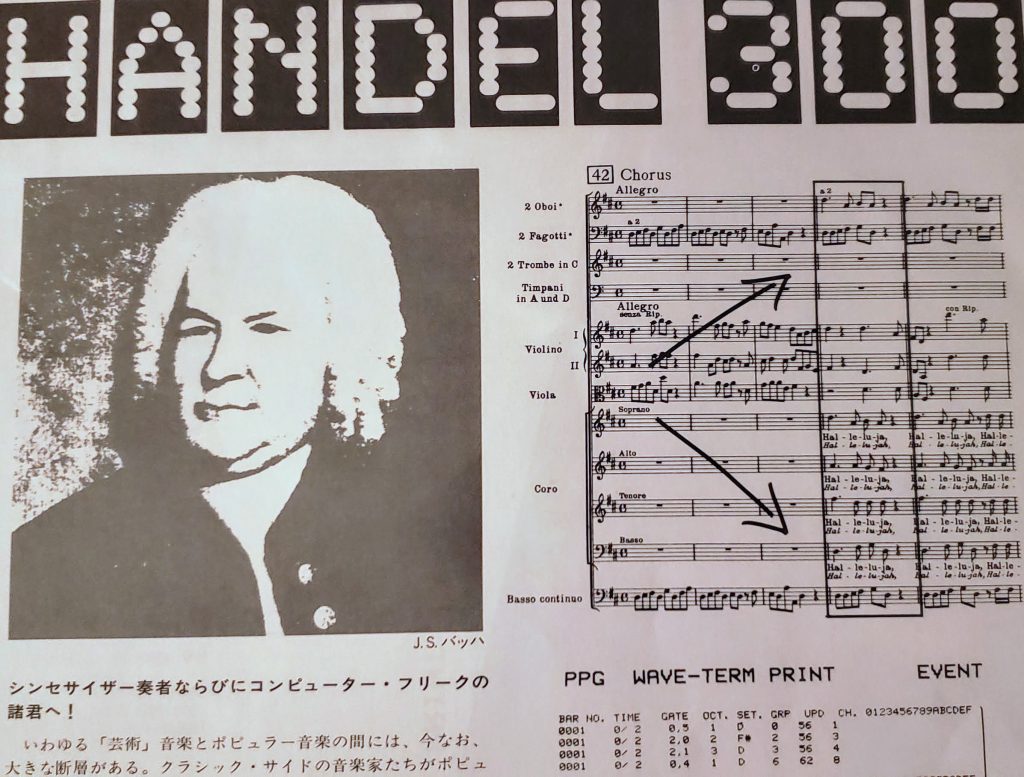
Graziano Mandozzi – Bach Handel 300 (complete album)
Sometimes I want to write about something even though I’m woefully lacking in the knowledge to do so. Here’s one of those times. Apologies for omissions or errors. Correct me (politely) in the comments!

Bach Handel 300 is a collection of synthesizer covers of compositions by (duh) Bach and Handel. It was originally released on by the influential and prestigious Deutsche Grammophone record label in 1985. Now, if you’re like me and you obsess over synthesizer covers of classical compositions, that date probably surprises you. Most classical synth albums came out in the first half of the 70s, all of them riding the coat tails of Wendy Carlos’ legendary Switched On Bach album. By the mid-80s, the novelty of the format had long worn off. Even in Japan, where synth covers albums seemed to be much more popular, I don’t see many from after 1978.

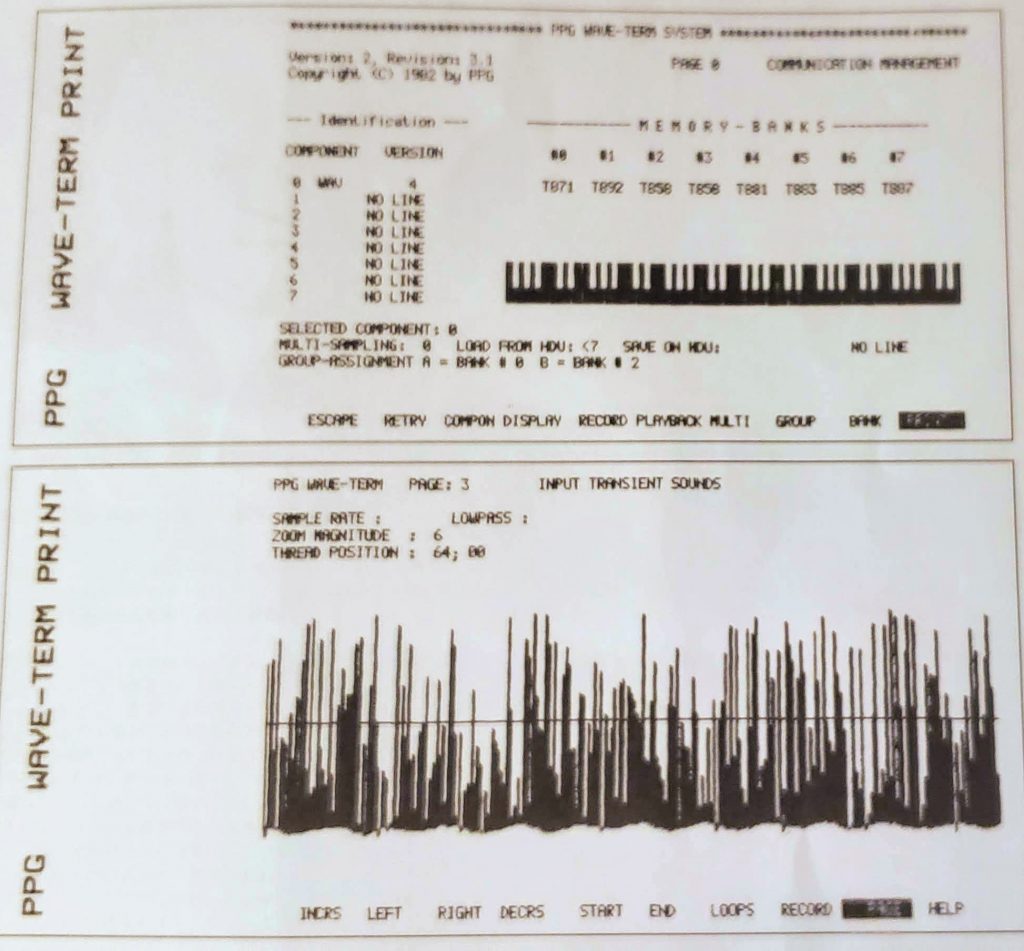
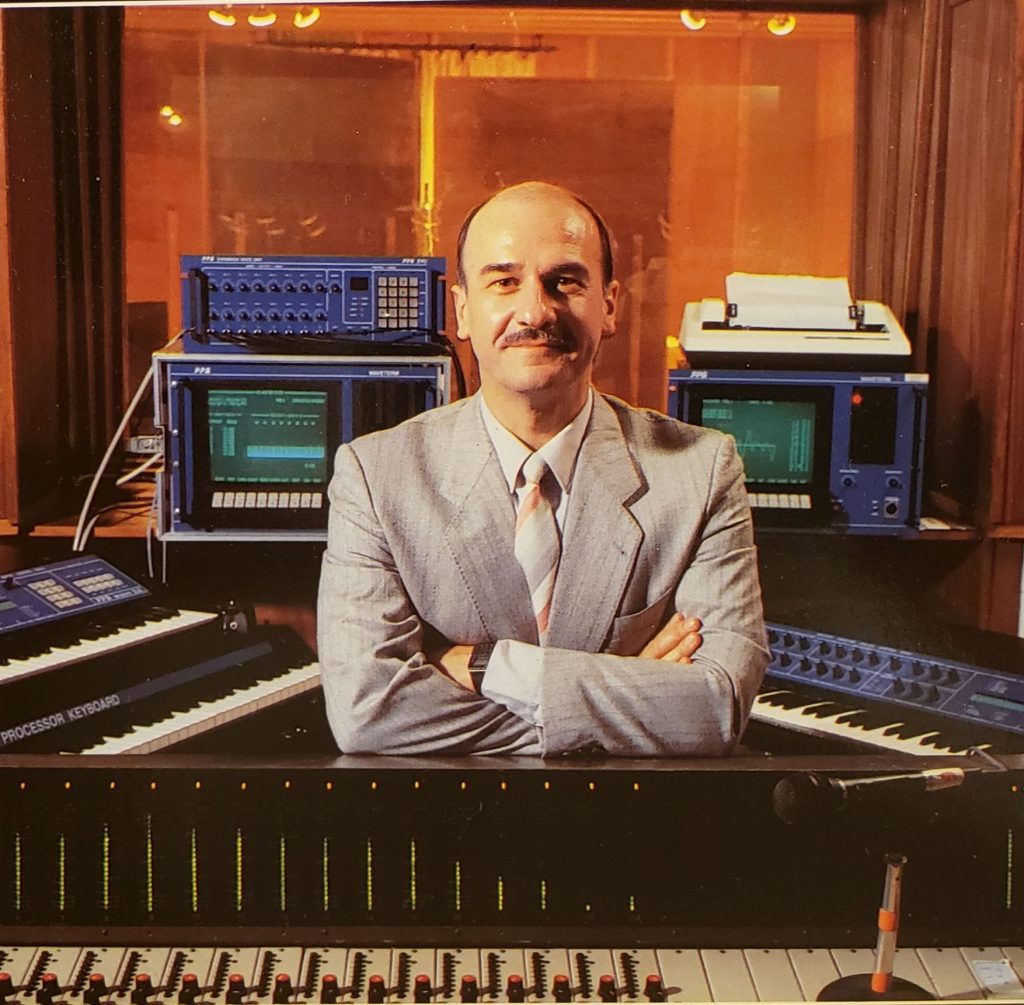
But this one probably had a very specific reason for existing; I think it was serving a commercial for the synthesizers used on the album. This album doesn’t feature Moogs, nor Korgs, nor any early digital synthesizers like the Fairlight or Synclavier. This album was made entirely on PPG Wave synthesizers. PPG was a German company. Deutsche Grammophone was a German label (duh) so, yeah, the synergy makes sense.

Never heard of the PPG synthesizer? Me neither! But apparently they were used a bit by synthpop acts of the era, if the Wikipedia page is to be believed. I’m not very good at picking up individual synths in songs aside from old-school moogs and the Synclavier, so I couldn’t tell you which songs have good examples of the PPG Wave, but I know they’re out there.

The PPG Wave was a different style of synthesizer. While the synths of the 80s were almost exclusively pure analog, and the synths of the 80s were digital affairs, the PGG Wave series were something in-between, analog/digital hybrids that provided a wide range of sounds with superior audio quality. They were apparently groundbreaking in a few different ways, but again, this is not my element so I’m not going to speak too much about it. But I will definitely say that the PPG has a unique sound that reminds me of analog synths of the 70s, with the variety and range of the 80s digital stuff. You get your warped, ghostly analog sounds alongside your crystal clear, bright, 80s notes. It also has a grit to it that was probably to its detriment at the time, but gives it a unique quality now that makes it stand apart from the cleaner all-digital synths of the era. I have another classical synthesizer album from the same year called Bachbusters. It’s on all digital synthesizers. It’s boring as hell. This one has way more personality.

But it never did reach the popularity of those other synths, sadly. This album came out in 1985, and PPG went belly-up just two years later. A lot of PPG systems still seem to be out there though, so if you dig the sound on this album head over to YouTube and you’ll find more examples of the sounds it can create.

I just realize that I’ve spent over 500 words going over the synthesizers used on this album but I haven’t even mentioned the man playing them! The man with a fantastic mustache and wonderful suit, exuding the confidence that only a man surrounded by thousands of dollars of digital equipment can.

That would be one Graziano Mandozzi, credited on the album as simply “Mandozzi” like he’s synth Prince or something. Ballsy move. I respect it. A Swiss composer, Mandozzi has a short, but insanely interesting discography that I hope to dig into more. He has an album called Masada that was recently released on vinyl and digitally via Bandcamp that is just insane. It’s some funk/jazz/experimental/psych rock monstrosity that was apparently the soundtrack to a ballet?! How anyone danced to it is beyond me. It’s rad as hell though. If you download this and like it, do the right thing and go buy that album to show support. Digital copies are cheap, and the vinyl comes with a download code.

I feel like I end all my posts recently in the same way, but I hope you all are doing well out there. Things are really scary right now, especially in the states. If you can, stay home, listen to stupid records like this and get drunk. That’s what I’ve been doing and it usually works for me.

Tomita covering Elvis and such

Wednesday, May 27th, 2020

Japan has been lifting its state of emergency gradually over the past couple of weeks, as cases of the coronavirus here have declined. Last week, most record stores in Tokyo finally re-opened.

I’m still being cautious. I don’t want to take the train right now, so I’m not going to a lot of my absolute favorite stores, but I did make the quick walk to Shinjuku to check out the Disk Union stores around there.

The first thing that struck me was how deserted the area around the stores was. That part of Shinjuku is usually crowded. It’s right next to a major entrance, has dozens of restaurants, and several department stores. But walking traffic was down by about 75%, there just weren’t many people out. A lot of bigger stores are still closed, and people aren’t eating out as much, so that probably had a lot to do with it.

The Disk Union stores in Shinjuku are absolutely wonderful, but they’re all a little cramped. Social distancing in those stores is an impossibility. There were signs up that said they might limit the number of people allowed in at once if things got crowded. Additionally, masks were 100% mandatory, as was using the provided hand sanitizer whenever you entered a new floor. There were also plastic curtains up that separated the customers and the clerks. Any floor that had windows (not many) had them open. The first floor Union Record store I went to had their front doors open. They were also the most reorganized, doubling the amount of space in front of the registers to allow for greater distancing between people.

Are their solutions perfect? No way. As I said, the stores are small and cramped, there’s no way for them to become 100% safe. But they’re trying their best. In a perfect world they could stay closed even longer, but that’s just not realistic unfortunately. Given the circumstances, I think that their precautions will help. Masks aren’t perfect, but they can help. If everyone is wearing a mask, using hand sanitizer, and keeping as much distance as they can, I think that will greatly work to minimize and potential risk of infection. Also, most of the people who go to the record stores go alone and don’t talk much, that alone cuts down any infection risk.

I’m doing my part by not going to eight million stores a week. I would hate to be asymptomatic and carry the virus around to all my favorite record stores. Tower Records is open now (HURRAH!) but I’m going to wait until next week before I go (BOO!). Then I’ll wait another week before I go to Coconuts Disk. And then another before I check our Recofan again. As much as they would all appreciate my business right now, it’s better to be safe than sorry. And I’ll for sure make up for any lost purchases when I go to their stores, that’s for damn sure.

I bought some cool stuff this week at Disk Union, but I still have to physically clean and record those records. In the meantime, here’s another weird synthesizer record from the 1970s. Shocking, I know.

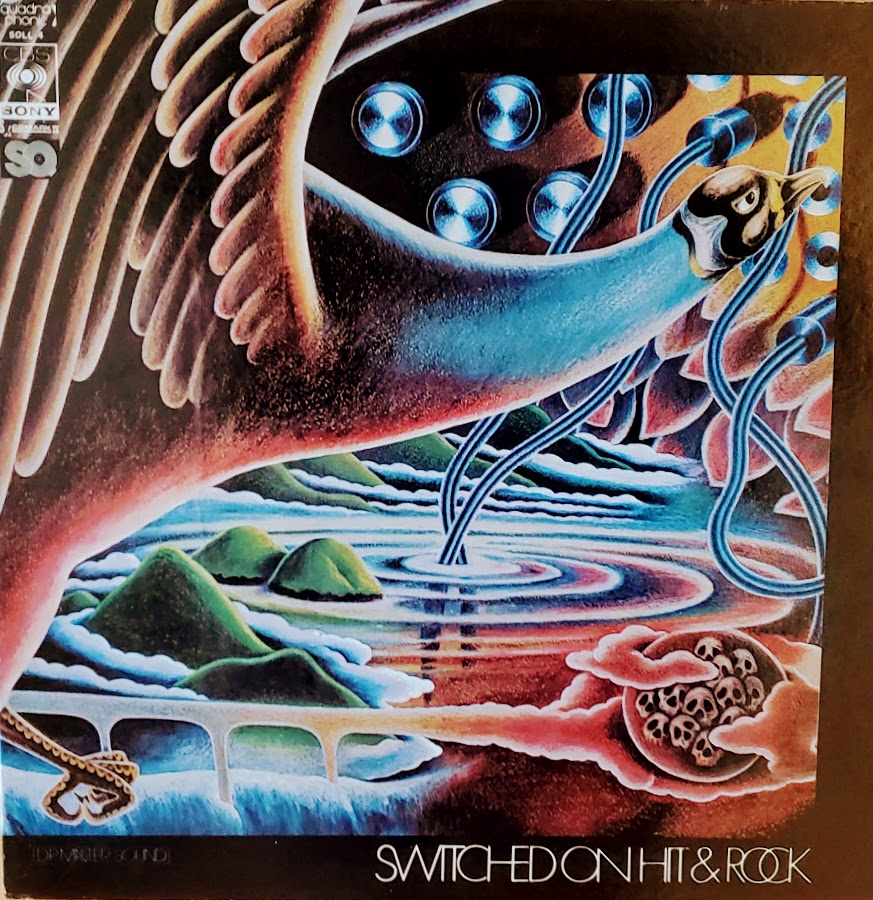
Isao Tomita – Switched On Rock (Complete Album Download)

Isao Tomita is one of the big three of early synthesizer music, right behind Wendy Carlos and Jean-Michel Jarre. His 1974 release, Snowflakes Are Dancing, which reworks compositions by Claude Debussy, was revolutionary when it came out. It charted on the American Billboard charts and even netted Tomita a few Grammy nominations.

But it wasn’t his first album. This was. Released in 1972, Switched On Rock is another in a seemingly endless line of synthesizer covers albums that flooded record stores after the runaway success of Wendy Carlos’ Switched-On Bach.

Like most Switched-On Bach copies, Switched-On Rock lacks the complexity and craft of Carlos’ original work. Carlos went through the hassle of recording layers upon layers of synthesizer melodies to build incredibly complex and detailed recreations of Bach’s original compositions. Synthesizers of the time were not polyphonic, so if you wanted a rich, full sound that meant lots of overdubbing.

Tomita didn’t go that route. He instead kept things simple. There’s some polyphonic work going on here, but not nearly at the level that’s found on Carlos’ record. Also, it’s not an entirely electronic album, with acoustic drums showing up on most tracks. Tomita also played it safe with track selection. As the title suggests, Tomita covers rock tunes here, not classical works. Rock songs, especially the rock songs he chose, are a hell of a lot easier to re-arrange for synthesizer than Bach or DeBussey, that’s for sure. They’re all little more than a basic melody and a backbeat. Lots of Beatles covers, Simon & Garfunkel, Elvis and other oldies.

That’s not to say that the album is boring or bland. Far from it. What Tomita lacks for in complexity here, he more than makes up for with weirdness. I’m not good with technical terms, so I don’t know what effects Tomita was applying here, I just know that it sounds weird. His synthesizers sound drunk, with the sounds often having a strange wobbling or bouncing effect added to them. And everything is put through an echo, giving it all a etheral dreamlike quality.

The album had a limited release. It came out in Japan first, and then was later released in the UK. There, Tomita was billed as “Electric Samurai” because Orientalism sells. It never got a release in the states and from what I can find online, there’s never been an official release on CD either, making it one of the rarest releases in the Tomita catalog.

Like all Moog albums, transferring the vinyl recording in a way that created a clean digital copy was not easy. Early synthesizers create harsh, abrasive sounds. Most audio cleaning programs pick those waveforms up as pops or cracks and they try to remove them. I could only do a very light pass on the lowest settings to remove the more drastic scratches. Then I went through again manually and removed more, before also scrubbing a bit of the background surface noise that’s found on all vinyl recordings. I think it sounds good, but if you hear a few mistakes or odd blips here and there, that’s why.

Listen to moog music and wear a mask. It’s the right thing to do.

Osamu Shoji’s Kaleidoscope of Movie Medleys

Sunday, April 26th, 2020

Osamu Shoji – Kaleidoscreen (Complete Album Download)

I’ve been posting a lot of complete albums lately. I hope my hosting service doesn’t kill me.

This is the (checks my expansive archive) fourth Osamu Shoji album I’ve posted in full. As I probably said in each of those previous posts (and other posts where I shared single tracks from his other albums), Shoji was a synth God with a capital G who produced some totally wacked out and insane pieces of music in his day. If you want to know more, I wrote a piece about him when he passed away a few years back.

Kaleidoscreen was first released in in 1982 and was probably Shoji’s 18th album. I say “probably” because English information on Shoji’s discography is still a little hard to come by. Since I first got into his music a few years back, several albums of his have been added to Discogs (mostly by me), so it wouldn’t at all surprise me if there are more holes out there that also need to be filled.

The early 80s were an incredibly prolific time for Shoji, between 1980 and 1985 the dude pumped out close to 30 albums. A few were original works, but the overwhelming majority were synthesizer covers albums. His bread and butter during this period was to release synthesizer covers albums of popular anime themes. There were all released under the “Digital Trip” series brand, which featured work by other synthesizer and keyboard greats, such as Jun Fukumachi.

But Kaleidoscreen is a bit different. Instead of sticking to one movie, anime, or series, he cast a wider net and covered themes from multiple movies, most of which were from America. These types of albums, of course, were not uncommon in the 1970s. I have countless collections of movie themes “switched on” for synthesizer. This one is a bit different though in terms of scope. Because while most synthesizer covers albums were content to have 10 or 12 movie themes reworked for the synthesizer. Shoji decided to shoot for the fences and compose 10 medleys that, when combined, featured snippets of SEVENTY-TWO pieces of music from a variety of different films.

A case of quantity over quality? Perhaps. The entire album does come off a bit cheesy, and the swings from theme to theme are sometimes so fast that you barely have time to register one before it moves onto the next. Additionally, the entire thing kind of has an elevator music/early-MIDI vibe to it, probably thanks to the prevalence of a rather generic beat that is played over most of the tunes. THAT BEING SAID I still love this album for all its ridiculousness, and the insane gusto that Shoji obviously put behind it. The dude just went for it. And I love how many deep cuts and oddball choices he included. Yeah, anyone could’ve (and did) make synth renditions of music from Star Wars, the James Bond films, and Rocky, but nobody else, for example, heard the themes to Laura, Days Of Wine And Roses, and The Way We Were and thought “Yo, what these themes need is more synthesizers and drum machines.” There’s a real sense of bravado there that I can really get behind.

This is not high art or a radical piece of work that re-invented electronic music. This is a piece of incredibly complicated, yet incredibly silly, music. It puts a smile to my face, even now, and I hope that it can do the same for you.

Below is the complete track listing, featuring all the songs that are included in each medley, in case you were curious.

Medley 1
Also Sprach Zarasthustra
Close Encounters Of The Third Kind
Theme From Star Trek
The Throne Room
Main Title From Star Wars

Medley 2
The Big Country
I Left My Love
Raindrops Keep Fallin’ On My Head
The River Of No Return
Johnny Guitar
The Call Of The Far-Away Hills
My Rifle, My Pony And Me
Buttons And Bows
Gunfight At O.K. Corral

Medley 3
The Theme From The Shaft
Charade
Whatever Will Be, Will Be
Laura
The Pink Panther Theme
The Entertainer
Love Theme From Godfather

Medley 4
Carioca
Cheek To Cheek
The Way You Look Tonight
Continental
A Foggy Day
Orchids In The Moonlight
Night And Day

Medley 5
The Geat Escape
Waltz From “Is Paris Burning?”
55 Days At Peking
The Guns Of Navarone
Exodus
Main Title Of Lawrence Of Arabia
The Longest Day

Medley 6 (James Bond Medley)
The James Bond Theme
Moonraker
No Boody Does It Better
For Your Eyes Only
Goldfinger
Thunderball
From Russia With Love

Medley 7
Three Coins In The Fountain
Love Letters
Never On Sunday
Sentimental Journey
Tara’s Theme
My Foolish Heart
Day Of Wine And Roses
Love Is My Splendored Thing
September Song

Medley 8
Gonna Fly Mow
Sound Of Silence
What Is Youth
Grease
How Deep Is Your Love
East Of Eden
A Summer Place

Medley 9
The Magnificent seven
The Green Leaves Of Summer
The Proud One
Ballad Of Davy Crockett
My Darling Clementine
Bury Me Not In Lone Prairie
High Noon
She Wore A Yellow Ribbon

Medley 10
The Shadow Of Your Smile
Windmills Of Your Mind
Moon River
What’ll I Do
The Way We Were
The Rosy’s Theme