Author Archive

The best disco version of Star Trek you’ll ever hear

Friday, March 6th, 2020

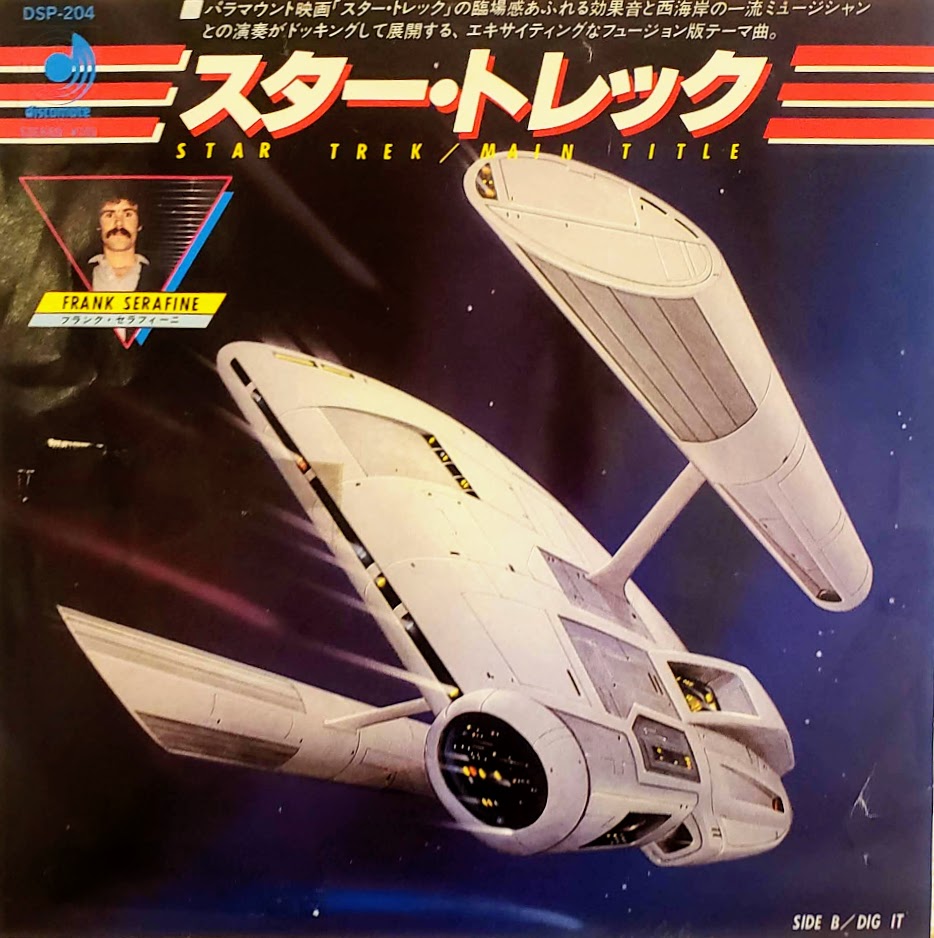
Frank Serafine
Star Trek Main Title
Dig It

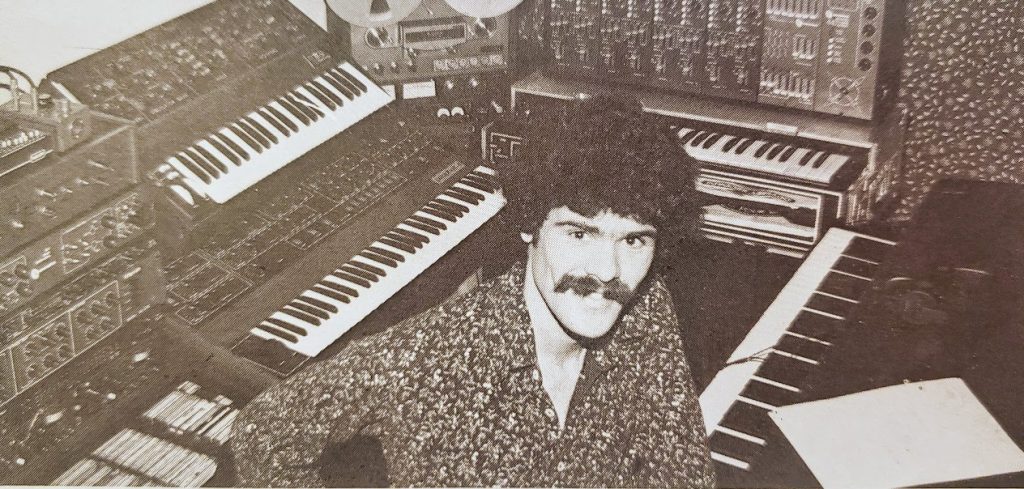
Frank Serafine is a name you have most likely never heard, and a man whose music you’ve probably never heard. However, you have without a doubt heard sounds created by this man. He worked as a sound designer and sound effect man for several huge movies from the 1980s. You know the dope sounds of the bikes in Tron? That was him. He also created sound effects for Pumpkinhead, Short Circuit, and Manhunter. He even won an Emmy for his work on The Day After.

Frank was also the sound effects designer for the first Star Trek film, which came out in 1979. A year later, he released his discofied version of the show’s main title music on a single that came out only in Japan.

It is far better than any disco version of the Star Trek Main Title music has any right to be.

This is an insanely well-produced piece of music with a fantastic sound. The b-side, “Dig It,” is also rad as hell. It’s a groovy, flute-driven piece, with a tight guitar riff, solid bass line, and fantastic accompaniment by an excellent horns section. It’s a shame that this came out as a b-side to a disco version of the Star Trek theme in 1980. Turn the dial back a few years, put this aside “The Hustle” or some other instrumental disco jam, and it could’ve easily been a hit with the same crowd.

This record sounds so amazing that I wanted to find out more about the people who worked on it. Frank is only credited as the flutist and keyboardist here, who else made this sound so good?

The single was produced by Miki Curtis, a big name in Japanese music going all the way back to the 1950s. He’s had a diverse career that includes everything from rockabilly to prog rock, with a notable career in acting as well. I would imagine that by 1980, the dude knew his way around a studio. He’s a solid producer here, that’s for sure.

Credited as an arranger as well as a keyboardist is Ken Shima, a workhorse studio guy who’s appeared on countless albums by Japanese idols, and more internationally-acclaimed acts like DJ Krush, Towa Tei and Pizzacato Five.

But the surprises don’t stop there. As I mentioned before, the guitar on this album is tight as hell, and that makes since considering the guitarist on this record is Robben Ford (credited here as Robin Ford). Another name you probably haven’t heard but whose music you have, Ford’s worked with damn near everyone. He played guitar in the studio for Steely Dan and Kiss. He worked with Miles Davis. He played guitar on motherfucking “Jessie’s Girl” by Rick Springfield. He played with George Harrison and Bonnie Raitt. He’s on a damn Tiffany record. He was even on an album of jazz fusion covers of music from the video game F-Zero, which is a really weird CD. Pee Wee Hill, who plays bass on this single, played on that album as well.
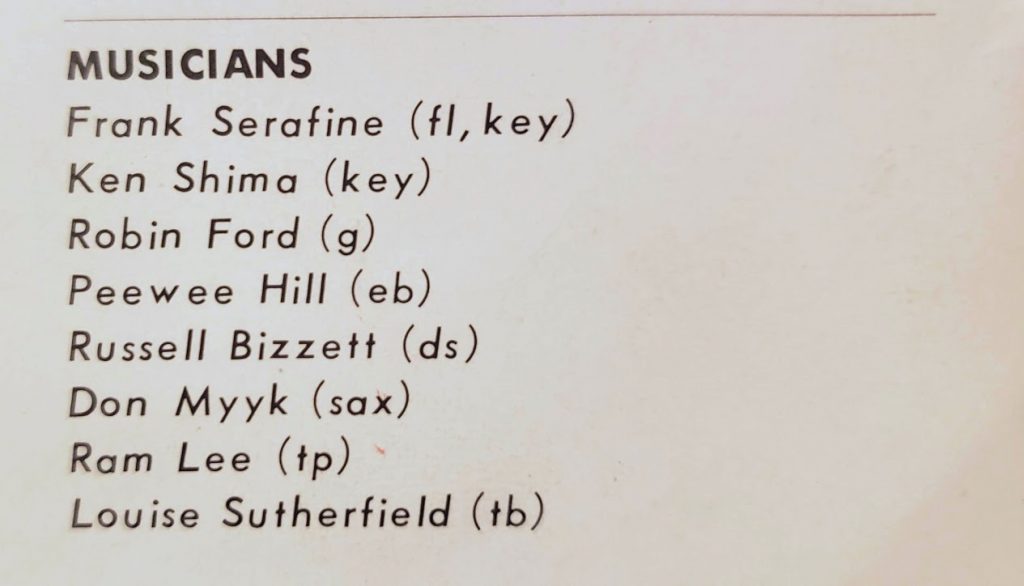
But who plays horns here? They’re so good, I just had to know. Well, according to the liner notes, someone named Don Myyk handled trumpet, while the trombone was played by one Louise Sutherfield. Those people don’t exist. I scoured Discogs and several other music sites, and couldn’t come up with a damn thing.

But you know who does exist? Donald Myrick and Louis Satterfield, both of which played with Earth, Wind & Fire throughout the second half of the 70s and into the 80s. No wonder the horns on this record sound so damn good. So why the false names? That probably has to do more with Japanese pronunciation woes than any attempt at keeping false identities. Translate those names to katakana and then back to English and you’ll end up with butchered spellings like those.

I bought this record as a joke. I figured with would be a lame attempt to capitalize off of the success of Meco’s Star Wars disco cover. Never have I been more surprised. I’ve listened to this cover so much that it’s lost all meaning as a piece of Star Trek music, and has instead taken on a life of its own as a damn fine piece of music in its own right. I’ve also fallen head over heels in love with “Dig It.” What a great melody! Again, a damn shame it never got the audience it deserved.

I don’t know how Frank was able to assemble such a great crew of international talent for such a goofy one-off release, but good for him. The results speak for themselves.

Frank’s only other music release that I can find is a new age album that came out in 2000, although he did do some work with Ravi Shankar as well. Aside from that, he mostly stuck to sound effects and film work. Sadly, the world lost Frank in 2018 in a car accident. He is missed.

The next time you watch Tron and hear those rad bike sounds, think of him.
Blue Monday ’95 for 2020

Monday, February 24th, 2020

In news that will upset nearly no one, here’s another quick and dirty New Order post.

New Order
Blue Monday (Hardfloor Remix)
Blue Monday (Manuella mix)
Blue Monday (Andrea mix)
Blue Monday (Plutone mix)

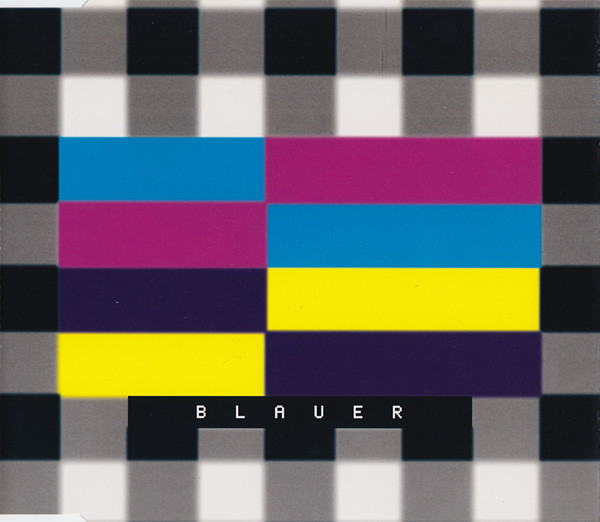
The original 12″ version of “Blue Monday” is a perfect song and no attempts to remix, remake, rework, or re-imagine it will ever come close to even matching the original. I feel that this is not a bold statement. There are plenty of New Order tracks that have benefited from remixes or re-workings. “Temptation” comes to mind, as does “Fine Time” and even “Touched By The Hand of God.” Hell, the entirety of Music Complete was remixed with extended versions and I prefer all of those to the originals. And some of the mixes to “Tutti Frutti” were just rad as hell.

But you can’t fuck with “Blue Monday.” Shit’s perfect. Still, New Order sure has tried. There was the ’88 remix, which achieved some degree of success, and these ’95 remixes, which did not. Most of them aren’t bad mixes, save for the “Andrea Mix” which reworks the song in a reggae dub track (yikes). But as soon as I’m done listening to them, all I want to do is listen to the original version once more. It ain’t broke.

Still, there’s a lot of good to be had here. While none are my first choice, I do return to a few of them. I dig the “Hardfloor” mix quite a lot. It has a hint of an acid vibe to it. Not too much, just enough to give it that edge. And the “Plutone” mix is great too. It has this high, almost ringing, synth line through it that gives it an urgent feeling that I really get into. If my knees still let me jog, I would slam this sucker on a jogging mix right away.

Maybe more New Order next week? I don’t know. I got some weird shit I want to share, but like I’ve said multiple times over, the weird shit posts take time. And since so few people actually seem to like them, sometimes motivation is hard. But if I don’t upload obscure late-70s Japanese experimental electronic music, who will?!

The Return Of New Order (to this blog)

Tuesday, February 11th, 2020

I haven’t posted a New Order track in nearly five years. What the fuck happened to me, man? I used to be cool.

New Order
True Faith-94
True Faith-94 (Radio Edit)
True Faith-94 (Perfecto Mix)
True Faith-94 (Perfecto Radio Edit)
True Faith-94 (The TWA Grim Up North Mix)

I bought 23 new wave and synth-pop CD singles this weekend.

There was a sale. I’m a weak man.

Sadly, much of what I purchased cannot be shared here because its all shockingly in print now. It amazes me still how much obscure and formerly hard-to-find stuff is being re-released now compared to when I started this blog 14 goddamn years ago. Remember how I could just go to a record store, snag a shitload of Depeche Mode 12″ singles (on the cheap) and end up posting a dozen or so remixes that had all fallen out-of-print? Those days are long gone. I bought several Depeche Mode singles at that sale. I have to double-check to be sure, but it would appear that all of the remixes on all of them are now easy to find on iTunes, special edition re-issues, and even on streaming services. The same goes for the Erasure stuff I picked up. I grabbed the first four EBX singles collections that the band put out several years back. Now all of those are available for listening online, as well as several digital-only sequels to the series (Boo to digital only!).

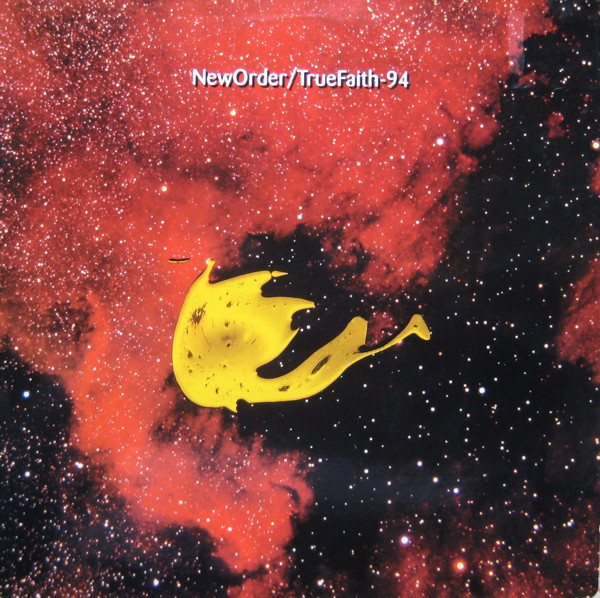
But you know what prominent new wave/synth-pop band continues to fuck up their legacy by keeping a large swath of their 12″ singles and CD single exclusive tracks out-of-print? That’s right, New Order. They’ve certainly gotten better. Pretty much all the remixes from their past few albums are online now, as are prominent remixes for more popular tracks like “Bizarre Love Triangle” and “Confusion.” But songs like these, the 1994 remixes “True Faith” are still MIA (the main ’94 remix was included on The Best Of New Order but that album is now out-of-print in most territories). For some reason, most of the remixes to “World In Motion” are online though, so who the hell knows why which tracks make it online and which don’t, its certainly not an issue of quality.

And these are really good remixes! Of a really good track! None of them are too drastic, they’re not pure dancefloor mixes that take away the vocals or hooks. They’re all really recognizable as remixes of “True Faith,” an all-time banger of a track if you ask me. I could get that hook stuck in my head for days and I wouldn’t complain. If I had anything negative to say about these cuts, it’s that they don’t do enough to deviate from the source material. But hey, I guess if it ain’t broke, why fix it?

I wonder how many discs it would take to properly re-release every New Order remix. How big would that box set be? It would have to be dozens of discs, right? I guess that’s why it’ll never happen. They’re far happier dishing this shit out piecemeal (with plenty of overlap so we end up buying a lot of the same music multiple times over). Oh well, a guy can dream.

Probably more New Order next week. Or a batshit stupid synthesizer album. I guess it depends on my mood that day.

Forgotten Techno Clapton

Sunday, February 2nd, 2020

TDF
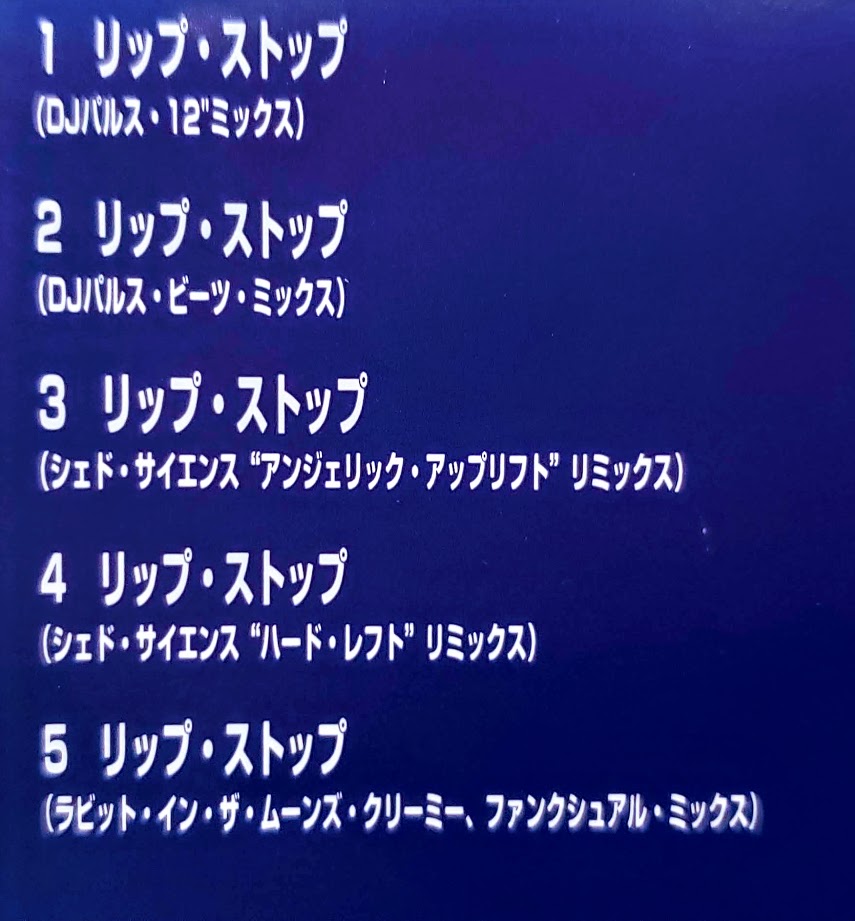
Rip Stop (DJ Pulse 12″Mix)
Rip Stop (DJ Pulse Beatz Mix)
Rip Stop (Shed Science ‘Angelic Uplift’ Remix)
Rip Stop (Shed Science ‘Hard Left’ Remix)
Rip Stop (Rabbit in the Moon’s Creamy, Funkshunal Mix)

I’m not a Clapton guy. I’ve never been. Sure, I dig me “Layla” (the real version, not that acoustic slog) and I can respect “Tears In Heaven” for its intent and meaning even if the song itself is kind of wallpaper to me. And, of course, Cream was a juggernaut of a band. But the whole “Clapton is God” thing? I just never got that.

Maybe it’s because I grew up in a world that already had Jimi Hendrix so I knew what god on guitar actually sounded like. Or maybe it’s just because the Clapton that existed in my formative years was the Clapton that put out adult-contemporary snoozefests like the aforementioned acoustic version of “Layla” or the absolutely hideous “My Father’s Eyes.”

“My Father’s Eyes” is off the album Pilgrim, which was produced by Clapton and Simon Climie, who was best known in the UK for his group Climie Fisher as well as his production and songwriting work for artists like George Michael and Westlife. But Pilgrim was not the first project that Clapton and Climie worked on, but the other kind of flew under the radar at the time unless you were on the look out for it.

In 1997, Clapton teamed up with Climie to form the group T.D.F. and release the album Retail Therapy, a collection of electronic/ambient tunes based around jam sessions by the two.

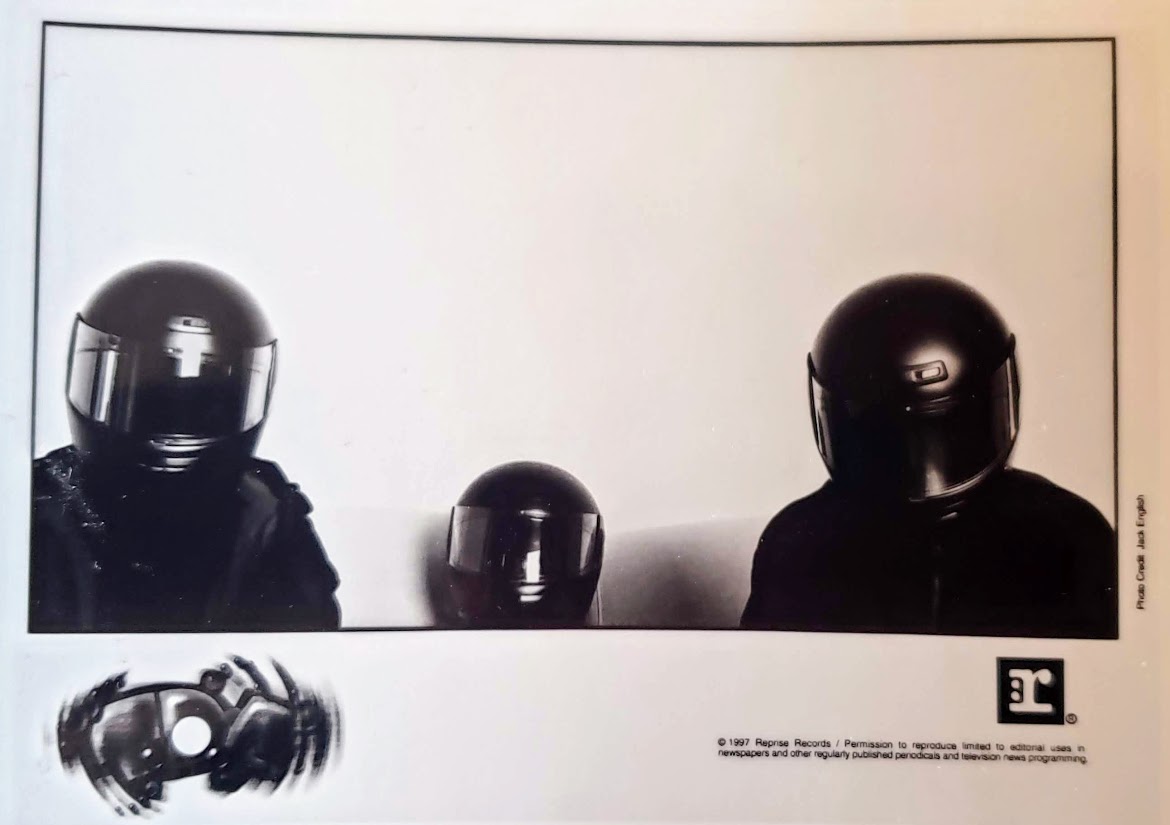
Strangely, Clapton is entirely uncredited in the album’s liner notes. Instead he goes by the name “X-Sample.” Furthermore, all photos of the group in the liner notes featured them hidden behind motorcycle helmets.

Clapton wasn’t the only 60s rock icon to try and re-invent himself in a somewhat anonymous way in the 1990s to earn hipster points. Before this, Paul McCartney collaborated with Youth on the Fireman project, which was also more electronic and experimental in nature than his previous work. Bowie also briefly toyed with the idea of adopting a pseudonym for his electronic music, releasing one single and performing a secret show as the Tao Jones Index (which is a great name).

But while Bowie and McCartney at least went through the motions of pretending they weren’t involved with their pseudonymous releases, Clapton apparently made no such effort. Every contemporaneous review and news item of the album I can dig up clearly know that X-Sample is Clapton. Here’s an MTV News item announcing the album’s release as Clapton’s “techno album.”

With Clapton’s involvement well-known by the time of the album’s release, reviewers perhaps were a bit pre-judgemental in their assessment, hoping for something a bit more guitar driven and rock in nature, and instead getting a collection of ambient electronic pieces with an occasional drum and bass bent. Retail Therapy was not a well-received record, although most of the reviews tended to fall along the lines of ambivalence than outright disgust,  One article I read referred the album as “not uninteresting,” which is praise that’s so faint it’s transparent. AllMusic retroactively gave the album a sad one-and-a-half star review, but the review itself treats the album more as something that’s forgettable rather than outright terrible, dishing out adjectives like “meandering” and “misguiding.” A review from the Hartford Courant is probably the most negative of the bunch, calling it “middling techno ambient stuff that takes a turn toward sleepy time New Age” but it still seems to lean more on the side of boring than awful.

I think I enjoy T.D.F. more than most of the critics, but even I have to admit that their album is, at best, an uneven piece that’s hard to entirely recommend. The first half of the record is actually pretty good, if you’re like me and dig instrumental rock and/or light electronic music. And there’s the fantastic track “Seven” which mixes drum and bass beats and a B.B. King sample with some honest-to-goodness great guitar playing by Clapton.

But on the second half of the record things really take a dive, with much more meandering, bland guitar work by Clapton. There’s also the absolutely horrendous “What She Wants,” an ear-splittingly atrocious piece mid-90s adult contemporary elephant dung that sounds like something that Savage Garden would’ve tossed int the trash for being too bland. This was the track from the album that was released as a single with a radio edit, so they probably had some degree of hope that it might’ve broken through. It’s a garbage track, for sure, but it’s garbage in the same way that a lot of Top 40 radio was in the mid-to-late 90s music was, so I’m actually surprised it wasn’t a hit.

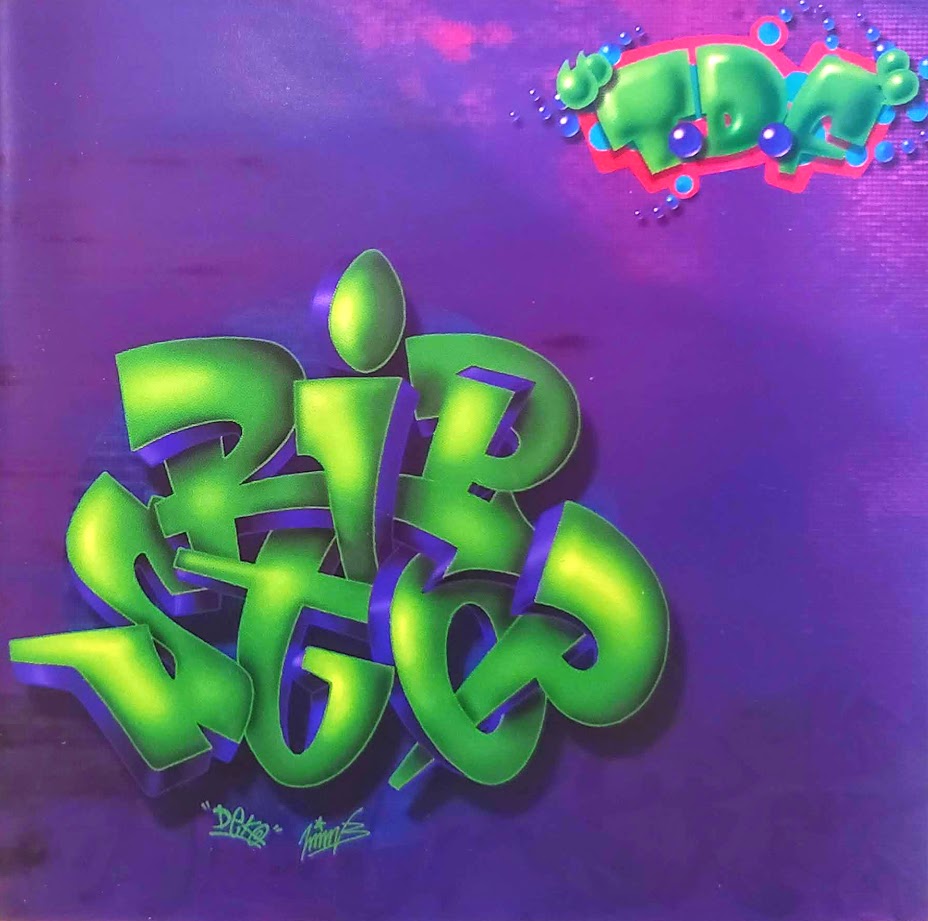
However, one album highlight does manage to sneak in near the end, the stand-out track “Rip Stop,” which mixes drum and bass beats, vocal samples, and light guitar playing by Clapton. While “What She Wants” was a single for radio play, “Rip Stop” was picked as a single for the clubs, with various 12″ releases seeing the light of day with various remixes. I suspect not a single club DJ even bothered with it, however.

The tracks I’m sharing tonight are from the Japanese CD Single for “Rip Stop.” As you can see from the remix titles, they were able to finagle some relatively big names into remixing the tracks, with two mixes by early drum and bass producer DJ Pulse as well as a one by remix giants Rabbit In The Moon (I have no idea who Shed Science is though).

As a whole, the remixes are good and work to the song’s strengths, mainly the dope beats and overall vibe. Some downplay Clapton’s guitar work to an almost comical effect, with others bring it to the forefront. Of the bunch, I enjoy Rabbit In The Moon’s take on the track the most. It’s hella long, and incorporates a lot of interesting new elements. It also is slow to bring in Clapton’s guitar. The riff doesn’t even make a prominent appearance until about halfway through the song’s 12-minute run time. It’s a good build.

And it’s certainly better than anything else Clapton put out since that song for that pool movie with Tom Cruise.


Terri Nunn’s Lost Berlin Song

Friday, January 31st, 2020

Just a single song this week, sorry. I have some good posts ready to go but I want to work on cleaning up the recordings a bit more, so hopefully you’ll be hearing stupid video game remixes and a bizarre version of “Telstar” soon.

Berlin
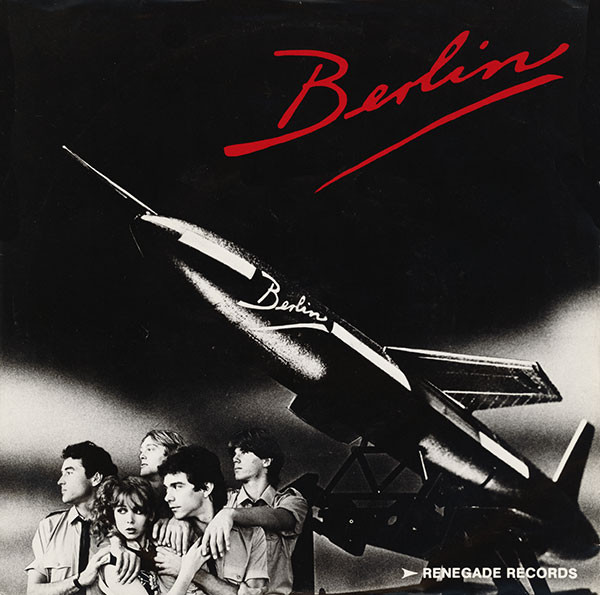
Overload (Terri Nunn Version)
I’m apparently a reputable source of information regarding the synth-pop band Berlin. I’m listed as a source on the band’s surprisingly in-depth Wikipedia page, which is hilarious to me.

Anyways, as a reputable source of information regarding the synth-pop band Berlin, I’m qualified to discuss this song in great detail. “Overload” is the B-side to Berlin’s very first single “Matter Of Time,” which was released on Renegade Records as a 7-inch single in 1979. Shortly thereafter, Berlin’s lead singer Terri Nunn would quit the group to pursue a career in acting. She would return to the group a short time later, but while she was gone the group recruited Virginia Macolino to replace her as the lead singer. With Macolino behind the mic, the band would re-record their first single, which was re-released by I.R.S. Records in 1980. The group also recorded a sole album with Macolino, the fabulous 1980 synth-punk classic Information. That album also included “Overload” and “Matter of Time,” of course with their current lead singer Virginia Macolino performing the vocals.

Nunn rejoined the band shortly after all of this and the group seemingly forgot their time with Macolino entirely, Information hasn’t been in print since it’s first release in 1980. When the time came for Berlin to release a greatest hits compilation in 1988, they included the then-rarity of “Matter Of Time” with Nunn’s vocals. But this B-side didn’t make the cut. To date, its only release has been on that very first pressing of the “Matter Of Time” single before they re-recorded it with Macolino (and the Macolino version is only on the second pressing of the single and the Information album, so it isn’t that much more common).

Synthpop in the late-70s was still wearing its punk/new wave influences on its sleeve and “Overload” is no exception thanks to its propulsive beat and sense of urgency. It’s must less polished than how Berlin would sound just a few years later on Pleasure Victim, and light years away from “Take My Breath Away.” Dope track for sure, and I’m surprised that it still hasn’t seen a proper re-release some 41 (holy shit) years later. 2020 is a garbage fire world, Berlin, please re-release Information sometime soon and make me feel happiness again.


Koto Bach by a hot koto man

Sunday, January 19th, 2020

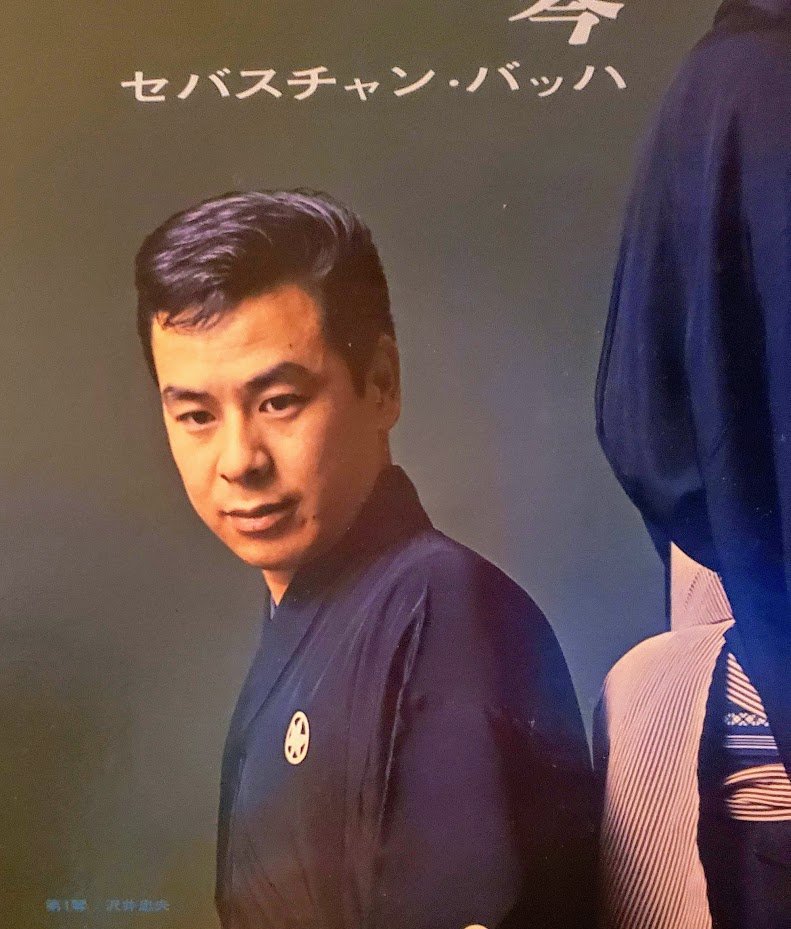
Tadao Sawai & Hozan Yamamoto
Koto Sebastian Bach (complete album download)

Fuck new wave, Berlin school, post-punk, electronica, avant-garde, and early-moog albums. Let’s listen to interpretations of classical music on traditional Japanese instruments.

This is the second “classical music but on koto” album that I’ve shared here. The first  was an album featuring Vivaldi’s Four Seasons performed on koto and shakukachi (Japanese bamboo flute). This, as the title suggests, is comprised entirely of koto-centric reworkings of Bach compositions, again with shakukachi (and some light jazz instrumentation) serving as accompaniment.

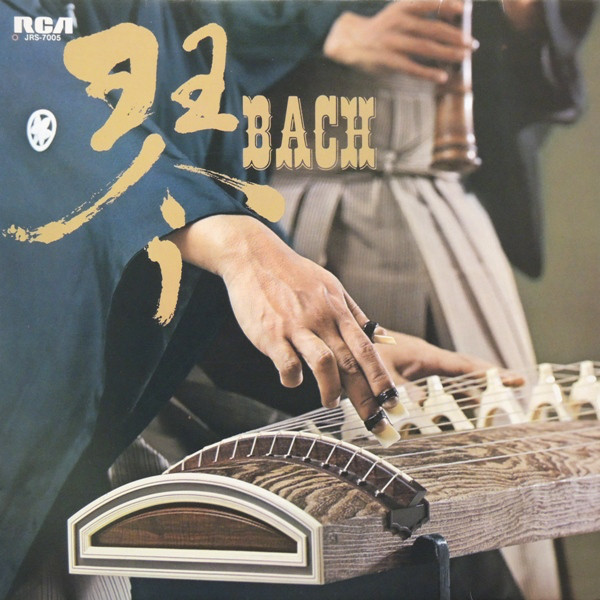
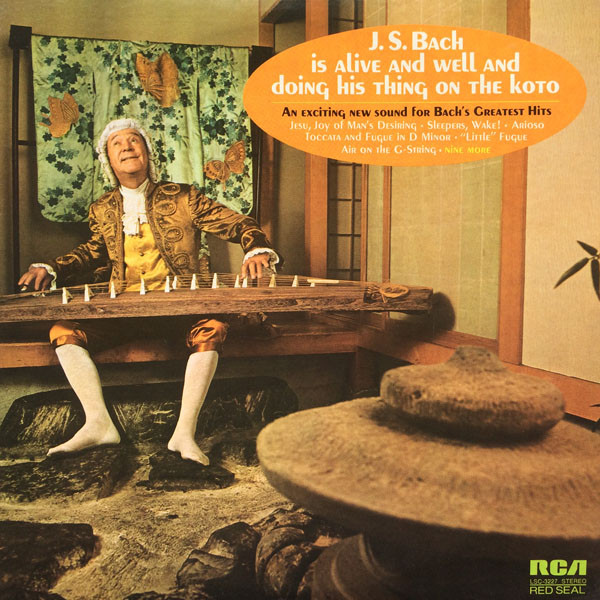
Like the Vivaldi album before it, this record is the work of Tadao Sawai and Hozan Yamamoto. This is actually their first album of classical covers, released a year prior to their 1969  Vivaldi album. Unlike their Vivaldi album, this actually got a release in America, coming out in the states in 1973 under the name J.S. Bach Is Alive And Well And Doing His Thing On The Koto. A ridiculous cover accompanied that ridiculous title change.

Yikes.

Sawai and Yamamoto would go on to collaborate on one more koto classical hybrid, Koto Amadeus Mozart, which was also released in 1969. From there, it looks like Sawai got more interested in koto reworkings of other genres, including some movie themes and Latin music. He apparently performed the theme to The Godfather on koto. I got to hear that shit.

I would also like to mention at this time that I think that Tadao Sawai was hot as hell. I mean, damn, look at this man.

He’s got them hungry eyes. Looking like he wants to take off those finger picks and show you what he can really do with those hands. Looking like he wants you to wait patiently while he properly disrobes from his traditional kimono before he can ravage you Edo style.  He’s got that big bad koto daddy look. He could…um…*desperately tries to think of a sexual koto double-entendre*….pluck me all night long if you know what I mean…and I think you do because that wasn’t very subtle at all was it?

I apologize for the sudden horny turn this post took. Enjoy the koto music.

Happy belated New Year – here’s Moby remixing Aerosmith

Sunday, January 12th, 2020

Around New Year’s I was showing a friend some other MP3 blog that shares remixes and b-sides. You know the one.

He agreed with me that it was totally lame that said MP3 blog not only shared tracks that are easily commercially available (sometimes on new vinyl even), but that the person behind the blog couldn’t even be bothered to do their own write-up about said tracks. I mean, it’s one thing to hook up a turntable to a PC, go through the sometimes arduous process of ripping a record to a digital format, cleaning it up, and then sharing it on the internet. It’s another to, let’s say, grab a rightfully forgotten piece of 90s electronica, rip it to a digital format, clean it up, properly tag it, upload it to a server that you paid for, and then write about said rightfully forgotten song.

That shit takes gumption.

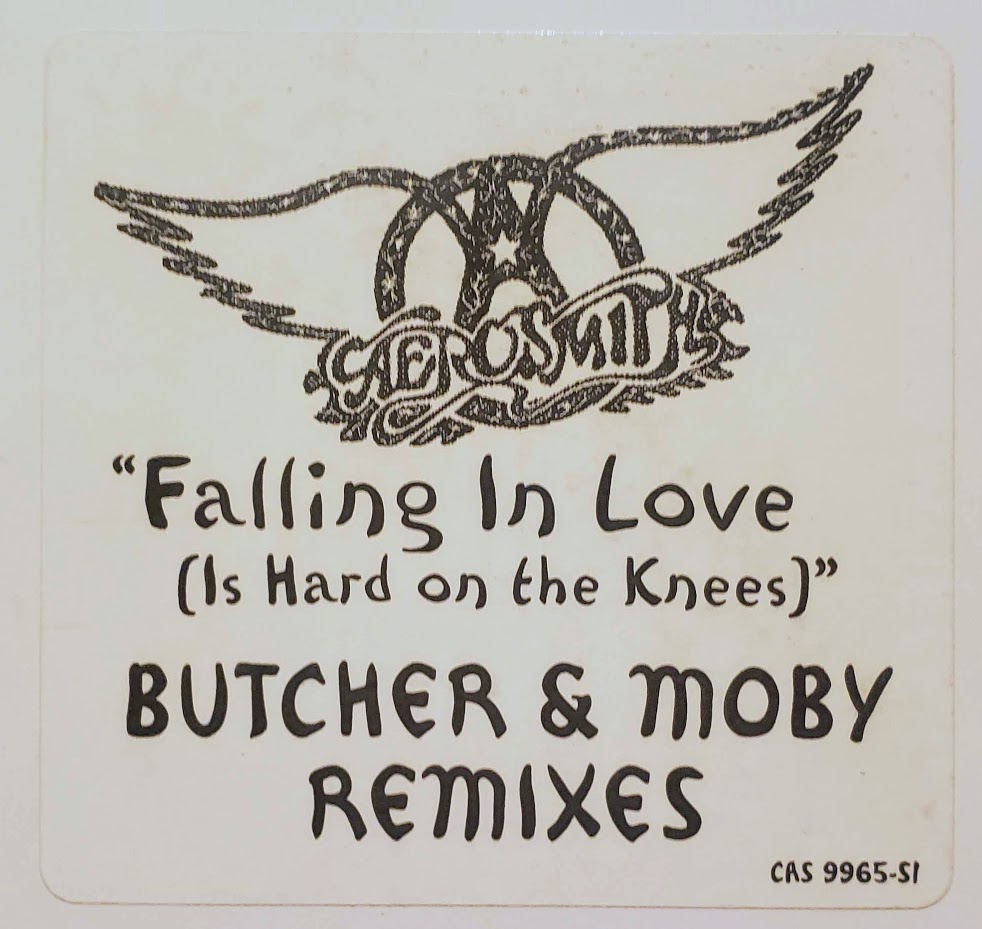
Aerosmith
Falling In Love (Is Hard On The Knees) (Butcher Mix)
Falling In Love (Is Hard On The Knees) (Butcher Mix Edit)
Falling In Love (Is Hard On The Knees) (Moby Flawed Mix)
Falling In Love (Is Hard On The Knees) (Moby Fucked Mix)

Whhhhhhhhhhhhhhhhy.

Okay, first things first, there are four remixes here. The first two are by Joe “The Butcher’ Nicolo, the founder of Ruffhouse Records. They’re good examples of your standard remix. They take the basic structure of the song, mix it up a bit, throw in a few more beats, and add some other dance elements. They’re fine. I mean, they’re as fine as remixes to very sub-standard late-90s Aerosmith track can get, but whatever. They are what they are and they accomplish what they set out to accomplish.

Then, there’s the Moby remixes.

What the fuck.

I’m not surprised that Moby remixed these songs. This isn’t an 808 State/Yes situation. He was doing a lot of remix work for rock artists in the mid-to-late 90s. This was around the same time he did remix work for The Smashing Pumpkins, Soundgarden, Blur, and even Metallica. I’m more surprised with how he remixed them. I don’t think it’s really fair to even call these tracks remixes. I think the only thing he saves from the original versions in his remixes are Tyler’s vocals, and he even cuts and screws them to an (even more) unintelligible mess. These are less remixes and more like entirely new productions that just happen feature vocals by Steven Tyler with some short snippets of Perry’s guitar. They remind me Moby’s “Next To The E” or some of the more hardcore remixes of “Go.”

To be perfectly honest, I really don’t know what to think of them. I respect that they’re just so far out there and removed from the source material. He basically took an Aerosmith song (and not a very good one at that) and turned it into a hardcore techno track. I got to give props where props is due, that’s ballsy. But this is just grating on the ears. I thought for a second that maybe I was just getting too old for this shit, but I took a minute to listen to some other hardcore techno from the era and I still dug it. This is just too much. It’s too noisy, too much is going on, and the ballistic Tyler vocals snippets layered over it (especially over the “Fucked” mix) are just too intense.

But I still find myself respecting the tracks. He took a bad rock song and, through sheer force, determination and drum samples, turned it into a…less-than-average-but-not-entirely-horrible techno track. A techno track that, had I heard it in a club in 1997, I probably wouldn’t have thought twice about it and danced right through it. Good on him. Shit, it’s still better than anything on Aerosmith’s Just Push Play, and definitely superior to anything on the last few Moby records.

Sorry to start the new year off with Moby remixes of Aerosmith songs. I had something much better planned but my recordings still sound a bit too scratchy for my tastes. I’m going to run the record through the record cleaner one more time and hope for better results before I share them. I also have just, a near-literal ton of weird Japanese electronic and/or moog albums that I want to share, so you all have that to hopefully look forward too in the coming weeks and months.


Osamu Shoji’s Star Wars – May the synths be with you

Wednesday, January 1st, 2020

I got to see Rise of the Skywalker this past Monday and thought it was just absolutely wonderful. It had some pacing and structure issues (so does Empire Strikes Back) but I loved how the movie blended the old with the new. I know it’s not the critical darling that The Last Jedi was, but I don’t care. It had a great story, fantastic character moments, and a terrific final scene. It was the first piece of any Star Wars media since Return of the Jedi that left me wanting immediately MORE Star Wars content. I’m back full-on Star Wars geek. If I had the room, I’d be buying stupid figures again. It inspired me to finally go through all the hurdles and download the “de-specialized” editions of the original trilogy so I can watch them again. It made me want to go back and watch the prequels even (well, maybe I’ll watch Attack of the Clones while doing some chores around the house). It pulled me back in.

There’s been a lot of negativity around this film and I’m still struggling to figure out why. It touched me in a way that no other film in the series had. I feel that a lot of the people who say they hate it can’t even express why. So much nitpicking tiny details, so many people demanding literally every single thing be answered and resolved in a way that matches their own head cannon. I don’t care about those things. I don’t overthink every tiny logistical and scientific detail of a Star Wars film (that’s what Star Trek is for). Yes, the movie is far from perfect, but most of its problems, pacing issues, seemingly random plot twists that don’t entirely hold up under scrutiny, deus ex machina force powers, sudden changes in character motivations, are in the other films too. I didn’t mind them then, I don’t understand why so many people mind them now.

I could keep going, but I already sound like a whiny defensive fanboy so I’ll finish by saying this; the movie made me happy. It hit all the nostalgic beats I wanted. It gave me new things to love. It reminded me why I love this franchise so much. I hope that it’s the sign of more greatness in future installments.

And if you want to comment about how much I’m wrong don’t fucking bother because this is my blog and I won’t approve them. If you have legitimate, interesting criticism of the film, I probably agree with you so there’s no need for you to share it here. If you want to whine about how “Ben Solo deserved better” or some other wanky bullshit, take your negativity to Twitter. That’s what everyone else does these days anyways.

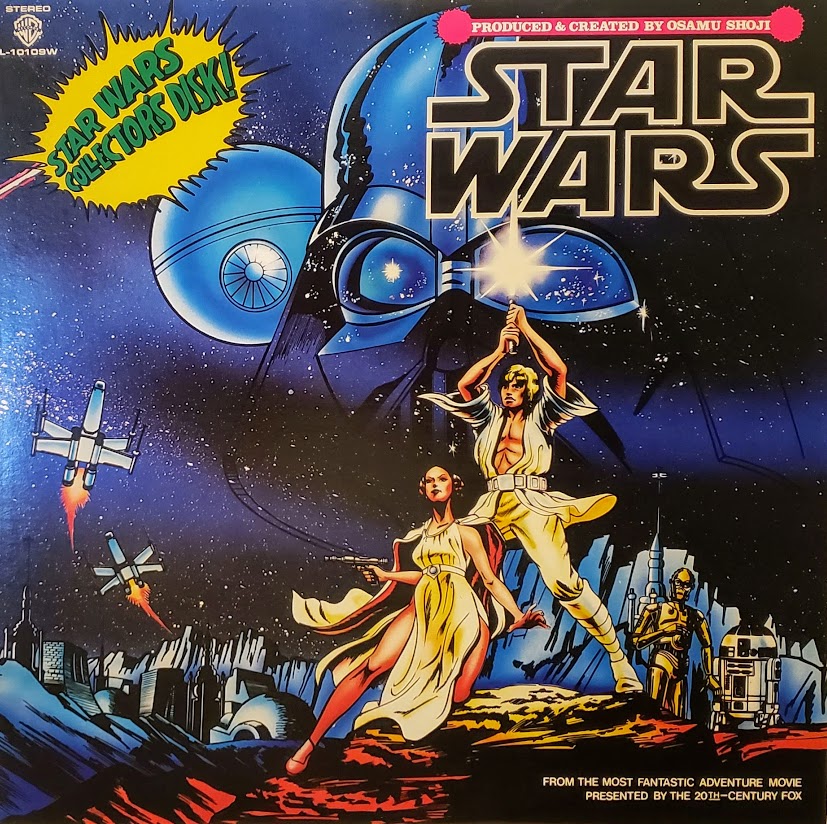
Osamu Shoji’s Star Wars (Complete Album Download)
Buy hey, Twitter isn’t all bad! Today Twitter user @keepingitpeel sent me a link to a blog post about an all-synthesizer Star Wars album, and he asked if I had it.

Of course I do. And I’m just fucking shocked and disappointed with myself that I somehow never got around to sharing it here. Starting off the new year by fixing that mistake right now.

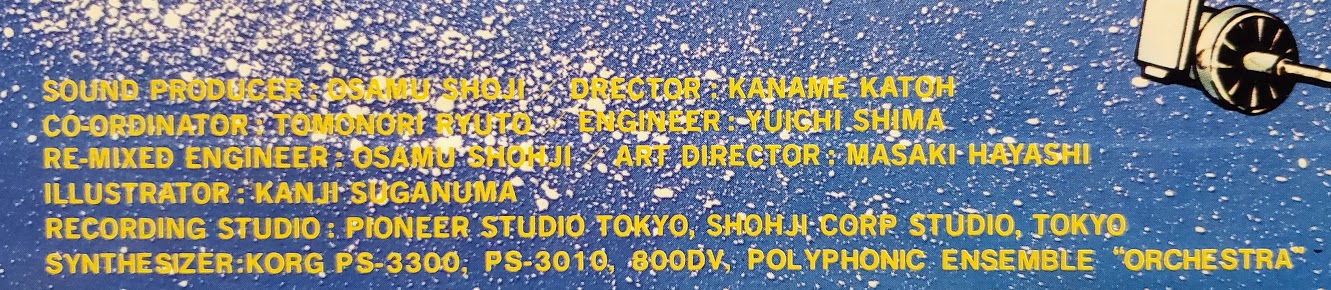
Star Wars by Osamu Shoji was released in Japan only in 1978. It’s not the only synthesizer arrangement of music from Star Wars (hell, it’s not the only one from Japan that came out that year) but it’s my favorite by leaps and bounds, thanks to the wonderful work of Mr. Shoji.

I have probably written more about Osamu Shoji more than anyone else has in English. When he sadly passed away in 2018, I put up a obituary of sorts on my other blog. He was an utterly amazing talent that took the synthesizer sound to places that others simply hadn’t before. Wendy Carlos proved that synthesizer music could sound like actual music, she made it commercially viable. Shoji built on her work to show that synthesizers could be fun, exploiting sounds and styles that were impossible on traditional instruments. It’s electronic music fused with 70s funk and jazz sensibilities. His best stuff just has an indefinable bounce. It’s just groovy, man.

His sense of goofy fun definitely comes across in his renditions of music from Star Wars. Like I said, there were many electronic takes on the Star Wars theme in the years immediately following the release of the film. A lot of the lesser-known ones failed to catch on because they just didn’t do all that much with the source material. They tried too hard to recreate the sound and feel of the original without adding anything to it.

In America, the most famous reworking of the Star Wars theme has to be by Meco, whose disco version of the main theme was actually a number-one hit single when it first came out. But I feel that had a lot more to do with the combined crazes of disco and Star Wars than it did with the actual quality of Meco’s work. I like Meco (really) but his Star Wars theme is little more than the regular Star Wars theme with a disco beat and some added instrumentation layered upon it.

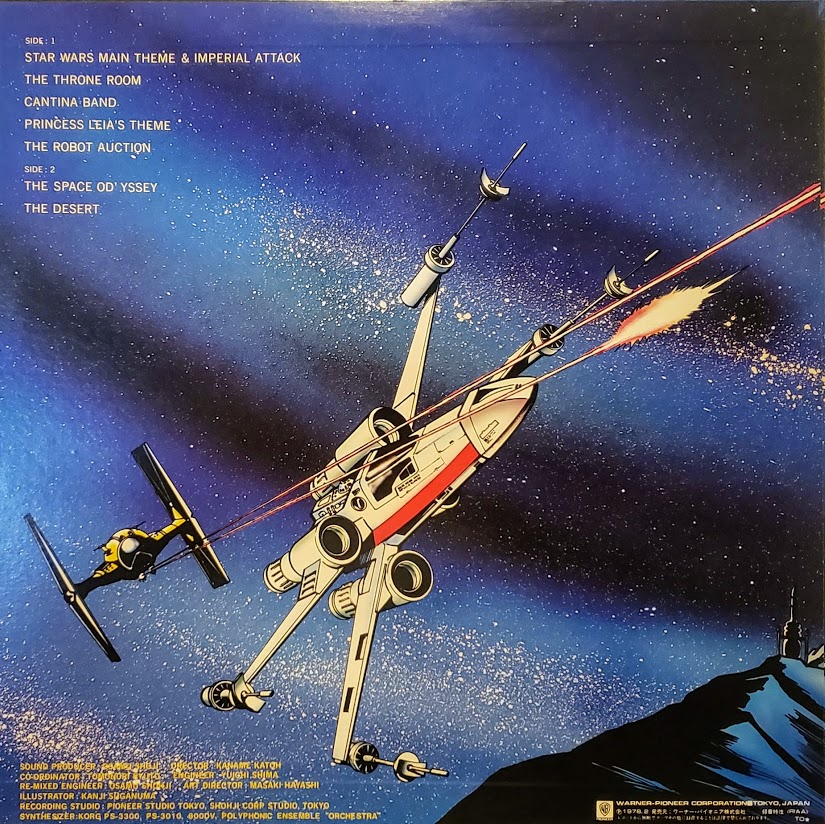
Shoji takes the Star Wars theme and just fucking goes, man. Robot laughter sounds? Sure why not. A wah-wah bass back-beat? Damn straight. A funky breakdown? You better believe it. Like a good jazz musician, Shoji throws in his own flourishes and touches to the theme, all while not deviating from it too much. It always sounds like the theme. He doesn’t let his ego get the best of him. He knows why people are here and delivers what they want. He diverges a bit more on “Throne Room” but the key moments are still there, weaving them in and out with his own elements. And that funky beat keeps the groove constant.

Shoji really lets himself go wild when he gets to the Cantina Band music though. First he plays it through in a relatively standard way, again he gives you what you want. Then, he breaks that motherfucker down and builds it back up again with a series of jams where he finally gives himself the chance to show-off. He’s pushing sounds of out his synthesizer that I just haven’t heard before. Total Emerson vibes here.

Side A of the album continues with two more pieces from Star Wars “Princess Leia’s Theme” and “The Robot Auction” that are also good. However, side B takes things in a different direction. Just like Meco did on his album, the second side of Shoji’s Star Wars album features original work by Shoji, not interpretations of music from the film. Of course, it doesn’t hold the attention like the Star Wars stuff does, but it’s still great. Shoji wasn’t just a musician, he was an extremely talented composer. He worked on countless anime during his lifetime. He also released several albums of original work (that are all super-fun).

The majority of Side B is dedicated to just one piece, the 20-minute “Space Odyssey.” As the title suggests, it’s an odyssey. It starts as a quiet, simple instrumental melody. From there, the synth strings segue in and things get downright sexy before a more eerie sound takes itself to the forefront for a pulsing, sci-fi influenced second half. The album concludes with “The Desert,” a brief coda that features Shoji at his most experimental, mixing ambient soundscapes, some elements of Williams’ score, and odd atonal bursts of noise. (It’s also the only part of the record where the surface noise is noticeable so I apologize about that).

I’m glad to see that this record is getting a bit more attention now. I hope that anyone interested in it checks out other work by Shoji. Like I said in my blog post about him, I highly recommend his album Night Flight, which also came out in 1978. It’s a fun, bright and upbeat record that isn’t afraid to get a little silly at times.  It’s groovy as hell too.

Happy New Year’s everyone! May this be the year that we finally realize that we’re not alone and that we can make a different when we all come together against a common enemy.

Yeah, I really liked the ending to Rise of the Skywalker, is it that obvious?

Best Of The Biscuit – Missing Persons

Friday, December 27th, 2019

I overindulged after finishing my last day of work before a two-and-a-half week vacation and now I’m nursing a hangover and dealing with the regret of consuming a heroic amount of whiskey while watching the Masters of the Universe movie with Dolph Lundgren.

I never said I was a role model.

Best Of The Biscuit – Missing Persons

Missing Persons are not good hangover music.

This is the second part of the August 7th, 1983 Best Of The Biscuit radio show. The first part, which was a Thomas Dolby concert, can be found here.

I’m not a Missing Persons enthusiast, so I can’t speak to what die-hard fans would want to find on a Missing Persons’ concert from 1983. Speaking as someone who probably owned their first album at some point (just seems like something I should have bought), I can say that I’m very happy with this short, six song set. We get “Words,” “Destination Unknown,” and the immortal “Walking In LA.” In addition to those all-time classics, the group also performs the bangers “Mental Hopscotch” and “I Like Boys,” which I had never heard before and wish I had so I could’ve put it on a slutty playlist back when I was single (somewhere between Lady Gaga’s “Do What You Want With My Body” and an electro-punk cover of “Boys Boys Boys”). Also here is “Windows,” another lesser-known (to me anyways) piece that’s very good.

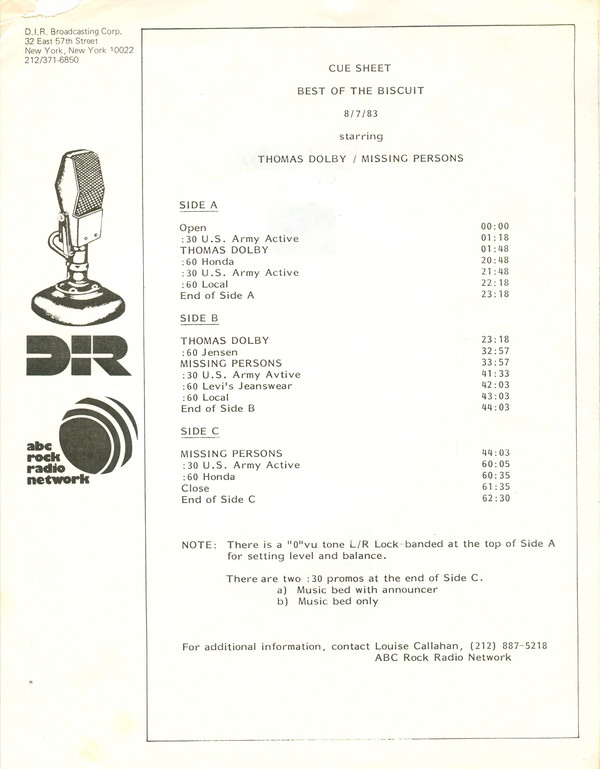
I’m once again including the commercials, which are sadly still mostly Army bullshit, with an ad for Honda at the very end. At the end of this side there’s a bit more though. You get some production credits for the show, followed by two 30 second promos for the program. One of them features commentary by an announcer, while the other is just the musical clips playing. I assume the latter is there so local radio stations could put their own DJs on the ad if they so desired.

Happy new year! And stay safe this New Year’s. Don’t drink an entire bottle of whiskey and sure as hell don’t watch Masters of the Universe.

Best Of The Biscuit – Thomas Dolby

Thursday, December 19th, 2019

Best Of The Biscuit – Thomas Dolby
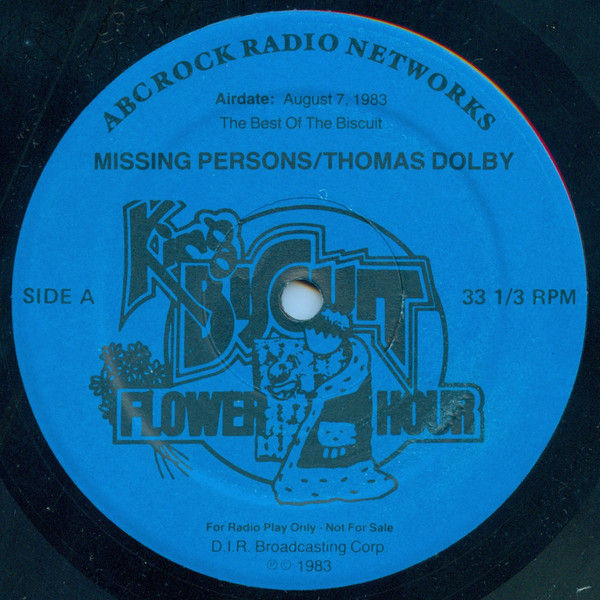
Right after I bought and wrote about a radio-only LP live show compilation called Live Tracks, I just happened to stumble upon another one at an entirely different record store. While the previous radio show I bought seemingly a derivative of the King Biscuit Flower Hour, this one is the real deal, a “best of” episode that originally the aired the week of August 7th, 1983. Split into two parts, the majority of the episode is dedicated to a Thomas Dolby concert, while the later bit showcases a few songs from a Missing Persons show. Since there’s so much content here, I’m splitting this into two posts, with the Thomas Dolby up first.

This is not a complete show unfortunately. If Discogs is any indication, King Biscuit broadcasted a more complete (if not entirely complete) version of this very same concert on May 3rd of the same year, just a few months before this “best of” version. That’s some quick repackaging! They might have even repackaged it once more for another program in the following year, or that could just be another Dolby show, hard to say.

Nearly everything Dolby performs here is from his 1983 debut album, or from assorted singles (that would eventually make their way into various permutations of said debut album – it’s been re-issued a lot). The sole exception is “New Toy,” which is a song that Dolby wrote for Lene Lovich for her debut EP. Lene Lovich actually joins Dolby on stage for this one. I have no idea how rare live performances with both of them are for this one, maybe they toured together and played it all the time, or this was a one-off special appearance. Regardless, it’s cool.

Just like the last radio show I shared, this too has commercials. Unfortunately, this time around they aren’t horribly inappropriate beer commercials that feature racist stereotypes and encourage underage drinking. Instead, they’re just commercials for the US Army (boo!). I remember these commercials though, so while I won’t say that it was cool to hear them again (again, boo military-industrial complex!) it did trigger a nostalgia dopamine response. Haven’t heard that “be all that you can be” jingle in ages. It’s also hilarious to me that the army sponsored a radio show with the aggressively anti-imperialist “One Of Our Submarines Is Missing.”

Also, how many die-hard synthpop fans from the early 80s were down with the thought of joining the armed forces? I feel that the military’s advertising budget could’ve been better spent on radio shows featuring AC/DC or Ted Nugent.

Enjoy the show (this one is “properly” numbered by the way) and, for those of you who celebrate Christmas, merry Christmas. I’ll be back next week with the second half of this radio show, hopefully.