Author Archive

My RSS feed has NOT been hacked

Monday, August 13th, 2012

Holy Shit!

If you’re seeing spam on my RSS feed that’s because someone has hijacked my old Blogger domain and is using it to send out spam. Delete that feed! The only Lost Turntable feed you need can be found on the right tool bar!

Actual post with music later this week.

My fifth favorite Belgium EBM act. Also Blondie.

Sunday, August 12th, 2012

I guess NBC borked the Closing Ceremonies, cutting out Muse, The Who, Kate Bush and a ton of other amazing performances. I didn’t even bother watching it, because  I knew that would happen. I’ll just download the BBC’s broadcast in a few days. Once I do that, I’ll probably convert the whole thing to audio and then make MP3s out of the best songs. I probably can’t share them here though, because I hear the IOC cracks down pretty hard on any blogs that put up that stuff.

You guys know I’m on Twitter right? I mean…you should totally follow me on that.

*whistles innocently and walks away*

Front 242
Rhythm Of Time (12″ Remix)
Rhythm Of Time (Anti-G Mix)
Rhythm Of Time (Victor The Cleaner)
I’ve been trying to get into Front 242 for a long time, and will occasionally buy a 12″ single when I see one used, hoping it will be the track that finally gets me to appreciate them, but it’s always been to no avail. That is, until now, I think I finally found the song that will get me to dig into their actual records. Of course, it’s “Rhythm Of Time,” the closest thing the band ever had to a hit, so I guess that makes me a mainstream-leaning poser, but whatever, I like my hardcore industrial electronic body music to have a slight pop edge. Blame Nine Inch Nails.

Blondie
Call Me (The Ben Liebrand Remix)
Backfired (Remix)
I was going to start this description by saying that it would be impossible to find any connection between the Front 242 tracks and these Blondie remixes by producer Ben Liebrand, but then I went and found one. Liebrand is from the Netherlands. Front 242 is from Belgium. They are literally connected, sharing a border. So there you go.

These remixes are from 1989, several years after Blondie called it quits, and several years before they eventually reformed in the 90s. I think that Chrysalis Records just occasionally put these things out whenever they needed a quick buck. Still, I guess there are worst ways to pay the bills. At least they scored some great producers to have a go at these tracks. Ben Liebrand is a stellar producer/remixer who has worked with Genesis, TLC and Grace Jones, to name a few,  the fact that he’s still making and releasing mixes shows that he’s doing something right. As for the “Backfired” mix, that was done by Bruce Forest, a DJ who did mixes for The Soup Dragons, OMD and a ton of other great artists from the late 80s and early 90s. It’s good, but of the two I think I prefer Liebrand’s take on “Call Me,” thanks to its extended synth sections that really work to Moroder it up in a great way.

This is a lot of Peter Gabriel

Wednesday, August 8th, 2012


Peter Gabriel
Big Time (Dance Mix)
Biko (Remixed Version)

Biko (Twelve Inch Extended Version)
Don’t Break This Rhythm
GA-GA (I Go Swimming Instrumental)
I Have The Touch (85 Remix)

In Your Eyes (Special Mix)
In Your Eyes (12″ Remix)
Jetzt Kommt Die Flut (Here Comes The Flood)
Sledgehammer (Extended Mix)
Sledgehammer (Dance Mix)
Shosholoza

Soft Dog

My god that’s a lot of Peter Gabriel isn’t it? I better get right into explaining what I got here. Keep in mind, this is a lot of music, so if I get my details as to how each mix sounds different than the original versions, please forgive me. One man can only memorize so many 12″ singles.

The “Big Time” mix is from the 12″ single, and expands on the original by about a minute and a half, most of which comes from an extended opening. Once you get past that there isn’t that much of a difference between the two versions, although they are mixed slightly different. Doesn’t matter, both are awesome.

Both mixes of “Biko” are longer than the album version, which is really saying something considering how long that track is. The “Remixed” version is actually longer than the “Extended” cut, with some added African chants thrown in the end. A powerful track made more powerful with their addition, in my opinion.

“Don’t Break This Rhythm” is a b-side to “Sledgehammer” and a kick ass one at that. I’m surprised it didn’t make it onto So. Not only is it better than some of the tunes on that album, but it could have held its own as a single. Great tune.

Also from the “Sledgehammer” single is the remix of “I Have The Touch,” a song that originally appeared on Gabriel’s 1982 self-titled album (aka  Security). How is a song from 1982 remixed for 1985? If you guessed “more synthesizers and drum machines!” you’d be correct. It’s mostly only really noticeable in the intro though.

Now for the really important stuff, the remixes of “In Your Eyes” aka (One Of) The Greatest Love Songs Ever Recorded. The 12″ Remix isn’t that different than the album cut, it’s about 45 seconds longer and most of that goes into extending the breakdowns. The Special Mix, on the other hand, is a drastic reworking of the song, with a much greater African influence. If you’ve seen Peter Gabriel live before, this version should sound familar. I like it, but Lloyd Dobler was right in using the album version.

“Jetzt Kommt Die Flut” is literally a German version of “Here Comes The Flood.” Same song, different language. Gabriel must have had a pretty big following in Germany, as he did this for quite a few of his early albums. Like “Here Comes The Flood?” Speak German? This track’s for you.

The instrumental version of “I Go Swimming” is for some reason called “GA GA” and is from the 12″ single to “Red Rain.” Makes sense that a single that strange would get an even weirder B-side. I have no idea if Lady Gaga listened to this growing up. Probably not, as it’s actually good.

“Sledgehammer,” the cutest, sweetest song about doing it that has ever been recorded, is presented here in two very different mixes. The “extended mix” is actually the shorter of the two, and is pretty much the album version with a tacked on intro. The “Dance Mix” is the real find, a full seven-and-half minute mix of the song with extended instrumental sections, more horns and lots more of Peter Gabriel yelling “Sledgehammer.” It’s rad.

Finally we have “Shosholoza” and “Soft Dog.” The former is a looped African chant, and the other is a near-instrumental ambient piece. Both are b-sides from Security-era singles.

Welcome To The Trevor Horn

Monday, August 6th, 2012

I have huge news!

I can’t tell you it. But it’s really huge. And awesome.

When can I tell you the huge news?

Soon. But until then, hey some cool 80s music!

Yes
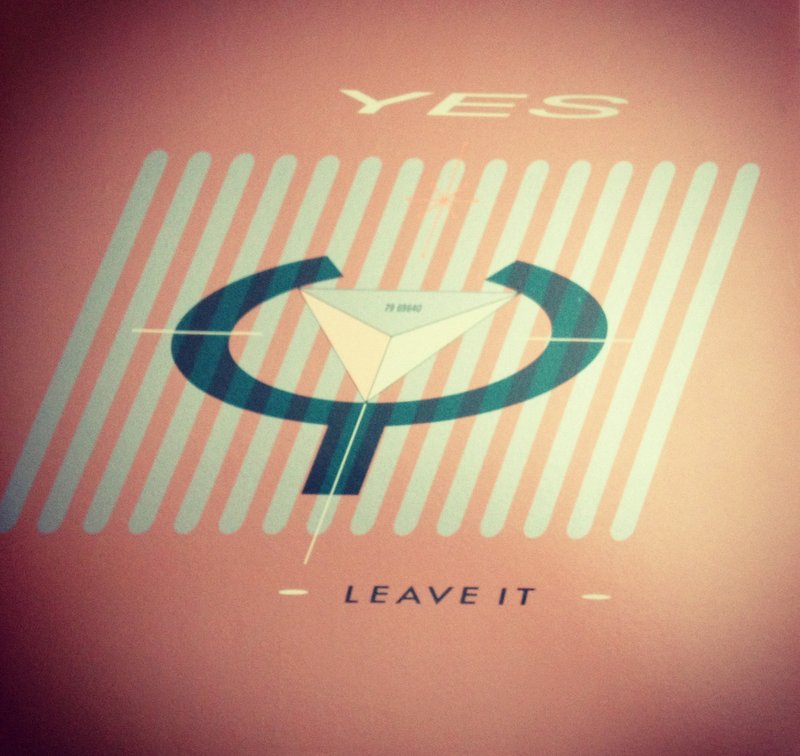
Leave It (Hello, Goodbye Mix)
One day I’m going to cave and actually listen to 90125, the Yes album that gave the world “Owner Of A Lonely Heart” and this equally good gem of 80s synth nonsense. It seems like the kind of stupid brilliance that I would fall in love with. But I’ve always wondered if actual hardcore Yes fans liked the album when it first came out. By all accounts it seems to be a very serviceable, above average synthpop record, but Yes was a prog rock band! Shit, there isn’t one song on 90125 that’s over 10 minutes long, fans of Tales from Topographic Oceans (the 2LP Yes album with FOUR 20 minute songs) must have been pissed at the time! However, their albums leading up to 90125 were allegedly so bad that maybe they took whatever they could get at that point that wasn’t outright horrible. I certainly know how that can be, as a Def Leppard fan I would settle for a post-punk revival rip-off record by them if it was halfway decent.

Or maybe all of their die-hard old fans were replaced with Frankie Goes To Hollywood fans, as Trevor Horn produced both 90125 and the seminal work of 80s excess, Frankie’s Welcome To The Plesuredome.

Frankie Goes To Hollywood
Happy Hi (Live)
Get It On (Live) 
Born To Run (Live) 
Warriors (Instrumental)
I have to give it to whoever is in charge of the Frankie Goes To Hollywood back catalog, they seem to be doing a pretty good job of re-issuing it. First there was the Twelve Inches two-disc compilation and now there’s the new Sex Mix 2 disc set that features even more rare and hard to find Frankie goodies (although I guess there’s a pretty severe mastering error on that one).

I give it up to them for going for the deep cuts and re-issuing long out-of-print and rare tracks, but I really think it’s time for them to go the distance and just put it all out. If there was any band that is deserving a full-on mega huge box set collecting everything it would be Frankie Goes To Hollywood. I want every remix, every edit, every alternate version, every live cut. Everything. Yes. It would be huge. Yes. It would be expensive. But I would buy the shit out of that thing and I be quite a few people who read this blog would too.

Until then, enjoy these live cuts and an instrumental track that have yet to see the light of day on any of the numerous Frankie re-issues that have been put out so far.

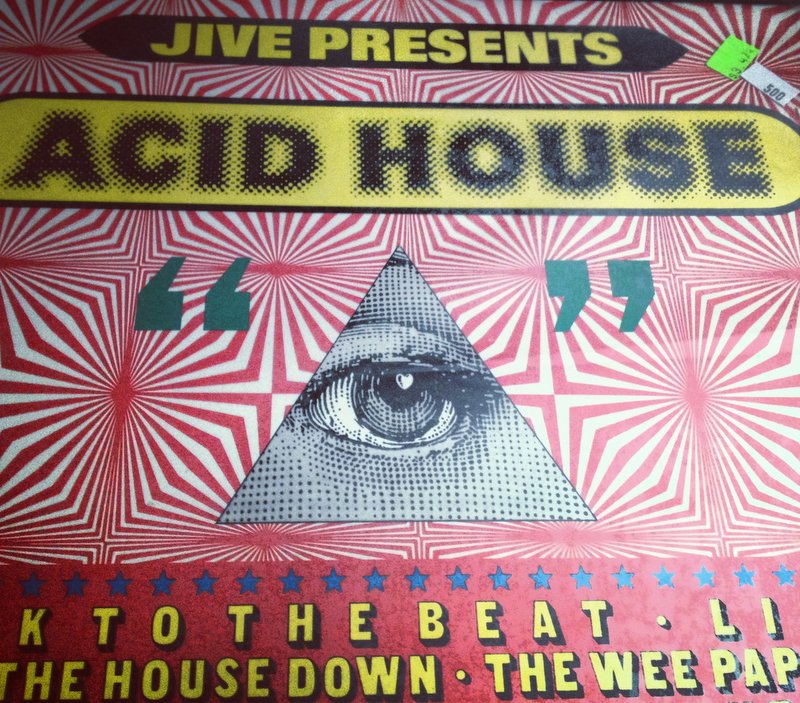
Jive Presents Acid House

Friday, August 3rd, 2012

Are you ready for some acid house?

Acid house, for you young kids out there who may not know, was one of the most influential and important dance sub-genres of the late-80/early-90s. It was an offshoot of Chicago house that employed the unique properties of the Roland TB-303 synthesizer-sequencer to create a sound that was more electronic, bizarre and trippy than anything that had been heard before. If you’re interested in reading more about the genre’s history and its sound, I suggest checking out the wiki, although it barely touches on the importance and lasting impact of the genre.

I think acid house has been kind of forgotten by the younger generation of electronic music fans, which is a shame as it was a key point in the history of electronic music. Before acid house, most dance music still had one foot in disco, relying way too much on four-on-the-floor beats and kick drums. By the time acid house made its way to England in the early 90s, it had stripped all of those aspects away, becoming one of the first purely electronic forms of dance music. Yes, I know other electronic dance music existed well before acid house, but it was one of the first to really catch on with the club crowd in a big way. Hell, as that wiki mentions it’s probably solely responsible for the birth of the UK rave scene (well, that and ecstasy).

That’s the scene that gave birth to Underworld, Fatboy Slim, The Chemical Brothers, The Orb, Prodigy and countless others acts that would go on to dominate electronic music (and to some extent pop music) in the later half of the 90s. Do you like electronic music? Then you should at least respect acid house, because without it your favorite electronic artists of today probably wouldn’t exist.

Which brings us to this album, one of the earliest compilations of the genre that I can think of. All the tracks on this record exemplify what made acid house acid house; simple beats, remixed and sampled vocals; and more 303 “squelch” sounds than you can shake an off-brand drum machine at. All awesome stuff, so let’s get into it.

Lisa M
Rock to The Beat (Short Circuit Mix)
A great seven and a half minute jam that combines the excellent acid sounds of the genre with some amazing vocals by Lisa M, whose full name is Lisa Moorish. She released one album, I’ve Gotta have It All, in 1996 on Go! Beat, but I think that was her only release as a solo artist. Since then the London-based singer has appeared as a backup singer on a few different releases, including singles for Ash, Oasis and Babyshambles. Didn’t see that one coming. This is one of the best songs on the album.

The Wee Papa Girls
Blow The House Down (Hard Core Mix)
The hideously-named Wee Papa Girls were a UK-based pair of rappers who released two albums on Jive in the late 80s and early 90s before calling it quits. I can’t find much in the way in activity for either of the girls after they split up. To be honest, their vocals are the least interesting thing on this excellent track, one again it’s the radical sequencer work that steals the show. Love this tune, it’s a sonic freakout.

Children Of The Night Featuring Rankin’ Roger
We Play Ska (Trojan Horse Mix)
While “We Play Ska” is a really odd name for an acid house tune, it’s a pretty accurate one. If there ever was a ska/house mash-up, it would be this track, thanks to is offbeat combination of 303 acid grooves with reggae vocals, trumpets and what sounds like a sample from a vintage ska track. We’ve been over how I feel about ska, but I do love anything with a hard 303 sequence, so I dig this track.

As for the people behind the music, Children Of the Night were Neil Rushton and Wayne Archbold, two DJ/producers who did more stuff behind the scenes as managers and producers than as artists themselves.  Rankin’ Roger is the MC on the track, and he released two CDs, one in 1988 and another in 2001. So I’m really looking forward to his 2014 release.

Mr. Lee and The Chi Town Posse
Pump It Up (Pump the Acid Remix)
Mr. Lee is a Chicago-born rapper who found some success in London in the early 90s thanks to his dance/rap hybrid style. Other dance hits by Mr. Lee include “Pump Up London,” “Pump Up Chicago” and “Pump That Body.” Apparently, the dude was pumped and wanted you to be as well. I’m not a huge fan of his rapping, but I love the sequencing on this tune.

And before you ask, I have no idea who The Chi Town Posse is.

Big Fun
Living For Your Love (Blow the Amp Mix)
Big Fun were a boy band, but apparently someone in their production group decided they should have an acid house remix. I’ve never heard the original version of this track, but I bet it’s pretty different than this remix, which is over seven minutes long and dissolves into nothing more than a sequencer melody and a drum beat near the end. Not a horrible track, but definitely the weakest song on this album.

Rhythm Is Rhythm
Beyond The Dance
Rhythm Is Rhythm is Derrick May.

Derrick May, in case you aren’t aware, was one of the originators of Detroit Techno. Meaning he’s one of the originators of techno as a genre of music. So yeah, he’s a big deal. Needless to say, this song is fucking fantastic and you should listen to it now.


Blur 21: First Impressions

Thursday, August 2nd, 2012

Quick review-type-thing for those with short attention spans: the Blur 21 box set is as awesome as it is huge (and in case you didn’t know, it’s freakin’ huge). So if you like Blur, you should probably just go ahead and buy it. If you want to know what makes it so awesome (and in some cases, a little less than awesome) feel free to read on. However, I want to note that this is not a full-on review of the box set. This thing is huge (seriously, I’m going to use that word a lot to describe this beast) and I haven’t had time to absorb it all, so I don’t think it’s fair to call this a review because of that. Like the headline says, these are my first impressions of the box, nothing more nothing less.

Now let’s do this.

Sound Quality
Since an alarming number of people come to this blog to find out about this stuff, I suppose I’ll cut right to the chase and start with my findings about the quality of the remaster.

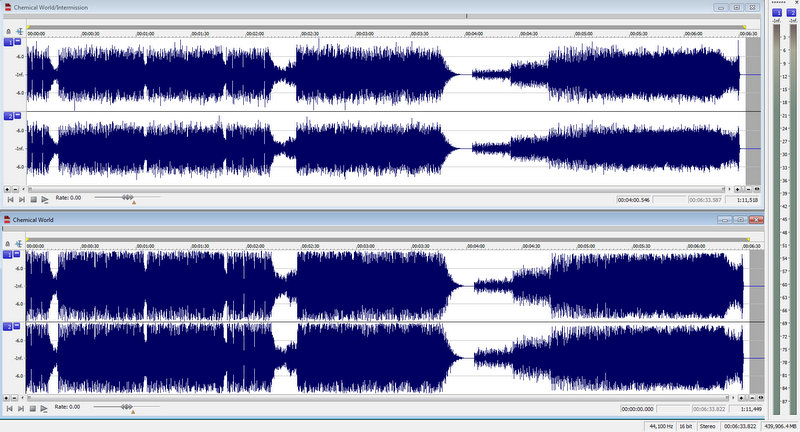
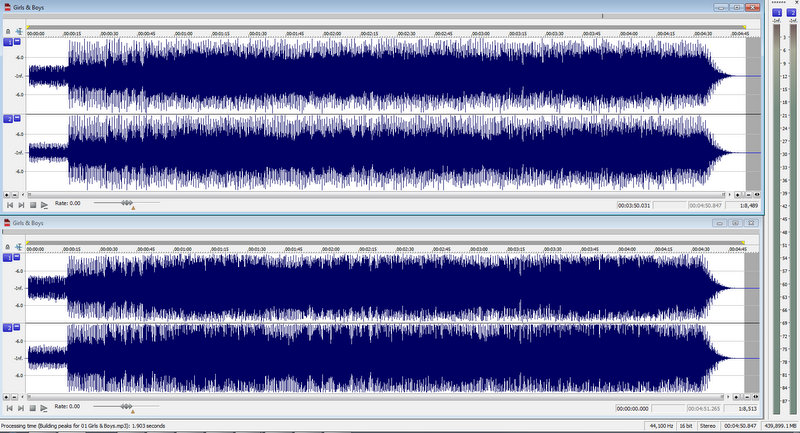
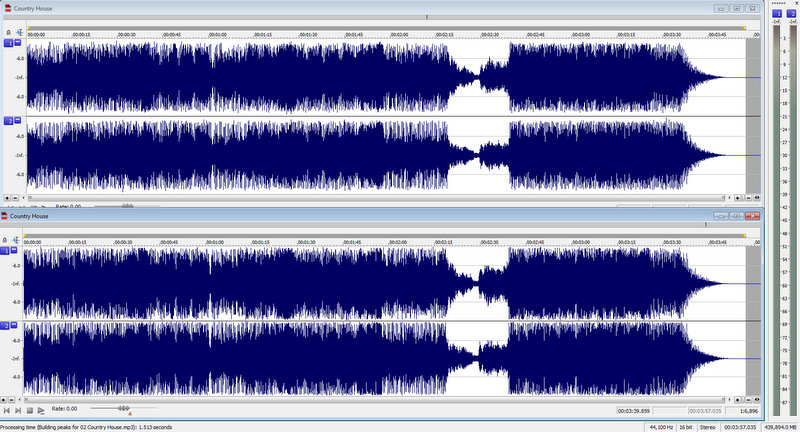
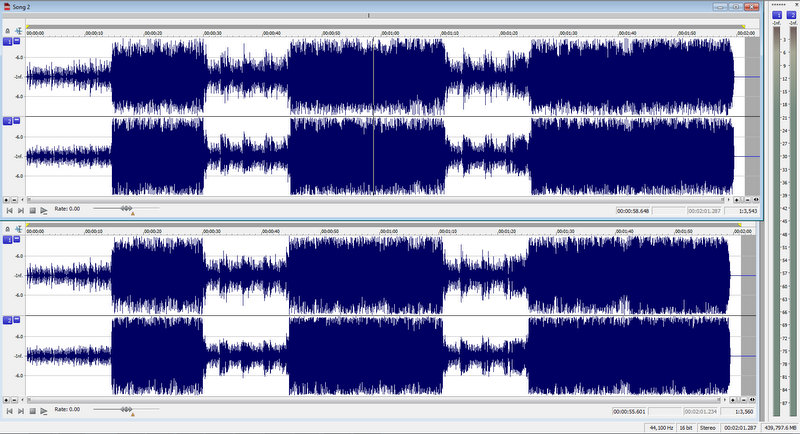
According to the promotional materials for Blur 21, only the first five CDs have been “remastered.” As longtime readers of my blog know, “remastered” more often than not really means “take out the dynamic range and compress the song so its all a loud pile of shit.” So how do the remastered Blur CDs make out? Well, see for yourself. Below are screen captures of waveforms from five songs, one from each remastered CD. In each capture the top waveform is from the original non-remastered version of the album, while the bottom is taken from the remastered edition. Below each screen capture are measures of each version’s dynamic range (the difference between the loudest and quietest parts of a recording). The higher a dynamic range, the more of a difference. For the most part a  higher dynamic range is better.

There’s No Other WayOriginal – 11
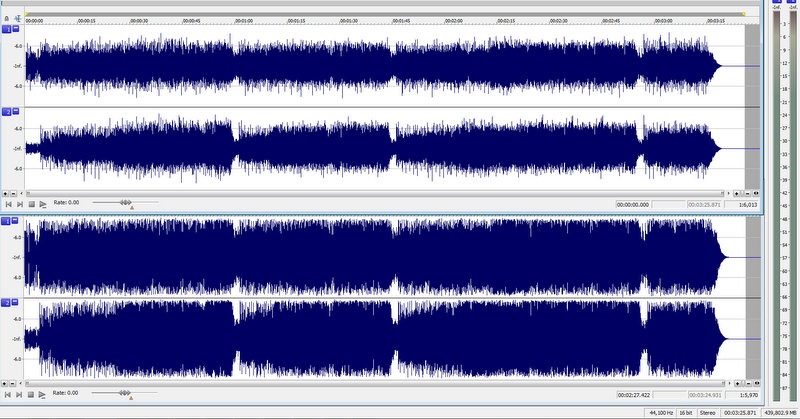
New – 7

Chemical World
Original – 12
New – 9

Girls & Boys
Original – 13
New – 9

Country House
Original – 10
New –  8

Song 2
Original –  8
New –  8

In some cases those look like some pretty drastic differences, and they are. However, I really can’t hear that much of a difference or any kind of degradation in quality. I think that’s because that, even though the remastered versions are louder, there’s no clipping and nothing is distorted or chopped off for the sake of loudness. Much like the Smashing Pumpkins’ Siamese Dream remaster, it appears the Blur albums were taken to their absolute limit of loudness without causing distortion. It’s kind of pointless, but like I said, I really can’t hear that much of a difference. I’m sure there are hardcore Blur fans who will be outraged by this, but sorry, I’m not one of them.

Presentation
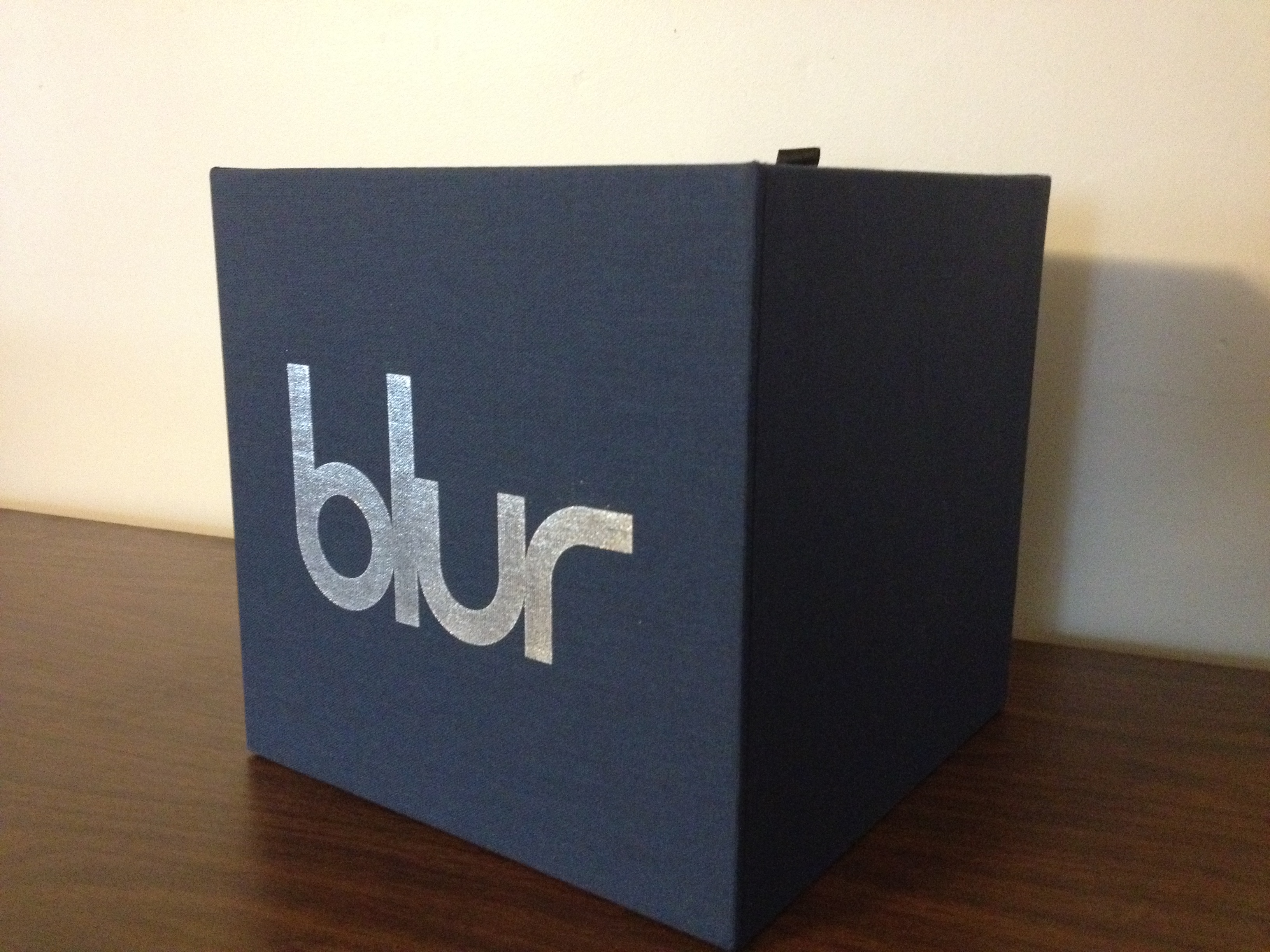
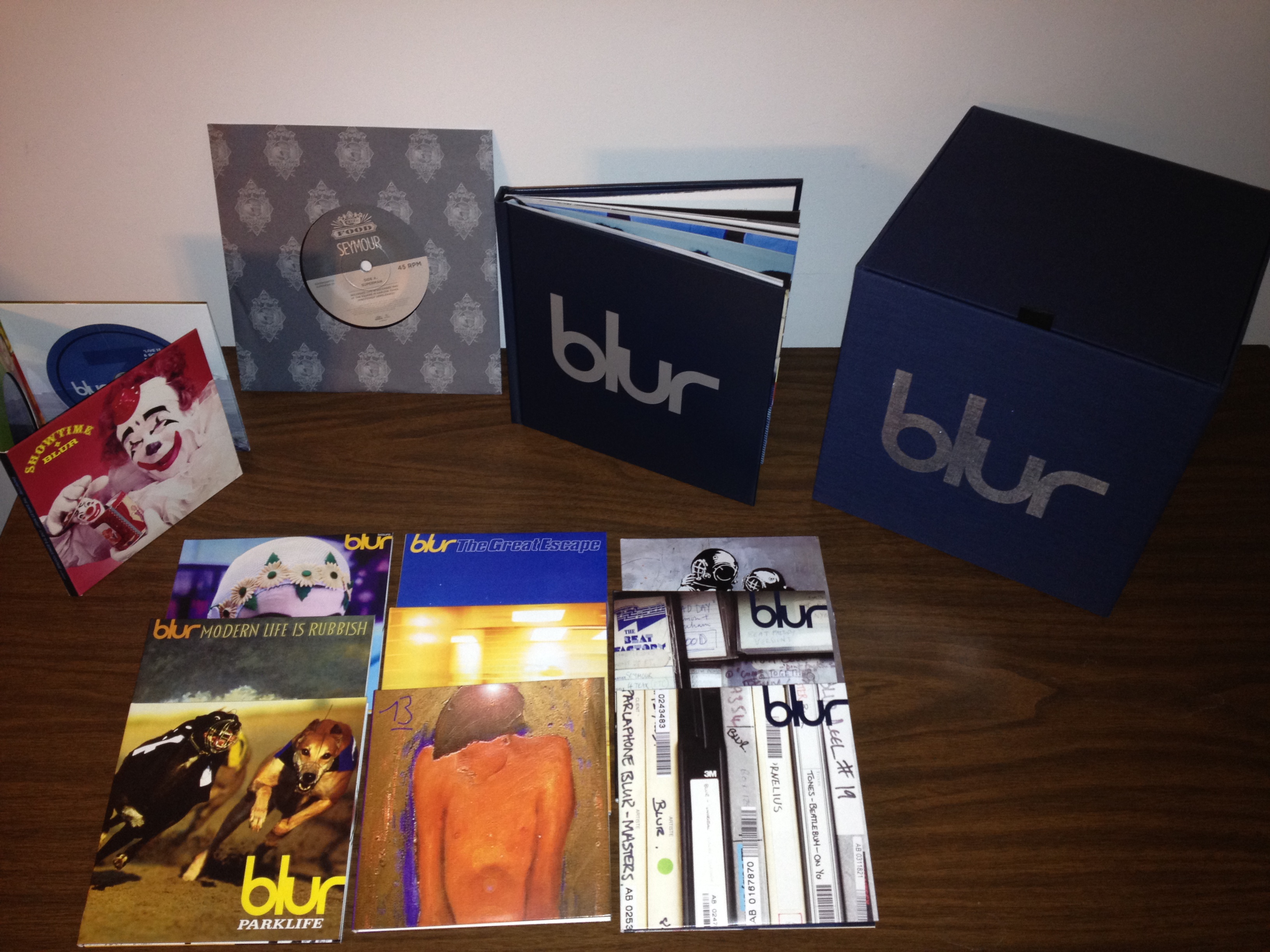
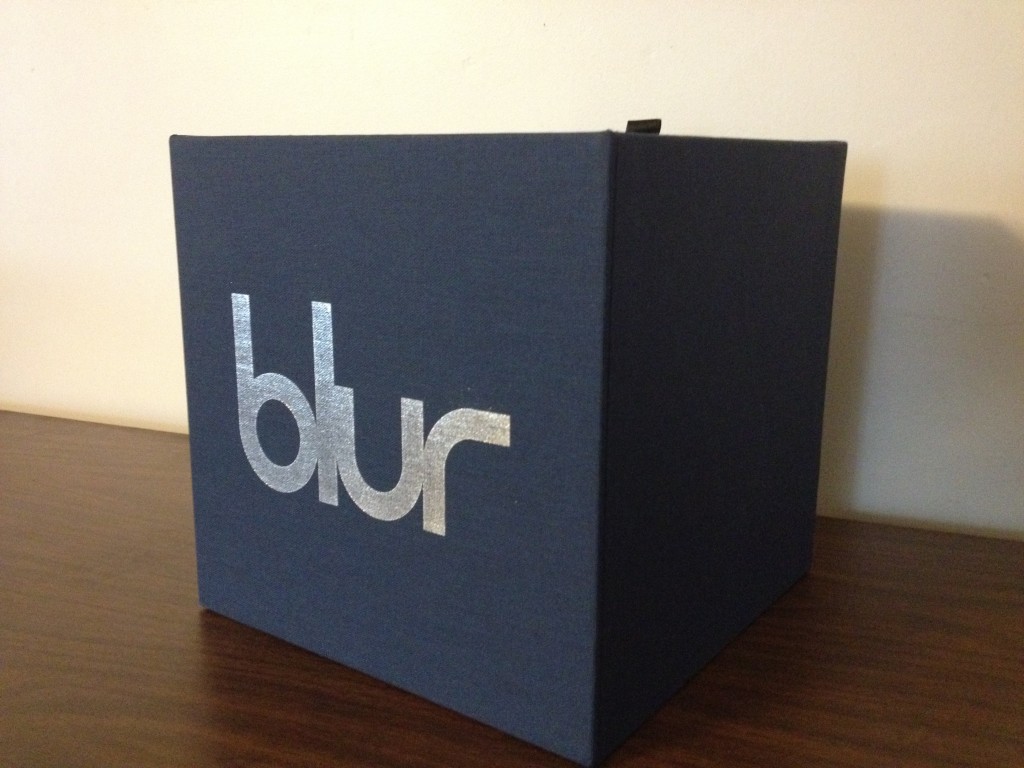
When I first saw promotional materials for the Blur 21 box I was less than impressed. It just seemed like a tiny blue box with a silver Blur logo on it. Not at all cool looking. Well, I was wrong. Turns out it’s a giant blue box with a silver Blur logo on it. This thing does house a 7″ single (more on that in a bit) so to fit that thing in there the entire box has to be 7″ x 7″ x 7″. That doesn’t sound that big, but trust me, this is one hefty looking cube of music. It’s going to hold its own on my record shelf next to my LP box sets. Opening it up and emptying it out really shows how big it is.
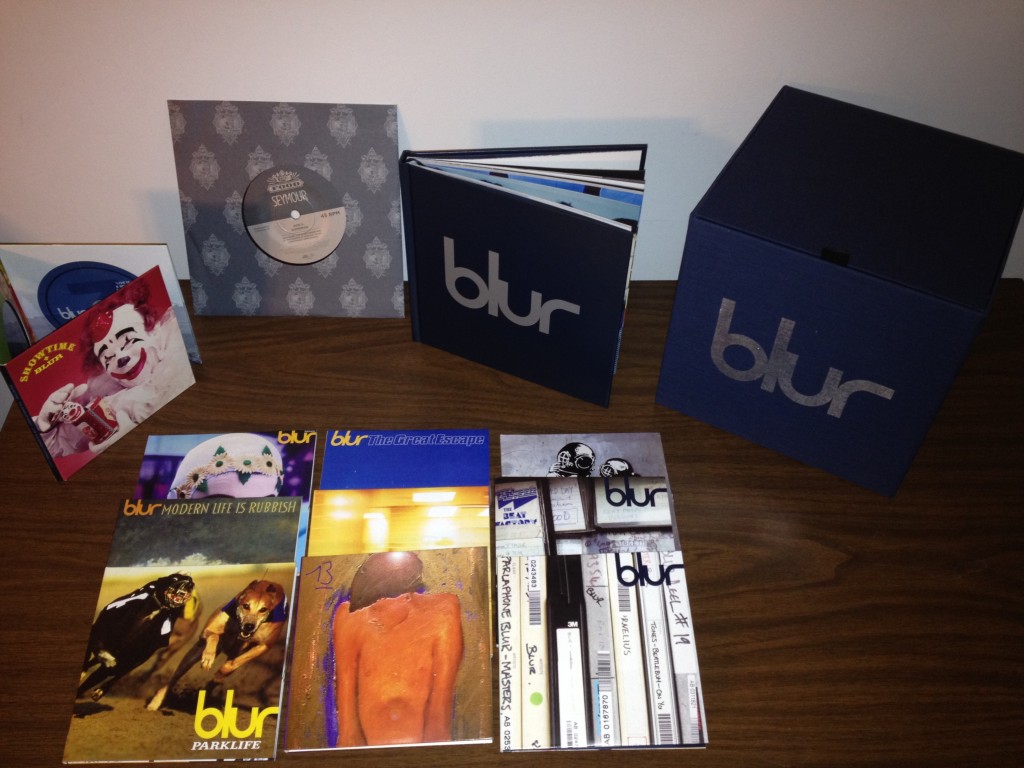
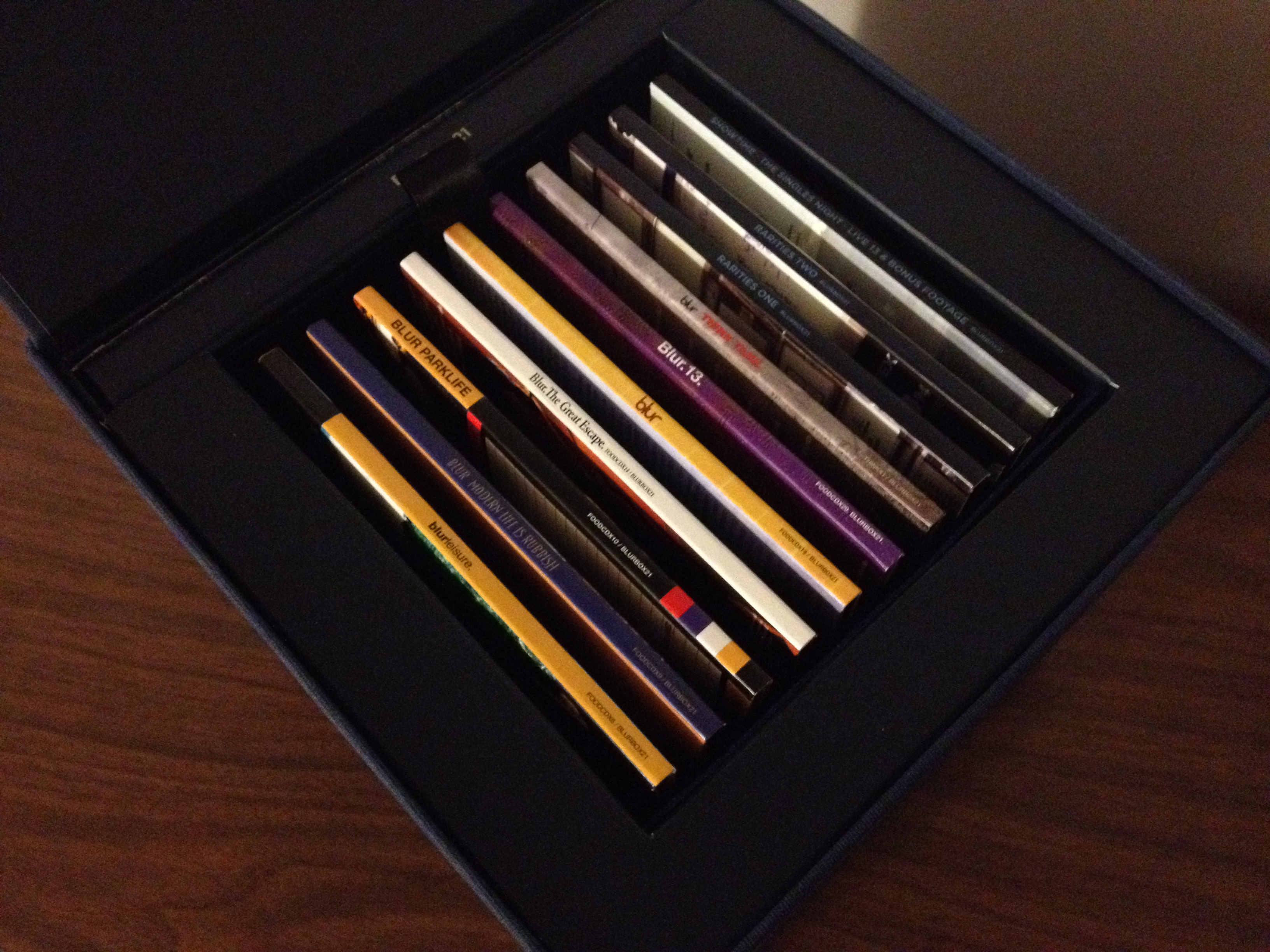
The inside of the box is laid out rather well also, with the CDs arranged nicely in a little rack in the center, with the 7″ single and an awesome hardcover book that covers everything you’ve ever wanted to know about Blur stashed away on the side. Very slick.
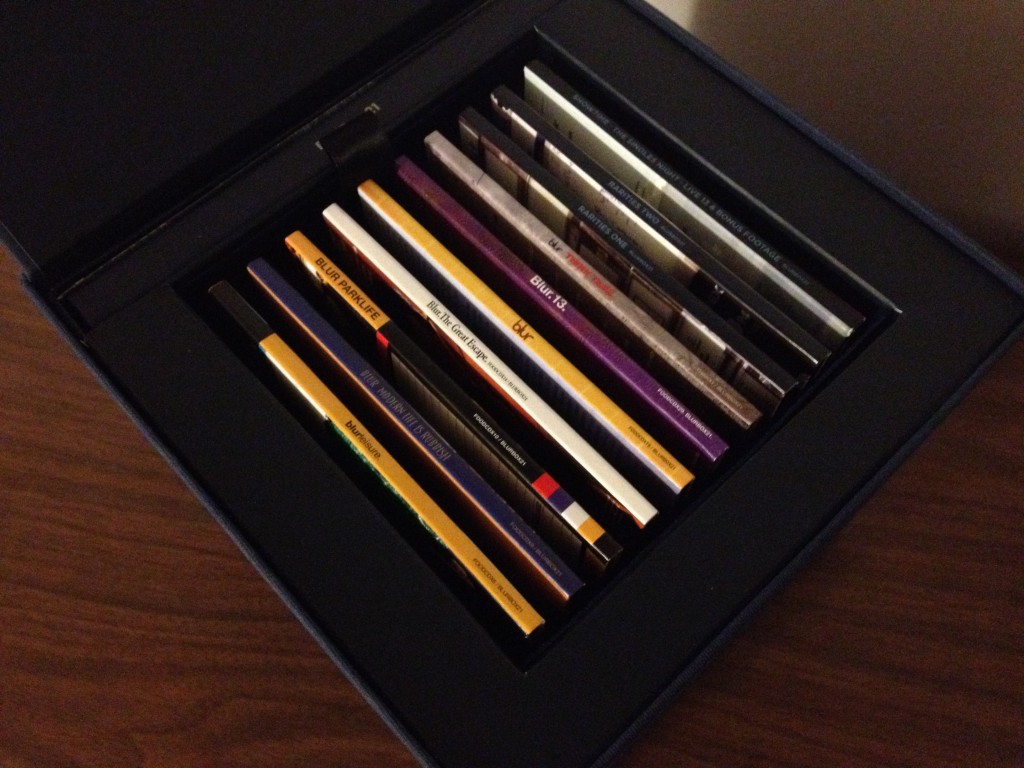
 

One of the odder inclusions with the set is a card with a download code.  The code gives you access to PDFs of the complete catalog of Blur fanclub newsletters, which is cute, as well as downloads to every CD in the set, which is…kind of strange and pointless. I mean, they’re CDs. Why do I need a download code? But hey, it’s convenient I guess if you want to own the box set and never ever actually take the CDs out the shrink rap (although you’d still need to open the DVD case if you wanted to watch those).

To be honest, if you never did open the CDs, you wouldn’t be missing much, each album (along with it’s bonus disc) is held in a plain reproduction case with no notable linear notes aside from the tracklistings, which can also be found in the hardcover book. I saw some commenters on another site complaining about this, but it really doesn’t bother me.

What’s In The Box!
Damn near everything. Seriously. This box includes all seven proper Blur albums, each with their own bonus disc of added songs. In addition to that, four CDs filled with even more bonus tracks in the form of rarities, B-sides, demos, alternate versions and remixes are also included. All in all that’s 282 songs of Blur; 18 hours and 41 minutes of Britpop joy. And that’s not even counting the stuff that’s on the 3 included DVDs, which are full of concert footage and promotional videos that are worth watching.  And let’s not forget the 7″ single, which includes the never-before-released “Superman,” a song from the 1989 when the band was still called Seymour. What more could a fan want? Well, since you asked…

What’s Not In The Box?
While a lot of great mixes did make it onto the set, quite a few didn’t make the cut. The remixes to “Bang” are absent as are remixes to other Leisure-era tracks “High Cool” and “Bad Day,” among others.

Additionally, the Japanese imports Bustin’ + Dronin’ and Live At Budokan are missing in action. While Bustin’ + Dronin’ is now easily available in the states and in the UK, the Budokan album remains out of print outside of Japan, so its inclusion here would have been nice. Live at Hyde Park is also nowhere to be found, but like Bustin’ + Dronin’, that’s easy to find on its own in most territories.

Conclusion
Time, and repeated listens, will tell if this box set truly is a must buy. I still can’t taken the whole thing in, and I may be missing mastering errors and other issues that seem to plague remasters and re-issues as of late. But as far as none of those rear their ugly heads, I think it’s safe for me to say that this is a must buy set for any Blur fan, it’s simply stellar. Yeah, the remaster may not be perfect, but it’s good enough, and the bonus tracks and other goodies more than make up for it.

Seriously, this thing is wicked awesome.

David Bowie’s Cocaine Adds Life (Cocaine Bear Approves)

Monday, July 30th, 2012

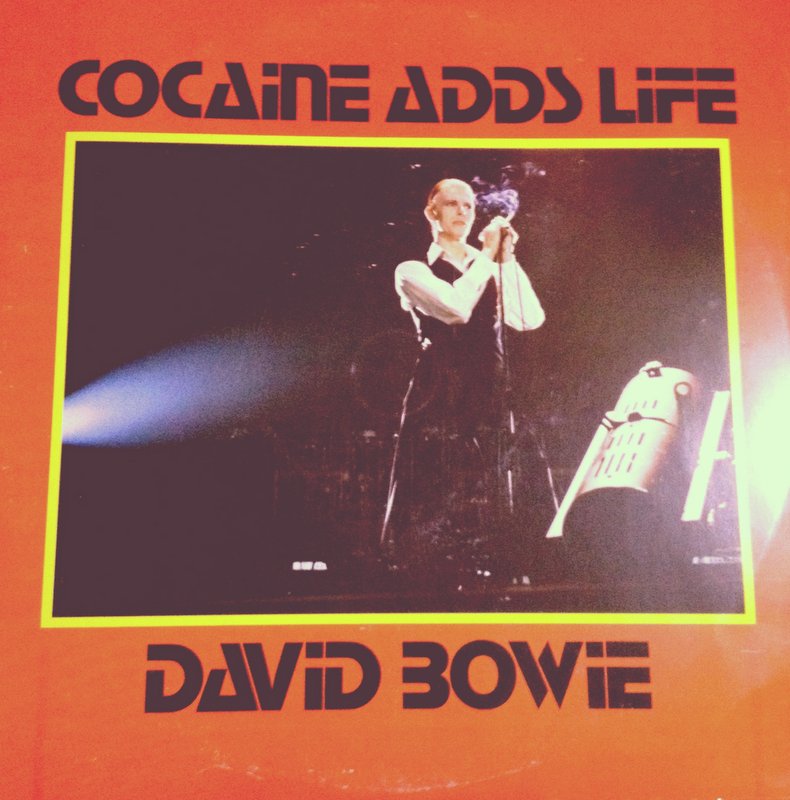
Another week, another amazing 2LP bootleg. This time it’s from David Bowie.

Cocaine Adds Life

The wonderfully titled Cocaine Adds Life mostly features tracks from mid-70s Thin White Duke Bowie (hence the title), but it also throws in some random 80s stuff on the last side. While Discogs sites the album as coming out in 2008, I think that’s a repressing, and that the version I have actually came out in 1984 (as this site claims). If the back cover of my version is to believed, the bootleg label responsible for this release only printed 200 of these bad boys (mine is number 66), making it a pretty rare find.

Regardless of where and when it came from, and how rare it is, it’s a great bootleg full of some pretty interesting stuff. The first three sides are a complete concert, recorded live at the Rotterdam Sports Palais Ahoy on May 13th, 1976. The recording is from a soundboard, so it’s crystal clear, if a little flat. Although Bowie complains on the recording that he’s suffering from a bit of bronchitis, he sounds great as the band plays through some of his best material of the time, including “Station to Station,” “TVC15” and “Diamond Dogs.”

The final side of the bootleg is a grab bag of bonus cuts culled from a variety of sources. First up is a recording of Bowie performing “Sweet Jane” with Lou Reed on July 8th, 1972 in London. It’s a real rarity, which makes up for the fact that the recording kind of sounds like garbage. After that there’s another super-rare one, Bowie doing a cover of The Beatles’ “This Boy,” performed on July 18th, 1972 in Aylesbury. It also sounds pretty bad though.

That’s followed by “Sister Midnight,” taken from a performance in Toronto on February 26th, 1976, and a version of “Sound and Vision,” that’s from a show in London on July 1st, 1978. These sound bad, but better than the previous tracks.

Finally there are a pair of tracks taken from two shows in Brussels on April 18th and 19th, 1983. The first is a rare live version of “Joe The Lion” and the second is a cover of The Who’s “I Can’t Explain.” These also sound okay, but not great.

Truth be told, the final side is pretty much a wash when it comes to sound quality, although those versions of “Sweet Jane” and “This Boy” should probably be of interest to Bowie completists out there. Like I said before, the real treat here is the complete concert from 1976. It sounds great and is well worth a listen. I hope you like it.

Complete Track Listing

Rotterdam Concert – 5/13/176

  1. Station to Station
  2. Suffragette City
  3. Fame
  4. Word On A Wing
  5. Stay
  6. Waiting For The Man
  7. Band Introduction
  8. Changes
  9. TVC15
  10. Diamond Dogs
  11. Rebel Rebel
  12. Jean Genie

Additional Tracks

  1.  Sweet Jane – 7/8/72
  2. This Boy –  7/18/72
  3. Sister Midnight – 2/26/76
  4. Sound And Vision – 7/1/78
  5. Joe The Lion – 5/18/83
  6. I Can’t Explain – 5/19/83

Crazy for Dance Craze

Friday, July 27th, 2012

Dance Craze (Complete Album Download)

I love ska!

Okay, that was a lie. I just lied to you, and I apologize.

The truth is, I’ve never loved ska, no matter how much I try. I blame The Mighty Mighty Bosstones. Seriously, it’s all their fault.

Like most stupid Americans, I never heard of ska until the mid-90s, when barely-ska acts like the Bosstones, Reel Big Fish and No Doubt broke the sound through to the mainstream. And, let’s be honest, those bands and others like them were at their best slightly better than horrible. The Mighty Mighty Bosstones remain one of my most-hated bands of all time, right next to Creed and The Nixons (I have my reasons, okay?). I’ve done my best to forget about Reel Big Fish completely, and I only grew to tolerate No Doubt when the abandoned their ska roots for a more electronic sound.

So it’s all their fault, they’re why I hate ska. But I’ve been trying my best to educate myself, broaden my horizons. In doing so I’ve discovered that I actually like early ska! I know, I was shocked too, but the  2 tone (second wave ska) stuff out of England, I’m really beginning to dig that stuff. And this album is a big reason for that.

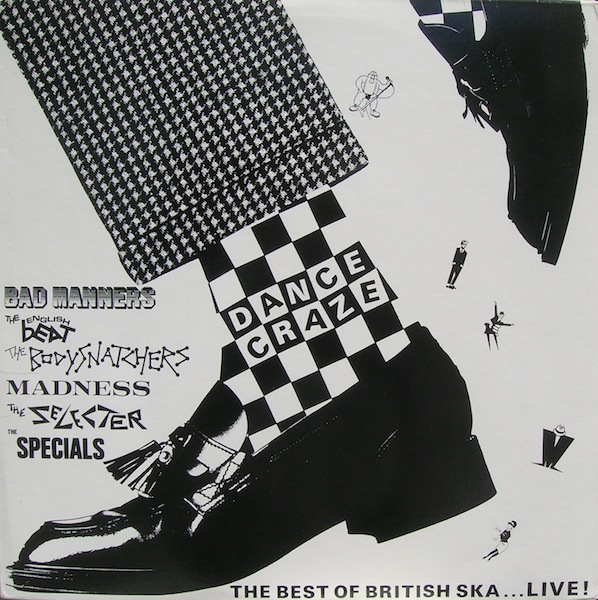
Dance Craze is like a Ska Urgh, a great compilation of early 80s tracks by artists both big (Bad Manners, The Beat, Madness) and small (The Bodysnatchers, The Selecter). It’s actually the soundtrack to a movie that came out in 1981, although it’s never been released on any format since, aside from VHS and that was only in England. (Although you can watch it on YouTube). The movie has 27 great performances, but the LP soundtrack cut that down to a slim 16 songs, which is a drag, especially considering amazing tracks like Madness’ “The Prince” and “Too Much Too Young” by The Specials were among those cut.

But that doesn’t mean the album was left with nothing but the dregs. The radical “Three Minute Hero” by The Selector is here, as well as an excellent version of The (English) Beat’s “Mirror In The Bathroom.” Thankfully we’re also gifted with a rocking jam of “One Step Beyond” by Madness AKA the greatest ska song of all time ever in the history of anything ever (don’t you dare try to correct me.)

Download and enjoy, and tell me about other 2-tone artists that you think I might dig.

Just don’t try to sell me on the Bosstones okay? Many have tried, and I have destroyed all of them.

And in case you’re wondering, here’s the complete tracklisting:

Side One

  1. “Concrete Jungle” – The Specials
  2. “Mirror In The Bathroom” – The Beat
  3. “Lip Up Fatty” – Bad Manners
  4. “Razor Blade Alley” – Madness
  5. “Three Minute Hero” – The Selecter
  6. “Easy Life” – The Bodysnatchers
  7. “Big Shot” – The Beat
  8. “One Step Beyond” – Madness

Side Two

  1. “Ranking Full Stop” – The Beat
  2. “Man At C&A” – The Specials
  3. “Missing Words” – The Selecter
  4. “Inner London Violence” – Bad Manners
  5. “Night Boat To Cairo” – Madness
  6. “Too Much Pressure” – The Selecter
  7. “Nite Klub” – The Specials

Also, a note to longtime readers of The Lost Turntable. I posted this soundtrack eons ago, but you should still download it again (if you like it). This rip is much better.

And one more thing. I was serious when I said I don’t care if you like the Mighty Mighty Bosstones, Reel Big Fish or any other of those shit bands. If you leave me a comment about how my taste sucks I’ll just delete it, so don’t bother.

The Incredible Sounds Of Synclavier II Demo Record

Tuesday, July 24th, 2012

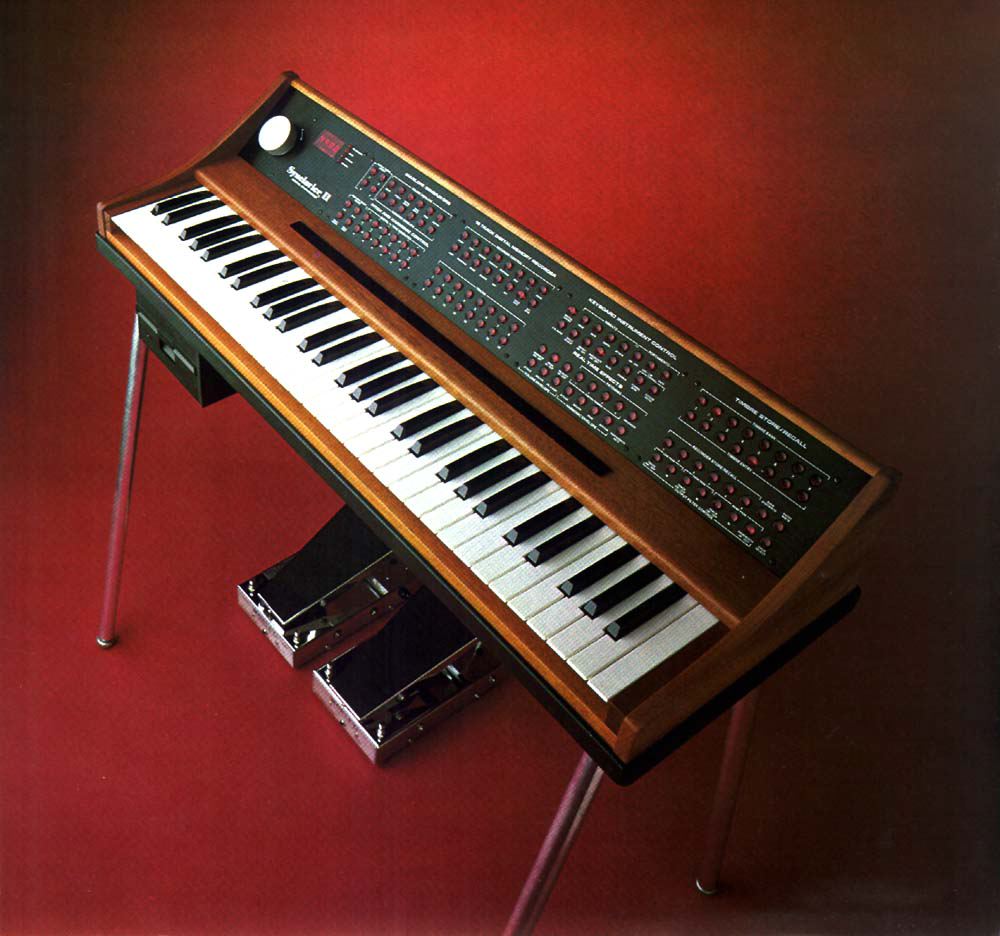
You see that? That’s the Synclavier II, one of the first digital synthesizers. Before synthesizers like that, most of them were analog.

What’s the difference?

Well, the sound in an analog synthesizer is created and modulated by the physical movement of its components, while a digital synthesizer creates sound using computer hardware. While some (including me) think that analog synths sound cooler and are more organic, they are a royal pain in the ass to work with. They’re very hard to maintain, and they go out of tune pretty easily. In fact, in some cases the heat that is generated by simply playing them over an extended period of time is enough make them go out of tune. Just imagine how much of a nightmare they must have been for touring musicians at the time. I don’t know how Tangerine Dream did it. Of course, I don’t know how Tangerine Dream does a lot of things.

That’s a hell of a barrier of entry for a lot of musicians. So in the late 70s, companies began to experiment with digital synthesizers and in 1979, the Fairlight DMI became the first digital synth to see widespread use within the recording community. One year later New England Digital’s Synclavier II followed suit.

While the Fairlight probably had a larger foothold in the popular music landscape thanks to its use by artists like Peter Gabriel, New Order, Devo and Herbie Hancock, the Synclavier also played a pretty big part in creating what would become the sound of the 80s. Frank Zappa’s 1986 album Jazz From Hell was composed almost entirely on a Synclavier, and artists as diverse as Paul Simon, Mr. Mister and Trevor Horn all made use of the Synclavier throughout the decade.

And I’m willing to bet that at least a few of those artists, and many others, listened to this record before doing so.

The Incredible Sounds of Synclavier II
Side 1

Side 2
Patrick Gleeson – Summer 

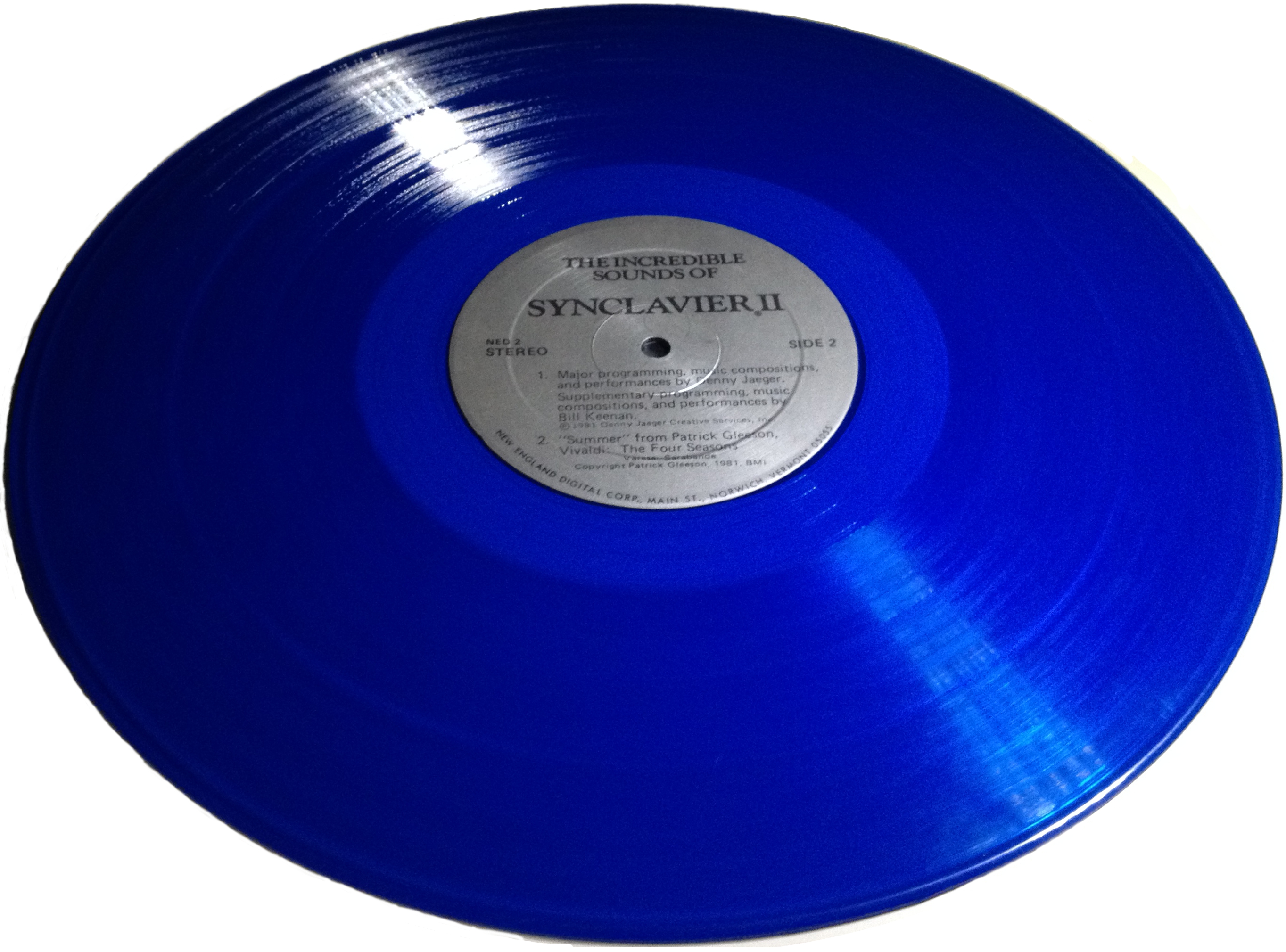
Released in 1981, this blue promotional record is basically one long demo reel that highlights the many strengths of the Synclavier. Throughout both sides of the record you’ll hear synthesized bells, gongs, pianos, drums, bass and various spacey synth sounds that would eventually make their way to countless albums over the next 10 years. It’s not really that musical, but for anyone interested in the behind-the-scenes aspects of the recording industry, digital equipment, or just goofy weird records, then this is probably worth a listen. At the end of the second side the full musical capabilities are showcased via Patrick Gleeson’s interpretation of Vivaldi’s “Summer,” which I’ve included as a separate track.

I know Michael Jackson and Quincy Jones probably listened to this record when it came out. Doubt me? Just listen to side one and skip ahead to about six minute and 44 seconds in. If you don’t want to, fine, you can just beat it.

Echoes of Romance – An Ultravox(!) Bootleg

Monday, July 23rd, 2012

Echoes Of Romance
Part 1
Part 2
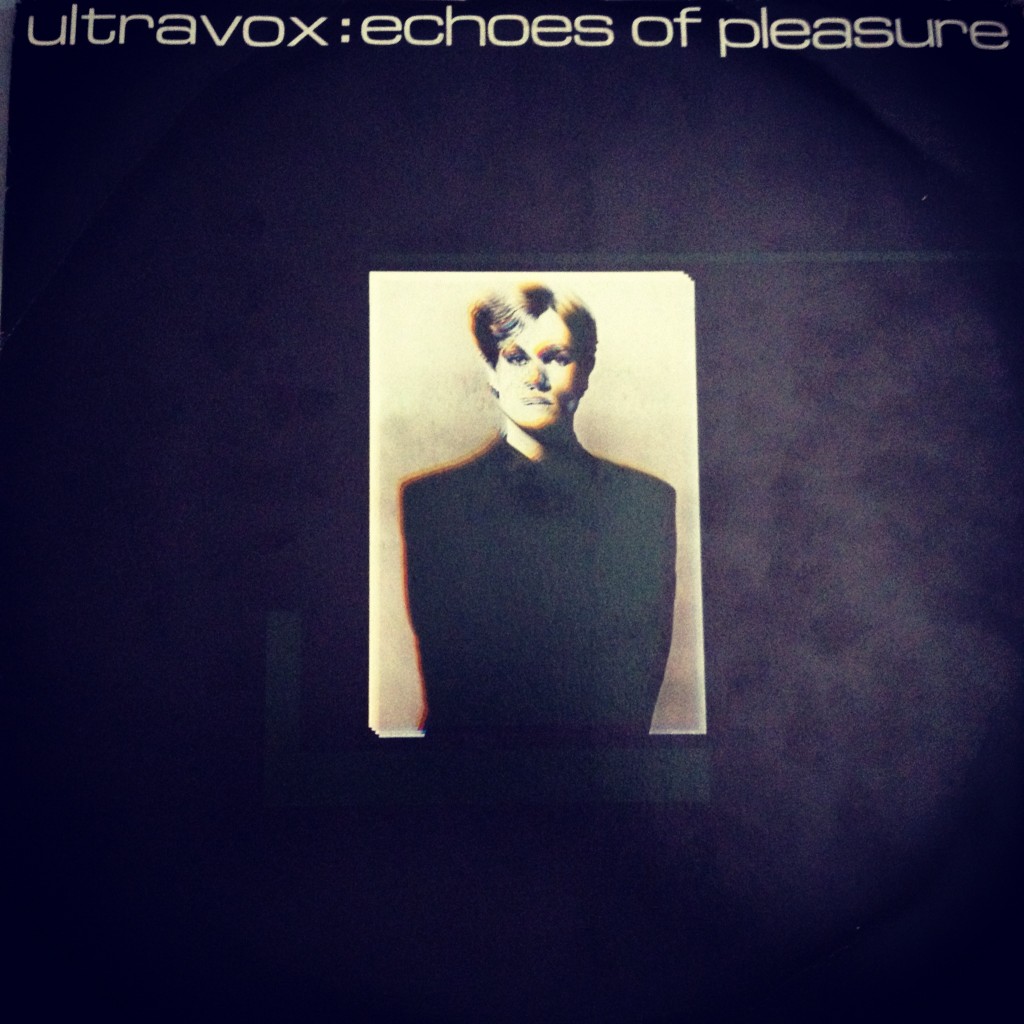
I’ve been accumulating quite a few bootlegs lately so I think I’m going to have to go bootleg crazy for the next few weeks to clear them out of my queue. Don’t worry, I’m sure most of you will like what I have to offer (even those of you who whine about “decent music).” So let’s just jump right in with one of my favorite recent bootleg finds, Echoes Of Romance by Ultravox.

This is an awesome album because it’s basically two great bootlegs in one, 30 songs pulled from two completely different shows. The first 15 tracks are taken from a December 26th, 1978 concert at the Marquee in England. This is the original(ish) line-up that includes Robin Simon on guitars and, more importantly, John Foxx on vocals. It’s classic early Ultravox, a bizarre combination of punk rock, synthpop and glam rock that still sounds unique and fresh some 32 years later. The quality is also excellent, with very clear vocals and almost no audience chatter. Classics like “Young Savage” and “Hiroshima Mon Amour” are performed, as well as awesome unheralded tunes like “Walk Away” and the supremely odd “Someone Else’s Clothes.” It’s a great show and worth a listen to even the most casual fans of the group’s early work.

The second half of this three-LP bootleg is comprised of songs from a December 13th, 1980 concert at the Odeon Hammersmith. This is of the “classic” line-up that features Midge Ure on vocals. The quality of this recording is a little more sketchy, with the vocals coming off a little more muddled at times and audience noises sometimes making their way into the mix. But even with its lesser fidelity it’s still well worth a listen for fans of the group as the band plays favorites like “New Europeans,” “All Stood Still,” and “Vienna.” Even Foxx-era tracks like “Hiroshima Mon Amour” and “Quiet Man” make an appearance. Great stuff all around.

I’m curious, which Ultravox do you all like the most? The punkier, harsher John Foxx stuff, or the classier, new romantic-influenced Midge Ure albums?

I love them both, although I still don’t have all of the Ure-era stuff. I think my favorite Ultravox song overall is the Ure-fronted “Hymm,” but I also have a soft spot for the crazier Foxx tracks like “Young Savage” and “Saturday Night In the City of the Dead.” Ask me which iteration of the band I prefer one day and you might get a different answer the next. I can’t decide.

Just don’t bring up the Billy Currie-led era. That never happened.

NEVER HAPPENED.