Electronic Music For Dead Feet

May 21st, 2018

Entertained a guest the past few days, which was very fun. It’s always great to show someone around Tokyo for the first time. It’s also incredibly exhausting. Holy shit I’m tired. Hence the short random post tonight. And hence the first post without proper art of any kind since December of last year. Damn. I was on a roll too.

Nah, fuck it. Here’s a picture of dancing mascots.

Okay, the streak continues.

Ram Jam World
Bluesy Baby
Bluesy Baby (Instrumental)
Bluesy Baby (Ed Rush & Optical Remix)

Ram Jam World is a Japanese drum and bass act. That was a surprise to me, because in my four years here I have yet to find anyone who remotely enjoys DnB. On the few occasions that I visit dance music record stores, I rarely come across the genre. Most dance music here is house or techno. I had no idea the act was Japanese when I bought this single. I snagged it solely because it featured a remix by Ed Rush and Optical, my favorite drum and bass act of all-time.

Now that I am aware of Ram Jam World’s existence, I hope that I can find some of their CDs proper. I really want to track down Uta To Oto, since it features Tomohiko Gondo from Metafive. This track doesn’t feature any luminaries of the Japanese electronic music scene (as far as I know) but it does feature Speech from Arrested Development. Speech is big in Japan. I have no idea why. I just know that he toured here as recently as 2016, and has several albums that either are exclusive to Japan or came to Japan first. So the next time someone drops on you that Mr. Big and Scatman John are big in Japan, you can throw that fact on them too.

Of course, no one in Japan is bigger than me in a literal sense because I’m a giant.

Gershon Kingsley
Popcorn (2000 Instrumental)
Popcorn is, of course, not a rare track. It’s probably still one of the most popular and recognizable electronic songs of all time. But this version is, as it was a vinyl only bonus track to the Grand Royale compilation At Home With The Groovebox. That album contains another version of this song that features Gershon Kingsley describing how he created the song the first time around. This version strips away that explanation and leaves us with a rather interesting modern take on the song, one that I can assume was created primarily with digital synths and computers of the era. It doesn’t have the classic analog sound of the original version, but it’s still great. And the wordless vocalizing that fades in near the end of the track is a nice touch that serves the song well.

Easy Going – Claudio Simonetti’s Inappropriate Disco

May 16th, 2018

Easy Going
Fear
I Strip You
To Simonetti
Put Me In The Deal

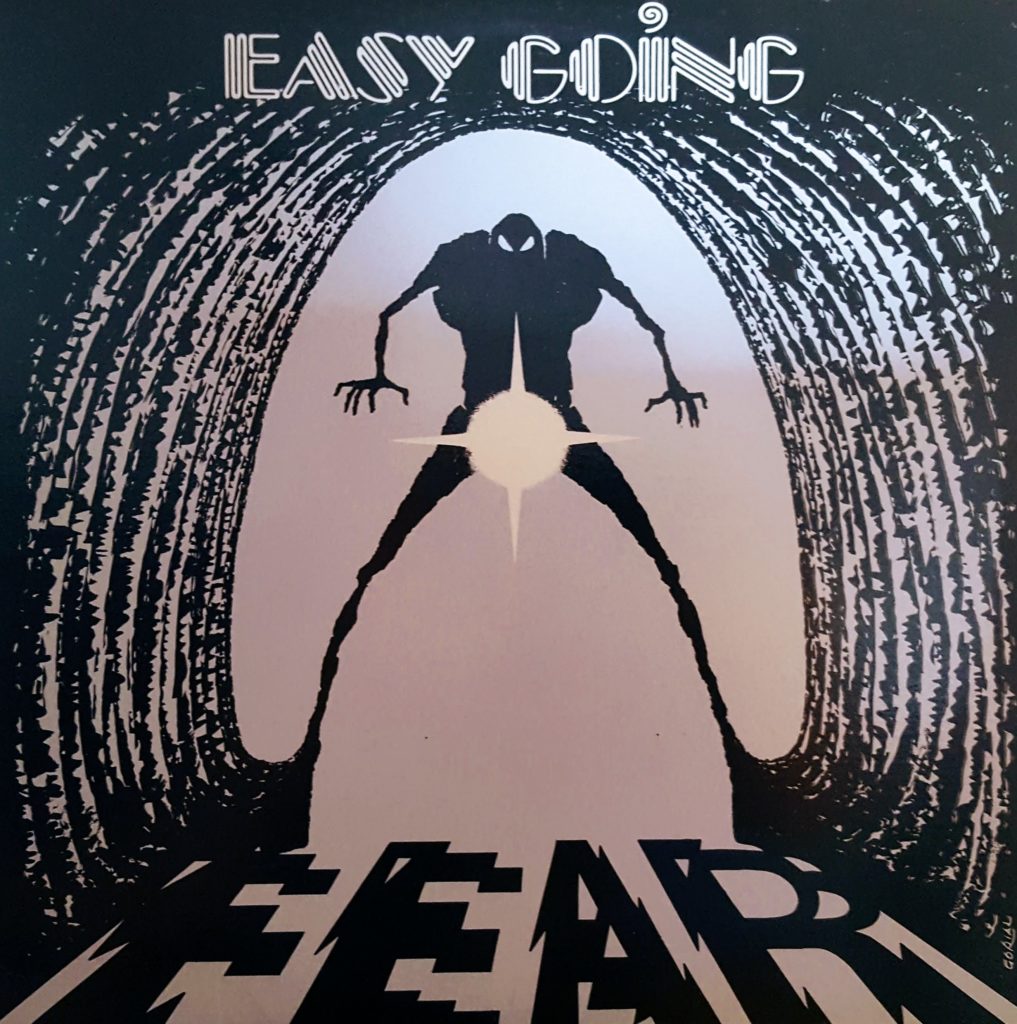
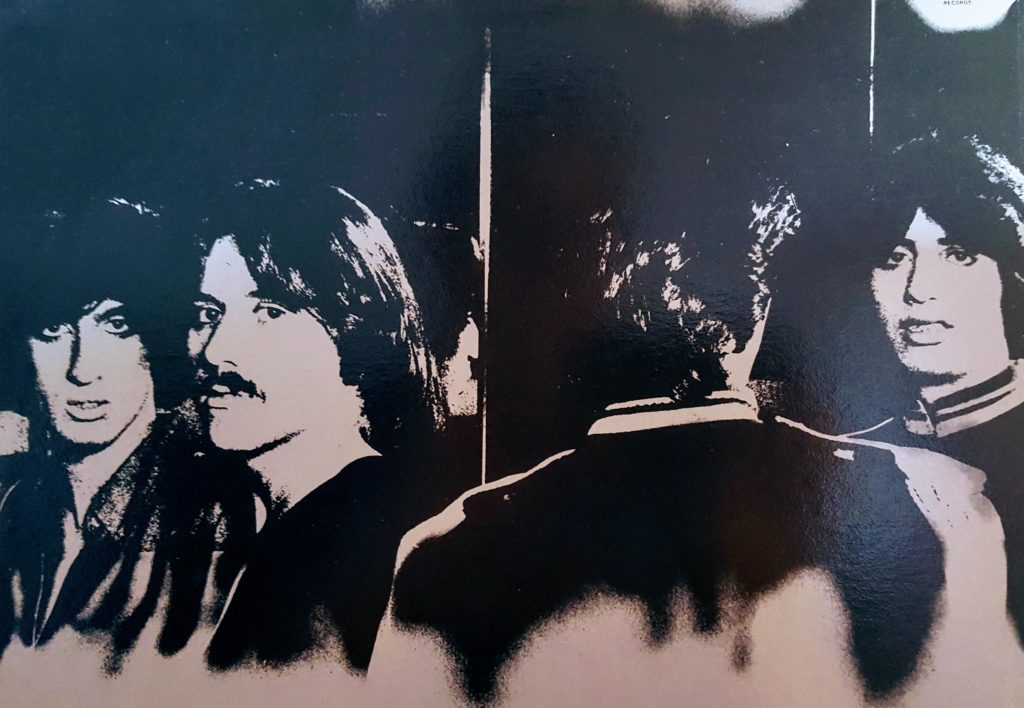
Easy Going was an Italian Disco act that featured horror rock icon Claudio Simonetti. While Simonetti’s involvement with such a project might be surprising for fans of his work with Goblin, it wasn’t the only time that he was involved with dance music. Around the same time of Fear, Simonetti was working as Capricorn, pumping out a few singles from 1980 to 1982. There was also Kasso, probably the best known of his disco aliases. He released three albums as Kasso in the 80s, with the first two being very widely acclaimed by fans of electronic disco. Like Kasso and Capricorn, Easy Going was more or less a Simonetti solo project. The album has a multitude of performers, but Simonetti composed, arranged, conducted and produced the album, with lyrics by Giancarlo Meo.

Also like Kasso and Capricorn, Easy Going is a good example of Italo-Disco. For those not familiar with the genre, it is disco from Italy (duh) that blends the disco sound of the 70s with the Hi-NRG and synthpop sounds of the 80s. The best cuts from this album, the first two tracks, are both very Italo-Disco, very Moroderesque, while the latter two are decent examples of more traditional disco.

“Fear,” sounds like a horror remix of “I Feel Love,” with a pulsing sequencer rhythm wonderfully punctuated by some ominous-sounding strings and intense vocoder-aided vocals (along with some random screaming). And then there’s “I Strip You.” It’s halfway between traditional disco and electronic music, with just as much strings as keyboards and sequencers. It’s a really powerful, funky song with a fantastic groove…that seems to be from the point-of-view of a potential rapist, maybe?

You made a mistake
Don’t play games with me, girl
You made a big mistake
And now you’re staying here

Furthermore, he seems to be willing to commit this crime just because he wants to disprove rumors that he’s gay?

This way you won’t say
That you think I am gay
To the people you won’t say
That you think I am gay

But wait, maybe he is gay! Because as the song ends…

Now that you’re turned on
I don’t want you now, girl
So now you’re free to say
The truth that I am gay
It’s better that I go
I don’t want you no more
You’ve got the reason to say
To say that I am gay

So he was gay all the time and he was just fucking with her? Or he was gay and he was trying to convince himself that he wasn’t? Or he can only be with women when they’re not interested? This is a weird track. It sounds like a treatment to an unmade Argento film that was turned into a club track.

It should be mentioned that Easy Going was named after a gay night club. The cover of their first album is an explicit piece of art that was part of the club’s dance floor. It has a song called “Little Fairy.” Their third album has a cover of “Gay Time Latin Lover.” I have no idea if anyone involved with Easy Going was actually gay, but they were certainly playing with the idea that people must’ve thought they were. I’m sure there’s something icky about the politics of that, but I don’t want to bother going there.

Regardless of all of this, these tracks are certainly better than the Capricorn disco cuts I’ve heard, and actually make me interested in tracking down those first two Kasso records. I assume they have less songs about potential sexual assault and ambiguous sexual orientations.

I mean, I don’t know for sure, but it’s a safe bet.

Hudson Game Music – Arranged Versions

May 10th, 2018

Hudson Game Music
Bomberman (Arranged Version)
Nuts & Milk (Arranged Version)
Binaryland (Arranged Version)
Championship Lode Runner (Arranged Version)
Star Soldier (Arranged Version)

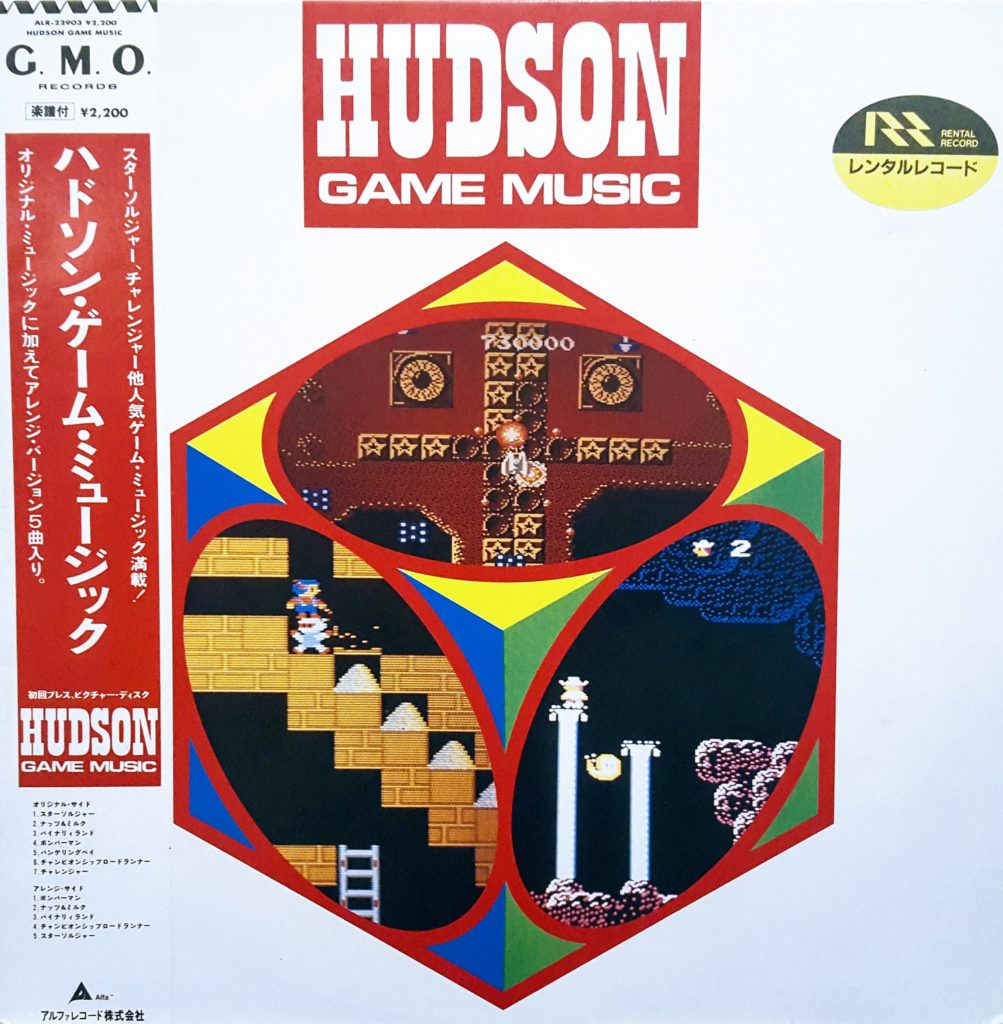
Hudson Game Music was the third release by G.M.O. Records, a subsidiary of Afla Records that was set up by Yellow Magic Orchestra for releases of game music soundtracks. Nearly all of the label’s early releases were compilations for specific developers, most likely because games at the time didn’t have enough music on their own to fill a complete album.

Most of the early releases by G.M.O. featured only one or two “arranged” (or remixed) versions and instead focused on pure audio rips from the games themselves. The Hudson Game Music release is a bit different as its entire B-side is dedicated to arranged versions, with nearly every game from the A-side getting a proper arranged version on the B-side. I don’t know if this was because Hudson didn’t have enough games of note to fill an album, or because G.M.O. wanted to showcase arranged versions, it’s hard to say.

Some of these titles are pretty damn obscure. Of course, I know Bomberman and Lode Runner (albeit not in its “Championship” variation), and I have a vague recollection of Star Soldier, but I know Nuts and Milk by name only, and have never even heard of Binaryland. A quick YouTube search of both confirms that I’ve never played either.

These arrangements were all done by Yoshihiro Kunimoto, who did a ton of arranging and remixing for a lot of early game music releases by GMO Records. He also worked with a few legends of Japanese music, including Jun Togawa and Denki Groove. He certainly knows what he’s doing here, all of these arranged versions are pretty damn great. The standout for me is the manic take on the Bomberman theme, a sample-heavy remake that also features a rad guitar solo. The Nuts and Milk track is a bit more sedate, but builds off the game’s simple melody in some fun ways, while the Binaryland theme is oddly re-imagined as a string quartet piece (with some synth overdubs) that makes it sound a bit like a lullaby. Championship Lode Runner is the sparsest of the bunch: a dreamy re-working that’s bookended with music box-esque takes on the tune, while Star Soldier is probably the most standard of the group, but that’s not a bad thing; it’s a fully synthed out remix that would fit alongside most 16-bit shooters, and with so much synth-bass. Love the synth-bass. Need more synth-bass.

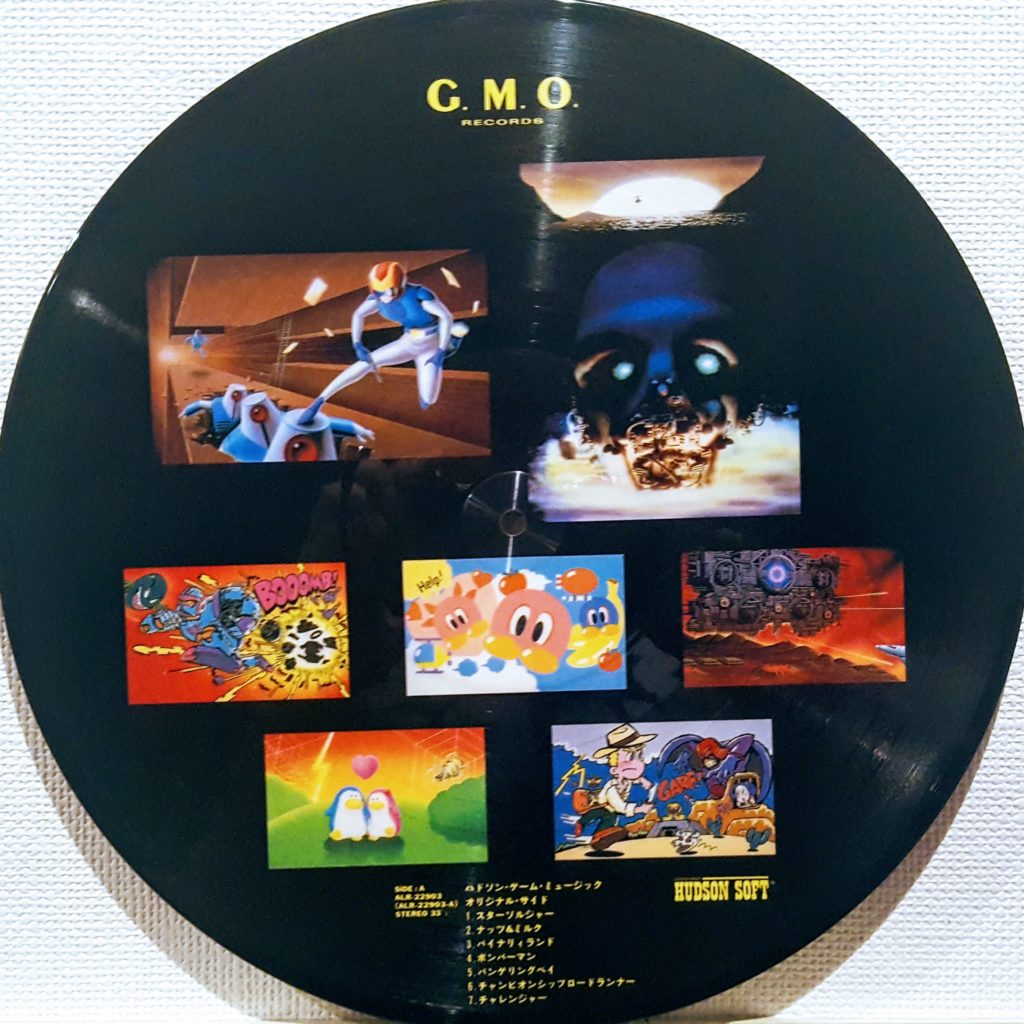
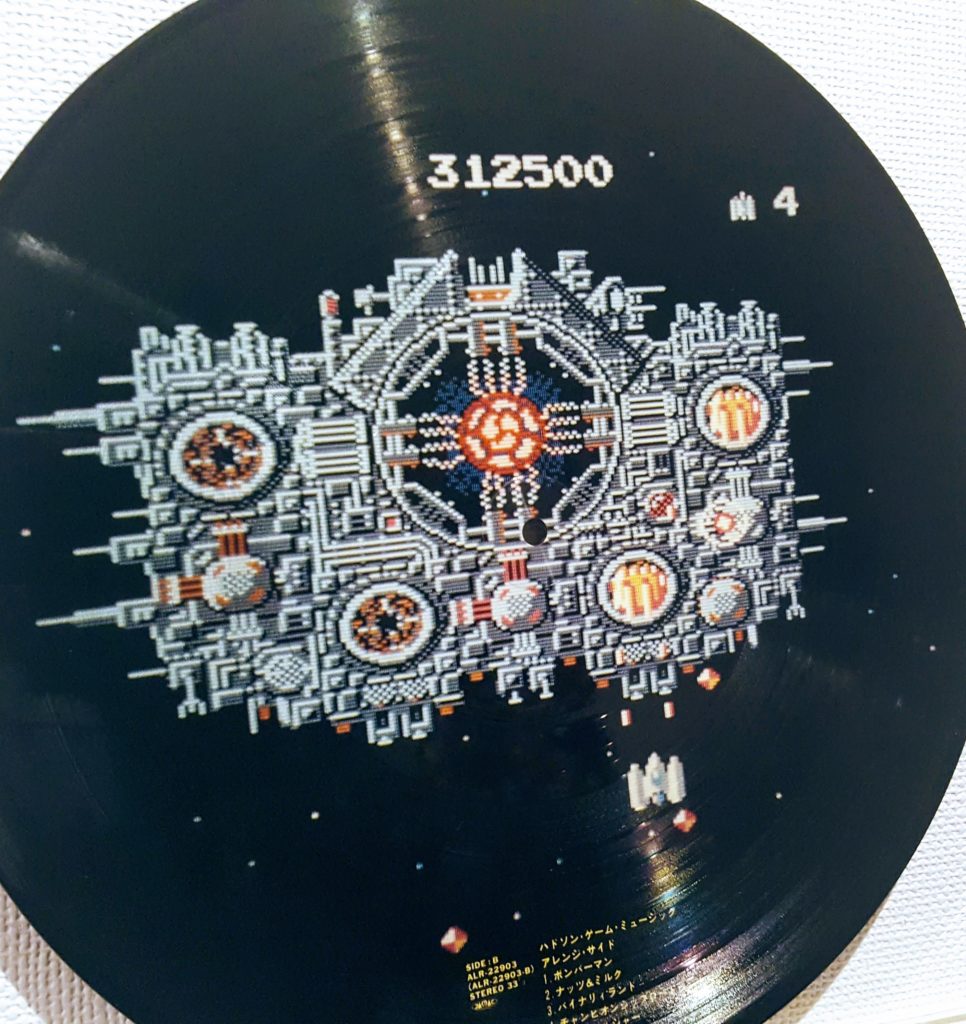
According to the Video Game Music Database, Hudson Game Music was released on vinyl and cassette on July 25, 1986, with the CD version coming out exactly one month later. That would make it the fifth GMO title to be released, between Konami Game Music Music Vol. 1 and Capcom Game Music. It’s exceedingly rare to find these days, I’ve never even seen a CD copy. This rip is from the vinyl edition. Unlike other early G.M.O. releases, the Hudson Game Music vinyl edition was a picture disc. And yes, that certainly does look cool, it doesn’t do wonders for audio quality. Thankfully, I think my vinyl restoration software did a pretty good job of cleaning it up. Hope you dig it.

Japanese Covers of the Classics (and Time of the Season)

April 29th, 2018

April is in full effect! And longtime readers of Lost Turntable know that means I’m currently getting my ass kicked with my legendary April bad luck. It’s been a pretty rough one; a drastic fibro flare-up, workplace drama, and a lot of wasted money on shoes (DON’T BUY SHOES ONLINE EVER IT’S NOT WORTH IT).

Anyways, the month is almost over and I’m unwinding the only way I know how, with odd covers of well-known music.

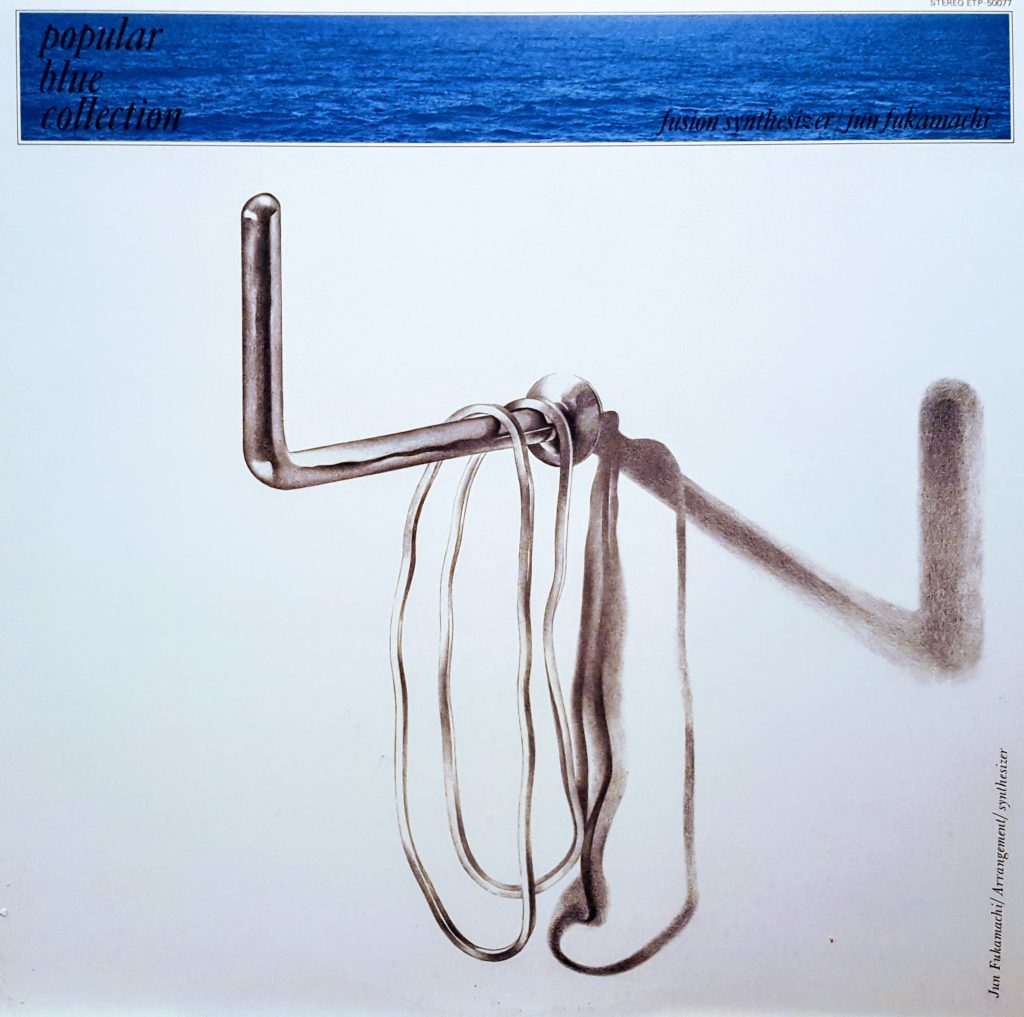
Jun Fukamachi
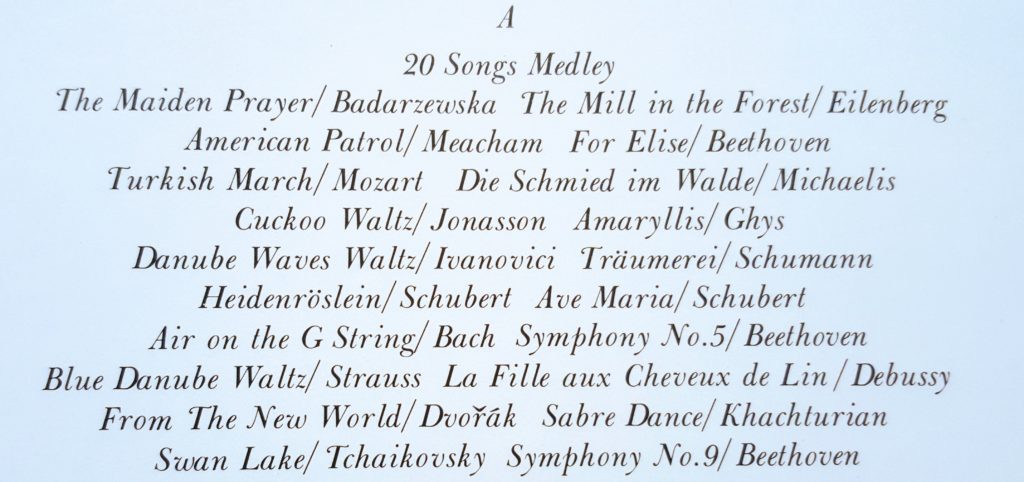
Classical Medley
Ave Maria

This record is so obscure that I literally can’t find a single English word about it on the internet so someone please help me.

I know that in the mid-80s Fukamachi briefly launched his own label, releasing a promo-only LP entitled 86 Spring & Summer Collection. Despite the similar name (and I suspect similar promo-only status) I don’t think that record and this one have anything in common. That album is a collection of original material, while this is entirely covers of classical compositions.

That, it’s entirely dope as fuck covers of classical compositions! This is some great, hyper-digital synth work and arrangement on display. While at first it sounds a bit cheesy, the more you listen to these all-digital reworkings, the more you appreciate just how much work went into them, especially with the epic 20-minute medley. These aren’t just classical pieces played through a keyboard’s default settings, many are reworked and tweaked to be equal parts jazzy and funky. It’s like an all-digital “Fifth of Beethoven.”

Like I said, I literally know nothing about this record. If you do, please give me anything you got! Especially if you have any idea about what the fuck is going on with that cover.

Ippu-Do
Time Of The Season
I don’t know what kind of stature Ippu-Do have in Japan now, or had during their peak, or even if they had a peak. Whenever I mention them to literally anyone I know, I get blank stare. That is, save for my boyfriend, who not only knows of the group, but remembered the melody of their biggest hit when I was playing the live record from which this track came from. My boyfriend literally never recognizes any music I ever play for him, especially Japanese music, so they must’ve been at least a little bit popular? I don’t know.

I have nearly all of their albums now. They’re good, obviously influenced by YMO and Japan (the band) in equal parts. I think bizarro cover of “Time Of The Season” is quite indicative of their sound, a strange combination of off-kilter vocals, heavy use of synths, and some rad guitar work. I really do need to give these guys more of a chance and dig into their discography a bit more.

One additional note, this is supposedly a live album, but considering how produced it sounds and the suspiciously looped crowd noises I’ve heard on several tracks, I have my doubts.


Moogapalooza – Obscure Moog Covers

April 17th, 2018

A few weeks back I wrote a thing about how dope Moog records are. The response wasn’t just middling, it was negative-middling. So few people read that (even for the standards of the stuff I write) that I think it took away hits from other pages.

Whatever, ain’t my fault that y’all are ignorant. So I’m going to follow the age-old adage of “show don’t tell” and share some of this music instead of just writing about it, in hopes that this might interest someone into tracking this stuff down for themselves.
Tsuneaki Tone
Chim Chim Cheree>
As I said in my previously mentioned article, a lot of Moog albums seemed to be exclusive to Japan. For whatever reason, there must’ve been a niche market here for the things. Of the Japanese-exclusive records I own, this one by Tsuneaki Tone isn’t the best, but it’s one of the oddest thanks to its bizarre tracklisting of tunes from various films. The selection seems to be totally random. Yeah, it has stuff from family fare like the above “Chim Chim Cheree,” but it also has the “Theme From Shaft” and “The Morning After.” An odd sort for sure.

Of all those songs, why share this one? Well, I feel that this sparse, minimal arrangement showcases what a dark song “Chim Chim Cheree’ is, at least from a musical standpoint. It’s in a minor key, and has a descending chord sequence. Musically, that just sounds sad, much like R.E.M.’s “Losing My Religion.” It’s a downer beat and a downer melody, when you take away the glorious goofiness of Dick Van Dyke’s horrid accent, that becomes a lot more clear.

Tsuneaki Tone released a few albums under assorted names. The ones I can find the most information on are his New Zealand releases, which he put out as The T-Tone Synthesizer, which is an ingenious pseudonym.

Synthesonic Sounds
Apache
For A Few Dollars More
The Good, The Bad and The Ugly

Synthesonic Sounds is Mike Batt, a British musician who has done damn near everything from synth-pop to film and television scores. If you do any research on this pseudonym of his, you’ll read that he released two albums as Synthesonic Sounds; Moog At The Movies, and Ye Olde Moog.

But that’s wrong! Batt actually released three albums as Synthesonic Sounds, but his third, Wonderful World of Moog Sounds, was only released in Japan. It’s an odd album actually, taking tracks from his Moog At The Movies release and throwing in some new compositions as well, like a version of “Spanish Flea,” “Help” and the above version of “Apache.” Of everything on the album, the Morricone covers work the best, the whistling sounds of “The Good, The Bad and The Ugly” just sound great on the Moog. Mike gets an “A+” for curation, but maybe a “B-” for instrumentation. His albums aren’t really moog albums exactly. All of his records feature full bands with just some moog accompaniment. And that’s fine,but that’s not what I’m looking for when I see an album touting its electronic sound. Get these string instruments out of here!


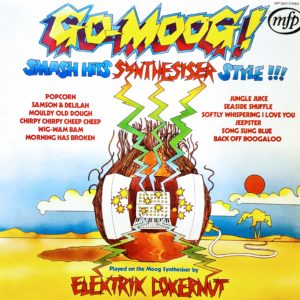
Elektrik Cokernut
Wig-Wam Bam
Another one to file under “not entirely moog” but damn if I care because this is a cover of The Sweet’s “Wig-Wam Bam!” This is one of the weird “switched-on” records as it eschews the big hits of the time and instead focuses on slightly more obscure material. In fact, I’m completely unfamiliar with all of the songs covered on this record save for this Sweet cover and their equally awesome take on T-Rex’s “Jeepster.”

Elektrik Cokernut (aka Electric Coconut – which is far easier to type) released two albums, with their first one being released under the names Go Moog! and Popcorn And Other Switched-On Smash Hits. The group was a duo made of Bill Wellings and Len Hunter. Wellings went onto a semi-successful career releasing cover albums in Australia, while Hunter did some session work and contributed to some library music albums in the 1970s.

Electrophon
Greensleeves
The Flight Of The Bumble Bee
Hall Of The Mountain King

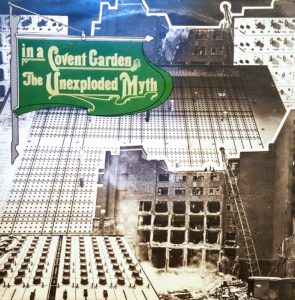
So you have your all-moog albums, and your moog with live band albums, but what about moog with a classical orchestra? That’s exactly what Eletrophon contributed to the greater moog oeuvre in 1973 with their sole album In A Convent Album; where a moog and a 16-piece orchestra perform classical pieces and traditional numbers.

From it’s name to its cover choices, this is the most British moog album I own. Damn thing should come with a tin of digestive biscuits and a packet of earl grey tea. That shouldn’t be a shocker though, as the album was produced by Brian Hodgson and Dudley Simpson of the BBC Radiophonic Workshop, aka the people behind the music to Dr. Who. While Simpson and Hodgson didn’t compose the iconic theme music, they did do a lot of incidental stuff, such as the sounds of the TARDIS. Hodgson was also in the group White Noise, which was an early avant-pop electronic music act from the late 1960s, so he really is a pioneer with this stuff.

All of these tracks are fantastic in different ways. “Bumble Bee” is a relatively straightforward take on the classic piece, no doubt chosen to showcase the technical abilities of the synthesizers they used. Their version of “Greensleeves” is a bold interpretation, however, incorporating some odd distortion and echo effects that help accent the somber tone the song can have in the right hands. This sounds like “Greensleeves” as it was being performed by ghost trying to communicate with this mortal coil once last time. And “Hall Of The Mountain King” is such a dope tune that it would sound rad on damn near anything, so of course a moog/orchestral version sounds incredible.

I know I’m skipping over a lot of information about all of these artists. This post is meant to be just a quick primer, not an in-depth look. But if you want to share any additional information about any of these acts, please do in the comments!


Disco-Gadda-Da-Vida Baby

April 15th, 2018

Hot RS
In-A-Gadda-Da-Vida (Part 1)
The Garden Of Eden
In-A-Gadda-Da-Vida (Part 2)

Hot RS was a South African disco act. Their name is a bizarre abbreviation of “House Of The Rising Sun,” a disco cover of which also served as their first single. Like many other disco acts of the late-70s (including some I’ve already covered), they focused on long-form tracks primarily. Their first album had just three songs; their cover of “House Of The Rising Sun” took up the entirety of side A, which two additional seven-minute tracks making up the B-side.

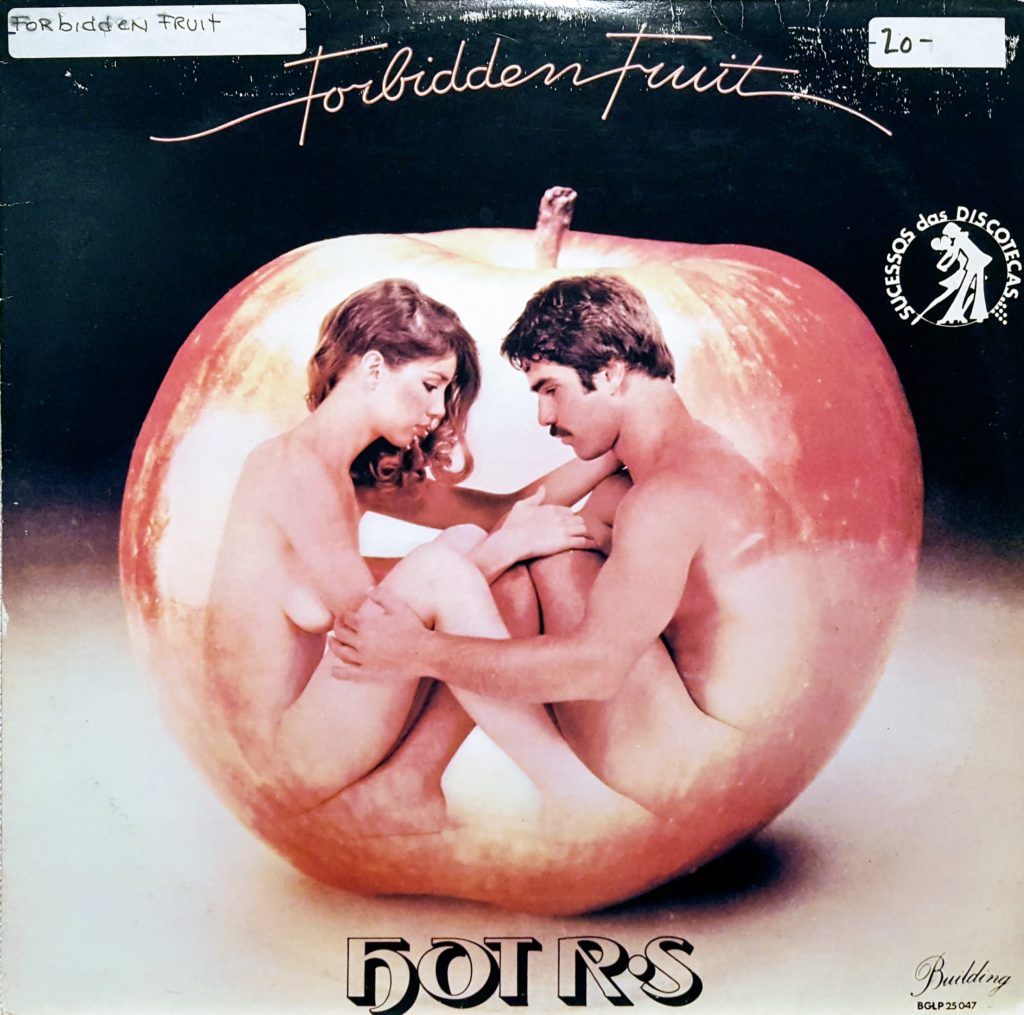
Forbidden Fruit has a few more tracks on it, six in total to be precise. Many bleed together like a medley, all are thematically-tied to the story of The Garden Of Eden, making Forbidden Fruit a disco concept album, which is a real rarity.

The B-side is kind of throwaway though, the real stand out is, obviously, that massive cover of “In-A-Gadda-Da-Vida” which also features an interlude cover of the unrelated oldie “The Garden of Eden.” It is shocking how well this song works as a disco track. They even manage to fit in a little bit of the drum solo and somehow make that work. A lot of it has to do with the song’s reliance on sequencers, they help to move things along, as well as some damn decent guitar work.

From what I can gather about Hot RS, that damn decent guitar work came from one Trevor Rabin, who you may know from his work with 80s Yes and about a billion film scores. According to what I’ve read on the internet about this group, he served as a session musician for Hot RS. Although I do have to say that I really can’t confirm that, as my copy of the album came with nothing in the way of liner notes.

The main members of Hot RS were Kevin Kruger and Dan Hill, with Kruger being the songwriter on a few of their tracks that weren’t covers (their weaker material, to be honest). Kruger was also a percussionist and he went on to work with Rabin on a few of his solo records. He also worked with Rabin on Disco Rock Machine, a group that was similar to Hot RS for taking rock tracks and transforming them into electronic disco tunes (I must own their records).

Dan Hill’s career goes a bit deeper though. He started as a jazz musician, and scored hits as early as 1958. In the late 60s and into the 70s he had several more hits with albums comprised of jazzy covers of hit pop tunes. (I suspect the incredibly risque covers no doubt help that.) As the 70s moved on, I think those got more and more electric in nature, one even name drops the Korg in the title. His last credited appearance on an album was in the early 90s, but apparently he kept on playing live until right before he passed away in 2009. Literally every article I found on him calls him a “music legend.” So I guess he was kind of a big deal in his home country.

Like I said, I fucking love this. If you didn’t latch on to my last disco upload, I really can’t blame you, that record was more of a curiosity than legitimately good. But this is just utterly captivating. Equal parts cheese and quality for me. And “In-A-Gadda-Da-Vida” is just such a classic tune anyway, it’s fun to see it re-worked into a different genre, and with other material that fits the lyrics of the track. Call it stupid, call it dated, call it corny, but don’t call it lazy; they put some effort into this one. This is a well-made, well-produced record by people who knew what the hell they were doing. A very good use of sequencers and other electronic instruments in a pop environment, which were all still kind of a new thing at the time.

And holy shit that cover.

Tell Chico that his beat his dope – The Mexican

April 10th, 2018

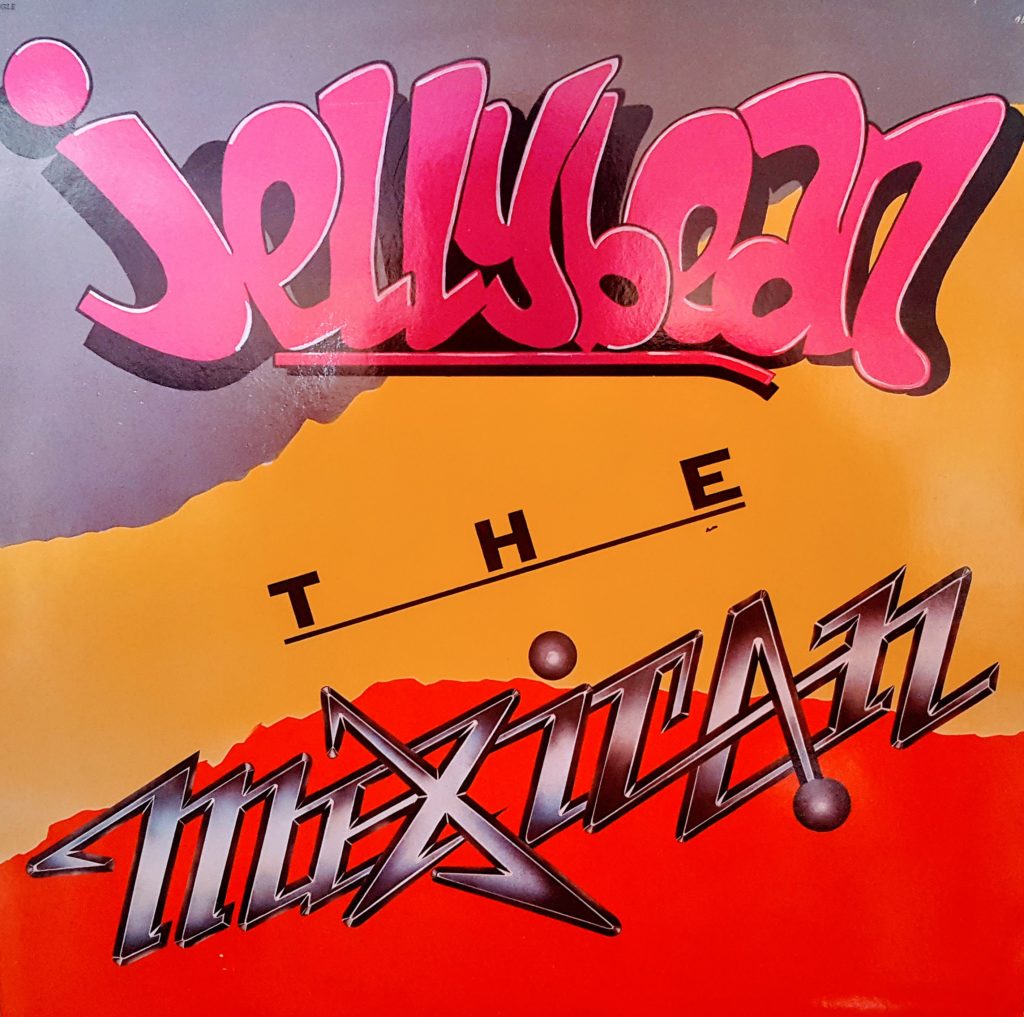
Jellybean
The Mexican (Dance Mix)
The Mexican (A Capella)
The Mexican (Funhouse Mix)
Hip Hop Bean Bop (Bonus Beats)
The Mexican (Short Version)

It’s funny how you stumble upon, discover, or even re-discover songs sometimes. I’m absolutely certain I had heard this song before last month, but it took a fluke discovery of a disco cover for me to fall in love with it finally.


“The Mexican” is a classic for a lot of people, but just as many people don’t know anything about it, so I thought I’d touch upon its history here. The song was first written and recorded by the band Babe Ruth, a British prog/blues band who released a few albums of moderate note in the mid-70s. “The Mexican” was a minor hit, but not a breakthrough smash by any stretch of the imagination.


But it somehow quickly found a second life, not as a rock tune, but as a club track. That’s how I re-discovered it, hearing it on a goofy disco record by a Canadian disco act called Bombers. Their version is good, it’s a pretty hard song to fuck up to be honest, but the second I heard it I realized that I had heard a different version of it at some point in my life, a version that was better.

Thanks to never deleting any song from my iTunes ever, I quickly was able to figure out where I first heard the track; on The Prodigy’s Dirtchamber Sessions mix CD. That’s two dance acts (albeit of very different types) to cover/sample “The Mexican,” but little did I know that just scraped the surface.

“The Mexican” sounds instantly familiar to almost anyone because of samples, not only because of who has sampled it, but because of what it samples as well. The track is built off of a riff from a Morricone tune, the theme music to “A Few Dollars More.” Like the theme to “The Good, The Bad, and The Ugly,” that music has been used so often as homage and/or parody that it’s just ingrained in the public psyche. Anyone listening to “The Mexican” for the first time will get to the part that uses that famous Morricone riff and instantly recognize it.

In turn, “The Mexican” has been sampled and remixed by seemingly countless other artists. Parts of it were sampled in “Planet Rock” by “Afrika Bambaataa, and it was even sampled by Sugar Ray in their shitclassic “Fly.” And if you fancy yourself a fan of The Jungle Brothers, Grandmaster Melle Mel, GZA, R. Kelly, Kool Moe Dee or Doug E. Fresh, then you’ve probably heard a sample of “The Mexican.”


A lot of people would probably credit the version I’m sharing tonight for popularizing “The Mexican” in hip-hop and dance culture, but as the version by Bombers shows, that’s clearly not the case. This song was floating around in the club and dance scenes almost immediately after its original release. It was a disco staple, despite not being a disco song at all.

Still, without question, a big factor in long-lasting appeal of “The Mexican” is because of this version by Jellybean, aka John “Jellybean Benitez, the superstar producer and remixer of the 80s who worked with Madonna, Sheena Easton, Fleetwood Mac and about a billion others. This version was a number one single on the dance charts and is the one that most often pops up on mixes like The Dirtchamber Sessions. It was a prog/blues song that happened to have a good beat before Jellybean got his hand on it, he turned it into a dance track, one that breakdancers still pop and lock to the beat of to this very day.

However, even though it’s been an incredible influence on the dance scene, (not to mention that it just kicks all kinds of ass) Jellybean’s version of “The Mexican” is not an easy track to come across legally these days. You can find it on some compilation albums, although they usually only feature the short version. The full-length mix was included on Jellybeans’ 1984 album Wotupski!?!, but even that’s a little hard to find these days, and the CD version apparently has all kinds of problems. How holes like this in the digital marketplace of 2018 continue to happen are beyond me, but as long as they exist I guess this blog will have a place.

And someone tell Muse to cover this, that would be amazing.

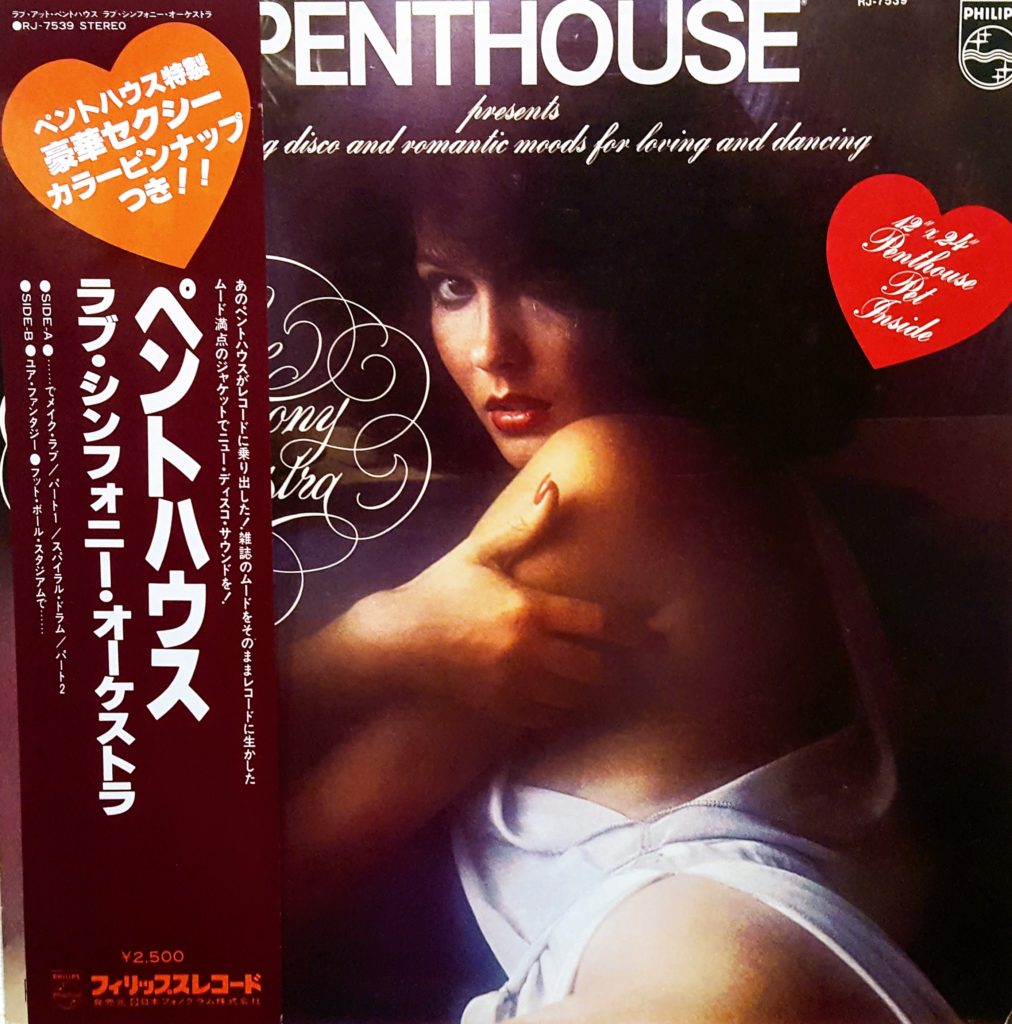
Disco for exhibitionism – Penthouse’s Let Me Be Your Fantasy

April 1st, 2018

The Love Symphony Orchestra
Let’s Make Love In Public Places
Let Me Be Your Fantasy
At The Football Stadium

Oh boy, where to even begin with this one.

I suppose I should get the obvious out of the way; yes, Penthouse actually released a record. In fact, from what I can gather, they actually released two records. This one in 1978, and a follow-up the year later which also featured The Love Symphony Orchestra entitled Messdames Ce Soir (the typo in “Mesdames” is theirs, not mine). That album is predominately covers, but this one is all original material – and I suspect is all the better for it.

The back cover lists two tracks, “Let’s Make Love In Public Places” and “Let Me Be Your Fantasy.” But that’s actually misleading in multiple ways. Firstly, the album has a third track, the decidedly unsexy-sounding “At the Football Stadium.” But in actuality, all of the tracks are really just sections of a multi-part suite, that for all intents and purposes is “Let’s Make Love In Public Places.” That’s both the thematic and musical glue that holds all three numbers together. The chorus of the main track makes an appearance in the other two tracks.

This is longform disco, which was very much the style of the time. Acts like Donna Summer and Grace Jones were putting out albums that had entire sides dedicated to a single track. This is before the idea of the “dance remix” really took hold. You wanted to craft a 12-to-17 minute banger that would really take hold of the dance floor.

In case you couldn’t already guess by, well, literally every single thing I’ve said about this record, it’s entirely about sex. More specifically, it’s about banging in public. The entire first section, all 13 minutes of it, is an ode to lewd behavior in public, complete with a spoken word interlude by a woman desperate to convince her man to get down to business outside.

Oddly enough, the second part, “Let Me Be Your Fantasy,” offers a slight argument for doing it behind closed doors, with the male counterpart taking the vocals to exclaim that he wants to “make love alone in private.” But his viewpoint is almost immediately shut down once the chorus for the original track returns. This woman wants to get down in public and this dude sure as hell isn’t going to stop her.

And she finally gets her wish with the grande finale “At The Football Stadium,” where the two characters get down to business…at the football stadium (duh). A few absolutely horrible football-as-sex metaphors are exchanged (“On the next play come inside our huddle/don’t care who wins as long as we score”) before the chorus of the title track returns once more and segues into an extended instrumental outro.

The only member of Love Symphony Orchestra that Discogs lists on the group’s page is Matthew Raimondi, a violinist who mostly works on classical music now. But if you dig into the page for this album, you’ll find more detailed information. A lot of people worked on this album, some really talented people at that. Andy Newmark from Sly & The Family Stone played drums, and the Blues Brothers’ Lou Marini is here as a flutist. Everyone on this album is on a billion other albums, many of which you’ve probably heard. Check out their Discogs’ pages and discover the wonderful rabbit hole that is exploring the work of session musicians.

I don’t know if I really like this record all that much, even though it is more than technically proficient and definitely well-produced. But I do know it’s funny as hell. I really appreciate its enthusiasm and commitment to its cause/mission statement of fucking in public. This is more or less a concept album dedicated to lewd public indecency, and I respect that.

Regardless, you certainly don’t hear anything like this these days. So if you want a throwback to a sound that is long forgotten, give it a listen. Just don’t hold me responsible for any laws you might break if you find yourself inspired after the album is finished.


Grace Jones and dope electro beats

March 19th, 2018

I’ve listened to I don’t know how many records this week and have added well over a hundred songs to my music library as a result. I bought so many Moog albums it was ridiculous. I’m actually working on something about Moog albums for my other site that I hope you’ll find interesting.

I was going to write a guide to Osaka record stores, but I just didn’t have enough time to really dig into that place. I don’t want to half-ass it. I’m going to try and re-visit that city sometime soon, hopefully with a couple of visits under my belt I’ll be able to piece something together. There are a lot of amazing stores there, but also a lot of crap stores as well. Fortunately, most of the worst stores looked relatively new, so hopefully they’ll get their shit together or go out of business before they sully the good name of that wonderful city.

Now electro.


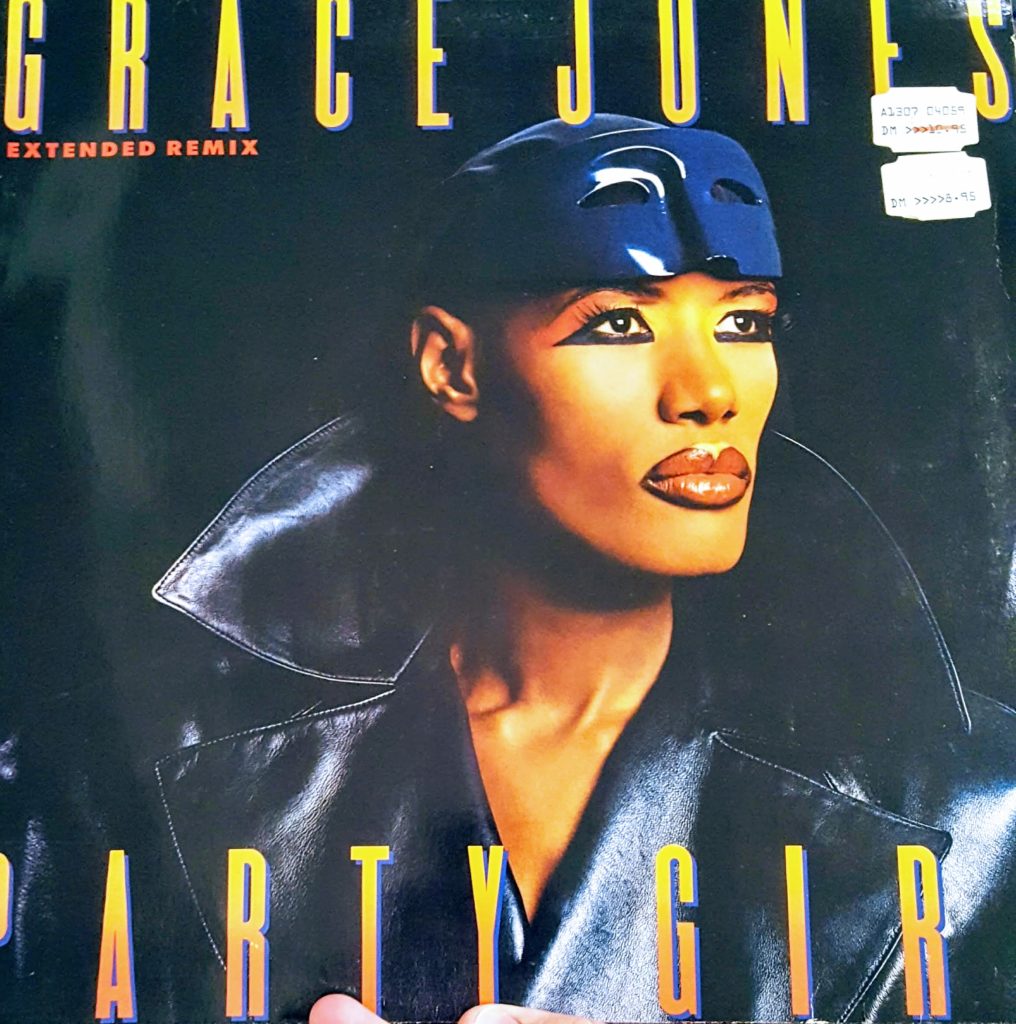
Grace Jones
Party Girl (Extended Remix)
Party Girl (Dub)
This was the one track by a mainstream artist that I found while shopping for records in Osaka. While my interest in crate digging for 12″ singles has waned in recent years (mostly because I literally have nearly every 12″ single I could ever want), I’m always on the lookout for more epicness by her majesty Grace Jones. In what turned out to be a theme for tonight’s post, “Party Girl” is a sparse electronic dance jam, very typical of Grace’s awesome 80s work. It was produced by Nile Rodgers, so yeah, it’s good.

Mya & The Mirror – Hesitation
Gina & The Flex – I Wanna Believe
I found both of these excellent tracks on a compilation called Fuzz Dance. The 12″ had four tracks in total, the other two being “Problemes d’Amour” by the legendary Alexander Robotnick and the absolutely brilliant “Check-Out Five” by Naif Orchestra. Both of those tracks have been re-issued many times over and are actually in-print at several digital storefronts, so I suggest checking them out.

These tracks haven’t had the same fortune, and have fallen into an even greater level of obscurity than the other ones. And that’s a shame, they’re dope electro/italo-disco cuts from the mid-80s that really exemplify how fun and wonderful that genre can be. Super upbeat, great grooves, amazing production, these tracks are tight as hell. I miss this type of dance music, it’s one of the reasons I’ve fallen hard off of the current EDM scene. It’s so big and the beats are overpowering. I feel that dance audiences today feel like they need a constant BOOM BOOM BOOM beat in order to dance. But they don’t! Minimal tracks like this prove that sometimes less is more. You just need a groove, man. I wonder if any gay dance clubs in Tokyo have a retro night…

Both of these acts didn’t really exist. They were manufactured names for producers. Mya & The Mirror is actually producer Maurizio Dami, featuring vocals by Mya Fracassini. Dami’s done a shitload of stuff over the years, while it appears that Mya went on to work in opera. The people being Gina & The Flexix were Gianni Sangalli, Marzio Benelli, and Giancarlo Bigazzi. Like Dami, they all produced, wrote and worked on dozens of dance tracks under countless aliases an in countless group projects.

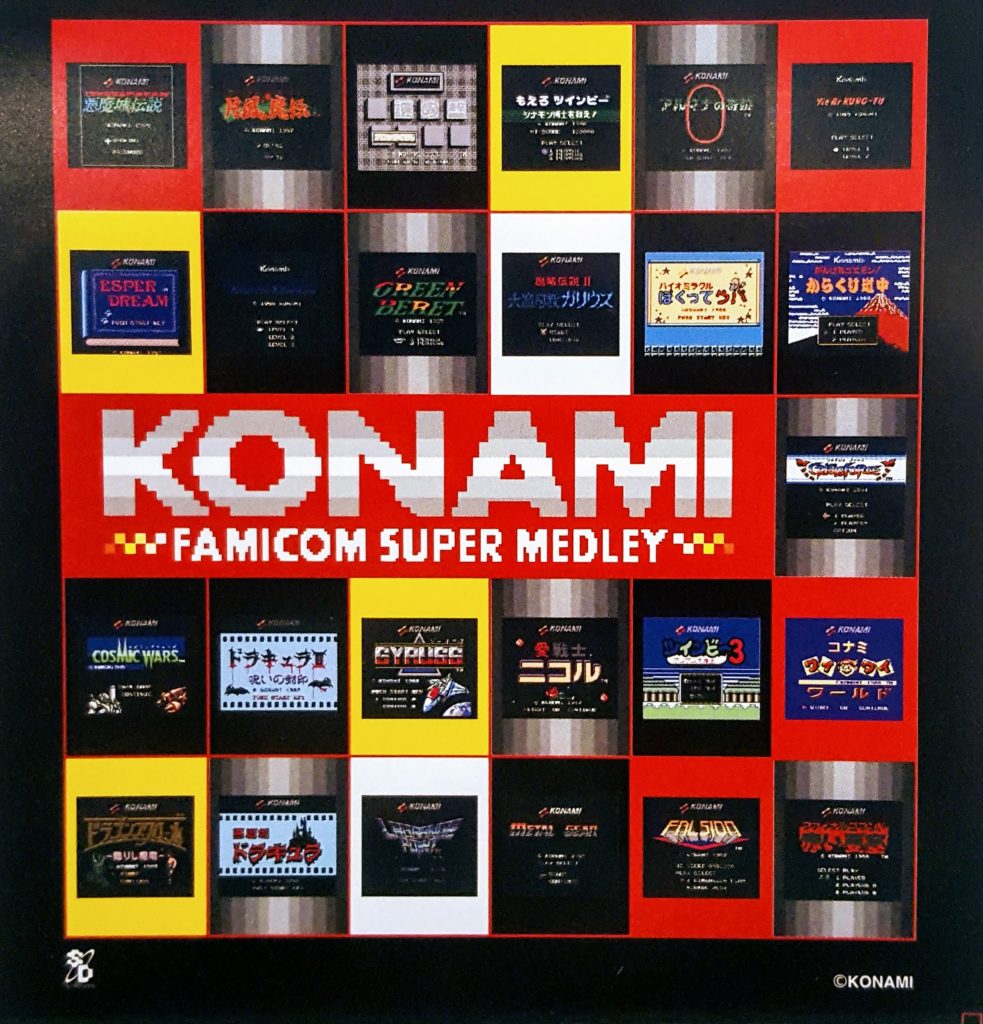
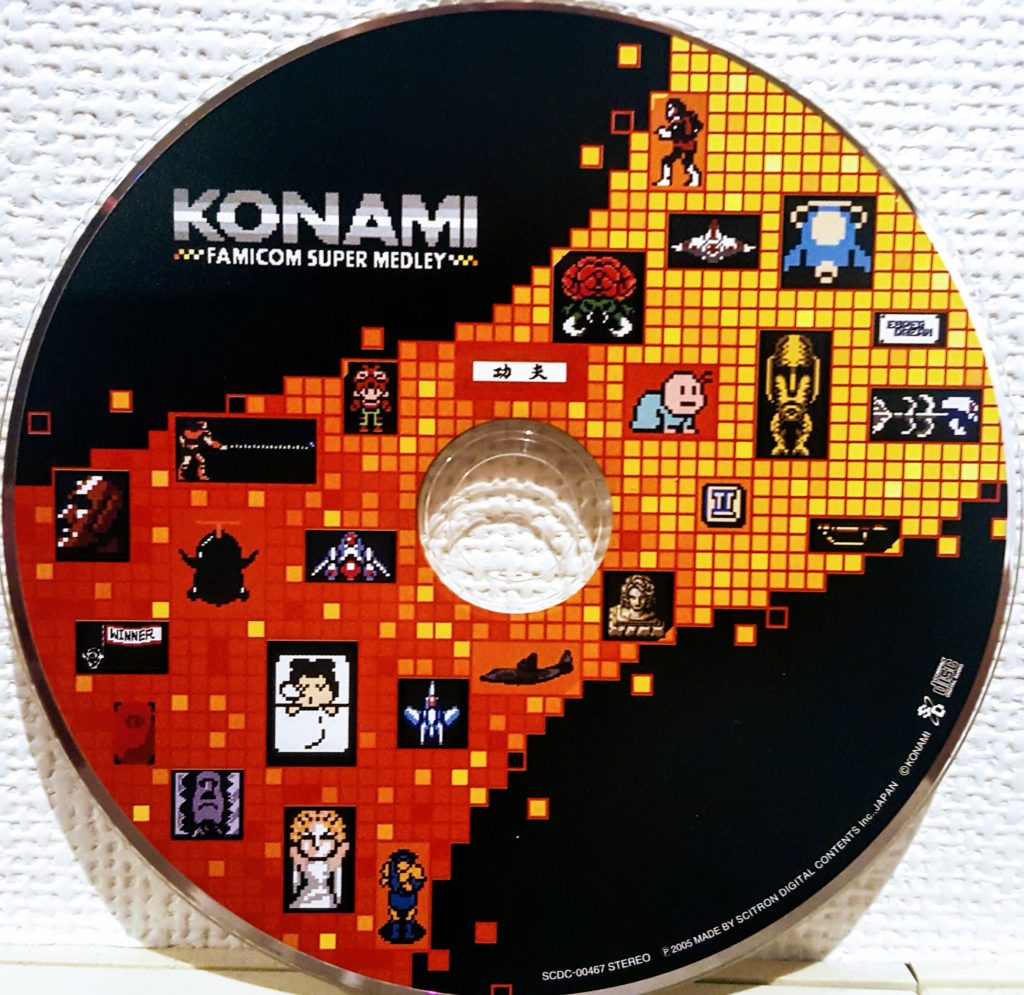
The Konami Famicom Super Medley

March 11th, 2018

Osaka was amazing. I saw incredible castles, temples, shrines. I went to two amazing aquariums. I ate so much wonderful food that my stomach is still angry with me. And, of course, I went to as many record stores as possible and bought a billion records and CDs.

Almost everything I bought was obscure and out-of-print. It looks like I have plenty of material for this site for the next few months if not a year. However, very little of it was “traditional” Lost Turntable content. Only got one 12″ single of an artist any of you have probably heard of. The rest of what I found was either obscure electronic music, Japanese prog, Japanese jazz/funk or video game soundtracks. So I hope at least some of that sounds interesting to you, because that’s what you got coming up for the next few months most likely.

Y’know, stuff like this.

Konami
Famicom Arranged Medley
Famicom Original Remix Medley
Famicom Super Medley
All of these are “arranged” and/or “remixed” so I don’t understand the names behind these tracks. The opening “Arranged Medley” is probably the worst of the three though. It just takes a bunch of arranged versions of Konami tracks and mixes them together while an horribly bland backbeat plays throughout. I mean, it’s not terrible, the source material is certainly great, but when compared to the tracks that follow it certainly falls flat.

Because the other tracks are really great. The “Original Remix Medley” is a much more pure presentation of the source material, using the original game audio alongside some added sound effects and beats. It’s not as smooth as the “Arranged Medley,” some of the cuts are a bit jarring, but the overall experience is much better. The original tunes are so strong that they stand on their own, they don’t need the lame backbeat of the “Arranged Medley’ to support them.

That’s not to say they can’t benefit from the remix or arrangement treatment, because they certainly do with the “Super Medley.” This track takes the most liberties with the original songs, re-recording them entirely with new instrumentation and accompaniment. Of the three, it is the most fun, and works the best as a proper medley. The segues between the tracks are smooth and natural, lacking the out-of-place cuts of the “Original Remix Medley” and not relying on a tired backing track like the “Arranged Medley” does. It’s also super energetic, almost like a stadium house track. If The KLF were given orders to rework Famicom tracks, I think it might sound something like this track. Dope shit all around.